



Why wine has a problem and how to solve it
Wine sales have now declined for three years – and the causes are structural and transitory – but there are solutions, according to Stephen Rannekleiv, executive director for food and agribusiness research at Rabobank.
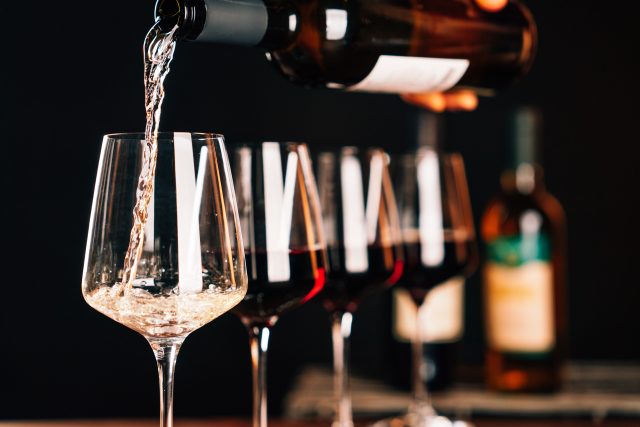
In a discussion with the Rabobank drinks analyst, who has been following the wine sector since 2007, it is clear that wine has a problem, particularly in its biggest market – the US – but that’s not a reason to give way to despair, he tells db in a podcast, as he outlines the causes of wine’s decline, and ways to turn the sector around.
As he points out, initially painting a picture of the current situation, “almost no major markets are in growth mode… and the US, for both domestic and foreign suppliers, has been declining since the middle of 2022 and fairly sharply – in a way that I think has caught everyone off guard.”
The result has been “an excess of supply in the US market… and it has left everyone looking for answers on how to get back to growth.”
In terms of the causes of this oversupply situation, it’s a fall-off in demand – as opposed to overproduction – that has created the excess, with dropping consumption in the US primarily due to financial issues.
Although the US wine market grew during the pandemic in 2020 and 2021 – “as consumers stayed at home and drank more” – Rannekleiv reminds db that the slowdown in the US demand for wine was “starting to manifest itself prior to Covid” – when volume was “starting to level off or turn slightly negative”, although at that time, there was an “ongoing premiumization process where we may be losing some low-end volume, but the high end was doing really well.”
But then in 2022, the trend changed, “and that was around the same time when we started seeing issues with inflation,” he says, suggesting that “some of the declines are likely related to inflation, with discretionary incomes for consumers in the US under some pressure.”
Indeed, Rannekleiv believes that “consumer sentiment is kind of back to the days of the global financial crisis or the worst of Covid.”
Looking to spirits and hospitality for examples of this impact, he says that “the consumption has shifted to small bottles – they’re not buying full 750ml – they’re looking for value, and it seems like consumers are shifting out of the high-end restaurant, where traffic is down, as they’re going to more fast, casual restaurants.”
But it’s not the only cause of wine’s decline, it’s also due to “a shift in the views of the health impacts of even moderate alcohol consumption in the US.”
While the wine category is also suffering due to the fact that “younger consumers – who are becoming a much more important part of the overall makeup of the US consumer – just don’t have the money to spend; their budgets are tighter.”
Consequently, Rannekleiv says that some of the causes of wine’s decline are “structural”, others “transitory”, although when it comes to an economic-driven moderation trend, he says that cost increases on wine, and the additional burden of tariffs, means that “inflation is going to be sticky.”
“At what point do wages really catch up with the level of inflation that consumers are seeing?” he asks, adding, “If consumers incomes and budgets went back to what they were prior to Covid, then then maybe we would point to this [current decline in wine consumption] and say, yeah, it’s more transitory.”
At the moment, however, the situation is having a potential impact on the profitability of the wine business – a topic due to be addressed in next month’s DB conference.
Rannekleiv outlines the challenge: “There’s rising costs of production for producers, and a real challenge in trying to pass through price increases to consumers, which puts wineries in a difficult position of wanting to maintain profit margins and not lose profitability on a per unit basis.
“But at the same time, the more you take pricing up, the more volume you lose, and then you have your fixed cost that gets spread over a smaller amount of volume, so your fixed cost per unit goes up.”
Such a development explains why wine seems to be losing market share to other drinks categories in the US, because, he explains, “the cost per serving of wine is much higher than it is for beer or spirits, which creates more disincentive for wine and and makes things like spirits even more attractive for consumers.”
Partner Content

So what can be done? “It’s hard, but, at least in the US market, we [the wine trade] haven’t done a very good job of creating a lot of entry-level products that make wine accessible or interesting at attractive prices.”
Continuing, he says, “So all of the effort that has been made in the US over the past 20 years has been focused on the premiumisation process and moving consumers up the pricing ladder – and all of that was geared towards Boomers and Gen Xers.
“And now we have a younger generation that doesn’t really have any very interesting brands that they want to show up to a party with and feel good about at an entry level price,” he remarks.
He adds, “I think the industry recognises this and wants to address it – the challenge is that today the retailers seem very uninterested in adding more wine brands.”
If anything, he says, “Retailers want to be reducing shelf space for wine rather than increasing it, and they certainly seem less interested in bringing on brands under $10 a bottle.”
“So, I think that we have a challenge ahead of us to create interesting brands that resonate with consumers at attractive price points and kind of reset the value story for consumers; brands that make it attractive to younger consumers that have less money to spend on wine.”
At the moment, Rannekleiv worries that “the wine industry tells all the same stories about their wine: they talk about the quality of the juice; they talk about their family history, the vineyards of the chateaux, but there’s no real connection with the consumer; there’s no kind of branding that creates a personal connection, which means that there’s no emotional connection for the consumer.”
This means that in his view, “wine brands are often fairly interchangeable.” In contrast, he says, “When you look at spirits, they do a much better job of telling a story and connecting at an emotional level with consumers: you know, with spirits, it’s clear what they stand for.”
Summing up, he notes that the trend towards US retailers reducing shelf space for wine is weeding out the weakest brands.
“US retailers are eliminating brands that don’t have the velocity on the shelf, and what it does is it calls out the brands that aren’t connecting with consumers,” he says.
There is a positive side to this negative trend, however. As Rannekleiv explains, “Those brands that tend to stay on the shelf, well, it’s like pouring gasoline on the fire: the brands that are doing well are doing very well, and the brands that aren’t, are really suffering.”
He adds, “But those that can create connections, stay on the shelf and can actually benefit from this process of reduced shelf space: you know, the winners will get stronger, and the losers are really going to struggle.”
As a further final point, more generally, he is optimistic. “For those in this for the long term, there are some challenges, but I think they are surmountable in time.”
He continues, “We’ve had a lot of good years, but the wine industry has seen cycles before, and I do believe this is a cycle that will that will have an end at some point.”
As for when? “That’s the big question, but you know, when things are going up, we always think they’re going to go up forever, and when they start going down, we think they’re going to go down forever – and that’s not necessarily true.”
Profitability in a challenging market: securing growth without sacrificing margins
- The Science Gallery, London
- 8 October 2025
- 9.30-5pm
Read more
How the wine trade can stem declining sales
Related news
#WeekInPictures: Galaxy Bar book launch, fine wine trends and pâté perfection at The Savoy
US wine trends 2025: premiumisation dominates as volume drops



Wine producers are doing this to themselves: Excessively high prices for wine across the board and failure to spawn the next generation of wine enthusiasts due to crazy high tasting costs. No longer can you stop at the winery and sample different varieties, spitting and dumping as needed when tasting fees can run $25 for 3 1oz samples!!! Wine snobbery spawned by whacky attitude and costs also drive away new potential enthusiasts.
Wineries need to get real, $5 tasting fees max and inclusive welcoming vibe.
A bottle of wine seems old school. Canned wine is a bit more trendy and it’s so convenient! There are some great canned wine makers out there such as Maker Wine, Nomadica and Archer Rose. It’s a bit expensive but the positives outweigh the extra price…drinking less, portability and convenience.