



AIV believes that Europe’s wine culture is at ‘existential risk’ from the WHO’s Prohibitionist stance
In an unprecedented move, the Académie Internationale du Vin (AIV) is speaking out publicly against the threat of what it calls the “denormalisation” of wine initiated by the World Health Organisation (WHO) in an open letter to the heads of government of all United Nations member states.
The AIV, which is based in Lausanne, is an association of around 100 of the world’s most renowned wine personalities from 20 nations and is often referred to as the “Council of the Wise” of the world of wine.
The open letter says to denormalise wine would destroy centuries of heritage, close scientific debate prematurely, and choose prohibition over education and freedom.
The timing is not accidental – as world leaders will be asked to vote on a resolution with potentially far-reaching consequences for the world of wine during the 80th United Nations General Assembly on 25 September 2025.
At first glance, the proposed resolution under the section “Prevention of non-communicable diseases and promotion of mental health” may well seem innocent enough.
But the four lines it contains pose serious concerns for all parties with an interest in wine. Those four lines propose reducing the ‘harmful use of alcohol’ by: (1) banning or comprehensively restricting exposure to alcohol advertising; (2) restricting the physical availability of alcohol; and (3) enacting and enforcing drink-driving laws.
In 2023, the WHO published a study claiming that the consumption of even the smallest amount of wine posed a health risk (talking of “no safe level” of alcohol consumption). Yet, wineries and many academics point to other studies that have concluded that moderate wine consumption for men and women over the age of 40 can in fact be beneficial to health. In addition, numerous scientists, medical experts and independent institutions point out that the “no safe level” study was both flawed in its methodology and selectively cited by the WHO. Yet it has been treated by many media outlets as authoritative.
Serious concerns
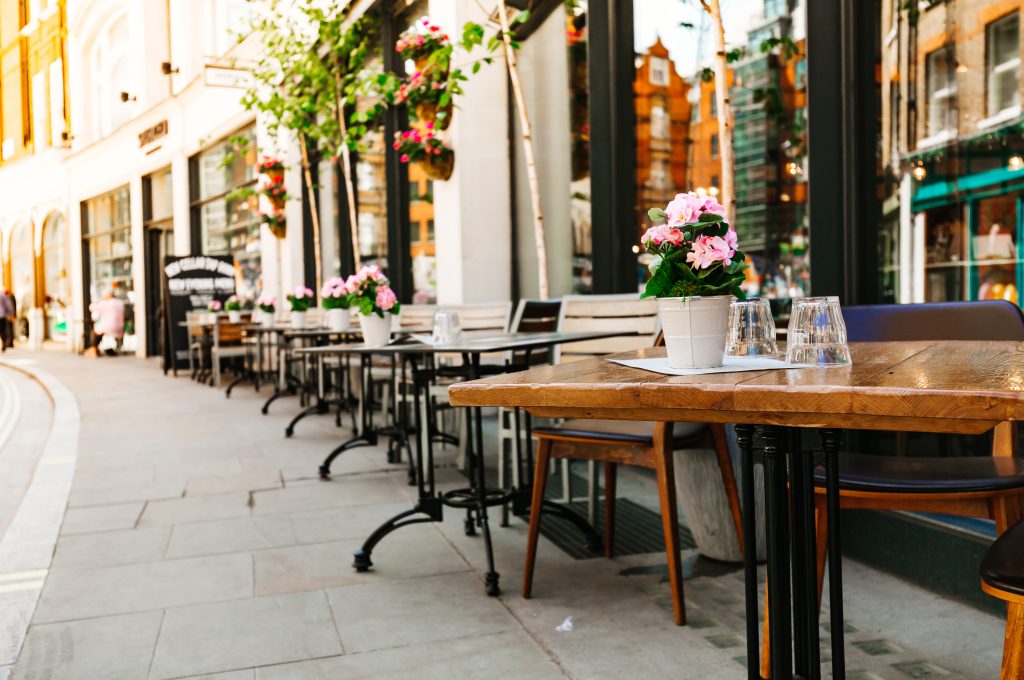
Wineries and other groups also argue that the anti-alcohol movement is pushing for still wider measures to “denormalise” wine, such as warnings on back labels referring to life-threatening risks, significant excise tax increases, a complete moratorium on wine advertising, and, most extreme of all, the banning of wine from public spaces. That would mean no wine consumption on visible restaurant terraces, outdoor cafés, or venues open to the street – which the AIV sees as a step towards worldwide prohibition.
The AIV’s message is clear. World leaders should not close the scientific debate too early. They must refrain from voting in favour of such measures until solid, independently verified scientific data is available. Only independent, randomised long-term studies – comparable to those required for pharmaceutical approval – can serve as a legitimate basis for legislation. Education and moderation are always preferable to prohibition.
To make an informed decision, it argues, heads of state and governments may want to review the comprehensive scientific presentation of US physician and winemaker Laura Catena, who has compiled all the key research on wine and health, or read the comprehensive article of journalist Felicity Carter on the influence of the anti-alcohol movement.
Partner Content

Speaking to db this morning, AIV President Guillaume d’Angerville called it ” a rare, indeed unprecedented, step for the AIV to make public its concerns in this way, but it is necessary if this existential threat to our millennia-old wine culture is to be thwarted. It is important for us to recognise the risk here and to act urgently and collectively in response – that is what we are doing. We trust that our message will be heard.”
db also asked Veronique Sanders, Chancelier of the AIV, what had motivated the organisation to break its vow of silence? “We simply want to tell the world, never to forget that wine has considerably contributed to human history, over eight millennia,” she said. “It is a universal language which relates human beings with one another, across borders. First and foremost, it expresses a passion for sharing, which is the foundation of our humanity. We are all custodians of this universal heritage.”
We also asked whether, now that it had decided to go public in this way, there are other issues on which the AIV and its members might also wish to speak?
“The AIV will continue its collective reflection with the aim of contributing to the improvement of viticulture and wine-making practices,” she said. “In the coming months, it will continue to also address itself to the challenges facing the world of wine in a rapidly changing society, particularly among younger generations. The AIV is a formidable forum for discussion amongst wine professionals, but it does not expect to speak publicly on a regular basis. Rather, the AIV will only speak out when the subject warrants it, and it feels that its voice must be heard.”
The AIV’s open letter concludes: “Ladies and gentlemen, heads of states and governments, we call upon you to act in a balanced and nuanced manner: combat excesses but recognise the value of moderation; prevent risks but preserve mankind’s bond with the earth; protect public health but respect the richness of cultures and the strength of traditions. Preserving wine means defending a civilisation, a way of life, a living universal heritage, a part of humanity that has been passed down from generation to generation for thousands of years”.
The full text of the open letter can be found here: https://academievin.org/en/
Signatories
The letter’s signatories are as follows:
Juan José Abó de Juan – Abadía Retuerta (Spain), Guillaume d’Angerville – Domaine Marquis d’Angerville (France), Angel Anocibar – Abadía Retuerta (Spain), Jane Anson – Writer (United Kingdom), Juancho Asenjo – writer (Spain), Hans Astrom – Klein Constantia Estate (Sweden), Franky Baert – Collector (Belgium), Jesus Barquin – Equipo Navazos (Spain), Alexander van Beek – Château Giscours (Netherlands), Joshua Bergström – Bergstrom Wines (USA), Michel Bettane – Journalist (France), Etienne Bizot – Bollinger (France), Hubert Boidron – Maison Boidron (France), Wojciech Bonkowski – Critic (Poland), Bruno Eugène Borie – Château Ducru Beaucaillou (France), Claude Bourguignon – LAMS (France), Philippe Bourguignon – Writer (France), Willi Bründlmayer – Weingut Brundlmayer (Austria), Christopher Cannan – Clos Figueras (USA), Robert Gyula Cey-Bert – Writer (Hungary), Jean-André Charial – Oustau de Baumanière (France), Gérard Chave – Domaine Jean-Louis Chave (France), Jean Louis Chave – Domaine Jean-Louis Chave (France), Jean-Pierre Chevallier – Château de Villeneuve (France), Donatella Cinelli Colombini – Fattoria del Colle (Italy), Corinne Clavien Desfayes – Oenologist (Switzerland), Raoul Cruchon – Domaine Henri Cruchon (Switzerland), Frans de Cock – Collector (Belgium), Jean-Philippe Delmas – Château Haut Brion (France), Paul Draper – Ridge Vineyards (USA), Thomas Duroux – Château Palmer (France), Kurt Feiler – Weingut Feiler-Artinger (Austria), Mariano Fernandez Ammunategui – Producer (Chile), Pierre-Henry Gagey – Louis Jadot (France), Angelo Gaja – Vini Gaja (Italy), Alberto Graci – Graci (Italy), Claude Geoffray – Château Thivin (France), Theodore Georgopoulos – Professor (Greece), Salvatore Geraci – Azienda Agricola Palari (Italy), Evangelos Gerovassiliou – Ktima Gerovassiliou (Greece), Anthony Hanson – Lecturer (United Kingdom), Gaston Hochar – Château Musar (Lebanon), Emilienne Hutin – Domaine Les Hutins (Switzerland), Joyce Kékkö-Van Rennes – Wijmkasteel Genoels-Elderen (Belgium), Andreas Keller – Editor (Switzerland), Anthony Lacey – Mistral Wine (United Kingdom), Dominique Lafon – Domaine des Comtes Lafon (France), Alois Clemens Lageder – Vignobles Alois Lageder (Italy), Jean Baptiste Lecaillon – Louis Roederer (France), Jeannie Cho Lee MW – Journalist (Korea), Pierre-Marie Lledo – Neurobiologist (France), Maria José Lopez de Heredia – Bodega López de Heredia (Spain), Juan Carlos Lopez de Lacalle – Bodega Artadi (Spain), Reinhard Löwenstein – Domaine Heymann-Lowenstein (Germany), Jorge Lucki – Journalist (Brazil), Philippe de Lur Saluces – Château de Fargues (France), Elie Maamari – Château Ksara (Lebanon), Axel Marchal – Professor, University of Bordeaux (France), Franco Martinetti – F. Martinetti Viniculture (Italy), Ton Mata – Recaredo (Spain), Laszlo Meszaros – Domaine de Disznoko (Hungary), Etienne de Montille – Domaine de Montille (France), Eva Moosbrugger – Domaine Schloss Gobelsburg (Austria), Jasper Morris MW – Writer (United Kingdom), Fiona Morrison MW – Journalist (United Kingdom), Roberto de la Mota – Revancha & Mendel Wines (Argentina), Dorli Muhr – Weingut Dorli Muhr (Austria), John Olney – Ridge Vineyards (USA), Raymond Paccot – Domaine La Colombe (Switzerland), Alvaro Palacios – Alvaro Palacios (Spain), Filipa Pato – Filipa Pato & William Wouters (Portugal), Jean-Pierre Perrin – Château de Beaucastel (France), Dominique Piron – Domaine du Vieux Bourg (France), Bruno Prats – Agronomist (France), Pietro Ratti – Cantina Renato Ratti (Italy), Josep Roca i Fontané – Celler de Can Roca (Spain), Pierre-André Roduit – Domaine du Grand-Brûlé (Switzerland), Raoul Salama – Château de Balleure (France), John Salvi – Writer (United Kingdom), Véronique Sanders – Château Haut Bailly (France), Erik Sauter – Writer (Netherlands), Carl von Schubert – Weingut Maximin Grunhaus (Germany), Michael Schuster – Wine Consultant (United Kingdom), Marc-André Selosse – Professor (France), Jacques Seysses – Domaine Dujac (France), Michael Silacci – Opus One (USA), Peter Sisseck – Dominio de Pingus (Denmark), Diana Snowden Seysses – Domaine Dujac & Snowden Vineyards (USA), Felipe de Solminihac – Viña Terra Noble (Chile), Oliver Spanier – Battenfeld Spanier (Germany), Serena Sutcliffe MW – Sotheby’s (United Kingdom), Pierre Tari – Collector (Switzerland), Ivo Varbanov – Ivo Varbanov Wines (Bulgaria), Christine Vernay – Domaine Georges Vernay (France), Quim Vila Betriu – Vila Viniteca (Spain), José Vouillamoz – Geneticist (Switzerland), Yannis Voyatzis – Boutari Wineries (Greece), Maurizio Zanella – Ca’ del Bosco (Italy).
Related news
Who is really driving the public health debate?
Genetic study finds no overall cancer link for alcohol intake
World Health Organisation says alcohol is now ‘too affordable’


