



From ash to glass: volcanic wine is exploding in popularity
Volcanic wines are surging in popularity thanks to their striking story, distinctive flavour profile and new certification standards. Here’s why sommeliers, retailers and wine lovers can’t stop talking about them. Kathleen Willcox reports.
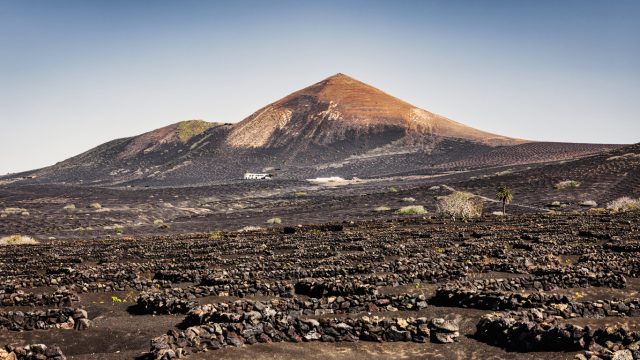
Humans have always appreciated a good visual and in the age of wham-bam social media, that has never been truer. Ideas, products and flavours that can be explained through instantly recognisable visuals inevitably gain traction more quickly than ones requiring a more nuanced explanation. Like… Prädikatswein. Or even … terroir.
But volcanic wine? Volcanic wine is, even for a neophyte, instantly graspable.
The ability to instantly picture, and on a superficial level, understand what volcanic wine means, is surely helping to buoy volcanic wine’s recent surge in popularity—but it’s definitely not the only reason you’re about to see it everywhere.
A growing movement
“This movement has been gathering for a long time,” says John Szabo, MS, who literally wrote the book on Volcanic Wines in 2016, arguably helping to foist the nascent category onto the world stage. “It used to be a niche category, but I’ve been seeing an increased interest from the trade, especially after the first International Volcanic Wine Conference in 2018. Volcanic wines offer a great storytelling opportunity for winemakers, retailers and sommeliers. It’s a hook, and a way to pique curiosity.”
Today, Szabo says that he sees volcanic wine sections on serious wine lists and in retail stores. He sees it discussed on wine labels, on social media and in marketing material the world over.
“And in June, the first label for wines of volcanic origin was created,” Szabo says. “That’s going to really help consumers connect the dots on volcanic wines and see them as something they may want to seek out.”
The new certification
The certification program has been launched by VINORA, a nonprofit association based in Auvergne, France, designed to establish how volcanic wines are defined, certify ones that pass their strict scientific analysis, and in the process, help to attach economic value to the term “volcanic wine.”
“The certification is open to any winery around the world, and it is similar to an appellation certification,” Szabo explains. “Once their soil has been analysed and the wine has been certified, they can affix the certification to their bottles.”
The initiative was launched in 2019, supported by a scientific committee composed of volcanologists, scientists and winemakers. The committee is tasked with the responsibility of guaranteeing that any winery bearing the label has had its terroirs scientifically validated, and that the soils in which the grapes are grown are from recognised volcanic origin (basalt, trachyte, andesite, pozzolan, etc.).
“Volcanic origin is not a marketing concept; it is a seal of authenticity that distinguishes wines originating from a truly volcanic terroir or from a proven volcanic influence,” Jean-Baptiste Deroche, president of VINORA, notes in a written statement. “We are committed to providing a clear benchmark in a context where the term ‘volcanic’ is sometimes misused. The work undertaken since 2019 confirms that wines from volcanic soils have their own geological and organoleptic identity, as well as increased resistance to drought. The label offers a tasting experience — smoky notes, salinity, pronounced freshness, minerality — that goes far beyond appellation or grape variety.”
The “Volcanic Origin” label has been requested and obtained by around 30 wine estates around the world.
Enormous diversity
While, as Deroche notes, there are throughlines in the flavour and character of volcanic wines, discussing volcanic soils as a homogenous entity is akin to describing something as “blue” and leaving it at that.
Like the colour, there are many “shades” of volcanic soil and a range of ways in which it can perform, depending on its age, elevation and other externalities, like the amount of rain it typically sees in a year, or its proximity to the ocean.
Some soils of volcanic origin are well known — the Canary Islands in Spain, Etna in Sicily and Lake County in California. But other terroirs of volcanic origin are generally celebrated in other ways— like France’s Alsace region, or Italy’s Veneto.
Even in one region, the soils from vineyard to vineyard can vary dramatically.
“We have at least 20 different soil variations in our vineyards, and each slope of the volcano has a different history that can dramatically change,” says Jacopo Maniaci, general manager of Tenuta di Fessina on Sicily’s Mt. Etna. “The north is sandy and fragmented, rocky in the higher vineyards and thinner in the lower ones. The eruptions have created a unique scenery, incredibly complex and difficult to fully understand.”
Tenuta di Fessina’s headquarters in Rovittello, for example, has two soil types across 11 hectares: rocky and sandy, with volcanic material and deposits dating back at least 15,000 years. The east of Etna, by contrast, is incredibly young. The Valle del Bove collapsed 9,000 years ago, creating a unique environment with fast soil regeneration known locally as ripiddu, due to constant volcanic activity. The south of Etna, meanwhile, is very old, the only area (millions of years old compared to the 600,000-year-old volcano) where clay and limestone can be found.
“Depending on where a vineyard is located, volcanic soils that are 3 million years old could be as hard as a rock without any organic material, or 1,000 years old and filled with organic material,” Szabo says. “Not all volcanic soils grow great wine grapes, either obviously. But there are certain characteristics that you see in wines from great volcanic soils, which is what everyone is responding to.”
Strengths of volcanic soils in the vineyard and glass
In Baden, Germany, Konrad Salwey works with Pinot Grigio, Pinot Blanc, Pinot Noir and Chardonnay grown in vineyards of volcanic origin and loess-lime soils at Weingut Salwey. Most vineyards hover between 210 and 250 meters. The volcanic soil is ancient, with eruptions finishing about 12 million years ago.
There are benefits to farming volcanic vineyards, especially amid a changing climate where extreme rain events are becoming more frequent.
Partner Content


“Even when it rains a lot, we don’t have a problem with erosion in our volcanic vineyards, even where there is a 70% steepness gradient,” Salwey says.
Megan Hoberg, marketing manager for the Lake Country Winegrape Commission, where there are around 10,000 acres of winegrapes being grown at elevations between 1,300 to 3,000 feet in elevation, and where two volcanoes (Cobb Mountain and Mount Konocti) with 1-million-year-old volcanic rocks, and much more recent eruptions dominate, credits the soil with success in the fields and glass.
“Lake County’s volcanic origins are more recent and geologically active than many other wine regions,” Hoberg says. “Grapes grown here often develop thicker skins and more concentrated phenolic compounds. The wines tend to have higher acidity, firmer structure and a mineral-driven profile that reflects the site’s distinct geological history.”
Jonathan Walters, VP of winery and vineyard operations at Brassfield Estate Winery in Lake County, concurs.
“These volcanic soils grow wines that beg you to eat food with them,” Walters says. “For our Rhone varietals, we get dark fruit, with mineral notes and this amazing saline flavour.”
The region’s cool nights and warm days support the development of complex aromas and flavours, while maintaining balance and brightness.
In the Dundee Hills, where the volcanic Jory soil formed between 15 and 17 million dominates, Granville Wine Co.’s co-founder and winemaker Jackson Holstein dubs the soils “gold.”
“I’m always impressed with these vines and what they extract from the soils,” he says. “We are witnessing the transformation of the planet due to climate change, and unless you listen to the vines here, you will run into challenges on these lower-vigour soils. But if you reduce the canopy early in the season and keep the canopy pruned, it’s like removing half the weight from a backpack on a long journey at the beginning. It’s much better to do it early, and you’re going to get a lot better fruit than if you just drop fruit at the end.”
Weaknesses of volcanic soils in the vineyard
These soils may make great wine, but the challenges they serve up in the vineyard ensure every drop is earned.
“On the positive side, our volcanic soils have excellent drainage, which naturally limits vine vigour and encourages deeper root systems,” Hoberg says. “This often leads to smaller berries with more concentrated flavour. However, rocky, uneven terrain can make planting and maintenance more labour-intensive.”
In Santorini, Gaia Wines’ founder Yiannis Paraskevopoulos is working with young 100% volcanic soils and a devastating drought.
“We have zero clay and zero organic matter,” Paraskevopoulos says. “Our soils cannot retain water. Even in very good years, our yields are low.”
In the past three years, the yields have been devastating — about one-tenth of the usual harvest, about 25% of what Paraskevopoulos says is their “most basic” necessity to bottle a vintage.
There is a glimmer of hope on the horizon, though.
“First of all, our grape Assyrtiko is a warrior,” Paraskevopoulos says. “It is so acclimatised to these conditions, it can still produce incredible, savoury wines. And because the E.U. has finally realised the issue we are having, and how endangered agriculture in general has become in Santorini, they are helping us build up a plant that will purify wastewater so that we can water our vines and other produce.”
Paraskevopoulos says that the plant will be fully operational in five years.
And while Salwey hasn’t encountered the kind of droughts Paraskevopoulos is facing, he agrees that volcanic soils don’t perform well in drought conditions.
“When I compare the volcanic to our more loess-driven soils in drought years, I see that it is much harder for the vines to compensate in the volcanic vineyards,” Salwey says. “It is much more challenging to farm. But on the other hand, they give us wine with so much character and profile in terms of flavour and taste. And it’s easy to market because it’s exciting and fairly easy to understand. It’s hard work in volcanic vineyards, but the wine is better.”
The future of volcanic wines
Volcanic vineyards represent about 2% of worldwide wine production, but their power already far outweighs their actual presence.
“The climate has become so unpredictable,” Maniaci says. “Considering that we practice dry farming on Mt. Etna, this is extremely challenging. But in my view, the benefits outweigh the challenges regarding volcanic soils. The drainage is excellent and the microelements and minerals act as natural fertilisers. The soils are continually regenerating thanks to the dust from the craters. The taste profile is also unique, with low pH, high acidity, low alcohol and a fresh, sharp and crisp character.”
In other words, exactly what the world is thirsting for: a unique but easy-to-understand story, with a side of low-ABV.
Related news
Chile 'missing trick' with its volcanic wines


