



Only connect: Bordeaux must rebuild trust, says de Boüard
Far from providing a reset moment, this year’s en primeur campaign has caused ‘an earthquake’ in Bordeaux, says Hubert de Boüard, reinforcing the need for out-of-touch châteaux to re-establish lost connections with their customers. Richard Woodard reports.
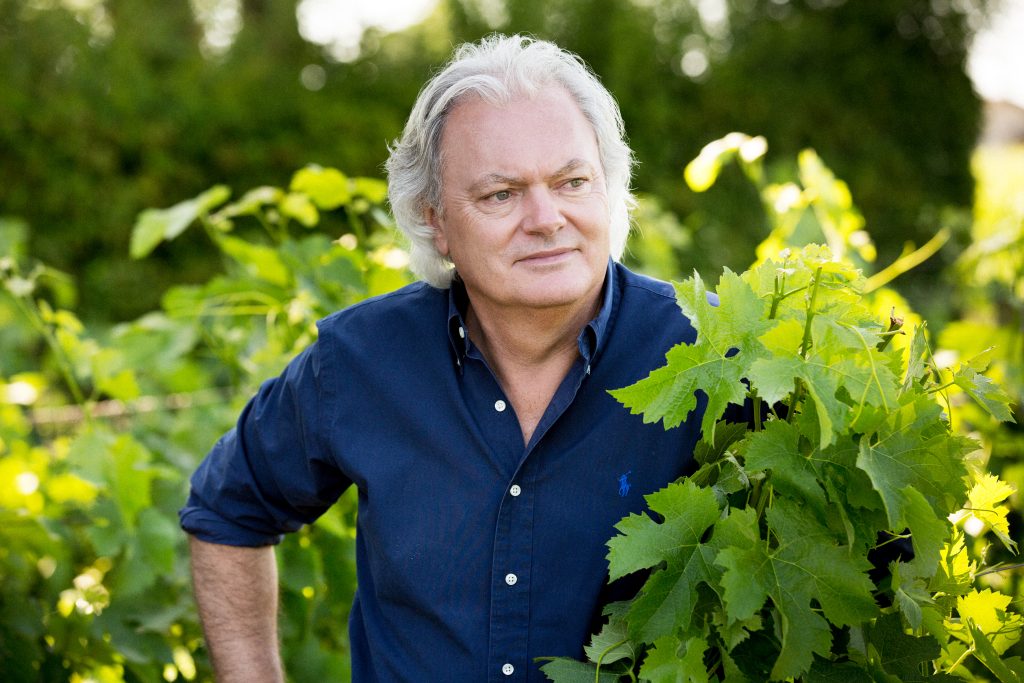
“I love to be with you here today, but I really love to be in the vineyard,” says Hubert de Boüard, addressing attendees at a London lunch centred on Château La Fleur de Boüard, his property in Lalande-de-Pomerol. “Honestly, I would rather be in my vineyard – I am a farmer.”
It may seem odd to paint the co-owner of one of Bordeaux’s bluest of blue-chip properties, Château Angélus, as a humble son of the soil, but you sense with de Boüard that this is no mere media façade. He confesses that viticultural worries – even 40 vintages in – still keep him awake at night.
Besides, de Boüard has more than one reason for perhaps wishing he were somewhere else: the lunch at Bob Bob Ricard City coincides with his 69th birthday, necessitating the postponement of celebrations with friends until the following day.
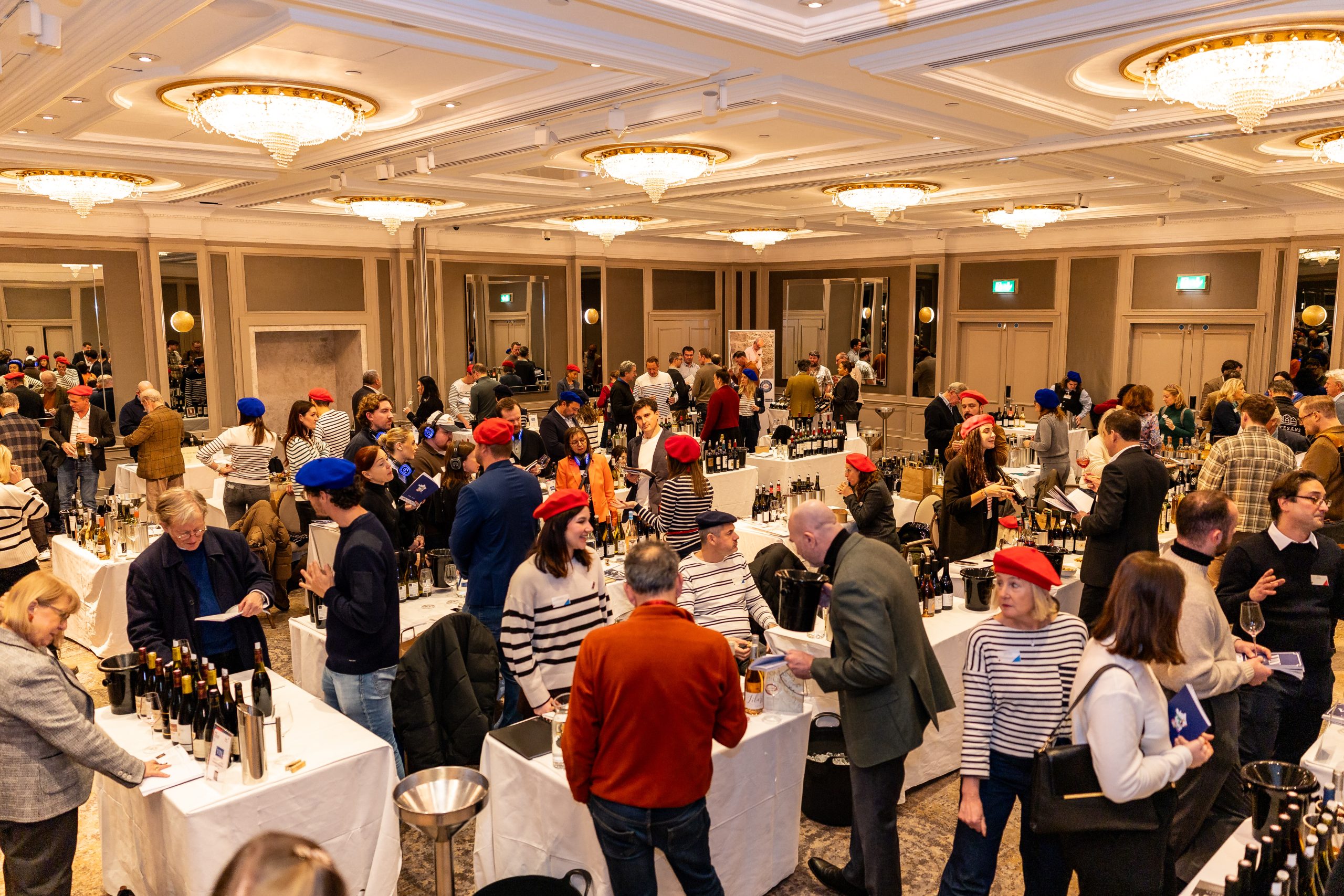
Jetting in and out of London on his birthday may have prompted a slightly tricky conversation with his wife, but de Boüard acknowledges that such events – in this case, promoting the recently bottled 2022 vintage of Le Plus de la Fleur de Boüard alongside a handful of back vintages and a memorable magnum of Angélus 2008 – are a vital component of the modern wine business. “I spend half of my time in the vineyard and the winery, and half of my time travelling,” he explains.
It’s a division of labour that others in Bordeaux might consider imitating. Asked about the impact of this year’s lacklustre en primeur campaign, de Boüard says it has caused “an earthquake” in the region. “Two years ago, maybe 300 châteaux had a successful en primeur campaign,” he explains. “Last year, it was about 150. This year? Fifteen to 20. There are others that did something, but not so many that had a real success.”
The irony, as de Boüard and other observers contend, is that Bordeaux’s wines, and the region’s strength in depth, have arguably never been better. But that means little to an audience that has lost faith in the en primeur model, stung by release prices that have been tone deaf to market reality.
“Bordeaux has lost that connection with the consumer,” de Boüard says. “We need to rebuild that, but the system does not help us to do that.” That said, he is not advocating a root-and-branch transformation of Bordeaux’s operating model, arguing that négociants still have a vital role to play. “I think we have to rebuild, reconnect with the people. That has been completely destroyed in Bordeaux.”
De Boüard is by no means a lone voice. François Dugoua, general manager of merchant Ulysse Cazabonne, recently told Sud-Ouest that Bordeaux needed to “recreate trust” and price its wines realistically, following this year’s “violent” en primeur campaign. Drawing attention to the “excesses” of past campaigns, Dugoua said that, over the past decade, “the connections with our long-standing clients, in Europe and France, have occasionally been broken”.
Nonetheless, you might expect de Boüard, born at Château Angélus, and a proud student of Emile Peynaud who has held a number of senior administrative roles in the region and at the INAO, to be a conservative pillar of the establishment. But Fleur de Boüard, points out associate director Emmanuel Teillet, is dubbed “Bordeaux new gen” in the US, thanks both to its wines and the approach in the vineyards.
Beyond its core expressions, the property also bottles an eclectic – in Bordeaux terms – mix of varietal wines: Chardonnay, Syrah and Pinot Noir, labelled variously as Vin de Pays de l’Atlantique or Vin de France. There’s even a Grenache/Syrah rosé, sold locally.
“It’s forbidden, but we are in France, so we don’t care,” says de Boüard with a smile. “Well, it’s permitted to plant it, but you can’t bottle it as Bordeaux… We have a problem with the Chardonnay, and it’s a big problem, because we don’t produce enough.”
Partner Content

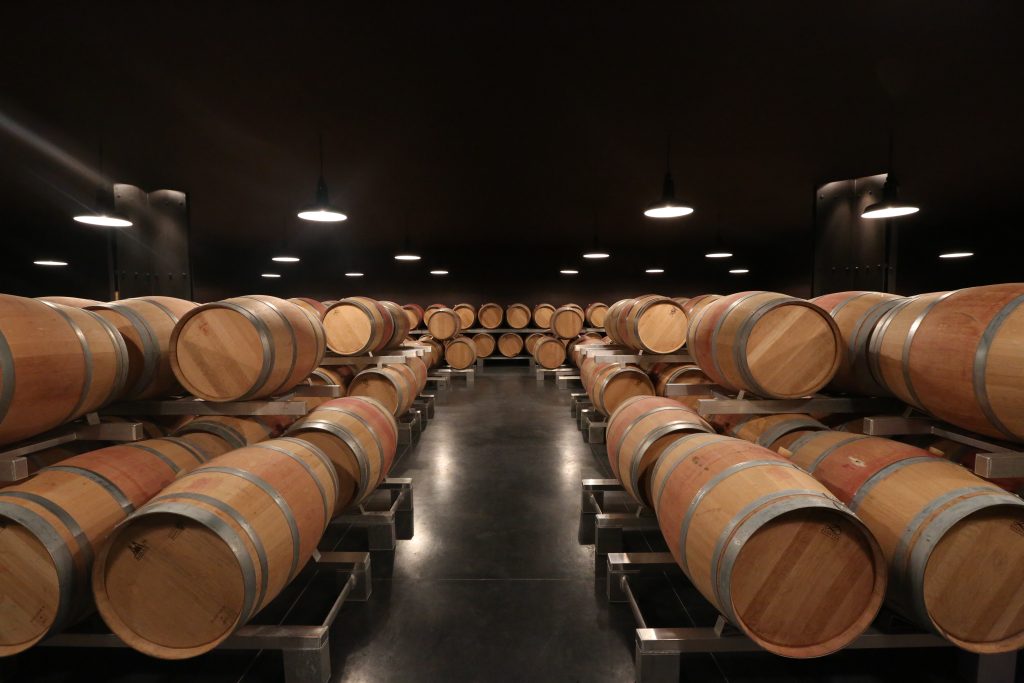
The first Chardonnay vintage was in 2016, and plantings have grown from 3.5 hectares to 6.5ha, thanks to the over-grafting of Merlot vines. Now de Boüard is considering repeating the trick with 1.5ha of Sauvignon Blanc. “Really, to be completely honest with you, Sauvignon Blanc is great in the Loire, and very occasionally in Bordeaux. For me, the only great white grape variety in Bordeaux is Sémillon.”
He continues: “I am not iconoclastic; I am classic, but I try to understand what the consumer wants to drink, what I like to drink. Some years ago, what we liked to drink was more Chardonnay than Bordeaux white wine – I’m sorry, but it’s true.”
De Boüard’s self-ascribed classicism is more apparent in Le Plus de la Fleur de Boüard, the estate’s 100% Merlot bottling, which is aged for a total of 33 months – 18 of them on the lees – before bottling. Le Plus is sourced from the oldest vines of a plot once owned by the village postman, on soils so stony that “you don’t know if you’re in Bordeaux or Châteauneuf-du-Pape”, de Boüard says.
The parcel has seen no systematic replanting programme. “Standing in the middle of the block, you have vines [that are] 20 years, 30 years, some something like 70-80, maybe more. When I tasted the grapes, it was something really different.”
The consistency of quality offered by these old vines is apparent across a span of contrasting vintages, from the dry warmth of 2022 to the classically framed 2016 and the uneven 2011 – and even the often derided 2013. “People talk about it as a vintage that was the worst in Bordeaux, but it’s not,” says de Boüard firmly.
The key, he believes, is not merely the age of the vines (“We say that old vines make the best wines. I am not sure about that, but I am sure that it’s more consistent”), but what goes on underground. “The root system is the key for great wines. You see that the vines after 50 years, they have roots that are three metres deep. You can see also the resistance of the vine: when you have a rainy season, they are not affected; when you have a drought season, they are not affected.”
Le Plus offers, he contends, proof positive that Merlot’s position in Bordeaux is emphatically not under threat, despite reports to the contrary. “Merlot is not dead in Bordeaux,” he says. “I am really scared when I can read something like that. Otherwise you would not have Petrus in 20 years.
“Merlot is great in Bordeaux and will be great in Bordeaux for ever – if you have Merlot in a good place. The kingdom for Merlot is the blue clay. When you have the blue clay and the root system, we really believe that the old vines make something special.”
Château La Fleur de Boüard’s wines are imported into the UK by Menzendorff. Le Plus de la Fleur de Boüard 2022 will be shipped to the UK in 2026, and will have an RRP of £102 per bottle. Le Plus de la Fleur de Boüard 2011 and 2013 are currently available in the UK.
Related news
Garcés Silva: fresh thinking from Leyda
Christie's to sell Burgundies from renowned British collector Ian Mill KC


