



How heatwaves to hailstorms are threatening the world’s finest wines
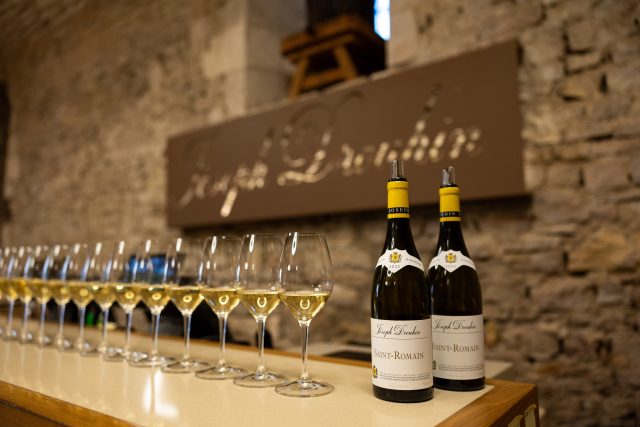
It was during a visit to Burgundy’s biodynamic Maison Joseph Drouhin earlier this month that db learnt how heat, drought, frost and hail are threatening the world’s finest wines – and what can be done to mitigate the threats.
Already this year, according to Philippe Drouhin, who manages the Drouhin vineyards in Burgundy and Chablis (as well as Oregon), the producer is dealing with climatic extremes.
The current and most pressing issue concerns water – Chablis and the Côte d’Or are “facing drought”, he said on 2 July, when db met with Philippe as part of a trip to Burgundy, along with Champagne and Sancerre, hosted by Pol Roger Portfolio – the UK importer for Drouhin.
Speaking specifically about Chablis, where Drouhin has 40 hectares of vineyards, Philippe said that a prolonged dry spell had followed relatively low levels of wintertime rainfall, and noted that water restrictions were already in place across the region.
“If there are no rains over the next few weeks then the drought situation will become much worse,” he said, before stressing that established vineyards in Chablis can’t employ irrigation.
Avoiding compaction
in terms of dealing with such conditions, which tend to be interspersed with short-lived but heavy rains, Philippe said that avoiding soil compaction was key – with healthy aerated soils good at both absorbing and retaining moisture, “because you need holes in the soil to hold water”.
To ensure Drouhin’s soils are in the best shape possible, the biodynamic estate keeps them covered with vegetation for much of the year, stressing the role of “a winter over crop to prevent soil erosion and improve soil structure.”
Notably, Drouhin uses extra-wide tractors for managing the soils and vines, which are capable of working three rows at a time.
“This means that we don’t have to run a tractor wheel over every row, so over half our estate is never compacted,” said Philippe, adding that the difference between the rows that aren’t traversed by a tractor track is marked, with huge benefits in terms of soil health.
Another heatwave vintage
As for the issue of high temperatures for prolonged periods, 2025 is proving similar in character to the heatwave 2020 and 2022 vintages in Burgundy, with Philippe commenting that the “growing season has the same pattern”.
Consequently, he’s expecting to start picking between 20 and 25 August in the Côte d’Or in 2025, which he added was too early in his view, as well as in sharp contrast to last year, when harvesting began on 15th September.
With the vineyards in the Côte d’Or mostly facing south-east, dry and hot conditions are a challenge for the plants, which receive the maximum amount of sunlight possible, especially compared to Chablis, were vineyards can be found with many different aspects, “which is a plus with global warming”, said Philippe.
For the sunniest sites in the latter region, Philippe said that Drouhin was trialling “different planting densities and rootstocks to delay the start of maturation, because we don’t want to make Chablis with 14% plus potential alcohol.”
Generally, he said that such techniques “can delay a bit the impact of global warming, but will not fully counterbalance it,” adding, “We can’t change the vineyards as fast as global warming is impacting us.”
Handling hail
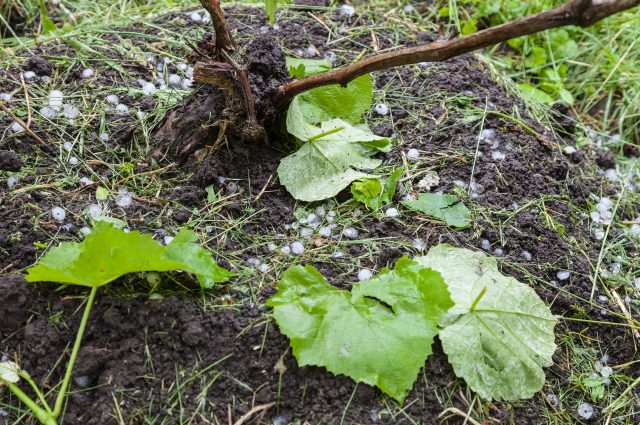
Beyond heat and drought, Philippe’s other headache concerns the risk of hailstorms, which can be sudden and violent, stripping leaves from the vines, and damaging the bunches. Indeed, in 2012, at Drouhin’s prized Beaune premier cru Clos des Mouches vineyard, 90% of the crop was lost to hail, before being damaged again in the ‘13 and ‘14 harvests.
However, it’s in Chablis where recent losses have been most severe, with a hailstorm last year destroying between 30% and 90% of the crop, depending on the vineyard location, although Philippe suggests that the impact could have been worse.
That’s because 10 years ago the region invested in “furnaces” that release silver iodide particles when a hailstorm is approaching. The silver iodide acts as an ice nucleus, encouraging the formation of lots of small hailstones instead of fewer, larger and more destructive ones.
“We do see that we have smaller hail stones than other regions, but I can’t be sure that’s because of the system,” said Philippe.
Partner Content

Fighting frost
His final problem are freezing temperatures, which have become a great issue due to global warming, as “it extends the number of days we can be exposed to frost”, he recorded. That is because warmer springs are bringing forward the vine’s growing season, commenting, “the cycle starts earlier”.
Later frosts are also an issue, with Philippe telling db that this year, in Chablis, Drouhin recorded freezing temperatures on 13 May – a period right at the end of the Saints de Glace (11-13 May), or ice saints, when the risk of frost-damage is normally reaching an end.
Nevertheless, he said that 2025’s frost-related vine damage “was low”, with 6-7 nights of below-zero temperatures during the growing season. Minimizing the impact of such conditions was the fact that the freezing conditions were not severe, and, importantly, the weather was dry.
Philippe explained, “The problem comes, as was the case in 2021, when you have high humidity and freezing temperatures, because it is the freezing of the moisture in the buds that does the damage to the vine.”
If it’s wet, then a temperature of minus 0.5 degrees Celsius is enough to damage the buds, but when it’s dry, Philippe said that the vines can survive temperatures down to minus 3.
This is why he said that running electricity along the vine-training wires was one particularly effective solution, because it both heats and dries the plant, although it is a specialist and expensive technique used only in the very top and grand cru classified sites in Chablis.
Elsewhere, Drouhin said that the vignerons of Chablis rely on heating the vineyards during freezing conditions with “candles”, which are little cans filled with burning oil – although Drouhin employs a “green” alternative that’s fuelled by pig fat from a local abattoir. “It’s cleaner – there are no black clouds – but it’s also less efficient,” admitted Philippe.
Other techniques include pruning the vines as late as possible during the winter to delay bud break, as well as bending the canes downwards much later in the season, so the buds stay elevated – the frost risk is greatest closest to the ground.
A final, and “very effective” measure to combat frost is, counterintuitively, to spray the vines with water when the temperature drops below freezing.
This is because the water creates a layer of ice that shields the buds from freezing temperatures. Also, due to the small amount of heat released when water freezes, the buds are not only insulated, but warmed.
However, Philippe said that Drouhin only employs the technique at its vineyard in the grand cru of Bougros due to the presence of a river at the bottom of the slope, from which it can pump water, rather than take water from the mains supply.
Even though, there is a drawback, according to Philippe. “If there is the risk of frost late in the season, and you spray the vines, then you also soak the soil, and that effects the terroir: it is not natural.”
It’s also why, he summed up, “We have to live with frost and hail – how much can we control? We could build a house over the vineyard, but then you would have to ask yourself, what is the terroir?”
Meanwhile, concluding on the most reliable way to manage all the climatic threat facing Burgundy, Chablis included, he said, “The best solution is to build up a good inventory and have good insurance.”
Read more
Frosty reception: how some producers have given up fighting frosts
Organics teaches you where you shouldn’t grow grapes
Related news
Why climate change may favour Garnacha in Rioja
Moët employs historic plant cuttings and new PIWIS in climate change battle
Analysis: Château Lafleur, climate change and the future of the appellation system


