



How can brands win new customers without alienating their core base?
Château Sainte Marguerite has been a local favourite in Provence for more than 30 years, but since Pernod Ricard acquired a majority stake in the business in 2022, the rosé producer has shot up the premium ladder. Sarah Neish heads to its new residency in billionaire’s playground Monaco to learn how it’s juggling new fans with old.
The terms ‘Old World’ and ‘New World’ have long been used in the wine trade, usually to refer to countries which either have an illustriously long winemaking history, or are comparatively footloose and fancy-free when it comes to rules and regulations.
But as brands evolve, and sometimes even transform their proposition, these terms could equally be applied to ‘new world customers’ and ‘old world customers’. Or to put it another way, those who were there before and after the cash injection/rebrand/line extension. How do brands keep longstanding customers close as they grow, while at the same time attracting new ones? One producer that may have hit on the winning formula is Château Sainte Marguerite.
Monte Carlo
Rosé producer Sainte Marguerite has been a firm favourite among the local residents and restaurants of the Bormes-les-Mimosas area of Provence for the last 30 years, since the winery was founded in the region by the Fayard family. Until fairly recently, it was a bit of a well-kept secret. Then came along Pernod Ricard, acquiring a majority stake in the brand in 2022 and holding it close, even as it sold off the rest of its wine business to Australian Wine Holdco Limited (now Vinarchy), the owner of Accolade Wines.
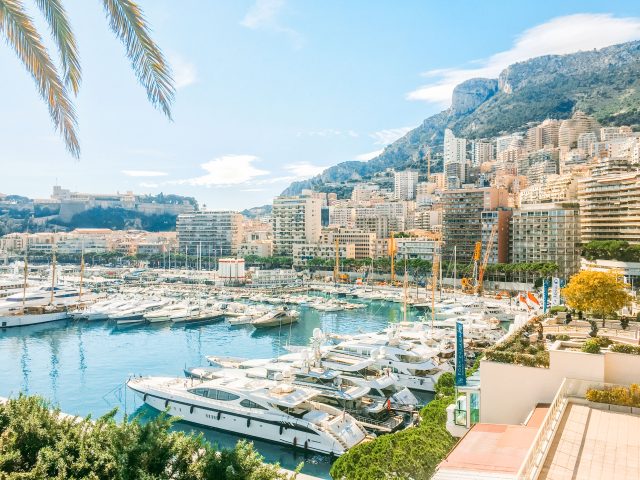
Now, not only has Sainte Marguerite bedded in with two major Champagne brands (Mumm and Perrier-Jouët) under Pernod Ricard’s remaining wine division, this summer it is assimilating with the uber wealthy in Monaco. Drive past the convoy of Ferraris and Lamborghinis and not far from the marina studded with super yachts you’ll find the Monte Carlo Bay Hotel, where rooms start from around £600 per night.
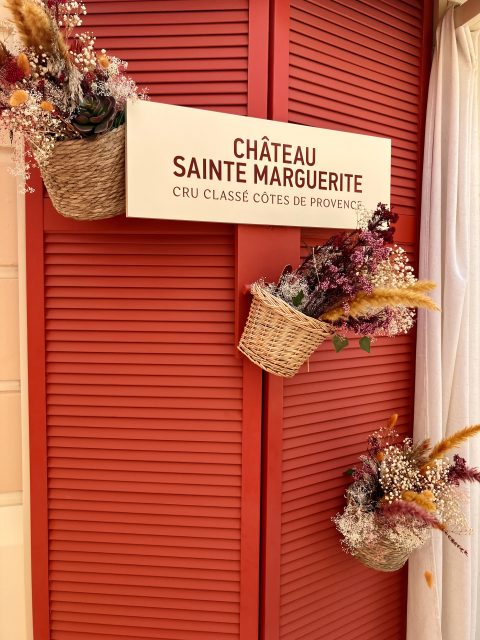
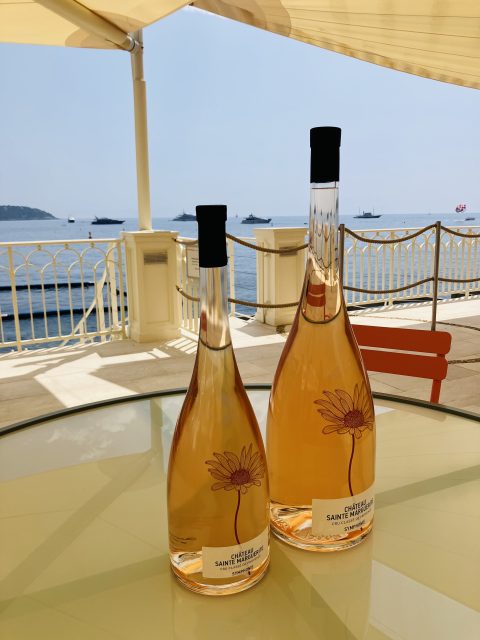
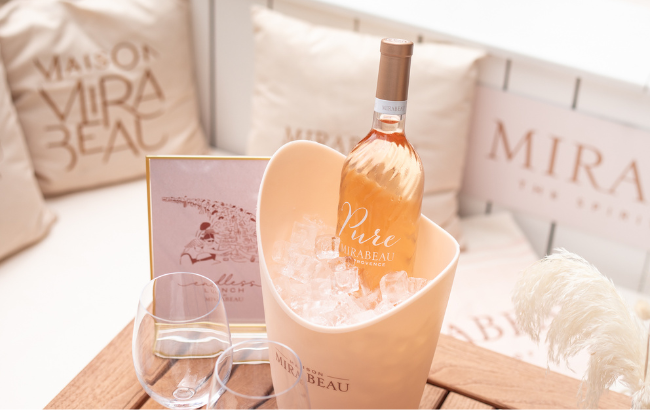
It’s here that Sainte Marguerite has agreed a seasonal residency for the next three years, with the brand’s Summer Kitchen offering bottles of its premium rosé paired with dishes made using produce sourced from the hotel’s impressive vegetable garden. Magnums of Sainte Marguerite gleam in enormous ice buckets while baskets full of Provençal blooms nod to the producer’s provenance.
The idea is to position Sainte Marguerite as a luxury rosé that fits in seamlessly with the affluent lifestyle of Monaco residents and tourists, where Gucci, Cartier and Chanel are par for the course. So how does the producer square this with the modest on-trade establishments it has been supplying in Provence for decades?
Price gap
A bottle of Fantastique, the flagship cuvée of the Sainte Marguerite collection, is priced at €17 per glass and €85 per bottle at the Hotel Monte Carlo Bay, compared with €60 a bottle at L’Estagnol in Bormes-les-Mimosas, for instance, one of the local Provence restaurants that has worked with the winery for years.
For context, the same bottle would set one back about €35 in the off-trade.
Yes, the wine costs more in Monaco, “but when you see the price of the property in Monaco, you understand”, says Olivier Fayard, owner of Château Sainte Marguerite. According to Fayard, buying bricks-and-mortar in Monaco in 2025 will set you back about €100,000 per square metre, or €170,000 per square metre if you want a sea-facing new build.
Unsurprisingly, large formats such as magnums and jeroboams sell well for Sainte Marguerite in its new Monaco space. “We don’t give the hotel more [than local Provence restaurants], but it sells more,” says Raphaëla Allouche, global communications and hospitality excellence director, Pernod Ricard.
Why choose Monaco for the brand’s long-term residency, over its home region Provence? “Sainte Marguerite was already strong locally but we didn’t have the capacity to expand internationally, and Monaco offers the best chance to do so,” explains Fayard. “There are lots of different nationalities visiting Monaco, which allows us to introduce our product to a lot of markets.”
And, on a practical note, Monaco is a mere 2.5 hour drive from Sainte Marguerite’s home in La Londe, Provence, making logistics that much smoother.
Expansion drive
When Pernod Ricard partnered with Sainte Marguerite, Fayard was buoyed by the French company’s promise to help his brand progress. “They said ‘we can help you to sell everywhere’, and I thought that sounded like a good deal,” he tells db.
Indeed, expansion was a key factor in the decision to join forces. “We work together to have exactly the right product for the market,” says Fayard. “It’s a very good partnership. Pernod Ricard is French-owned, they don’t come from somewhere else. It’s a good feeling when you speak the same language as your partner, it’s easier to understand each other.”
Sainte Marguerite presently exports to 10-15 countries “but our goal is to reach about 20,” says Fayard, revealing he is currently gearing up to enter the Thai market. The Provence winery currently has a 1 million bottle storage capacity and “we control everything,” he adds. “We own our harvest, our machines and equipment, we even do the bottling here.”
Since the 2024 vintage, the fruit that goes into Sainte Marguerite’s bottles is also 100% estate-grown, “which is why we can use the word château on the bottle,” explains Fayard.
Humble beginnings
It’s a long way from the brand’s humble beginnings when Fayard’s parents first put down roots in La Londe in 1977.
One of Sainte Marguerite’s first customers back then was L’Estagnol, an outdoor seafood establishment a stone’s throw from a sandy beach, where steaming bouillabaisse is cooked in a steel cauldron over roaring flames, and lobster served up with accompanying bibs to protect clothing. The restaurant remains a loyal customer to this day.
Partner Content
Speaking exclusively to db, Genevieve Cruchet, co-owner of L’Estagnol, recalls her first order, placed about 35 years ago with the producer. “It was six cases (36 bottles).”
As the restaurant has grown over the years, so too has her order, with L’Estagnol now requesting “around 250 cases (1,500 bottles) annually.”
I’m intrigued to know why Cruchet has continued to work with Sainte Marguerite for so many years, and whether she fears losing a sense of connection with this local supplier as it continues on its international expansion march.
“It’s a wonderful family. They are very nice people and we really like having them dine here regularly at the restaurant with three generations, now that they have grandchildren,” she says. “Sainte Marguerite is growing in big cities such as Monaco but remains at the same time very authentic.”
Quality check
Importantly, Cruchet feels that Sainte Marguerite “has kept the same level of quality even with its development.”
On this point, Fayard is resolute. “Everybody asks ‘how can you make a premium wine with 460ha vineyards? It’s too big.’ But we are not one massive vineyard. We have lots of different little parcels, and because of that we can make a very good wine with precision.”
Grenache lends the wines aromatic intensity and a silky texture while Cinsault brings a touch of delicacy and finesse, and Vermentino contributes pear, lemon and grapefruit flavours to the final blend.
The branding might be slicker, and the wines now sipped by F1 stars dripping in Rolexes, but Sainte Marguerite’s core values, Cruchet believes, remain the same.
“As long as the family continues to manage the winery, there is no reason that our relationship should change,” she says. “I think it’s fabulous to see how much they have been able to transmit their heritage [to a wider audience].”
Organically farmed
Of course, the brand’s success is not all down to Pernod Ricard’s marketing heft. The wines speak for themselves.
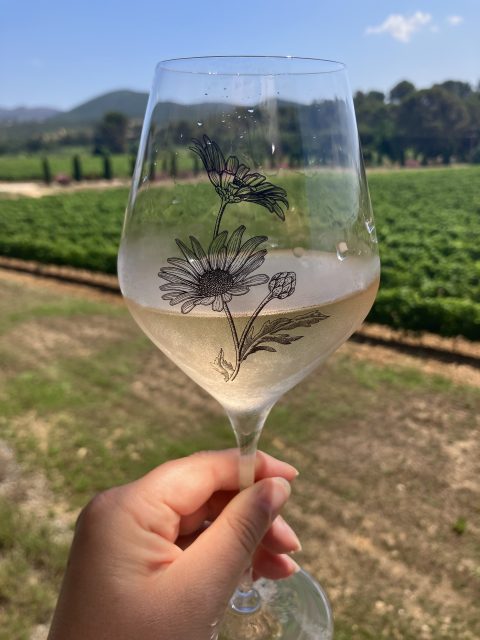
The grapes used to produce the collection’s top wine, Marguerite, are sourced exclusively from its 15ha, south-west facing and organically-farmed La Londe vineyard, comprising schist and mica schist soils, which sparkle in the relentless sun. According to Fayard, it shines “for 320 days of the year.”
“It never rains here. It’s the driest place in France,” he says.
For this reason, Sainte Marguerite irrigates twice a year, in the June to September period, “but at no other time” and “just enough to save the plant.”
The average vine age here is 15-20 years, but Sainte Marguerite recently embarked on an ambitious replanting project, grubbing up 100ha of vineyard, and replanting with new and healthier vines. It means the producer is currently operating at about 65% of its usual capacity, but it’s a hit Fayard was prepared to take in order to underwrite the future success of the business.
Special barrel toast
In the winery, grapes undergo maceration for between four and 16 hours to ensure the rosé keeps its pale hue, and a special barrel toast developed specifically for Sainte Marguerite by French cooperage Tonnellerie Bernard imparts a slight savoury, umami flavour to the producer’s Marguerite wine.
“Anyone who says they make barrel-aged rosé from Grenache and Cinsault is lying,” says Fayard. “They might put the Vermentino component in wood but not the other varieties as it would immediately make the wine too heavy.”
Sainte Marguerite makes a white version of its Fantastique wine (100% Vermentino), which also flirts with wood. “As soon as we taste cooked pineapple we know it’s ready to come out of the barrel,” says Fayard.
The family might have decades of winemaking expertise and strong ties to the local community, but its bottles are ready for a whole new world of consumers wheeling suites of Louis Vuitton luggage, leaping into jacuzzis on super-yacht sundecks, and sampling caviar with their cigars.
Related news
Driverless tractors to GPS planting: how one New Zealand winery is paving the road to success


