



Why the wines of the Canary Islands are ripe for the UK
Are the characterful wines of the Canary Islands poised to make significant inroads in the UK market? Louis Thomas reports.
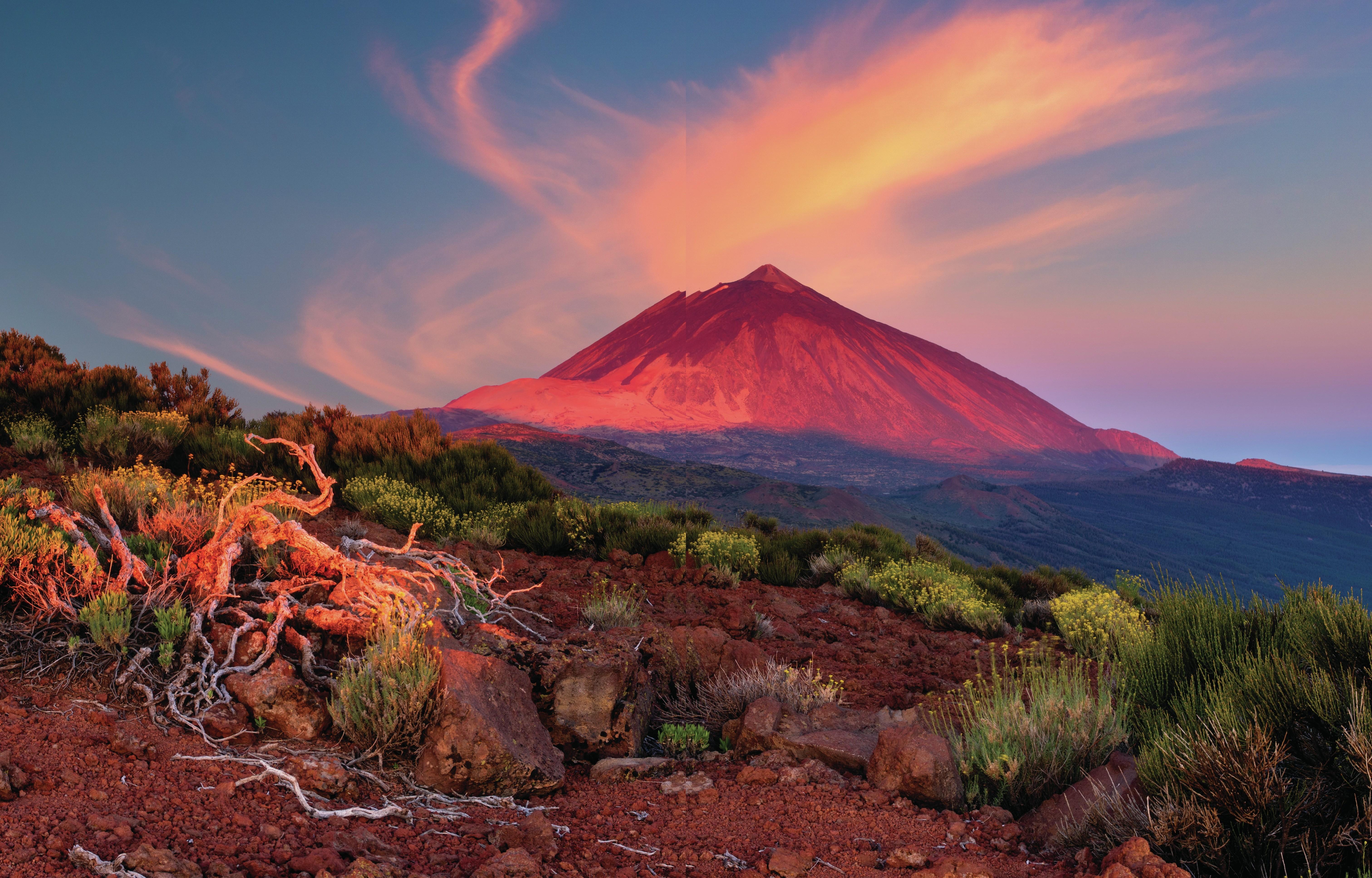
With its volcanic soils and abundance of local grape varieties, it is easy to see why certain wine fans have become intrigued by what is coming from the vineyards of the Canary Islands.
However, certainly when compared to other parts of Spain, this archipelago still seems fairly obscure as a wine region – its myriad of DOs, including five on Tenerife alone, are certainly far from household names for even the most wine-conscious Brits. Only around one-tenth of Canarian wine production is exported, and about one-tenth of that – or 1% of the total – currently goes to the UK.
The most obvious angle for getting UK consumers interested in the wines of the Canary Islands is tourism. One particular hotspot is the island of Lanzarote, the easternmost in the archipelago. Last year, 3,179,036 tourists visited Lanzarote, and 48% of these were from the UK, with 11% coming from Ireland and 10.2% from Spain.
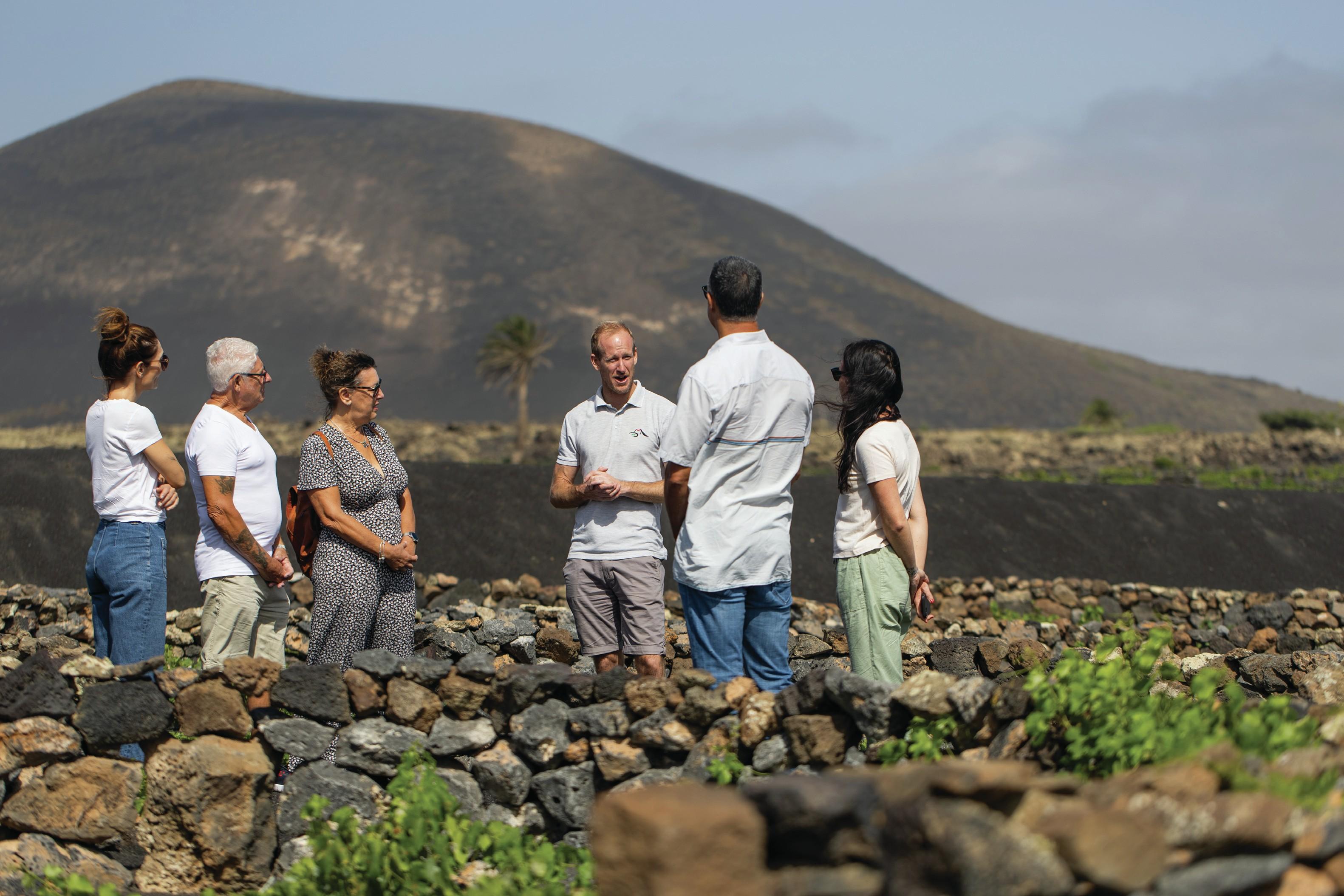
Where there are tourists there are opportunities for tour operators. One such business is Wine Tours Lanzarote, which offers group trips around the island’s volcanic vineyards, and tastings of the wines they produce.
Originally from Guernsey, Oliver Horton swapped the Channel Islands for the Canary Islands in 2013. He founded multi-activity company Lanzarote Outdoors SLU in 2017, which in turn spawned Wine Tours Lanzarote.
According to Horton, the island’s food and wine scene is “exploding”.
“We have even received guests from as far away as the US who have travelled specifically for the wines and vineyards of Lanzarote,” he explains. “In fact, never has it been such an exciting time to visit the island with this in mind. In the last few years alone, the number of DO wineries has expanded from 14 to more than 30 bodegas, with new artisan producers springing up with highly > skilled young Canarian winemakers at the heart of this movement.
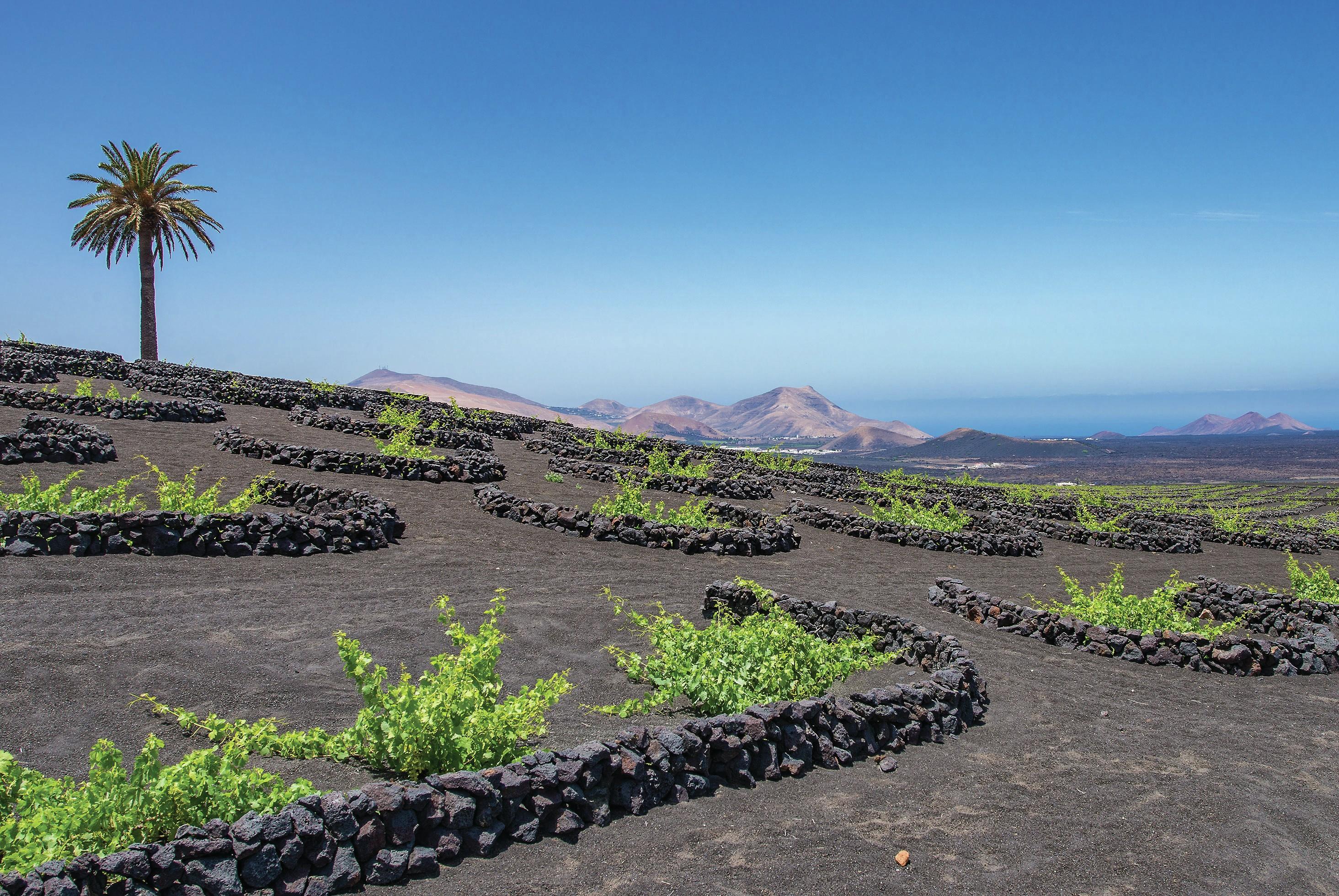
“This has gone hand-in-hand with the gastronomic scene, with fantastic restaurants highlighting local cuisine and locally sourced products, along with a number of rural hotels to support this shift in demand. Through our business, we know this is seen as an increasingly important attraction of the island, and has been an important strategy both for Turismo Lanzarote and the gastronomy promotion board, Saborea Lanzarote.”
Horton also reveals that, in recent years, there has been something of a demographic shift in terms of who is visiting the island, reporting: “I would say that since the pandemic there has been a clear trend towards a lower average age on the tours.”
Although there have been recent reports of hostility from residents of the island towards the influx of visitors, with protestors brandishing ‘Go Home Tourists!’ signs, Horton says that “this isn’t the case at all”, adding: “At no point has Lanzarote urged UK tourists to stay away. If this has been stated somewhere in the UK Press, it is a complete fabrication of the truth.”
For those not planning to pay a visit to the Canaries, their first point of contact with the islands’ oenological output may be via a restaurant wine list.
One high-profile London eatery to feature a wine from the archipelago in its selection is the Michelin-starred Spanish restaurant Sabor in Mayfair, which is part of the JKS Restaurants group. The wine in question is Táganan, a Listán Negro blend from Tenerife’s Envínate, with a 75cl bottle costing £98 at the restaurant.
JKS group wine buyer Emily Jago describes it as “one of the benchmark wines from Tenerife”.
“That reductive style of wine typical of Tenerife has become increasingly popular, and I think consumers have a better understanding of it when paired with a ‘volcanic soil’ origin story,” says Jago. “Táganan has a smokiness and crunchy red fruit character that’s great with chargrilled peppers, or Sabor’s classic suckling pig.”

Expressing a desire to list more Canary Islands wines on Sabor ’s list in the future, Jago suggests that the region’s wines in fact aren’t “under-appreciated or represented in restaurants with a serious wine programme”, and notes that producers such as Envínate “appear on a lot of restaurant lists, particularly those with a Spanish menu”.
“I also think that the trend towards drinking indigenous, lesser-known varieties has helped the popularity of island wines with guests,” she adds.
Football focus
There is one individual who may help to put the wines of this archipelago on the map for a wider UK consumer base. Born in Gran Canaria, ex-professional footballer David Silva cut his teeth in the Spanish league before transferring from Valencia to Manchester City in 2010. Over the next decade spent at the English club, he went on to win numerous accolades, including four Premier League titles and two FA Cups.
Although he retired from the beautiful game in 2023, Silva has not just been admiring his trophy collection, but rather he has been focusing on his own winery, located on his home island, Gran Canaria.
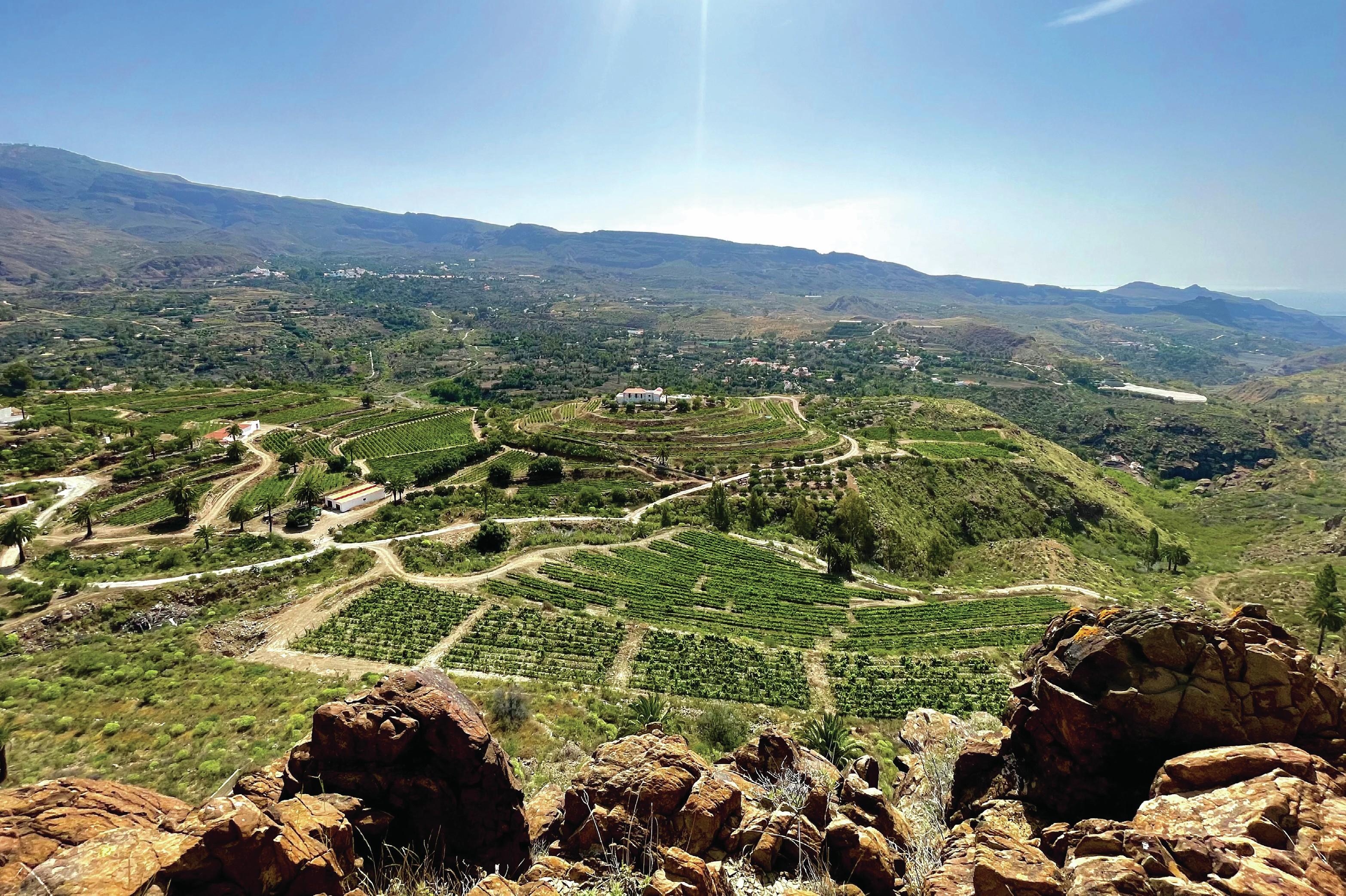
It was in 2019, while still playing for Manchester City, that Silva messaged experienced winemaker Jonatan García to congratulate him on one of the wines he had produced for Tenerife’s Suertes del Marqués. The two went on to strike up a friendship, and Silva then acquired Bodegas Tamerán on Gran Canaria.
Planted with local grape varieties including Verdello, Marmajuelo, Baboso Blanco, Vijariego Blanco, Malvasía Aromática, Malvasía Volcánica and Vijariego Negro, the six-hectare vineyard now produces more than half a dozen wines, as García explains. “Our wine range has seven different wines, five whites and two reds,” he says. “All the wines that I make have the goal of ageing, but this is a young cellar and our first vintage was in 2020. I feel that the wines are ready to drink sooner than those from other regions of the Canaries, but I’m expecting them to age well.”
Silva is, according to García, very hands-on with the winery’s operations. “He stays in the cellar during the whole harvest. He works in all the steps of the process – harvesting, winemaking and bottling. He knows everything that is happening in the cellar.”
However, while Silva’s star power might certainly help to persuade Brits – or at least Manchester City fans – to buy a bottle of Bodegas Tamerán, García expresses reluctance for the winery to become overly reliant on the former footballer ’s brand.
“We want the wines to be sold in the UK due to their quality, not because David is involved,” he explains, noting that Tamerán wines are also available in other parts of Europe, as well as the United States and Canada.
“Obviously [his fame] has an impact, but he doesn’t want to be used as a commercial claim,” García stresses. “In a market like the UK it is important to sell wine based on its quality – if you sell it based on a celebrity, it will end after just a few years.”
Although wine was the archipelago’s main export from the 16th to the 19th centuries, consumption became increasingly localised after this point.
Perhaps the real predicament that the Canary Islands’ wine industry faces when it comes to breaking into the UK market is sufficiency of supply.
Low production
Indigo Wine handles Bodegas Tamerán in the UK and has just started working with two projects from young winemaker Carmelo Santana: Bien de Altura in Gran Canaria and Jable de Tao in Lanzarote. Indigo founder Ben Henshaw says that “relatively low” yields and production volumes from Canarian wine regions create limitations, pointing out: “The general focus is on high-quality wines, and with that comes higher pricing. Also, stylistically, the best wines can have a lot of complexity and character, which can make them challenging for some palates.” Data from the Canary Islands Wine Growers and Wineries Association (AVIBO) suggests that annual production across the archipelago’s seven wineproducing islands is in the region of 7m litres. By contrast, Rioja produces around 40 times that amount, at between 280m and 300m litres per year.
Horton of Wine Tours Lanzarote notes: “It is true that we are seeing increasing demand and interest in Lanzarote wine from a variety of buyers.
However, with such low production and with 90% of wines consumed within the Canaries, the need and resources for promotion outside of Spain has historically been somewhat limited.” However, perhaps it is precisely that exclusivity that will ultimately make UKbased wine enthusiasts, rather than the average consumer, eager to get hold of Canary Island wines. JKS Restaurants’ Jago seems to think so, suggesting: “People understand that for the top island wines, these are coming from extreme viticultural conditions, tough soils and old vines with lower yields, and that scarcity helps build demand.”
Feature findings
• Only about 10% of Canary Islands wine is exported and, of that, only 1% comes to the UK – but rising tourist numbers could change that.
• Lanzarote alone attracted 3.2m visitors last year, and the island’s food and wine scene is booming, with the number of DO wineries increasing from 14 to more than 30.
• London restaurants are showing more interest in the islands’ wines, especially venues with serious wine programmes and Spanish menus.
• Canary Islands-born ex-footballer David Silva hit the headlines when he acquired Gran Canaria winery Bodegas Tamerán.
• One issue is supply: annual wine production in the islands is only about 7m litres, limiting the scope for international expansion.
Canarian wine in numbers
• The islands have 6,750ha under vine, 14% of the total area devoted to agriculture.
• Tenerife is the largest wine producer of the Canaries, with 3,193ha of vineyards, followed by Lanzarote with 2,055ha. Together they make up almost 80% of the total vineyard area in the Canary Islands.
• Plantings range from five metres above sea level to 1,689m.
• The most widely-planted variety is Listán Blanco, also known as Palomino Fino.
• There are 8,000 winegrowers and 320 wineries.
• The islands have 11 DOs: five in Tenerife, and separate ones for Lanzarote, La Palma, La Gomera, Gran Canaria and El Hierro. There is also an Islas Canarias PDO which covers all of the islands.
• According to data, taking the average production from 2016 to 2020, 3.974 million litres of white wine and 3.492 m litres of red wine are made annually.
Related news
The Big Interview: Santiago Mora
Ramón Bilbao joins exclusive club as it celebrates centenary


