



Why California’s winemakers are heading north
Premium California winegrowers are planting grapes further north, pushed on by global warming and the search for affordable terroirs, reports Roger Morris

What does gentrification look like in California’s wine country? It may mean that your newest neighbours who have moved into your region in recent years, either as owners of wineries or vineyards, have such well-recognised names as Duckhorn, Jackson Family, Silver Oak, Cakebread, Gallo, Littorai, Williams Selyem, Cliff Lede, and Roederer, the latter having moved in early when real estate was a lot cheaper.
It also means you must be growing grapes in California’s Anderson Valley.
Sooner or later, major wine producers in premium winegrowing areas around the world begin looking beyond their home base to expand production and sales, and to diversify their portfolios. As well as fresh terroir, there are usually financial incentives for this, often to support multi-generational family growth, or to meet the growing demands of outside investors.
For example, 50 or so years ago, Champagne producers looked beyond France and even Europe to the Americas and Australia as sources of more grapes to make bubblies with. Earlier in this century, major Rhône producers expanded into the Languedoc, while Burgundy négociants found additional opportunities in Beaujolais.
At first, prosperous wine families in Napa Valley and Sonoma County (itself having been somewhat colonised by Napa producers years earlier) first looked south to Paso Robles as a source of Bordeaux-style grapes, and more recently west to the colder Sonoma Coast for Burgundy varieties. Now, with global warming plumping up the sugar, and thus alcohol levels, larger, wealthier winegrowers in Napa and Sonoma have a new target for expansion – California’s North Country.
Principally, that means two counties – Mendocino, just north of Sonoma County along the Pacific Coast, and Lake, further inland, and abutting the northern edge of Napa County. Humboldt County, just north of Mendocino, has few wineries, and has drawn no major outside investors to date. But its time may yet arrive.
It should be noted that both Mendocino and Lake, both rural regions, have had wineries operating for decades, but most had received little outside attention. Their wines have generally been considered good value, but have not garnered high ratings or become targets for collectors.
As is usually the case in these situations, newcomers have been welcomed, as they draw attention to the region, raise its critical profile and increase property values. While the latter may be annoying for pioneer producers looking to expand, it is also good to know if you ever decide to sell, the price obtained may be even higher than you expected.
THE ALLURE OF MENDOCINO
Not too many years ago, Mendocino County was somewhat known to outsiders as a place where people grew marijuana illegally in its dense redwood forests, maintaining some of the same mystique that moonshiners once had.
Today, the legalisation of marijuana in most venues has robbed many pot growers of their income, but the county does have about 7,041 hectares of grapes – chiefly, but far from exclusively, Pinot Noir and Chardonnay – with 108 wineries and 15 appellations (AVAs) that cover coastal areas, inland valleys and numerous mountainsides.
The median vineyard size is 5.6ha, and the total value of the latest grape crop was about US$113 million (£91m).
By far the best known AVA, and the one with the mostsought-after vineyard land, is Anderson Valley, which lies mostly along the Navarro River and its tributaries and Highway 128, a popular route to reach rugged coastal towns and a few resorts.
Ted Lemon, owner with his wife, Heidi, of Littorai winery at Sebastopol, in Sonoma’s Russian River Valley, explains that winegrowing in the Anderson Valley evolved differently than in other regions, starting with the founding of Roederer Estate in 1982.
“From that point forward, Pinot Noir acreage began to increase dramatically,” he says, driving vineyard production to fit the needs of sparkling winemaking.
When he went looking for grapes in the early 1990s, he says: “Most were easily rejected because they were being farmed for the sparkling wine trade, so the clones were not appropriate for fine wine, or else ownership simply had no interest in such.” He did find 0.4ha of fruit owned by Rich Savoy, and today he says half of his Littorai production comes from five vineyards in Anderson Valley, the grapes being transported back his Sonoma winery.
Most of the origin stories for outside producers who flocked to the valley are similar. “During the 1990s, Dan and Margaret Duckhorn were looking for the next evolution of the brand,” says Neil Bernardi, vice-president and general manager of Duckhorn’s coastal brands. “They wanted a Pinot Noir, and went to areas in California and Oregon, but decided on Anderson Valley.”
The Duckhorns purchased 32ha of vineyards, and established their Goldeneye brand in 1996. In 2008, they constructed a modern winery.
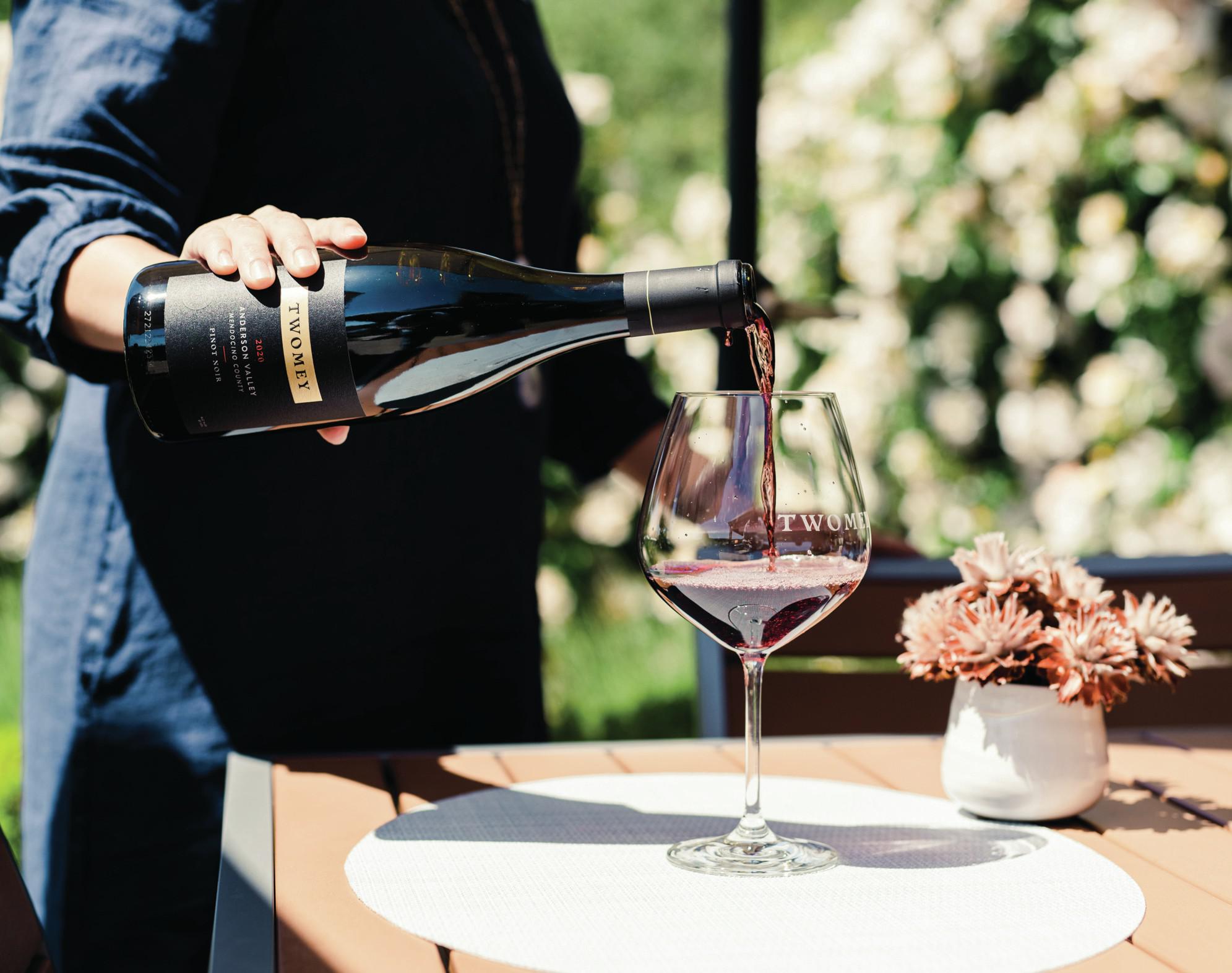
David Duncan’s family made Silver Oak Napa Valley and Alexander Valley Cabernet Sauvignon benchmark wines in the 1970s, and founded the Twomey brand for Pinot Noir in 1999. “We’re in what is called the deep end of Anderson Valley,” he says, referring to the narrow, cooler, heavily forested area closest to the coast. “The story I heard was that Dan Duckhorn thought it was too cold here to grown Pinot Noir and sold the vineyard. We’re glad he thought that way.”
Cakebread planted vineyards in Anderson Valley in the early 2000s, says Aaron Fishleder, vice-president of operations. “We grow everything ourselves,” he adds, “and we have space for a winery in the future, but for now everything is being made at our Rutherford facility.”
Sarah Wuethrich is winemaker at Maggy Hawk Vineyard in Anderson. “In 1994, Barbara Banke [of Jackson Family Wines] bought the winery, the vineyard was planted in 2000 with Pinot Noir, and the first vintage was 2007,” she says “The main focus was to create several different expressions of Pinot Noir.” A tasting room opened in 2022, a sign that tourism and DTC sales are increasing in the valley.
While Anderson Valley is a little warmer than Oregon’s Willamette Valley, another highly rated region for Burgundian grapes much farther north, it is a little cooler than most other areas in California.
“Anderson Valley is a transverse valley,” explains Bernardi, one that runs at sharp angles to the adjacent mountains, “which means it has cool nights and warms days, and the grapes have bright acidity, with ripe and dark flavours. The wines taste like red cherries with brambles, while, for comparison, those from Sonoma Coast are spicier with blue fruit.”
Lemon says when he first visited the valley in 1987 to taste wines, he thought there was “a spark” to its Pinots. “The Pinot Noirs of Anderson Valley combine the tannin structure of the Sonoma Coast with the darker fruit aromatics of the Russian River Valley,” he says. But he cautions: “There is a great deal of variation in wine expression from one vineyard site to another, hillsides versus hilltops versus valley floor, much of which is actually rolling hills.”
INCREDIBLE DIVERSITY
Wuethrich, who is also president of Anderson Valley Winegrowers Association, agrees. “Fundamentally, we believe in the difference of our regions, and the special terroirs of our vineyard sites. The greatest thing that sets Anderson Valley apart from other winegrowing regions is the incredible diversity in a relatively small area. We’re about 15 miles long, and one to two miles wide.”
While Chardonnay and Sauvignon Blanc have received high praise, most of the outside interest has remained with the red grape. Cakebread and Duckhorm only make Napa Valley Chardonnay. Duncan says: “We’ve absolutely thought of Chardonnay, and we think it could make a great wine there, but we don’t want to pull up any of the Pinot we have planted.” Littorai makes several Chardonnays, but only from Sonoma County. However, FEL, the Anderson Valley brand of Napa-based Cliff Lede, does make multiple Chardonnays there.
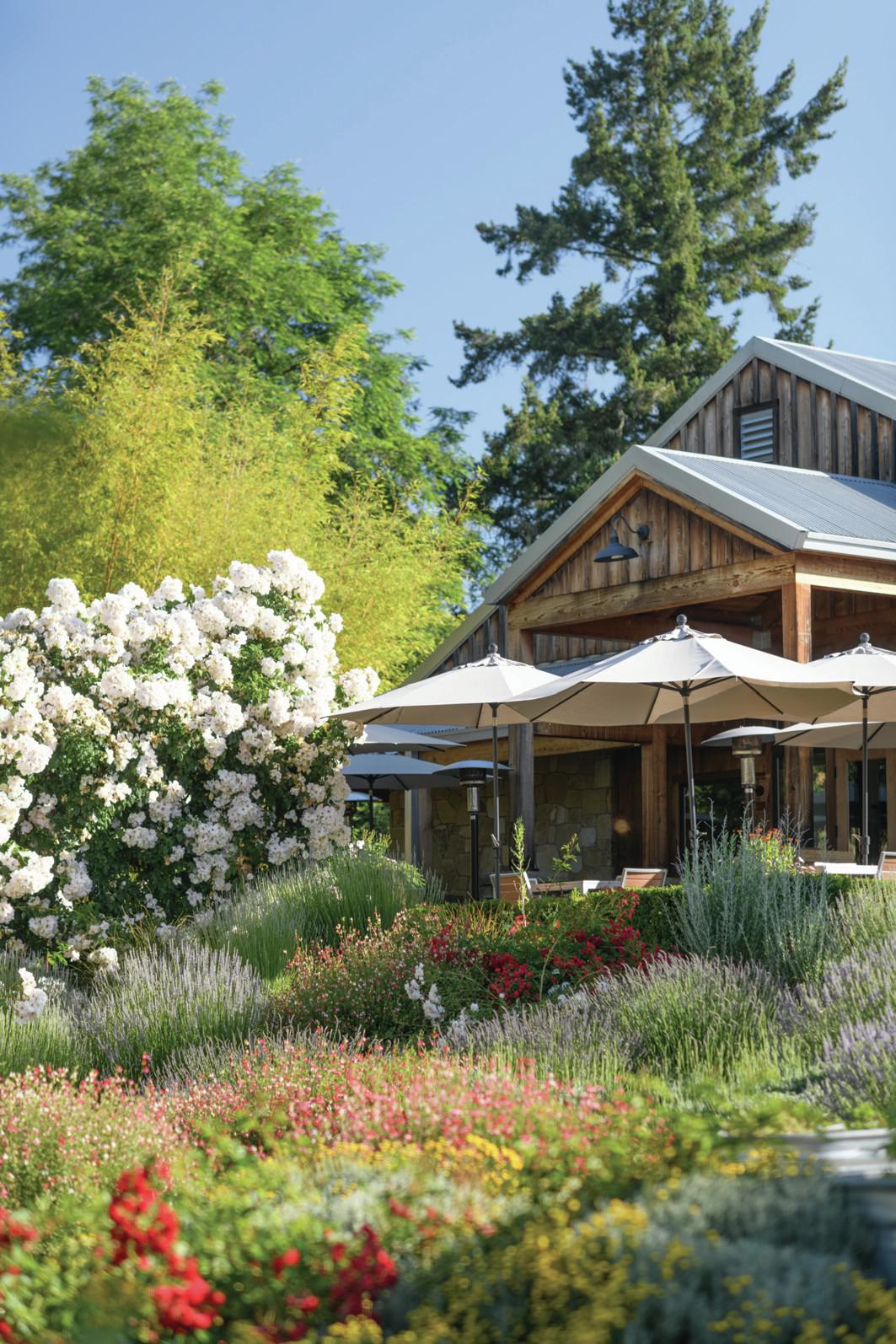
“I’ve made a Chardonnay from our high-elevation estate vineyard, Skycrest, since 2018,” Wuethrich says, “and I’m excited to introduce a sister Chardonnay, and perhaps a sparkling wine, in the near future. In May 2022, we grafted five acres to three clones of Chardonnay at the Maggy Hawk Vineyard.”
Another sign of their reputation for quality is that many Mendocino wines are reaching the export market as well, especially the UK, says the California Wine Institute’s London-based Damien Jackman.
“Wanderlust Wines looks for small, exciting new producers and have taken on Baxter from Mendocino. The cool climate allows Baxter to make wines like Nebbiolo, Carignan, and Montepulciano, which are not hugely planted in most parts of California.”
He says: “Notwithstanding the cool-climate focus on Mendocino these days, they can also make wonderful wines from varieties that are normally associated with warmer regions, such as Zinfandel. Fells imports an excellent example from Edmeades.”
Another UK importer, Roberson Wines, is also keen on Mendocino. “It’s a region that has been in the shadow of Sonoma and Napa for some time, but I think we are seeing more producers venturing further north in recent years, perhaps in part due to climate change, and also potentially lower land, fruit, and production costs,” says buyer Keith Kirkpatrick. “It has the soils and climate to produce really stunning, elegant, and nuanced wines that often come in at a lower price point than their peers in other regions, in particular the Pinot Noirs. So we have seen quite an uptick in interest in these wines from consumers.”
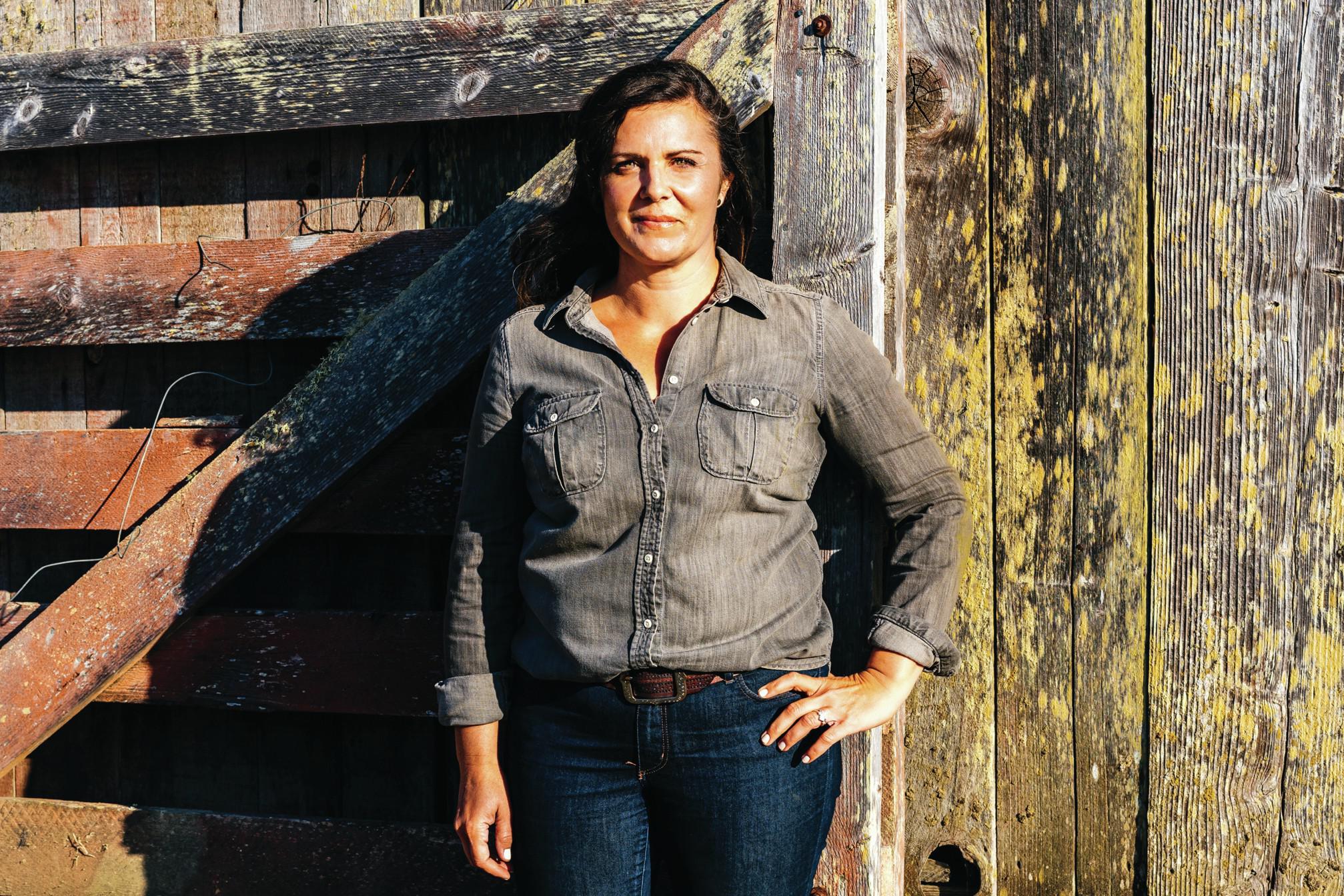
Gatekeeper: Sarah Wuerthrich, winemaker at Maggy Hawk Vineyard
Will Anderson Valley grasp the type of reputation for Pinot Noir and Chardonnay as Napa has for Cabernet? The one deterrent, everyone says, is that it’s so small, limiting production. “In the early days, land price was also a good attraction,” Bernardi says, “but most of the land has now been bought up.”
Perhaps, if that happens, Anderson Valley winemakers, both those from outside and long-time local pioneers, will discover Mendocino’s 14 other AVAs.
A part of Lake County was once the northern section of Napa County, and it was a major wine producer in the late 1800s and early 1900s before Prohibition. After Prohibition, it did not get off to the fast start that first Napa and then Sonoma did. Today, the mountainous county still has its allure for red wine producers, especially for Cabernet Sauvignon and Zinfandel, and especially from the county’s Red Hills AVA. Today, Lake County has seven viticultural areas, about 30 wineries and 3,400ha of winegrape production.
“We own a large vineyard, Snow’s Lake in Red Hills,” says Mairead Quinn, E. & J. Gallo’s head of marketing communications in Europe, “and we have more than 320ha under vine with Cabernet Franc, Cabernet Sauvignon, Malbec, and Merlot there.”
Napa County’s Andy Beckstoffer is northern California’s best-known source of premium grapes for many top winemakers, with vineyards in both Mendocino – mainly Chardonnay – and Lake counties, in addition to Napa Valley. In total, he has about 1,618ha of northern California vineyards, about 1,214ha planted with Cabernet Sauvignon.
Beckstoffer began planting vineyards in the 1990s, and helped form the Red Hills AVA in 2004. He now has about 809ha there, all but 16ha of it Cabernet.
Two things different about his Lake County plantings, he says, are the altitude and the hillside slopes.
“I never planted mountainside in Napa because the slope soils are streaky due to erosion, so you can’t get any uniformity,” he says. “In Lake County, all the hillside soils are deep and uniform because they were all blasted there from [a long-extinct] volcano. So my vineyards in the Red Hills start at 1,400 feet and can go up to 2,200ft, while in Napa they are 300ft-400ft elevation.”
Lake County had a bad reputation for its vineyards when he first planted there, Beckstoffer says. “It reminds me of when we started in Napa in the 1970s,” he says. “Back then, it wasn’t wine country, and it wasn’t Cabernet country. We still have to build a brand in Lake County, because it’s known mainly for recreation because of the lake. But people ask, ‘Is it the next Napa Valley?’ No, there isn’t another Napa Valley.”
So far, Beckstoffer is doing his best to create a Lake County brand, through selling Red Hill grapes to a clientele that includes Duckhorn, Bogle, Gallo, Francis Coppola and Hess Select. A few other outside producers make Lake County varietal wines, including Beringer, which does a Zinfandel.
In fact, Bryan Kane, co-owner of Sol Rouge winery in the Red Hills, which produces quality Bordeaux and Rhône red types, makes a tongue-in-cheek assessment of the situation.
Under California regulations, up to 25% of a wine can come from grapes from outside of the AVA on its label. Kane says: “A quarter of Napa Valley reds are actually from Lake County.”
LIMITS OF GROWTH
Whether or not Anderson Valley will become California’s Burgundy to Napa Valley’s Bordeaux is a scenario to be played out over the next several years, and many producers from other coolweather Pinot Noir and Chardonnay along the state’s north and south coasts would contest any such claim.
It is certainly reasonable to predict that Lake County will grow in stature as a producer of Cabernet Sauvignon grapes. Except for Sonoma’s Alexander Valley, no area outside of Napa Valley has the same stellar reputation for Cabernet, so growers in Napa will continue to look elsewhere if they are to make highquality but affordable Cabs at under US$100 a bottle. Lake County is the easiest place to find such a place. Eventually, more will buy their own vineyards there, and some will build wineries, and open tasting rooms.
At present, no one seems to be looking farther north beyond these two counties. While Humboldt has a small handful of rural producers, almost none of the county’s wines are distributed far beyond its borders. So global warming as an incentive to plant father north has, it appears, for the near future, reached its limits in California.
Related news
Here’s why ProWine’s 2026 Asia fairs deserve a spot on your calendar
'Consumers deserve to know what they're buying': Essex police seize 67,000 bottles of fake wine


