



Wine analysis
WHILE THERE is undoubtedly an art to winemaking, the past 20 years has seen a technological boom that is increasingly enabling winemakers to experiment, and push the limits of science in the pursuit of excellent quality.
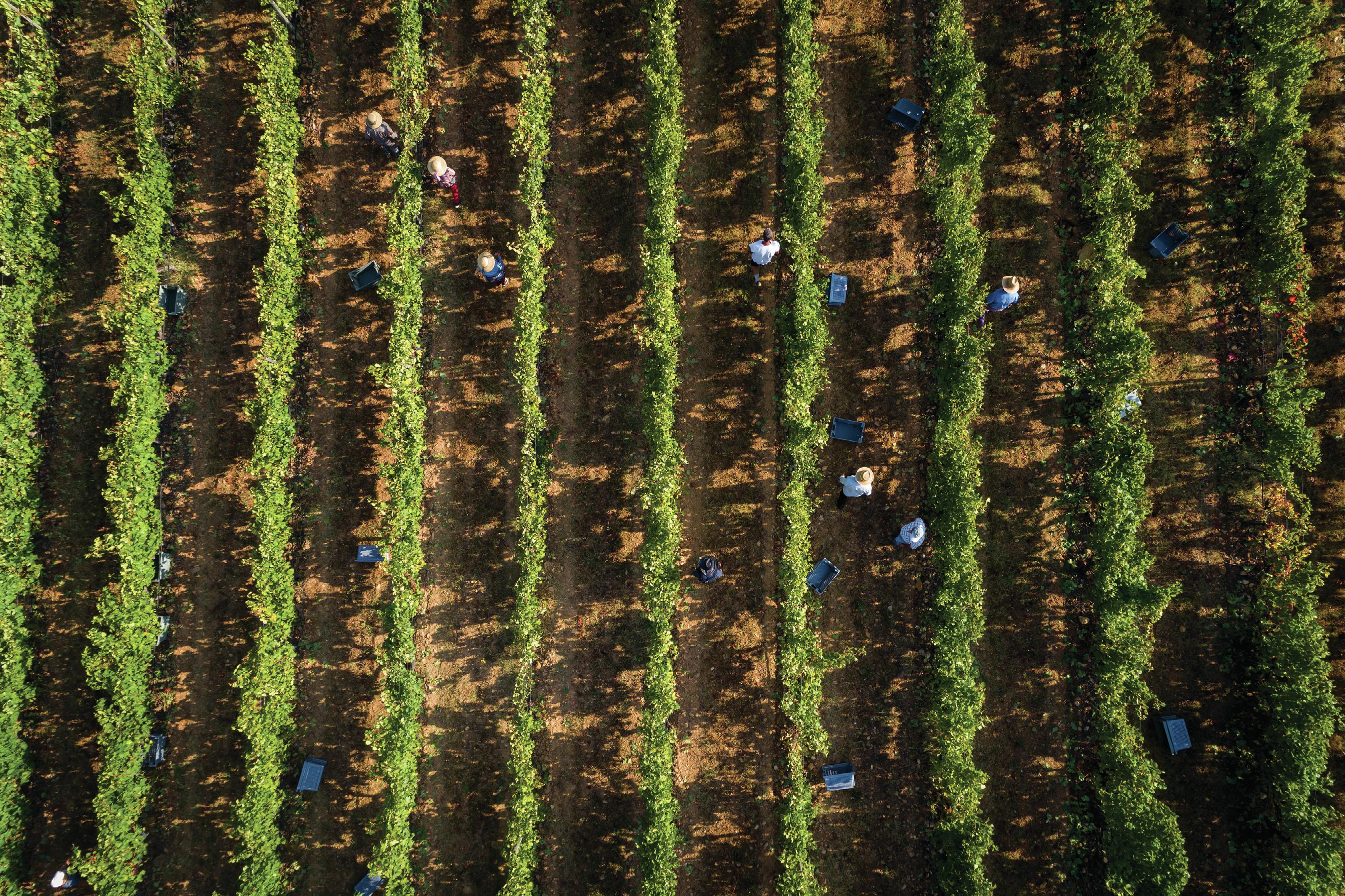
The biggest innovation in wine-quality control and analytics in recent years has centred on the online control and monitoring of the fermentative processes, according to Christophe Riou, director of the Institute of Vine and Wine, and president of the Scientific and Technical Committee of Vinitech-Sifel, both in Bordeaux, along with the deployment of new technologies at all stages of work in the cellar.
“These improve the control of oenological processes, and allow the anticipation of possible problems, which enables the implementation of preventive actions,” he explains. “This not only avoids the need for curative action, but provides improvements in control and ergonomics, data collection, and the use of analysis to allow a better control and optimisation of practices.”
These innovations allow winemakers to adapt better to the grapes they have harvested, and guide the winemaking itself to make the best use of the raw materials and a better-defined product. As oenologist Matteo Bagnoli, from Italian estate Banfi, explains: “Constant monitoring allows us to follow the vinification correctly, and to always monitor the fermentation progress from an oenological and, above all, microbiological point of view.”
Part of the vision of Danish analytics company FOSS is “to secure predictable quality and insight”, by offering a variety of solutions for winemakers.
This varies, from its top-of-the-range rapid-testing laboratory-grade equipment to an ‘out of the box’ table-top solution for smaller producers – the latest of which, OenoFoss2, hit the market in November. It is capable of analysing a range of key parameters in minutes.
Christina Lindstorff, FOSS’s head of business unit, wine and beer, explains that its equipment gives winemakers the tools and insights they need to get the best from the harvest – whether that’s deciding when to pick the grapes based not only on sugar content and the healthiness of the grape, but also on a detailed analysis of nitrogen levels, pH levels, total acidity, and the malic acid in the grape, to when to stop malolactic fermentation or when to bottle. Wines can be analysed quickly at any stage of the process, during initial or malolactic fermentation, or during blending trials. This ensures greater consistency across multiple vinifications and blends, as well as quicker decision-making, and allows for correction at any stage of the process.
“Timely and reliable information that supports the traditional art of winemaking is increasingly important for maintaining and improving wine quality in an era of challenging growing conditions and evolving consumer tastes,” Lindstorff says.
But its not just analysis – winemakers are increasingly using online control systems for fermentation, barrel ageing conditions, and cellar operations such as traceability, equipment controlling flow rates, pumps, as well as thermal regulation.
Bertrand Léon, technical director at Provence’s Château d’Esclans, argues that while the greatest stride in precision cooling was made 15 years ago, with the introduction of Inertys presses (pressing under controlled atmosphere ) – along with harvest receptions that better respect the grapes, and more efficient optical sorting tables, the tech continues to evolve to provide even greater precision.
“New generations of wine pumps have appeared which better preserve the must or the wine at each stage of its development during pumping,” he says.
KEY ELEMENT
For Léon, controlling the temperatures at each stage of vinification and ageing is a key element in the production of rosé wines. The cooling starts as soon as the grapes arrive in the cellar, and is repeated at critical stages in the winemaking process. “The aim is to limit oxidative phenomena, which can result in wines that lack sharpness and aromatics,” he says.
Initially a tubular heat exchanger is used to lower the grapes to a set temperature before pressing, and once the juice has been freshly squeezed, the must is then kept in vats at a temperature below 10°C for 48 hours, to allow the lees to settle before being removed.
“The quality of the settling is essential to making wines of great precision,” Léon says. Temperature is then controlled during the alcoholic fermentation, and then again during ageing, to ensure the wines stay fresh and lively. However, simply having the best tools to be able to make the right decisions at each stage is not enough – the winemaker needs to know the personality of each parcel and the individual terroir, and work accordingly, rather than using a one-size-fits all model.
“We must adapt the vinification to each vintage and not use a uniform ‘recipe’,” Léon argues.
“In the same spirit, each batch must be vinified individually: we need to taste, gauge the potential and act accordingly to extract its full potential.”
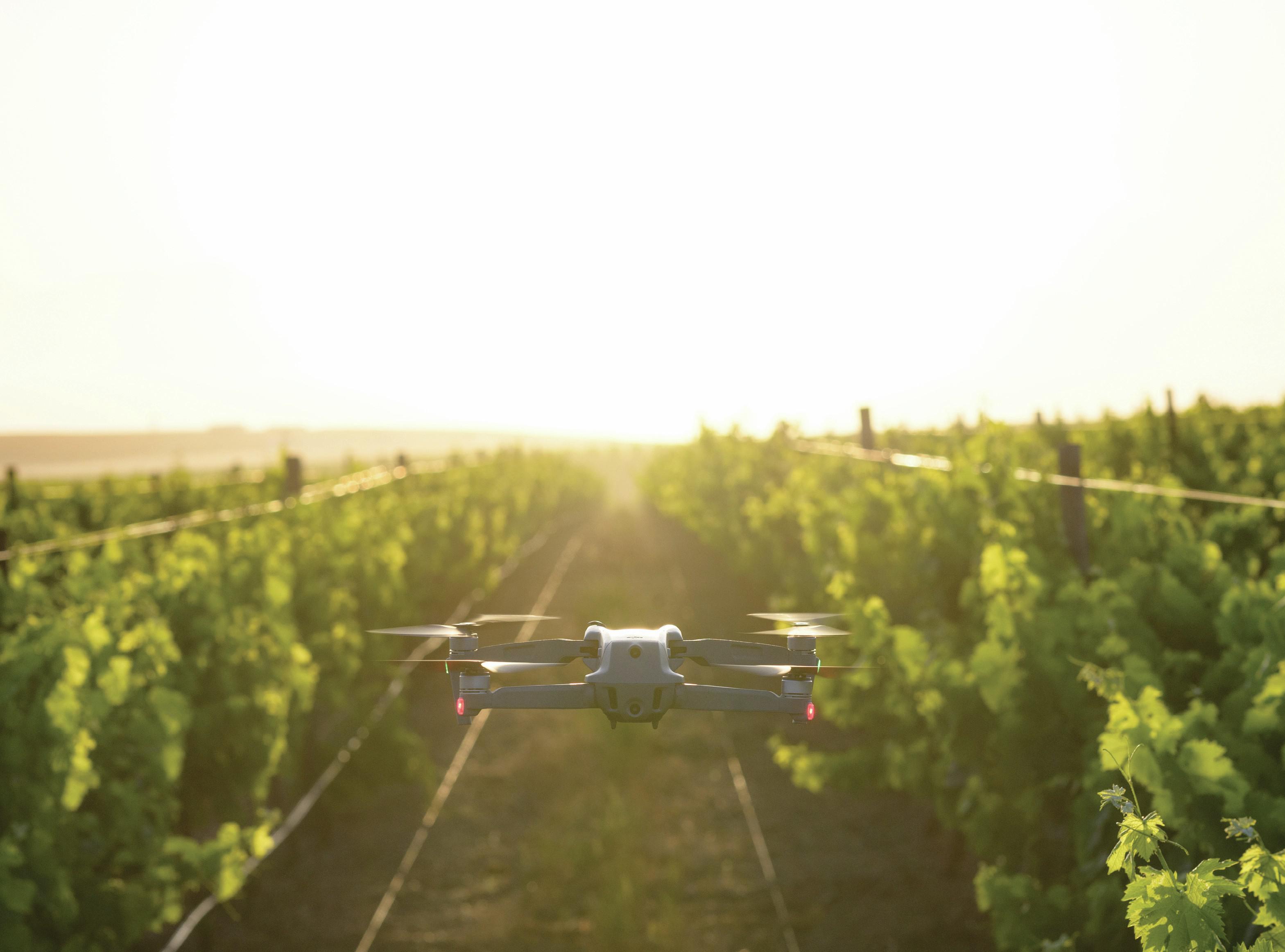
But how exactly do you get to better know each parcel and batch? The answer, it seems, lies in the rise of new tech in the vineyard, from remote sensors deployed to monitor growth and crop yields, to using drones, robots and satellites to give viticulturalists the best data to work from.
Ian Beecher-Jones, precision agritechnologist, farming consultant, and founder-owner of JoJo’s vineyard in Henley-on-Thames in the UK, has been developing a way of capturing a ‘digital vineyard’ that will allow the use of precision viticulture techniques with a real-world vineyard. Beecher-Jones has used surveying technology’s real-time kinematic positioning to create a hyperlocal GPS grid of the vineyard, showing every post and every vine.
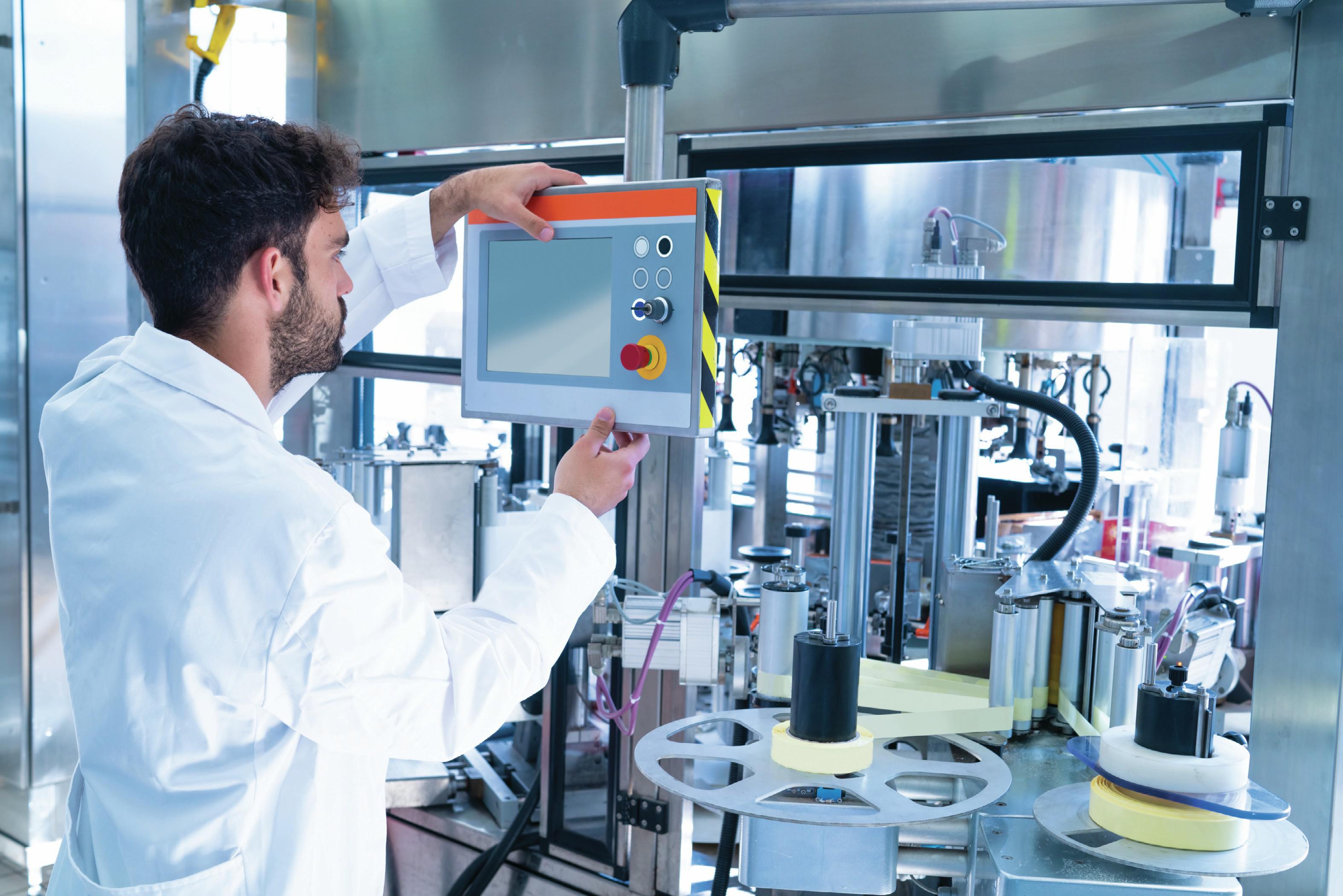
Data on the soil, canopy density and thickness will be incorporated to build up a highly accurate and granular picture of the vineyard – which will enable growers to take on robotics, drones, or tractor steering services. It will also show what is actually happening to the vines themselves so growers can apply targeting solutions if necessary. “It has the potential to revolutionise the ability for tech providers to work with vineyards, orchards, or even strawberry growers, because it’s the grower who owns the infrastructure, rather than a commercial provider doing it for them and keeping it,” Beecher-Jones told the drinks business.
The application of tech for maintaining quality is huge – a New Zealand forensic science business, Oritain, for example, has launched a forensic ‘fingerprint’ for wine that can scientifically pinpoint – down to a single vineyard block – where a wine comes from, a key step in providing rocksolid proof of provenance, which could be interesting for fine wine producers, as well as individual appellations or PGIs.
But while technology is ramping up, one key area of progress to boost quality, as identified by Riou, is decidedly less high-tech, with winemakers increasingly experimenting with styles and materials for tanks and fermentation vessels. “The major evolution is particularly prominent in the sizes and styles of containers and tanks such as spherical tanks and glass tanks, and greater temperature control,” he says. “The increasing diversity in terms of material and shape offers the possibilities of working the wine differently.”
So while concrete eggs have become increasingly popular since they were established by Michel Chapoutier and concrete-tank company Nomblot more than 20 years ago – they have been adopted by producers including Telmo Rodríguez from Bodega Lanzaga in Rioja,
Gerard Bértrand in the south of France, John and Rory Williams at Frog’s Leap in California, as well as Château Cheval Blanc in St-Émilion and Masseto in Tuscany among countless others.
Producers are increasingly exploring other materials, and the different qualities they can bring to the wine. For example, more recent experimentation with glass tanks and globes is offering winemakers a fresh perspective, with companies such as Bordeaux-based Wineglobe paving the way.
Glass as a medium contrasts directly with concrete eggs, whose very breathability allows some oxygen to come into contact with the wine to soften the tannins, without imparting the oakiness of wood. But it is the non-permeable quality of glass that is prized here – helping to maintain a wine’s purity, keep the fruit’s freshness, and maintain the grapes’ typicity.
It is something that renowned French winemaker and consultant Stéphane Derenoncourt at Domaine de l’A uses for his red and white wines, arguing that their very neutrality from being airtight enables the winemaker to understand the wine better, and to make decisions about fermenting with indigenous yeasts, or by ageing, for example.
“Our quest is to obtain a wine that is as pure as possible, and as close to the original qualities of the grapes,” he is quoted as saying on the Wineglobe website. The adventure of ageing the reds is enthralling with the Wineglobe. It challenges all the definite views acquired through classical ageing in wood, as well as in vats or amphorae. The notion of time becomes essential then.” An additional benefit is one of hygiene – they are easy to clean and can help the winemaker reduce their reliance on sulphur dioxide.
The downside however, is cost – they are currently around four times more expensive to buy than an oak barrel. The past few years have undoubtedly seen great experimentation with existing technology, as well as the evolution of new tech and materials both in the vineyard and the winery. As a result, there is a growing number of tools at the disposal of winemakers to support and improve the quality of their wines – without removing the magic of winemaking.
Key areas of innovation
• The past 20 years has seen a technological boom that is enabling winemakers to experiment, and push the limits of science in the pursuit of excellent quality.
• Innovations allow winemakers to adapt better to the grapes they have harvested, and guide the winemaking itself to make the best use of the raw materials and a better-defined product.
• Online control systems of fermentations, barrel ageing conditions, cellar operations (traceability, equipment controlling flow rates, pumps), and the process of thermal regulation.
• Sensors for grape selection: onboard, pedestrian; example optical sorting, plot selection.
• Microbiological/sanitary control of equipment (cleaning of bariques) and products (monitoring of populations of microorganisms and the, evaluation of the risk of occurrence).
• Increased support for the sensory description of wines (data entry, archiving, reporting).
Related news
How can whisky makers prepare for UK-India free trade deal?
The Big Interview: Philip Gregan, CEO, New Zealand Winegrowers


