



The Big Interview: Sebastián Labbé
Santa Rita’s winemaker, Sebastián Labbé, oversees the producer’s world-class Casa Real wine. Jessica Mason finds out how a surfer with a penchant for travel came to create one of the globe’s top expressions.
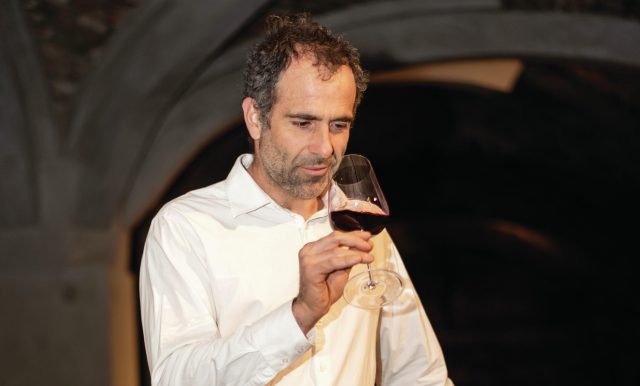
Sebastián Labbé became a part of Santa Rita Estates in 2005, taking over the winemaker role for its ultra-premium wines, including Casa Real, in 2017. Naturally, he was daunted, but, as he explains, experience and adventure are closely linked. And life is all about “timing and enjoyment”. So too, it seems, is the business of winemaking.
“Initially, when finishing school, I knew for sure that I really wanted to do something where I enjoyed my day-today work,” says Labbé. “I’m very happy to have achieved that.”
He describes how his travels initially took him to New Zealand and Australia, both trips changing his outlook, and teaching him a lot. “In New Zealand, I began working at a small restaurant. There, I met a sommelier, and he knew a lot about Chilean wines and the different areas where they’re made. We had a really good relationship because we were both keen on ocean sports, especially surfing. We began spending extra time together after shifts, just tasting wine and discussing it. At that time, wine was something that I enjoyed, but it wasn’t yet a big part of my life.”
Later, Labbé “got a part-time job at Margrain Vineyard – asmall boutique winery in the Martinborough appellation in New Zealand’s North Island. This offered him “the opportunity to do pretty much a bit of everything”. Then he enrolled into a viticulture and oenology course at Lincoln University in Christchurch. It was then that Labbé came to realise that being a winemaker was “a fantastic and magical job, where you could work on the agriculture side, then be like God and transform all of that into wine by doing all of the technical and incredibly scientific things in the lab”.
Travelling and learning felt like part of the role. He explains: “When I went to Australia, I went to Tyrrell’s Wines in the Hunter Valley, and stayed there for around six months.” His interest was piqued, and he wanted to see what else was available in the wine world.
Labbé is aware how diligent learning, listening to others, and seeing all sides of the industry can shape insight and experience. He is constantly looking at the bigger picture, and recognising best practice in all its forms. He insists: “It gave me a lot of tools that I still use today. It shaped the way I now think and plan things as a winegrower.”
Even though he loved his time in Australia and New Zealand, Labbé admits that Chile was calling him home. “I’d met my wife, Maria, in New Zealand, but over time, we decided to move back to Chile, and that’s how the role at Santa Rita Estates came about.” Labbé admits he always knew that “the most important vineyards were planted in Alto Jahuel [where the grapes used for Santa Rita’s iconic Casa Real wine are grown]”.
Despite being flexible in winemaking styles, he says “in the beginning, it was challenging to adapt to all the grape varieties that had been established for centuries, because there was a lot of tradition and old-school influence. It gave me a completely different view and added even more knowledge and experience. All of it, really, was great.”
He has had the chance to learn from some of the best people in the business, like Pilar González, head winemaker at Santa Rita’s sister winery Viña Carmen. Labbé describes her as being very talented, and says she taught him a lot. He reveals that he also studied the work of the company’s previous winemaker Alvaro Espinoza, who he describes as a “biodynamic and organic farming viticultural guru in Chile”.
All this learning ultimately led to Labbé becoming responsible for Santa Rita Estate’s ultra-premium wine portfolio, and for nurturing its Casa Real wine, an opportunity he describes as a true leap of faith. He admits that the timing was fundamental. “Sometimes things come at the right time,” he says. “There was a boat that needed a skipper, and I jumped and caught the rudder. I think it worked quite well but it was a big challenge that I accepted humbly. I mean, it was massive initially, and it really scared me to be looking after Casa Real as one of the most iconic wines from Chile. There is such a lot of heritage and history, so it wasn’t an easy decision. But I took the chance and said: ‘OK, come on, let’s give it a go’.”
Labbé explains that “because it was a big challenge and still is, every time that we’re bottling a new vintage of Casa Real, it’s a lot of pressure”. But, he insists that pressure can also be a good thing because it keeps you on your toes, adding that “a great wine needs someone who cares enough to get things right.”
According to Labbé, environment and terroir play big roles in Santa Rita’s future, but he observes that the winery “has a perfect combination” from a climatic point of view, being planted at the foothills of the Andes ranges having an advantageous impact on the wine. “These are wines that have the mountain as the soul of the wine, so that influence from the Andes ranges and the proximity to the Maipo River is also a key factor,” says Labbé.
He refers to how Casa Real is “a wine that is grown over gravelly soils [that has] a number of rounded stones, and very good drainage. It is around four kilometres from the base of the Maipo river, meaning it gets the gravelly part of the soil. But because it’s not a very new terroir you do get some clay components, especially down in the lower part of the soil.”
Partner Content

How would he describe Casa Real? “It is a wine that has a lot of elegance and finesse, but also structure. It has a super Cabernet base but with all the red fruit and all the cherry.
“It is very juicy and has delicate tannins, which feel soft and gentle, but still carry a lot of power, showing that they can age very well. It is a wine that shows its real character when it ages. It has some cedar notes and tobacco, but still maintains that kind of a solid, structured backbone.”
According to Labbé, “the objective was always for Santa Rita to make one of the top wines of the world”. He has “tried to keep that message” through his work but his main challenge and focus right now is the establishment of Santa Rita’s newest ultra-premium vineyards.
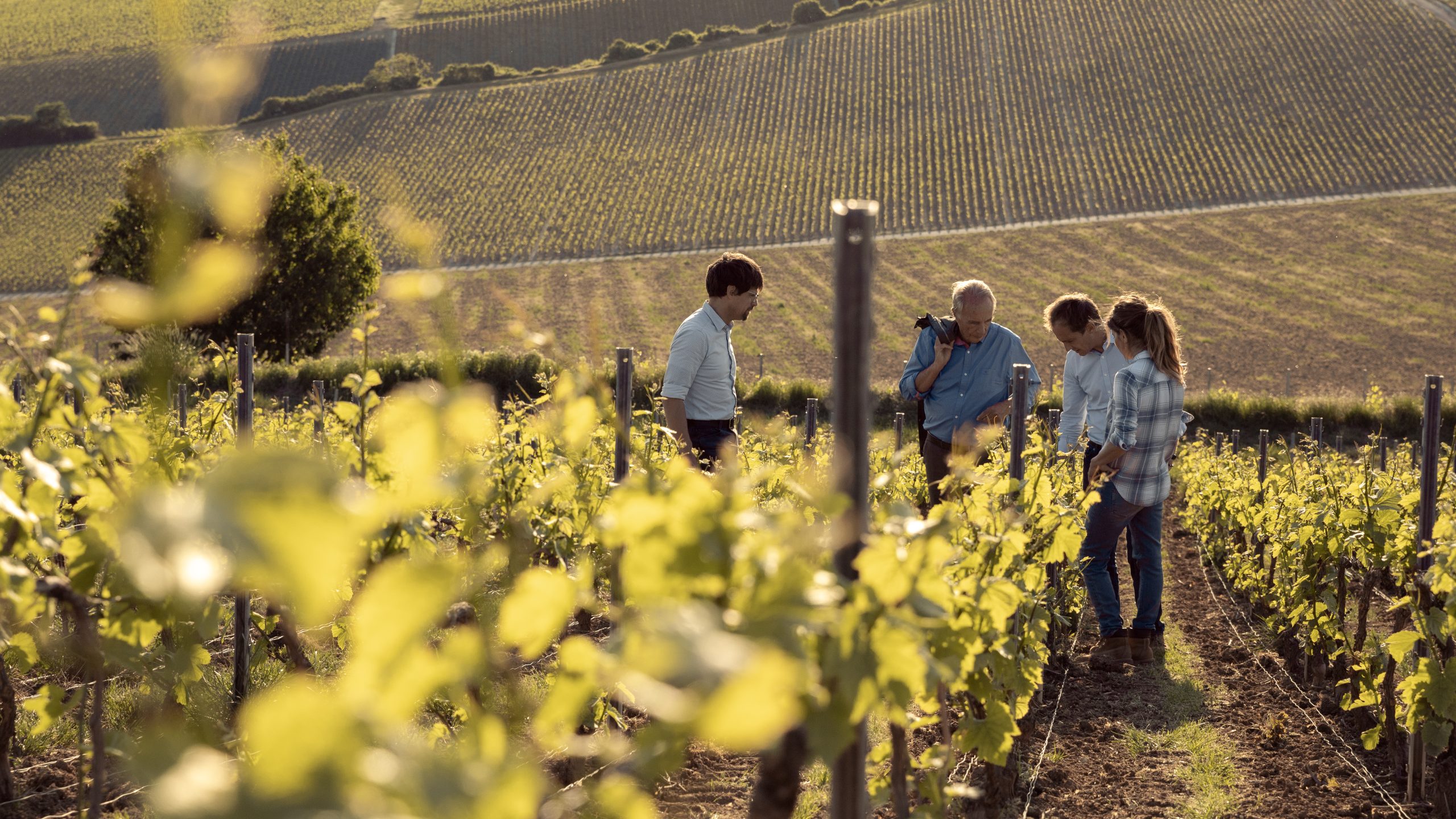
He explains: “We’re planting a lot of new vineyards for the Casa Real project, and also for other ones in Alto Jahuel. We have planted the vast majority of our vineyards there. My main objective has been to make sure that those vineyards are well established.
In terms of the future of Casa Real, Labbé says that he and his team have “been working with the massal selections, and replanting some of the vineyards”, which are over 50 years old, and where the core of Casa Real originates.
“It is 20 hectares, which amounts to two blocks. We have further subdivided those into around 25 parcels.”
The plans may be to expand, but this will happen gradually, says Labbé, and in a controlled way so that quality remains paramount.
“I want us to get to 120 acres (48.5ha),” says Labbé. “We are going to grow six times. The main role, as I see it, is, how do I replicate that consistency of quality but growing on a bigger surface?”
Labbé maintains that the task is not insurmountable because there is great promise in the future bottlings that will be released by Santa Rita. The vintages that have blended in grapes from some of the new vines are already proving to be outstanding in their own right.
“Already, I’m blown away by the quality I have seen since 2021, for example. Santa Rita started planting those vineyards in 2009. Then, in 2015, the first crop of those vineyards was for 2020. But in 2021, I started noticing, especially in blind tastings, that there was something great from the new vineyards. That makes me very happy,” he beams.
This good fortune is something that Labbé calls the ‘cascade effect’ or rather a ripple or a wave that can be caught if you are able to notice exactly when to paddle. Labbé says it is a way of recognising how something small, but brilliant, can have a big impact on many other things. That is when you realise just how in tune Labbé is with the finer details. How he diligently watches and waits until the time is just right, waiting for that perfect peeling tide. In his role, “the little things” are the blessings he does not overlook. Instead, he notices how every detail plays a part in contributing towards a bigger story.
He explains: “There may still be some other adjustments that we’ll do in the future when it comes to winemaking.” But he believes that little differences executed with precision are as important as making a big splash, because, over time, those minute tweaks contribute to overall quality.
As he assesses: “Everything that happens with Casa Real has a cascade effect, and benefits everything else that goes through Santa Rita in general.”
Related news
VIK expands its WineLAB initiative to celebrate emerging talent
10 years of Tayu: Inside Chile’s most unique grower–winery collaboration


