



‘Wine is the third character in the series’: Sébastien Pradal on shaping Drops of God
The Paris-based sommelier, restaurateur and consultant played a key role in bringing authenticity to Apple TV+ drama Drops of God. Sébastien Pradal speaks to James Bayley about script development, vineyard culture and why wine must remain rooted in human experience.
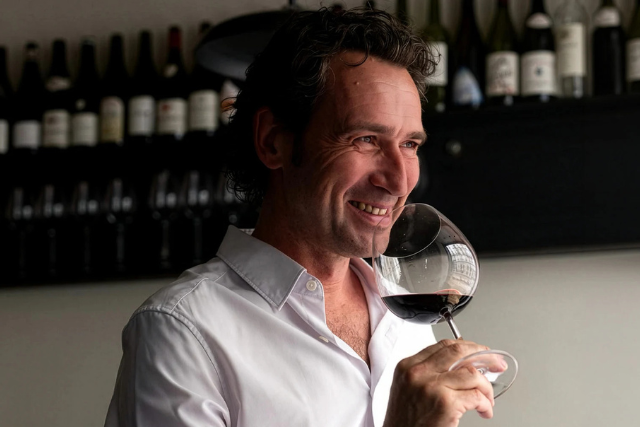
Sébastien Pradal has spent most of his career in the everyday world of wine. Restaurants, vineyards and dining rooms have shaped a professional life grounded in hospitality and entrepreneurship. Named Best Young Sommelier of France in 1997, he has since developed a varied career spanning gastronomy, wine distribution and international consultancy.
In Paris he runs the restaurant La Petite Régalade, where the wine list reflects a personal affection for independent producers and distinctive cuvées. Alongside that, he leads the wine agency Les Vinosaures, which represents estates and organises tastings and professional events for restaurateurs across the capital.
His work also reaches well beyond France. In 2022 he co-founded the importing company Sangre del País with Joël Léger and chef Juan Arbelaez, bringing wines from leading producers into Mexico before expanding distribution into Colombia, where restaurants have recently begun receiving recognition from the Michelin Guide.
Against that practical and commercial backdrop, his involvement with the international television drama Drops of God might appear unexpected. The series, adapted from the globally successful Japanese manga, revolves around wine knowledge, blind tasting, and the cultural world surrounding great bottles.
Pradal became involved in the project long before the cameras began rolling. “I was the first to join the adventure alongside producer Klaus Zimmermann, around 2018 or 2019,” he tells the drinks business. “Through mutual contacts we met, and he was drawn to the relaxed and popular way I approach wine.”
From that first meeting the collaboration developed slowly, shaped by conversations about wine culture and the craft of sommellerie.
A loose relationship with the manga
Although the series takes inspiration from the manga created by Tadashi Agi and Shu Akimoto, Pradal did not initially approach the project as a devoted reader of the source material. His relationship with the books was more distant. “I was familiar with the manga, but I had not read them,” he says. “In fact, I think that was probably for the best, because the series is only very loosely inspired by the manga.”
The creators later sent him signed copies of the first eight volumes shortly before filming began. That gesture inspired a small homage in the opening scene of the television adaptation. “As a tribute to them, I chose to open the very first scene of episode one of season one with château le puy, which is the grail wine of the manga,” he says.
What began as general discussions soon became more immersive. Early meetings with the production team focused on explaining the fundamentals of wine culture, including the profession of the sommelier and the agricultural realities behind a bottle.
To bring those ideas to life, Pradal invited the production team to the Rhône Valley. “I invited Klaus to Château de Beaucastel in Châteauneuf du Pape, with the Perrin family, so he could gain a global vision of the profession,” he says. That visit introduced the producers to the wider wine ecosystem, from biodynamic viticulture to large-scale production of rosé. It also proved decisive in shaping the scripts’ direction.
Writing wine into the story
As the screenplay began to take form, Pradal’s involvement deepened significantly. Rather than simply verifying details, he worked alongside the writing team to integrate wine meaningfully into the narrative. “We first spent a lot of time talking and exchanging ideas about the world of wine, and then a synopsis gradually emerged,” he explains.
The writers soon adopted a practical method; scenes involving wine were deliberately left incomplete until Pradal could provide the necessary details. “For the scenes that involved wine, the writers would leave blank spaces that I would fill in,” he says. “The dialogues, the wines paired with the music and the pairings themselves.”
His influence extended even further. Pradal selected many of the bottles featured in the series and suggested the destinations the protagonists travel to during their investigations. “I also chose the wines, and often even the destinations, the regions or countries where the protagonists travel during their investigations in seasons one and two,” he says.
Certain plot elements also emerged directly from his ideas. “For example, in season one the idea of the beeswax on the cork that leads them toward Greece, or the extraordinary domaine de vassal for the search for endemic grape varieties.”
Wine as the third character
Central to Pradal’s thinking was the idea that wine itself should play an active role within the narrative, rather than appearing as a simple prop; the bottle becomes part of the drama’s emotional structure. “For the choice of wines I proceeded in the same way as the manga authors. I spoke about the wines I love,” he says. “Wine is the third character in the series, alongside Camille and Issei.”
In the first season the audience is introduced to the structures of the wine world, competitions, blind tastings and the culture of sommellerie, which provide the framework through which viewers encounter the story. By the second season, the narrative becomes more expansive. The series explores topics such as biodynamics and climate challenges while also introducing less familiar wines alongside established estates. “We were able to deepen this wine character and address topics such as biodynamics, climate challenges and more,” Pradal explains.
Partner Content
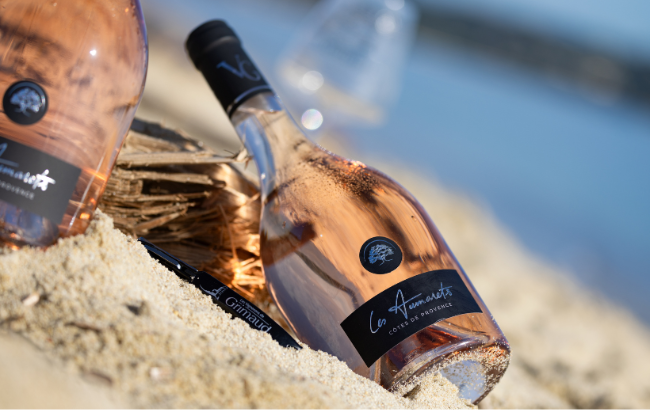
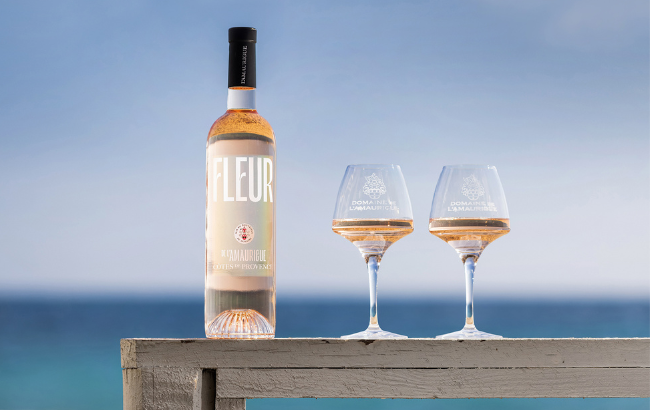

His selections follow a consistent philosophy, the wines chosen are those produced by growers whose work he respects and whose approach to viticulture remains closely aligned with nature. “They are wines made by winemakers whose work I admire,” he says. Importantly, those decisions were not shaped by marketing or sponsorship. “Every wine was chosen completely freely and without any form of compensation.”
Filming with soil underfoot
Authenticity was equally important when it came to filming locations. The production team worked at Château de Beaucastel during periods when the estate was undergoing significant changes. “We filmed the first season at Beaucastel at the beginning of the harvest and during the first week of work on the gigantic and spectacular new cellar,” Pradal recalls.
The crew returned during the completion of that cellar for the start of the second season, once again working in a fully functioning winery. For Pradal, the decision to film within a working estate rather than a studio set made a profound difference. “It was essential to film with our feet in the soil, surrounded by real professionals,” he says. “The atmosphere, the light, the energy. Everything is tangible in the series.”
The Perrin family hosted the production throughout the process, providing access to the vineyard and cellar while welcoming the film crew into the rhythms of harvest life. At the end of long days of filming, the convivial traditions of the wine world inevitably appeared. “The ends of the day were happily accompanied by plenty of wine,” Pradal says.
Wine in a changing world
Despite the success of Drops of God, Pradal remains thoughtful about the broader position of wine in contemporary culture. In his view, consumption patterns are shifting in ways that producers and sommeliers must acknowledge. “I think wine is less popular than it used to be,” he says.
Younger generations, particularly in Europe, often approach alcohol with greater caution. “Millennials show relatively little interest in it, and there is a growing healthy food culture in which wine is often seen simply as alcohol, no different from vodka,” he explains.
Where the series may have influence is in reminding audiences that wine belongs to a much larger story, one that involves agriculture, landscape and people. “I hope people who don’t yet know wine will watch the series and become curious,” he says. “Push open the doors of wineries and meet these wonderful characters.”
For Pradal, reconnecting consumers with the origins of wine remains essential. “Wine, and chicken for that matter, doesn’t grow in supermarkets. It comes from farms.”
Wine and the imagination
The project also reawakened an earlier fascination. As a teenager, Pradal once imagined a life in cinema before wine took centre stage. “It is a gift that life has given me,” he says. “When I was a teenager, wine and gastronomy were my second passion after cinema.”
That connection between wine and artistic expression continues to shape how he thinks about tasting. He often describes the process as something that draws upon the entire catalogue of human experience. “I like the idea that synesthesia is the way we sommeliers approach tasting,” he says.
In his view, memories and sensations from across a lifetime can resurface in the glass. “Every painting, film, piece of music, pain, joy, memory or moment of our lives is hidden somewhere in our subconscious,” he explains. “During tasting our synapses spark and memories burst forth, merging with flavours and aromas.”
Books also play their part in that intellectual landscape; among those that left a lasting impression is Mille Vignes by Pascaline Lepeltier of Chambers Restaurant in New York. “She represents France in the international sommelier competition and I’m 1000% behind her,” he says.
Keeping wine simple
Despite the glamour that accompanies a television production, Pradal’s outlook on wine remains grounded in the pleasures of the table. The experience of working on Drops of God has not altered his fundamental philosophy.
“This experience has not changed my approach to wine,” he says. For him, wine remains inseparable from food, conviviality and the emotional atmosphere created around a shared meal. “I was tamed by the table, because eating and drinking caress the senses. Tasting a wine with a dish touches the soul.”
He also speaks warmly about the social energy that wine can bring when enjoyed responsibly. “When it is light, gentle and occasional, it allows people to let go of their inhibitions. We talk, we laugh, we dance, we flirt.” For that reason, Pradal believes the language surrounding wine must remain accessible. “We need to simplify our language and the way we transmit knowledge to create a simple relationship with wine,” he says.
The television series has, however, changed how he views his own place within the wine world. “A spotlight has been cast on me, and I have never really felt a sense of legitimacy in my career,” he says.
Related news
The 12 wines from 'The Drops of God'
The Drops of God's authors on their passion for Japanese wine


