



Chef Q&A: Ayesha Kalaji
Ayesha Kalaji, chef patron of Glastonbury gastropub The Queen of Cups, talks to Amelie Maurice-Jones about politics, food culture and saving the pub sector.
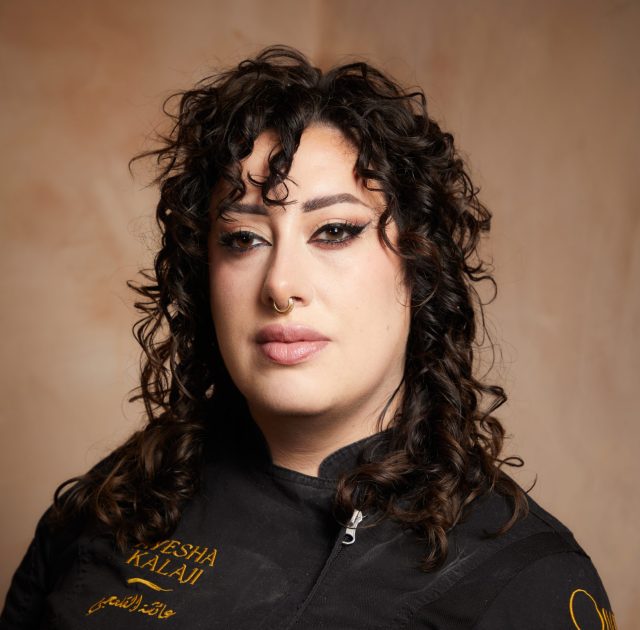
You studied politics before becoming a chef. Do politics and cooking intersect for you today?
I consider myself a political person with strong convictions, and those values shape how I source ingredients and run my kitchen. I make conscious choices about the producers I support, and I’m willing to withhold my support when their values don’t align with my own. Beyond that, my very presence in the kitchen is political. I am the child of an immigrant, and the food I cook reflects both my Arab and English heritage. In a society that feels increasingly polarised, cooking from multiple cultural lineages, openly and unapologetically, is a statement in itself.
What’s one thing you wish people knew about Jordanian cuisine?
I wish people understood the nuances of our cuisine. A lot of the time, Middle Eastern and North African (MENA) food is homogenised, especially the countries of the Levant. Although we do share commonalities such as hummus, falafel and shawarma, we differ from our neighbours in that we have distinct food cultures, histories and traditions. Jordan has arable land, desert and coastlines. Our food culture is rich and varied, from the makmoura in Irbid in the north, the mansaf that is best when made with the jameed of the Bedouins of Karak, to sayadieh made with fish from Aqaba that was influenced by the spices of the Silk Road trade routes.
What’s the story behind The Queen of Cups?
Glastonbury is an esoteric town, filled with mysticism. It’s nigh on impossible to buy a pair of socks on the high street, but I know at least five shops where I can buy a magic wand. To pay homage to this, we looked to tarot. The Queen of Cups is a tarot card in the minor arcana that embodies a caring feminine energy. She is compassionate, caring and nurturing – all things that I try to convey with my food, and I hope customers and staff alike feel this when they are in the building. Not only that, but there is a reference to our cups being full, and we do have an excellent wine list.
Who’s a local distiller that should be on everyone’s radar?
I’ve had plenty of gin in my time, but nothing like what Still Life Gin is producing in Frome, Somerset. They even created a custom gin for Queen of Cups using spices and herbs I brought back from my travels, with notes of Jordanian sumac, hibiscus, Lebanese za’atar, rose, cardamom, coriander and grapefruit. The bottles are beautifully made too.
What’s the best and the worst thing about running your own restaurant?
I didn’t have any grey hair before opening a restaurant, but every ounce of stress and every white hair has been worth it. I get to create the dishes that I want, work with the suppliers I like, choose every wine on the list, cultivate the experience I envisage; and people seem to rather like it. It is rewarding and validating, and I get to truly express myself, which is something all chefs dream of. But I’m sad that I’ve missed friends’ weddings, birthdays and events. I don’t see my family as much as I would like, and I miss my mum. Despite these sacrifices, I am ultimately so lucky to get to do what I do every day.
Partner Content



More than 500 pubs are tipped to close during 2026. What’s needed to save the pub sector?
A government that actually cares about the hospitality industry. I wake up every morning and check my bank account first. The impact of rates and taxes is something I am acutely aware of and personally feel. It just takes one broken fridge to wipe out profits for a month. A European model of VAT would make a huge difference, along with rate relief and support, not to mention taxing large corporations and billionaires properly.
Top tips for making hummus?
Thou shalt never use tinned chickpeas. Thou shalt soak dried chickpeas overnight and cook them until the skins come away easily. Removing the skins makes a smoother hummus. Thou shalt always use good-quality tahini. Thou shalt blend the chickpeas until smooth before adding tahini. Throw a few ice cubes in too.
What do you drink after a shift?
It depends how hard the shift has been! A smooth shift calls for a glass of wine, a busy shift calls for pints of beer for the whole kitchen, and a tough shift calls for whisky with a few drops of water. Preferably peaty, and keep them coming.
Related news
Will this be the most collectable pint glass of 2026?


