



Top Finger Lakes trends of 2026
The Finger Lakes in New York State is finally getting its moment in the spotlight as markets wake up to its cool-climate reds and experimental fizz. Kathleen Willcox uncovers the region’s top trends.
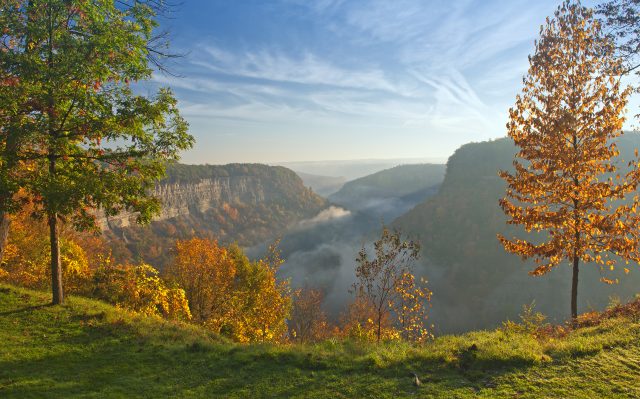
New York winemaking region the Finger Lakes first planted wine grapes in 1829, but its ‘modern’ era began when Dr Konstantin Frank planted Vitis vinifera on the shores of Keuka Lake in the late 1950s. Having spent many decades being a bit unloved, the Finger Lakes is beginning to attract global attention for all the right reasons.
Its slow burn can, in many ways, be attributed to the Finger Lakes’ challenging climate, and – until very recently – the lack of outside investment. While key regions in California, Oregon and Washington were energised by retired hedge fund managers and foreign winemaking investors moving in and launching a brand with a splash, the Finger Lakes was built on a legacy of farmers and boot-strapping pioneers.
“The Finger Lakes is not a forgiving place to grow,” says Fred Merwarth, head winemaker, vineyard manager and co-owner at Hermann J Wiemer Vineyard in the Finger Lakes. “That is changing because, after decades of experimentation and refinement, we are focusing on a more finite number of varieties, like Cabernet Franc, Riesling, Blaufränkisch and Chardonnay, that we know how to farm for consistent production.”
For a wine region without an influx of venture capital to throw around, time is key. After all, it takes about a decade between breaking ground on a vineyard and getting a decent bottle of wine into the hands of a consumer. So, in many ways, it’s no surprise that it has taken decades of experimentation with hybrid, native and Vitis vinifera grapes, and slow, steady growth in the ones that work, for the Finger Lakes to make a splash on the international market. Here’s what to know about what many in the industry see as the next great American wine region.
1. Cabernet Franc takes centre stage
“When Hermann [Wiemer] was planting grapes in the 1970s, it was like Burgundy 1,000 years ago,” Merwarth says. “There was a lot of promise, but not a lot of history. As a region, we had to learn by trial and error, and that takes a long time. For both climatic and historic reasons, we focused on Riesling for a long time in this region. But that’s starting to change.” Hermann J Wiemer Vineyard (HJW) first planted one row of Cabernet Franc in 1999, as part of a small cohort of wineries testing the waters. “We planted more in 2004 after making a single barrel from the single row, because we saw its potential,” Merwarth says. Now there are 119 hectares of Cabernet Franc under vine in the Finger Lakes, and it’s the most planted red Vitis vinifera grape variety, according to the New York Wine & Grape Foundation’s 2024 Vineyard Report. In the past few years, winemakers agree, the grape has become a cause célèbre among vintners, sommeliers and the general public. “[Winery collective] Cab Franc Forward has done a great job spotlighting the grape in the Finger Lakes and across the state,” says Boundary Breaks co-owner Bruce Murray. “It’s very clear that Cabernet Francs are resonating in the market and in the tasting room.”
Chris Bennem, co-owner of the Finger Lakes winery Glen Hollow Vineyard, points to 60 years of hard-won experimentation and experience in paving the way towards success for what many are now seeing as the region’s flagship red grape, Cabernet Franc. “Climate change has helped us too,” Bennem says. “The quality of Cabernet Franc here and the reds in general is becoming world-class, and part of that is marketing together through Cab Franc Forward, and honestly the market. People aren’t looking for the super-high-alcohol, fleshy reds. Don’t get me wrong: many brands in Napa are still selling Cabernet Sauvignon for hundreds of dollars a bottle, but there is a new appreciation for the cool-climate reds we can make here.”
As the drinks business previously reported, Finger Lakes producers are even lobbying government to have Cabernet Franc approved as the ‘official grape variety of New York State’. “I think we’re very close. We have some extremely dedicated and passionate people pushing this forward, and I think it could happen within the year,” Jenny Menges, director of strategic development & sales for HJW, told db.
The Cab Franc Forward committee began by taking the request to the local Farm Bureau and, having made it through this first line of defence, the proposition is now being considered at state legislature level.

2. Classic and ‘punk rock’ sparkling wine
Sparkling wine is experiencing a similar trajectory in the region. “Anything sparkling is doing well,” says Kelby James Russell, co-winemaker and co-owner of Apollo’s Praise, which launched in 2024 with 1,800 cases, and is scaling up to 8,000 cases in production this year. “Traditional method sparkling wine made with traditional Champagne grapes, but also Riesling, Cabernet Franc, Saperavi. Sparkling reds of all stripes are also suddenly a thing, from Sheldrake Point to Red Tail. Winemakers are having a lot of fun with it.”
Apollo’s first release of traditional method sparkling wine will be ready for release in a few years, and in the meantime, people can slake their thirst on a Charmat Lambrusco-style blend of Saperavi and Riesling. Boundary Breaks’ Bruce Murray says he’s been thrilled to see how the winery’s carbonated sparkling wines are being received. “We make a Riesling and a Gewürztraminer that are priced very competitively, and have turned sparkling wine into an everyday option,” Murray says, explaining that the wines typically retail for US$19–US$22 a bottle.
“And people love that they can just open them and not deal with a big cork with a cage on top wrapped in foil.” Ria D’Aversa, co-owner and vineyard manager at Ria’s Wines in the Finger Lakes, also notes the enthusiastic embrace of all things sparkling. “The sparkling wines we’re producing and I’m seeing around the region are delicious fun, and that’s exactly what wine should be,” D’Aversa says. “We are working on a traditional method that will be a blend of Cayuga, Traminette, Vignoles and Chardonnay, and we have a pét-nat [pétillant naturel] that’s a blend of Cayuga and Vidal Blanc. Sparkling wines are great here because people love them, they’re a fun way to explore grapes and styles, and they’re a security measure against frost, because they can be pulled so early.”
3. Influx of winemaking talent from afar
When a wine region begins to attract talent from established regions, that’s the best kind of endorsement. “In the past several years, there has been an influx of winemakers from afar,” Glen Hollow Vineyard’s Bennem says, pointing to his consulting winemaker Nova Cadamatre MW, the first female winemaker in the US to become a Master of Wine. Cadamatre had stints at California’s famed To Kalon Vineyard and Robert Mondavi Winery under her belt before relocating to the Finger Lakes. Plus, there’s husband-and-wife duo Ria D’Aversa and Michael Penn, who arrived in the region from Constellation Brands and Green and Red Vineyard in Napa respectively, to establish Ria’s Wines in 2022.
Another example of incoming talent is Paul Hobbs, who established Hillick & Hobbs Estate in 2013 after launching projects around the world, including Paul Hobbs Winery in California and Vina Cobos in Argentina. However, it was Louis Barruol from the Rhône Valley in France that was the first major figure to arrive from overseas and establish himself in the Finger Lakes, founding Forge Cellars in 2011 with wine buyer Rick Rainey.
Wine educator and judge Irene Graziotto says she has been visiting the Finger Lakes for more than a decade, and has been impressed by the evolution in standards. “The quality has increased incredibly from when I first visited in 2015 to judge the Finger Lakes International Wine Competition,” Graziotto says. “Back then, there were only a couple of outstanding wineries, like Dr Konstantin Frank. Nowadays, the region has evolved so much to showcase its polychromy across the different areas. I am very curious to see where the region will be in another few years’ time, with increasing investments from established producers like Paul Hobbs.”
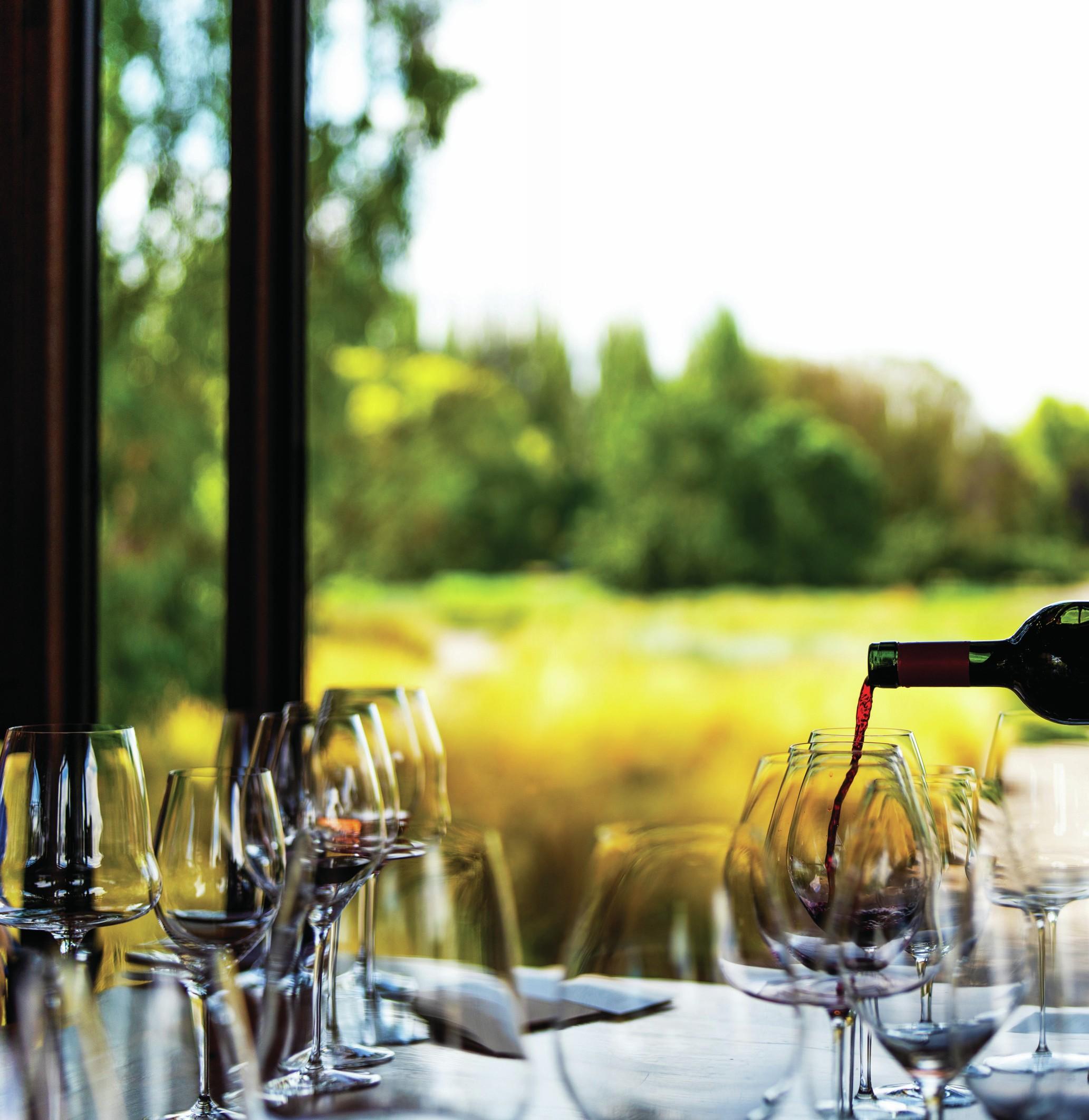
Red dawn: Cabernet Franc could soon become the official grape of New York State
4. Elevated but relatable hospitality
Much ink has been spilled on the reduced visitorship to Napa Valley and other high-flying wine regions due to surging prices, but the opposite seems to be happening in the Finger Lakes, where wineries have upped their hospitality game without serving up stratospheric tasting fees.
Boundary Breaks’ Bruce Murray says wineries in the Finger Lakes were forced to rethink their hosting model during the Covid-19 pandemic – and they found that they liked the results. “We’ve changed the customer experience,” Murray says. “Before Covid, there were tour buses coming up and visiting eight to 10 wineries in a day. It was a party. During Covid, to be open wineries had to seat people six feet apart and serve food.”
In addition to requiring reservations and instilling a calmer atmosphere, the policy allowed wineries to flex their hospitality muscles. At Boundary Breaks, the winery offers themed tastings. Over the winter during the weekends, the reservations-only experience (US$35) includes a tasting of the winery’s library wines, a face-off between French and Finger Lakes wines, and a blind tasting seminar covering red, white, orange and rosé. Five wine flights, paired with snacks, are always available for US$20 a pop.
“No one in the Finger Lakes is trying to be a three-star Michelin-starred restaurant, but we make sure that our hospitality staff are mature, and can help guide people,” Murray explains. “Or just leave them alone if that’s what they want.”
D’Aversa of Ria’s Wines has noticed a true interest in engagement from visitors – even those who know very little about wine. “They want stories, they want to know how we farm and they want to know more about grape varieties,” she says. “Our wines are made with hybrid and Vitis vinifera, sometimes together. We can pour them a glass, and walk them through the history in a straightforward way.”
These days in the Finger Lakes, there are a lot of visitors from afar, who come expressly for the wine. The Finger Lakes receives about 1.5 million visitors a year to its 140-plus wineries, with wine tourism contributing an estimated US$3 billion in economic impact. “It’s great to see us being taken seriously in terms of fine wine, and seeing us shed the ‘I went on a bus tour and threw up on my shoes’ persona we had for so long,” says Forge’s managing partner, Rick Rainey.
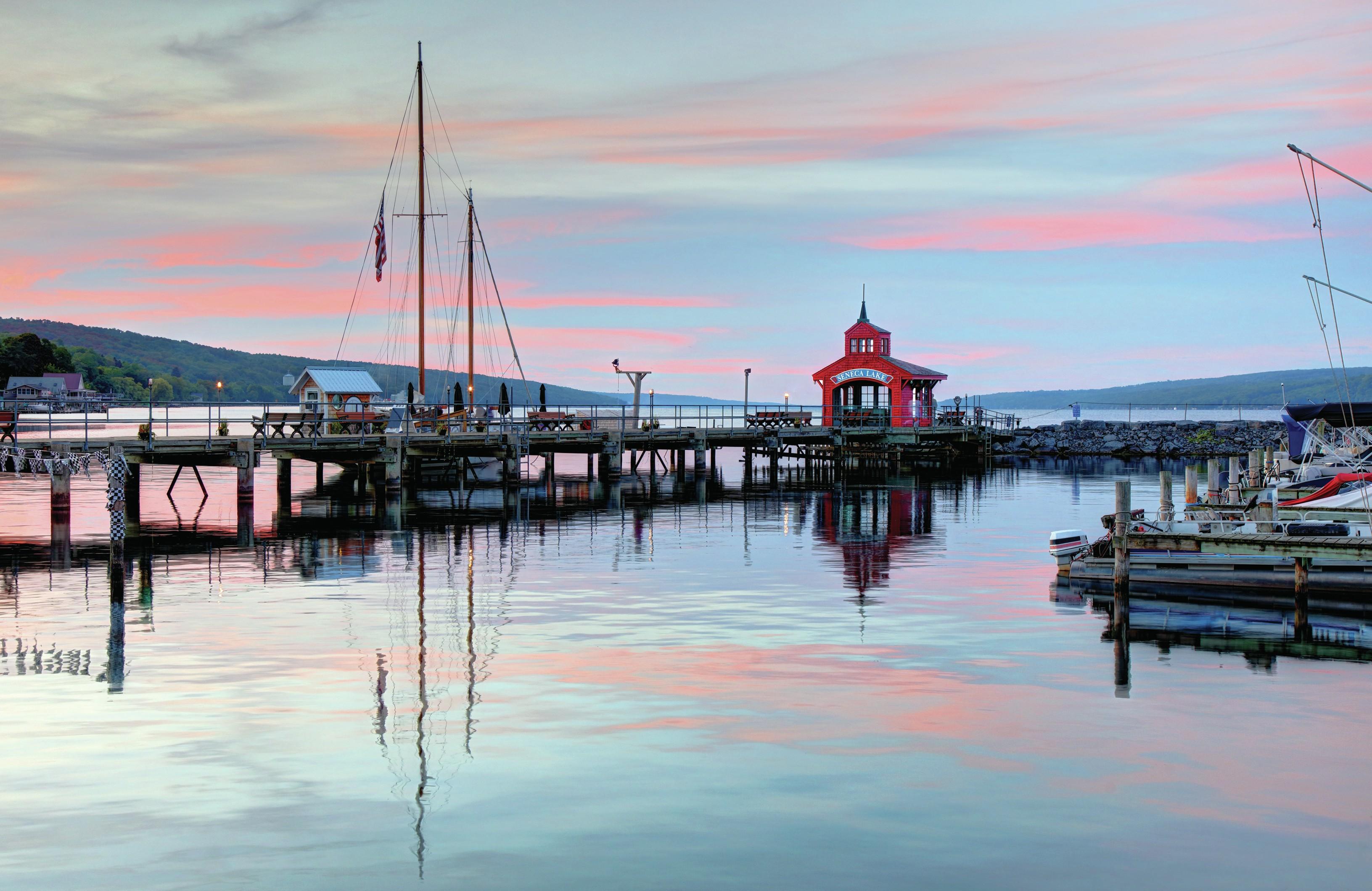
Still waters: Finger Lakes’ rise to prominence is the result of decades of hard work
5. Good distribution and gatekeeper excitement
Many very good regions only distribute their wines locally, or even regionally. These regions often thrive, with a loyal cadre of visitors and locally-minded wine buyers. But getting into markets across the country and world means rubbing up against buyers and consumers who aren’t necessarily familiar with the region itself, and who are being introduced to its wines for the first time. For a region to be great, distribution is essential.
“It is hard to overstate how significant it is that much of our real growth at Apollo Praise and in the wider region has happened through distribution,” co-owner Kelby James Russell says. “The wider US market is huge, and Finger Lakes wines have never been largely available across the country. Suddenly it is a major source of sales and interest.”
But Russell is also quick to point out that this “sudden” growth is the result of a lot of groundwork. “It’s great to see us doing so well in Chicago, Wisconsin, Missouri,” Russell says. “Our wines are competing toe-to-toe with wines priced much higher, so that’s a win for everyone.”
Forge Cellars, Boundary Breaks, Wiemer, Glen Cove and many others are now readily available on the market in the US, as well as in the UK, Germany and Scandinavia. Monica Townsend, sommelier at The Tusk Bar and Brass in Manhattan, says the reception for Finger Lakes wines has been notable. “While all the wines have generated curiosity and conversation from consumers, the strongest sellers by volume have been Wiemer’s traditional-method sparkling wine made from 100% Chardonnay, along with their single-vineyard Cabernet Franc,” Townsend says.
This, she adds, points to changing tastes, and tightening budgets. “It reflects a growing guest appetite for value-driven wines that demonstrate a clear sense of place, as well as increasing confidence in the Finger Lakes’ precision and age-worthy styles,” she says. “Looking ahead, I expect to see continued momentum for both traditional-method and pét-nat sparkling wines, as well as Cabernet Franc, alongside greater openness to longer-aged and more experimental, niche bottlings from the region.”
Elyse Lovenworth, director of operations at natural wine bar and shop Nature’s Vin in Wayne, Pennsylvania, says that while the Finger Lakes “have been up and coming for a while,” there is new momentum behind the placements and attention they’re receiving. “To my shock and delight, two of our best-selling and most talked-about wines are from Barbichette in Seneca Lake in the Finger Lakes,” Lovenworth says. “One is the Chette Baker, a skin-contact Gewürztraminer, and also the Poc à Poc, which is Barbichette’s ‘ode to the Roussillon.’ The best-selling Riesling is the bone-dry, single-vineyard Apollo’s Praise.”
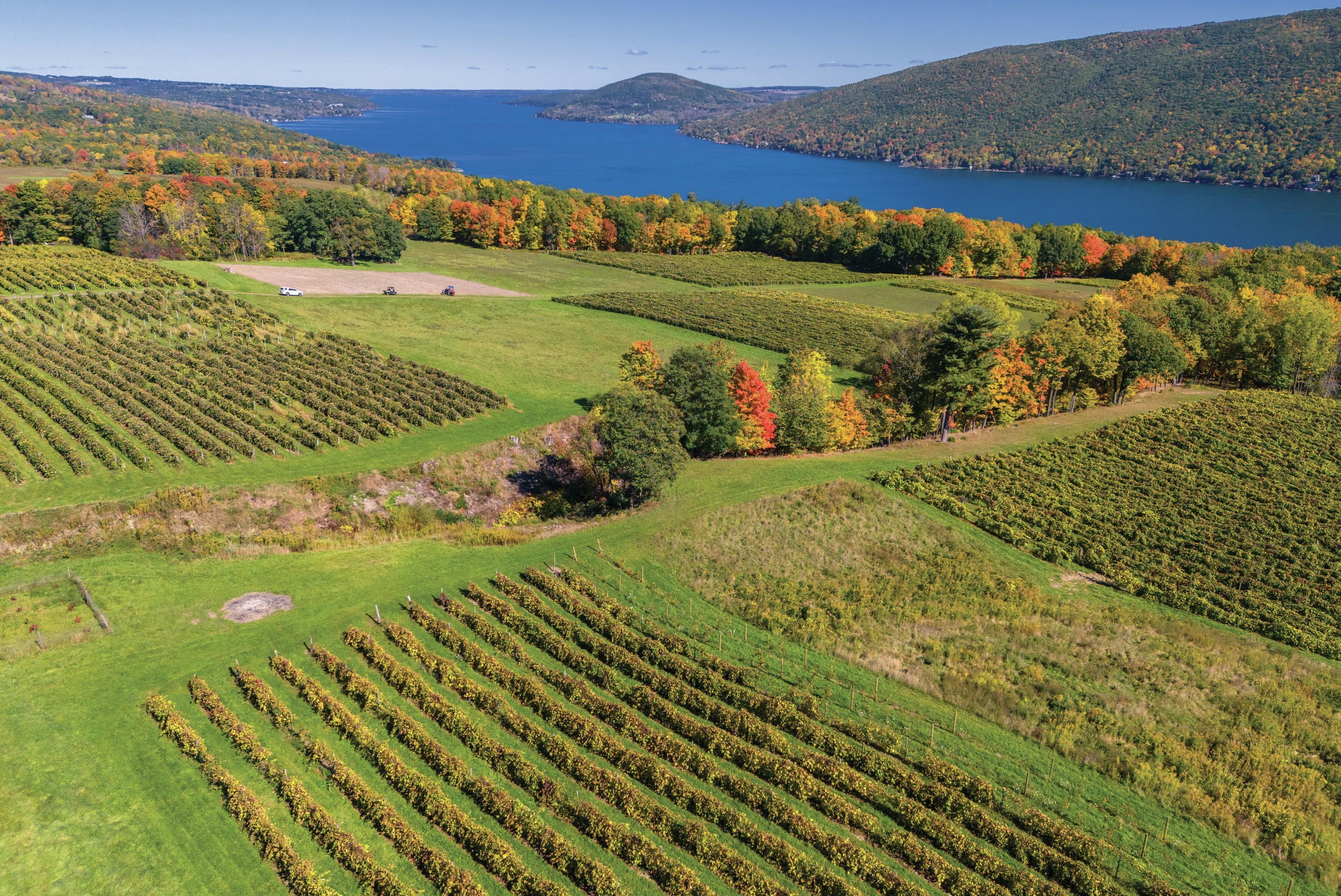
Picture perfect: tourism is a key revenue driver for Finger Lakes wineries
6. A robust ‘garagiste’ scene
Now that the Finger Lakes region is more respected and established than ever, it may mean that vintners there are also more willing to innovate fearlessly. “I’m seeing more and more native yeast, experiments with blends and fermentation and ageing vessels,” Glen Hollow’s Cadamatre says. “And there is a serious garagiste [garage wines] movement right now. More established wineries also host pop-ups for winemakers in the group Wineries Without Walls, which was created as a cooperative to promote and help each other. It’s how I got started.”
Russell agrees, saying that the small-batch, often self-funded passion projects showcased in Wineries Without Walls show just how viable the Finger Lakes is. “I think it’s an indication of the health of the system here,” he says. “When a region can support a successful garagiste movement, it’s a sign that the region’s doors are about to blow off.”
No walls, and soon, no doors. But some of the most elegant, daring, sought-after and exciting wines in the nation can be found in the Finger Lakes, driven by patience, hard work, innovation and, finally, external buy-in.
Finger Lakes AVA by numbers
• 5,640 acres/2,282 hectares under vine
• 38% Vitis vinifera, 38% hybrid, 24% American, less than 1% other
• 52% white grapes, 48% red grapes, less than 1% other
Key premium grape varieties:
• Riesling (832 acres/336ha)
• Cabernet Franc (295 acres/119ha)
• Chardonnay (259 acres/104ha)
• Cayuga White (225 acres/91ha)
• Cabernet Sauvignon (104 acres/42ha)
• Top grape variety by vineyard area: Concord (1,058 acres/428ha)
Source: New York Wine & Grapes Report 2024
Related news
Chrome Horse Tequila seals New York Empire partnership
Sotheby's New York to auction bottle of 'revered' Château Lafite Rothschild 1865
Sotheby's to offer wine cellar of New York sculptor Joel Shapiro


