



Hoopes Vineyard fights ‘unconstitutionally excessive’ fines
Lawyers representing the Californian winery says “no family should lose everything over ordinary business activity that harms no one” as they move to have US$4 million worth of fines overturned in the producer’s ongoing battle with Napa County.
Hoopes Vineyard in Napa County has stepped up its fight against Napa County by employing a public interest law firm with a track record of suing governments. The ongoing case relates to customer tastings which the county claims have taken place at Hoopes for years without a permit, but owner Lindsay Hoopes maintains that the winery falls under a Small Business Permit Exemption and that all necessary paperwork is in place.
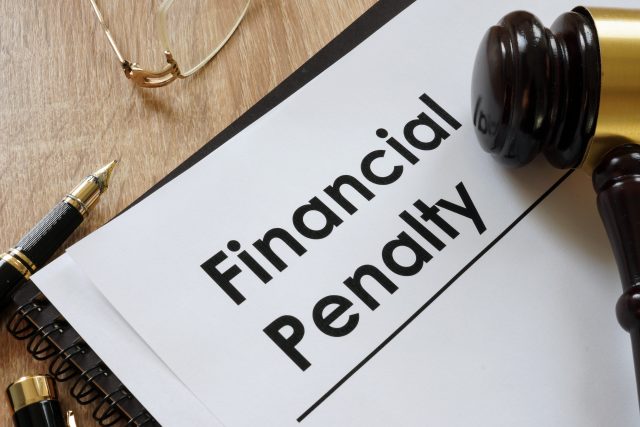
In the latest development to emerge in the unfolding case, Hoopes has brought in Sacramento-based Pacific Legal Foundation (PLF), who on 11 February 2026 filed a motion to scrap more than US$4 million of fines and legal fees slapped on the winery for carrying out customer tastings. PLF stated that the penalties are “unconstitutionally excessive” and would bankrupt the family business.
Fair and proportional?
This new twist boils down to whether or not the fines fit the gravity of the alleged crime.
Napa Superior Court Judge Mark Boessenecker ruled in November 2025 (a decision that was upheld last month) that Hoopes must pay $1.53 million in civil penalties ($1,250 a day for 1,220 days), plus $2.25 million in attorney’s fees, $111,230 in abatement costs and almost $70,000 in statutory costs.
However, PLF claims the total cost imposed ($3,960,013.05) by the court breaches the requirement for punishment to be “fair and proportional.”
“No family should lose everything over ordinary business activity that harms no one. The Constitution promises that punishment must be fair and proportional. We’re standing up for Lindsay’s right to preserve her family’s legacy without being crushed by excessive fines,” Anastasia Boden, senior attorney at PLF said in a public statement.
Indeed, according to PLF, “the exorbitant fine is so large that it exceeds the winery’s total lifetime revenue.”
High profile case
The case, which has been underway for several years, has caught the eye of a number of high profile figures including California State Controller Mahlia Cohen who demanded an explanation from Napa County as to why it wants to ban tastings at some of its wineries. In a letter shared with the drinks business, written on 18 December 2024 and addressed to Napa County Supervisor Belia Ramos, Cohen expressed her dismay over the continued persecution of Hoopes Vineyard and a number of other wineries involved in the case.
“After seeing various media reports, I am writing to request some information as to how a winery that has been paying taxes on wine poured at their property for 40 years was only recently found to have been illegally serving wine,” Cohen wrote. “I am concerned as to how the state and county could have been collecting taxes from a small business for so many years for wine sold on the property, when allegedly it was not allowed to do so.”
Partner Content



One month later, Napa County issued a reply via a letter of its own penned to Cohen by Napa County Counsel Sheryl L. Bratton. In the letter Bratton argued that while Hoopes Vineyard has a permit to sell bottles of wine on the property, it does not have a permit to carry out tastings. Bratton further claimed that due to Napa’s “zoning code”, on-premises consumption of wine is restricted to those wineries with a “use permit”, something which Hoopes does not have.
“Hoopes has refused to get a use permit, which wineries must have in order to serve wine to customers,” began the reply, sent on 8 January 2024. “Instead, Hoopes has been operating only under a Small Winery Permit Exemption, which a prior owner applied for in 1984. The permit exemption allows Hoopes to sell wine produced on the property by the bottle, but it does not allow wine tasting without a use permit.”
Napa County says that it only discovered that Hoopes Vineyard was “pouring wine for customers” in 2020, from which time the County has continually asked Hoopes to get a use permit.
Acquiring such a use permit comes with no small price tag. Napa County office told the drinks business that the cost of a use permit involves “an initial deposit of $10,000, with a maximum surcharge of $1,255.10, plus an hourly rate for departments (starting from $177 per hour) as needed to obtain the permit. However, if a business wishes to modify an existing use permit it may accrue a one-off cost of up to $5,128.”
Excessive fines clause
According to PLF, which is representing Lindsay Hoopes for free, Hoopes Vineyard has “obtained all required licenses and approvals” in order to hold tastings on the property. Despite this, PLF said, “Napa County abruptly reversed course and labelled her already authorised operations a ‘public nuisance’.”
The newly filed motion argues that the fines imposed by the Napa Superior Court violate the ‘Excessive Fines Clause’ of the US and California Constitutions. A victory would not only protect Hoopes’ winery but also “help prevent governments from using crushing penalties as a revenue tool against small businesses,” PLF said.
A mission statement on the organisation’s website informs that PLF strives to “defend Americans’ liberties when threatened by government overreach and abuse.
“We sue the government when it violates Americans’ constitutional rights—and we win,” it reads.
Related news
Netflix turns to Napa Valley for new wine drama
Napa Valley pioneer Dan Duckhorn dies aged 87
Calmére Estate sale signals renewed investor confidence in Napa Valley


