



How do people under 40 find their way into fine wine?
The fine wine sector has been operating on a series of false assumptions about how and why people engage with the category and become wine collectors, a new report from fine wine think tank Areni Global has claimed.
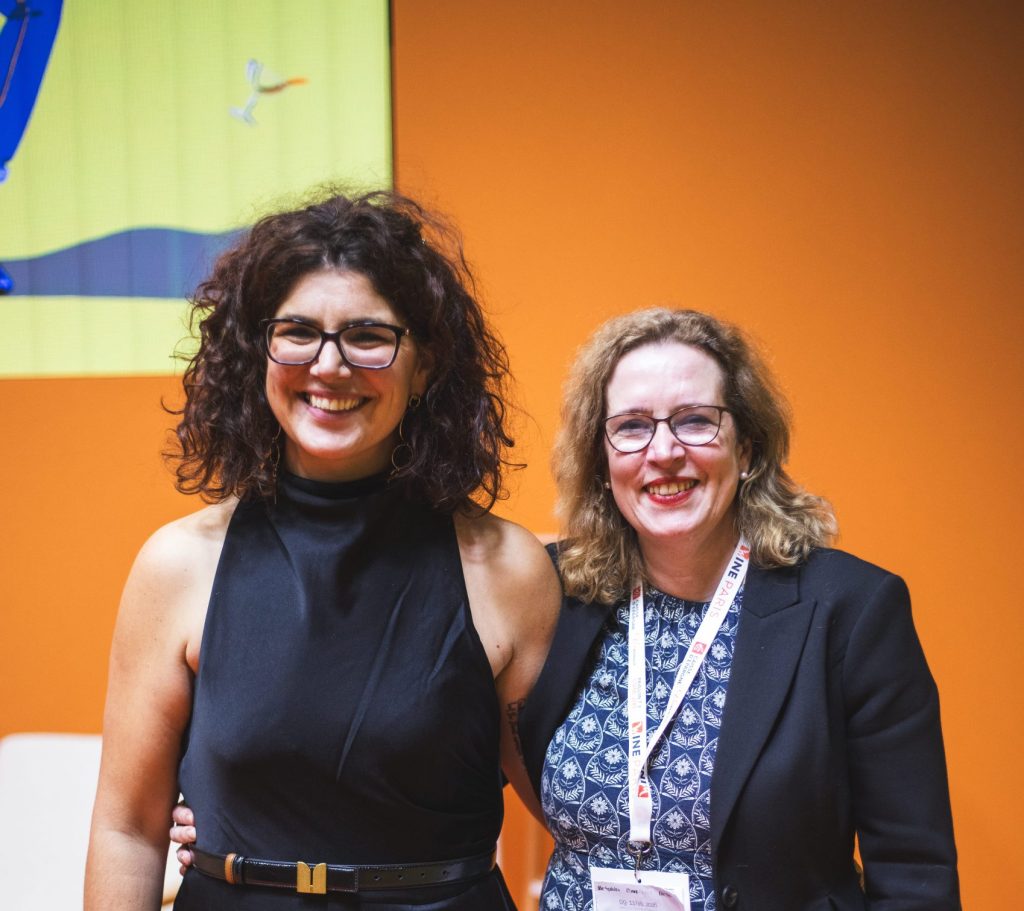
Pauline Vicard, co-founder and executive director of Areni Global, said that while the research started with six hypotheses, only one of these was fully confirmed by its research, the rest being “either completely overturned, or only somewhat true” she said. As a result, in order to grow and retain a customer base in an increasingly challenging market environment, producers, merchants, educators and event organisers must actively adapt to cater for the actual pressures rather than the potentially incorrect received wisdom.
No longer the domain of the over-50s
Increasingly wine merchants and auction houses are reporting the emergence of buyers aged 28-40, a pattern that is happening globally. However, The New Fine Wine Consumer: How people under 40 find their way into fine wine report argues that there are demographic, economic and cultural factors which “are creating a bottleneck in the pipeline that was once responsible for the next generation of fine wine buyers” – and this has the potential to “throttle growth” in the future.
“Understanding this younger generation is critical, because the macro-economic environment is not working in fine wine’s favour,” Areni said, warning that if fine wine doesn’t adapt to the “converging” pressures of a shrinking 25-40 age cohort across key markets, the loss of entry level professional positions, and the erosion of alcohol’s cultural legitimacy, “it will be serving fewer fine wine lovers in the future”.
Among the key findings, was that contrary to the received wisdom that it is “friends, not family, who draw people into fine wine”, the widespread assumption that a love of fine wine is passed down through generations is “not supported by the data”.
“Whether your parents collected or not, or whether your parents drunk wine or not, has got very, very little influence,” Vicard explained during a zoom presentation of the report, noting that this was usually sparked by “a defining moment” with friends that is worth exploring.
“Fine wine only becomes part of someone’s life once curiosity has been validated by a peer.”
As a result “we don’t need to depend on the older generation and families, we can start anew,” she said. Similarly, the importance of social media wanes after the age of 25. “From what we gathered from our interviews, it’s also counterproductive, because the minute you start understanding how special fine wine is, social media looks like something for the masses and for the average, and you don’t really want to be involved with that,” she said.
Travel is a big driver of fine wine exploration in the 26-40 age-range, while peers, the trade and fine wine merchants have “a really big role to play” in the 31 to 40 age-bracket, she said.
Community is a driver
Partly connected to this idea is that community, rather than products, are the primary driver of sustained engagement.
“I believed people would automatically trade up as salary and experience increase, but that is only partly true,” Vicard said. “They need a community to do so.. and we need to bear this in mind for events.”
“Our job as people who sell wine isn’t done when the wind is sold, but when it is drunk, and we need to emphasise this in our offer.”
Collecting is like gaming
Another finding was the “genuine difference” between engaged wine buyers and wine collectors, the 30% of the population who have a genetic predisposition to collect. This, the report said was centred on the thrill of collecting something rare that gives pleasure in itself – the complexity of wine itself also make it more appealing.
“It’s like gaming,” Vicard noted. “Collecting is a game. People want to have fun, they want tight mechanics, clear rules and progression, as well as flexibility – not just in terms of smaller volumes, but digital integration,” she said.
Partner Content


Age was another factor – the age of 26-35 is key to the emergence of collecting and the desire to collect “must be sparked in the under-40 age group, or would-be collectors will never develop the passion”, the report noted.
“If you’re not one [a collector] by the age of 40 you won’t become one,” Vicard said.
She warned that although merchants
Fine wine is “systemically failing” women
One of the most striking findings in the report is how the fine wine world is “systemically” failing women.
“The biggest differentiator in that study wasn’t about where people came from – the patterns and behaviours were surprisingly similar, whether you are from Hong Kong, Singapore, Shanghai, Paris or London – the biggest differentiator was whether you were a male or a female,” Vicard said.
She explained that young women enter fine wine in almost equal numbers to men in the 25 and under bracket (at around 44% compared to 56% for men in the same cohort), and attend more events and invest more heavily in formal wine education but only a quarter of those women go on to become regular fine wine buyers, compared to three quarters of men. Participation falls sharply when women enter their 30s – in the 26-35 age category, female engagement drops to 28%-29%, and by the time they reach the top age bracket (56 years+), women represent only 13% of engagement in fine wine.
“If the fine wine sector wants to change this trajectory, it must redesign the pathway and find ways to keep women engaged as their lives change,” the report said, noting that women “have different engagement patterns from men”. Currently, these are not being catered for – despite around 43% of women saying they are interested in becoming wine buyers “but not yet”.
“The female attrition problem is not a question of interest or commitment, but a systemic failure,” the report argued.
Vicard noted that “if we want to engage women in the wine world, we need to think about it differently. It’s not just reproducing business models that do work for men, it’s about also trying to find business model that fit women.”
“Essential to close the gap”
The report was produced in collaboration with Berry Bros & Rudd, 67 Pall Mall and LVMH Vin d’Exceptions, and created using a mixture of focus groups with senior trade professionals, questionnaires of more than 300 consumers and in-depth interviews with consumers and trade members. A further 60 wine students from leading universities in London and Paris also participated.
Emma Fox, CEO of Berry Bros & Rudd argued that the next generation will define the future of fine wine, “yet until now we’ve had remarkably little insight into how consumers under 40 discover, learn about and connect with it”. The new study was therefore “essential in closing that gap”. By partnering with Areni, Berry Bros. & Rudd are taking an active role, she said, that can “help shape the understanding our industry needs to serve the fine wine consumer of tomorrow with confidence and relevance.”
Mathieu Jullien, CEO of Vins d’Exception added that while it wasn’t “necessarily bad news” that alcohol consumption is declining “slowly but steadily”, it should encourage wine professionals “to ask themselves what they can do to foster the next generation of wine lovers.”
“How do we promote enlightened consumption? How do we engage with a younger audience (under 40)? How do we feed their curiosity? How do we invite them on this lifelong, fascinating journey of learning and sharing?” he asked.
Related news
Cono Sur shows off terroir-led range
All the medallists from the Bordeaux Masters 2026
Black Odesa: Felix Hart goes viral in Peter Stafford-Bow's new wine novel


