



Beer Hour: Evin O’Riordain
Evin O’Riordain speaks to Jessica Mason about how the beer world is changing, ways IPA has changed and how mainstream brands are turning heads despite not winning palates.
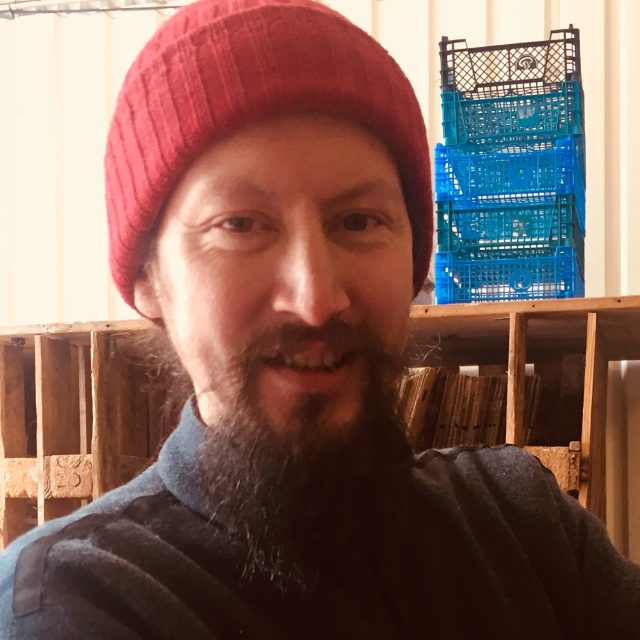
Evin O’Riordain founded The Kernel Brewery in a Bermondsey railway arch in London in 2009. In 2024, he opened The Kernel’s taproom on Spa Road.
Wandering into the space, which has all of the simplicity of the Kernel’s brown parcel labelled bottles which are recognised the world over and you can see how artfully the area has toned down the noise.
“We put a lot of work in. All of the panels have fluting on the side that is specifically designed to mute sound, and above, you have this kind of spaghetti cardboard, which is again. designed to do the same,” says O’Riordain when he sits down across from me.
It’s late afternoon and the taproom isn’t hugely busy, but has a low level of music and chatter in the background.
But it wasn’t plain sailing, he admits, opening the taproom made him think a lot about what it would be and perhaps what it would cease to be. But ultimately, it has been a lesson on listening.
He explains: “I think what I worried about most was how this sort of space would appeal to different people. To find us in the old arch, you’d have to really want to come and drink a beer, so we only had people who really wanted to be there. But now there are other people who just randomly drop in off the street. It’s completely changed, but it’s actually better, because rather than diluting anything, it has meant being more open to more people. It has made the place a more inclusive environment. It has taught me a lot of lessons. To just be here and be present for people. You can be a friendly face. Give people a place to be.”
‘Here to hear and connect’
O’Riordain remembers that “everyone in the local area complained. The Bermondsey Beer Mile had already been their worst nightmare and that had been happening down the road for the last 10 years, and we were the cause of it, because we were the first ones here, so all of the local residents were completely justified”. But, he points out “this place isn’t like that. We had 57 objections beforehand and now, since we have opened, we’ve had no complaints”.
He smiles and says: “Really, I’m just here to hear and connect” and with regard to the packaging of The Kernel’s beers which gently echo the same modesty of the room, he adds: “The bottles might just stand out more than they used to, just because they haven’t changed. Really, it’s more that the world has changed.”.
O’Riordain shifts a little in his seat and looks thoughtful and says: “We live in interesting times. You know, very interesting times. The sort of beer that we talked about years ago, well, it doesn’t exist in people’s heads in the same way anymore. “Craft’ and what it means. I mean, it was dirty, even back then, but now it either means something your dad is into, which is fine, you know, I’m somebody’s dad. I’m okay with that. But when it’s a company that’s sold their ‘whatever they built’ to ‘somebody else for money’ or it’s ‘a brand that’s just been created by a bigger brewery to sell more beer’ and not ‘something that is actually nice’ then maybe it is cooler just to drink something mainstream and normal and just own it.”
How things are changing in the beer world
How is what people want from beer changing, exactly? For a start hop geekery is phasing out a little. O’Riordain reckons lots of beer drinkers have stopped caring “about the nuances between a Citra and Mosaic beer” and even goes so far as to suggest that “that’s just not really very cool anymore, is it? It feels like that’s what’s changed”. Interesting for a brewery that has often labelled its beers with very few words, but its hops were often cited on the front of each bottle.
But he does have a thing or two to say on why people choose to drink things like Guinness when they know better stout exists elsewhere. Importantly, as he observes, the overload in our real lives has been taking its toll.
He insists that “drinking Guinness or whatever” becomes some people’s choice because it “doesn’t involve you having to think about it”.
The overload
O’Riordain says that “one argument that makes sense is the fact that we are so overloaded with information that to make a choice that is just ‘normal’ and so nobody will question it. And this means you don’t have to justify that choice. It also means you just have less stress to deal with. You know, if you make a choice and drink beer that’s blue, everybody’s going to ask you about it, you’re going to have to justify it and say why. Whereas if you drink the same as everybody else, you have more brain space to deal with other issues, and if your life is full of chaos, it makes sense. Because we’re all overloaded.”
He explains: “I think the rest of the world is stressing out our nervous systems and there is so much for us to worry about that sometimes not worrying about beer and saying: ‘I’ll have the same as they always have’ is just one less thing to worry about.”
To his mind, this is why “brands have become much more popular recently, because they simplify everybody’s lives. It just means you don’t have to make a choice. If there is a specific thing that you drink, then it doesn’t have to be discussed. It can be simple”.
Perspective is everything
Does O’Riordain think anyone expected mainstream beer to over-deliver or surpass expectations? He laughs. “No, if the bar is quite low, they very rarely under-deliver. And I don’t know if the average consumer ever really worried about these things.”
Partner Content


He does admit that there is a beer nerd echo chamber at play still though and this means a lot of people reject other opinions that don’t align. He examines this by asserting: “This is the problem when you’re inside the craft beer bubble, is that you think everybody’s thinking about things the same way as you are.”
IPAs are changing
One peeve in particular for O’Riordain is how IPA means a different thing on the bar and on labels these days and he’s finding how much the style has changed to be quite unappealing.
He gives an example, saying: “Right now, if I go into a random bar in London that serves good beer and I order a pale ale or an IPA, I’ll end up with something that’s New England and hazy. And for a long time, I thought that was just people’s tastes changing. It’s not to my taste to drink a hazy New England IPA, but that’s what’s here, and that’s what people drink, so that’s what bars are selling. I reached a point where I stopped ordering IPAs because that’s what I was going to get, at least that’s what I thought I was going to get. But then I realised that maybe actually half of the population who wouldn’t want to be drinking these things are no longer ordering pale as an IPAs because it means something completely different than what they had in mind.”
He pauses to consider this and says: “Maybe we want a West Coast IPA or a pale ale”. But laments: “I’ve experienced a massive amount of palate fatigue over every New England, hazy, juicy thing” and “an IPA has become something else”.
Look for balance
This is also the case in the US, he says, he believes there’s a lack of balance being invested in some brews.
O’Riordain insists: “It’s not just the New World hop thing. This summer, I was in northeast United States for three weeks and I hadn’t spent any time there since before the brewery started, but I couldn’t find any drinkable beer and I suffered on that trip. But then, at the end of the trip, I found, in New York City, an off licence that was selling Heady Topper, and although that’s used as the template for New England IPA and it’s really bitter, it’s got a balance to it, which actually isn’t present in all these other things. They are not the same. But yet IPA now means this, but if you find Heady Topper around you remember that it’s about bitterness, dryness and lack of sweetness.”
There are other things that O’Riordain perceives to have changed, both in the world as much as the beer world, but as he continues to describe, endearment and learning doesn’t come from being a perfectionist compared to being human.
Perfection versus being human
Looking back, he remembers how even he has changed his outlook based on what he regards to be of greater value now.
“Since I was a kid, I was always anal about spelling, and I used to win spelling competitions. I did it even when I was a teenager, and then I remember losing one, and I misspelled the word It was the word speech and I spelled it, S, P, E, A, C, H, you know, when I was 12, I was traumatised,” he laughs.
Now, he’s over it. O-Riordain says “I was traumatised ever since then until about six months ago when we put out a job advert and got lots of responses, but I remember seeing a spelling mistake in one of them and thinking: “At least that was written by a human.”
Can human error still be a wonderful thing? He considers this and replies: “I was like: ‘Okay, well, a human wrote that because there would have been an autocorrect otherwise’. But then I realised that just reduces all humans to mistakes.” He laughs again and sips his drink and muses: “Maybe all we have left is the mistakes we make.”
The search for meaning
Then, reveals: “I tried to write a PhD on Samuel Beckett, and most of what he wrote was specifically our human experience of our ‘not quite good enough’ responses to all of existence.”
O’Riordain highlights how, really, we get to feeling precious about beer in a similar way. But the reasons we bought into ‘craft’ in the first place was perhaps linked somewhat to the fact that we felt humans were behind it all. It changes our perspective on human foibles too.
Considering this, he assesses: “You can also take that little mistake and you can empathise with it, because it’s a human mistake. We can all make that human mistake”. But admits that some people “can look at that as a reason to reject something too” and adds: “I think most people struggle to understand the value or the meaning of things.”
Really then, the term shouldn’t be a search for craft, or a search for an independent beer as such, but rather a search for something meaningful.
O’Riordain reveals: “What engages me when I come to work every day is that there is meaning in what I do, for myself at least.”
Related news


