



Is personalising a wine’s closure worthwhile?
The age of democratising closures is upon us, with small brands now able to access the kind of bespoke personalisation that was previously reserved for large multinational drinks companies, writes James Lawrence. How might this change the global drinks landscape?
Historically, bespoke closure systems – highly personalised, sustainability-driven and design-forward – were generally the preserve of global wine giants. Custom tooling, printing plates and extended lead times made personalised designs cost-prohibitive unless large quantities were being manufactured at scale.
As a result, smaller wineries would often gravitate towards standard cork or screwcap products, while blue-chip Bordeaux and Napa estates could request elaborate embossing, special materials and creative, original designs. Yet a major cultural shift, driven by some of the industry’s key stakeholders, is taking root.
In December last year, Guala Closures unveiled state-of-the-art digital printing technology and consultancy services, designed to level the playing field and give smaller producers access to previously unavailable bespoke products. According to Arturo Martorelli, chief commercial officer at Guala, the new bespoke service can cater to order quantities as low as 1,000 units, with no set-up costs, significantly lowering the barriers to entry for the “premium decoration of closures”. Martorelli says: “Democratising access to advanced closure solutions and empowering winemakers – regardless of production scale – is key to the company’s mission.”
Alongside its product offering, Guala has also developed a comprehensive consultancy service designed to support winemakers at every stage of the decision-making process. This includes detailed technical guidance on oxygen transmission rates (OTR), helping to ensure that closures are precisely matched to a wine’s intended ageing. In parallel, the company is actively assisting producers who are thinking about making the move from cork to screwcap, by enabling them to trial closures without the need for immediate investment in capping machinery, lowering both the practical and financial barriers to experimentation.
Strategic branding tool
This shift, though, is not simply driven by altruism. In today’s challenging context, where margins are tightening and consumption is declining, widening access to the boutique winery market has become vital. Meanwhile, an element of wine packaging once regarded as purely functional has become a strategic branding tool, a sustainability signal and, increasingly, a point of differentiation for wineries of all sizes.
But the reality of the “democratisation” of closures – who’s doing it, who can do it and whether it truly matters – is more nuanced than it first appears. In 2026, an expanding constellation of manufacturers is harnessing the latest innovations – particularly in the realm of AI – to widen access to bespoke closure systems. By lowering barriers on quantity and lead times, the economics of customisation no longer exclusively favours large-scale brands.
For Amorim, the notion that bespoke closures are reserved for multinationals is already obsolete – because the current zeitgeist demands flexibility.
“As the world’s largest supplier, not just of cork stoppers but wine closures in general, the ability to supply very small or very large clients with equal levels of sophistication is a cornerstone of our product strategy,” explains representative Carlos de Jesus, formerly head of marketing and communications at the company. Dismissing the notion that minimum order quantities (MOQs), tooling costs and lead times are inevitable barriers to entry for smaller enterprises, de Jesus advocates offering “a unique degree of customisation while maintaining competitiveness”.
He adds: “Not only is our cork stopper production and raw material sourcing fully verticalised and integrated, but it also features cutting-edge technology such as AI-powered cork punching and individual laser branding, giving us an immense degree of flexibility on the shop floor.”
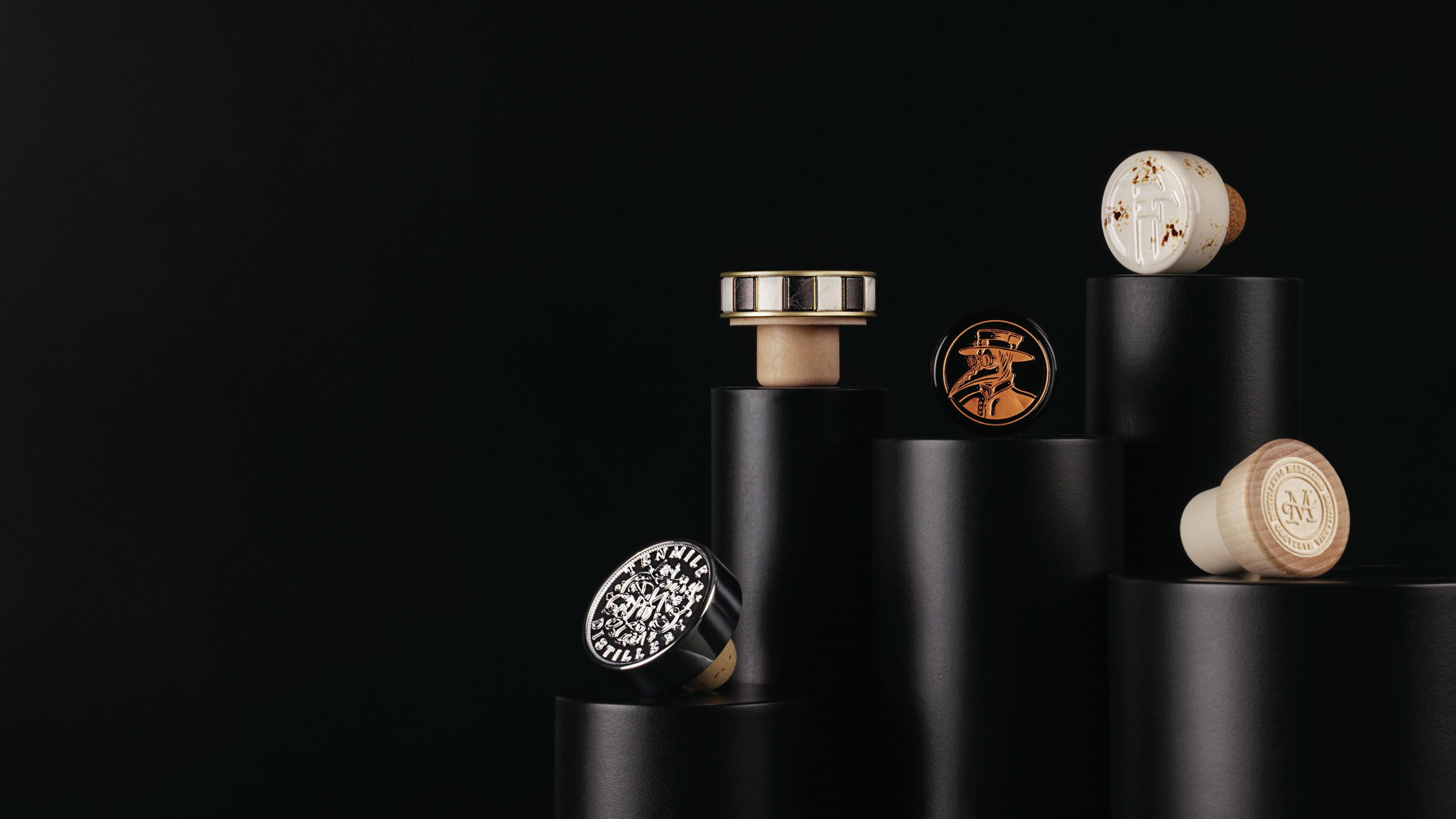
Easy access: Guala has lowered the barriers to entry for customisable closures
Vinventions, the multi-brand group formed from Nomacorc and other acquisitions, is another vocal proponent of widening access to bespoke formats. Today, its strategy explicitly targets flexibility across volumes – a shift that particularly benefits smaller players.
“Supporting small and boutique wineries is embedded in how Vinventions is structured industrially. If a closure supplier cannot properly serve a small winery today, that is not a market constraint, it is an industrial limitation,” observes Romain Thomas, product management, marketing and sustainability director at Vinventions.
This is not simply rhetoric – it’s backed up by clear examples of client delivery.
“Across Nomacorc, Sübr and Vintop, we are able to operate efficiently at very low volumes while maintaining the same standards of personalisation,” Thomas adds, noting that lead times and service levels mirror the care shown to large, international brands. “Small producers are not offered a simplified version of our portfolio. They have access to the same materials, technologies and design options. Scale still matters, but flexibility matters more.”
Cork Supply also frames its strategy around serving a diverse winery base, not just high-volume clients with generous budgets. Yet manufacturing highly customised products for small-scale clients inevitably raises questions about margins and operational efficiency, at a time when general overheads have spiralled over the past few years.
“Servicing small producers or producing highly customised products doesn’t have to dilute margins, nor should it,” replies Monika Michalski, global brand manager at Cork Supply. “There has to be a mutual understanding that these types of products have to be valued in a way that doesn’t put anyone at a loss. Not every producer is then willing to accept that price, but internally we have to consistently value our products, services and brand.”
Barriers to entry
It would be disingenuous, however, to claim that barriers to entry are not real considerations for closure firms. While Vinventions, Amorim and Cork Supply all present compelling cases that customisation is operationally feasible at smaller volumes, other stakeholders are more frank about the challenges of reducing scale.
According to François Margot, VP sales & marketing at Diam Bouchage: “Highly customised solutions for small producers can create more complexity than standardised, high-volume runs, and that can impact margins and efficiency. For smaller wineries, the main barriers to bespoke closures typically include tooling costs, lead times and sometimes internal prioritisation. These factors can make customisation feel out of reach compared to standard solutions.”
And yet Margot regards any weakening of margin as a necessary price to be paid – “a deliberate investment in wine quality and customer trust”, as he frames it, adding: “We accept that trade-off for a simple reason: we are passionate about wine, and our role is to preserve the identity that winemakers craft. Customisation and, above all, precise oxygen management help each cuvée to evolve exactly as intended.”

New tricks: technological advances are helping to democratise the world of closures
As a result, the company has introduced dedicated production lines that prioritise boutique clients and simplify the process, in addition to “streamlining lead times with improved planning, selective stock programmes and local supply capabilities worldwide”.
Nuno Silva, global marketing manager at MA Silva, expands upon the theme. “Naturally, some production costs are linked to order volumes,” he says. “Certain customisation processes, such as fire-branding, require specific tooling that involves meaningful investment. For this reason, minimum order quantities are sometimes necessary to make these processes viable.
“That said, we do not – and cannot – exclude or deprioritise a winery simply because it is small. Our reputation in the market has been built on exactly this approach: treating every customer as a long-term partner and finding solutions that balance technical feasibility with commercial reality.”
Lavish budgets
Of course, some segments of the industry – particularly high-end glass or highly specialised bespoke stoppers – remain economically centred on clients with lavish marketing budgets. When tooling and hand-finished detail are central to the product, smaller producers are still often priced out.
Flip the coin to the producer’s perspective and the debate shifts dramatically: it isn’t just about whether smaller wineries can afford bespoke closures – it’s whether they should, and whether it justifies the outlay. In theory, a custom-made closure can elevate perception and convey sustainability credentials – two increasingly important points of differentiation. The subject of added value, however, remains a divisive one, with different stakeholders travelling in different directions.
“I’m willing to pay more for customisation when the closure plays a clear role in differentiation – for example, if it strengthens brand recognition,” says Pia Usón Díaz, global brand marketing manager at Chilean wine producer Undurraga. “On the other hand, I’m less willing to pay more when the customisation is purely cosmetic, hard for the consumer to notice or easily replicated by competitors. If it doesn’t translate into stronger shelf impact, brand recall or sales performance, it’s difficult to justify the additional cost, especially in a tight margin environment.”
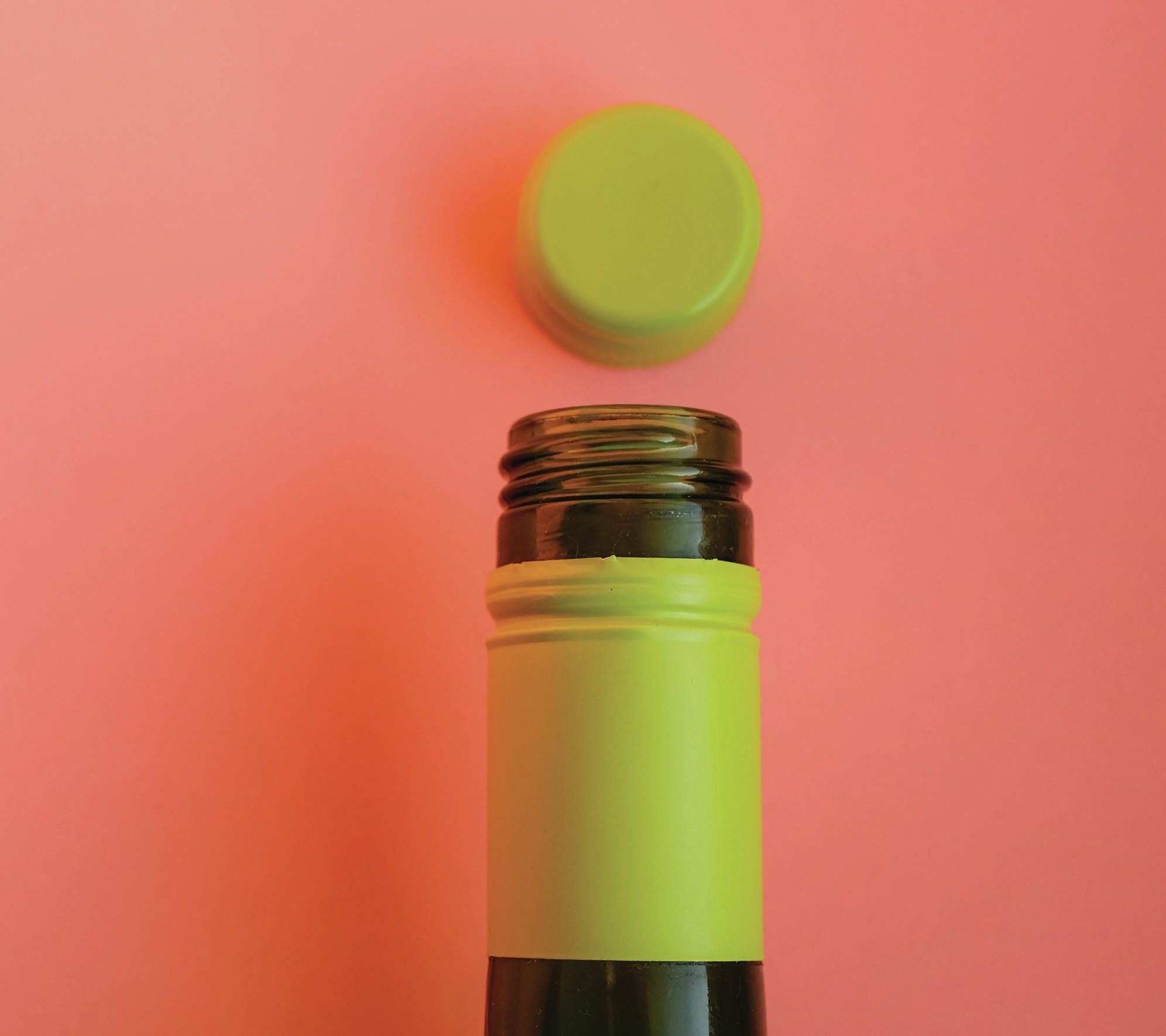
Turning the screw: margins are under pressure right across the industry
At the consumer level, Usón Díaz underlines the point that, while many drinkers pay little attention to the seal (with the notable exception of self-described ‘cork snobs’), premium or distinctive closures “can operate on a subconscious level”. She regards this subtle reinforcement of quality cues as relevant to the overall decision-making process, although of course there is no easy way of linking a closure to SKU sell-through. Instead, the brand focuses on indirect metrics such as “sell-out performance compared to previous packs, repeat purchase, feedback from the market and even social media comments or unprompted mentions of the packaging”.
Usón Díaz adds: ”If the closure supports stronger brand perception or pricing power over time, then it’s clearly doing more than just decorating the bottle.”
Quality and longevity
A more heritage-driven perspective comes from Cantina Terlano in Italy’s Alto Adige, where closure choice is rooted firmly in wine quality and longevity, rather than marketing. “We use natural corks of medium to top quality for all of our wines, as cork is a crucial element in the overall ageing process. High-quality natural cork allows for controlled oxygen exchange, supports the wine’s balanced development in the bottle, and plays a key role in preserving long-term quality and stability,” explains Klaus Gasser, commercial and marketing director at the cooperative.
Riccardo Ferrari, technical director at Giodo in Montalcino, believes “it is mostly wine professionals and producers who really notice a company’s choice of one closure over another”.
But consumers, he adds, “tend to build loyalty over time with a brand; if they have never come across flaws or unusual aromas, they know that the producer is paying attention to a detail that is sometimes underestimated.”
It is precisely through this care, he argues, “that a strong and lasting relationship between the wine brand and the consumer is strengthened over time”.
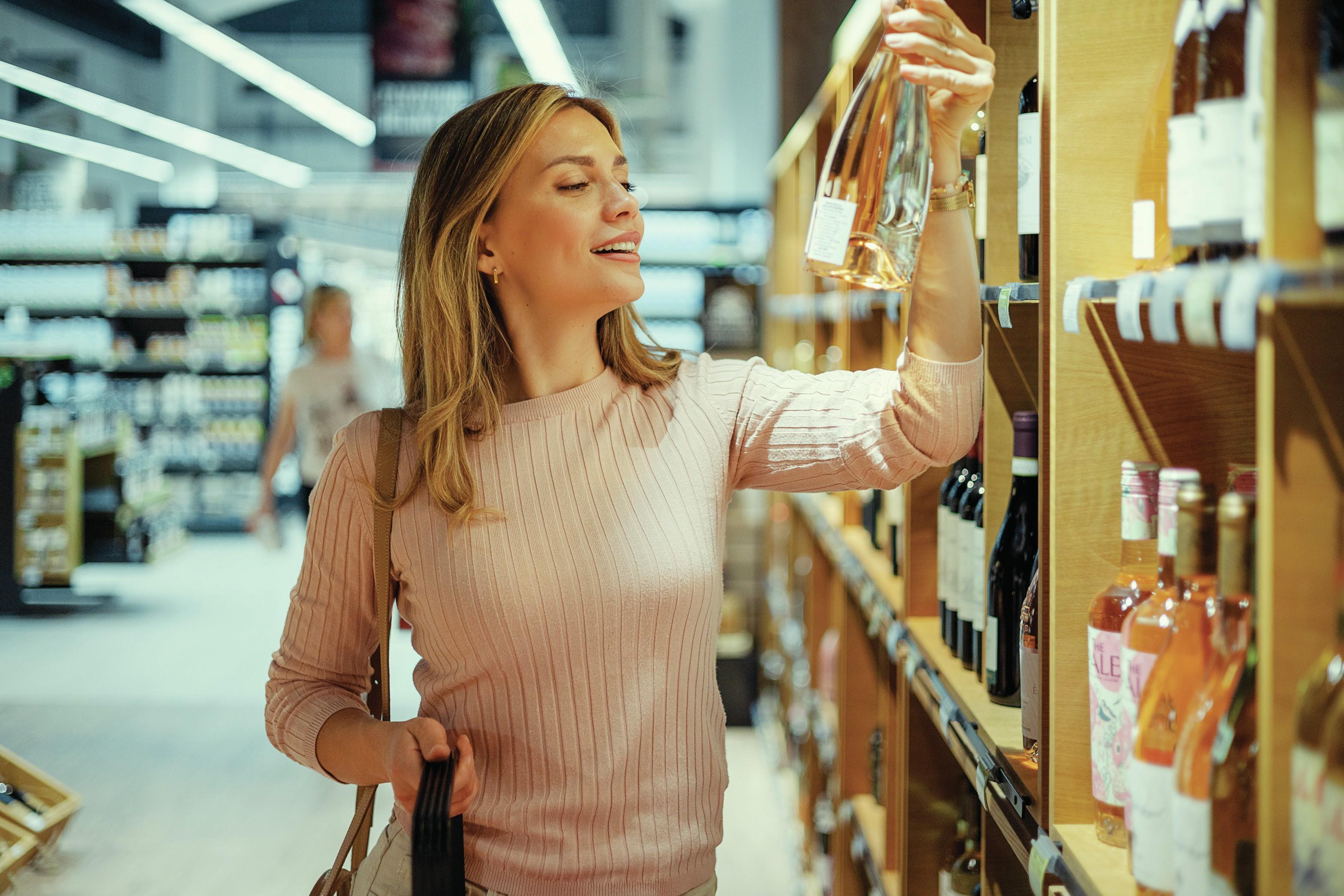
Subtle hints: the right closure can boost a brand’s image with consumers
Ferrari’s perspective, shared by many in the industry, is that, while bespoke closures may be increasingly accessible, their value is defined by intent. For some, customisation is a marketing lever that can earn its place commercially; for others, innate quality takes precedence over bespoke designs. Nevertheless, the level of customisation available in 2026 is impressive. Noticeably, it is extending beyond aesthetics alone – suppliers are developing solutions that are tailored to a producer’s specific technical and stylistic requirements.
Meanwhile, innovations such as Vinvention’s Vintop Infinite – which allows digital printing across screwcap surfaces – are moving customisation beyond simple logo printing to extended creative processes, supporting limited edition releases, etc. Stoppers made from natural cork and agglomerate can now also be laser-engraved with bespoke designs, offering an artisan feel that some wineries believe supports higher prices.
Access versus adoption
But with budgets tight and margins increasingly thin, access will not automatically equal adoption. “With rising production costs, closures are definitely something we look at very carefully. They’re not automatically a top priority,” observes Undurraga’s Usón Díaz.
Long dominated by scale and material conventions, the closures industry is increasingly influenced by technological innovation and the reality of a shrinking global market. Today, customisation is no longer an elite service reserved for cru classé Bordeaux and blue-chip Burgundy – but this shift is being driven by pragmatism as much as egalitarianism.
“Supporting small and boutique wineries is becoming increasingly strategic,” notes Diam’s Margot. “The market is evolving toward premiumisation and differentiation, which means customisation is no longer just a niche, it’s a growth driver. While large brands remain important for scale, boutique producers often lead innovation and set trends that resonate with consumers.” He describes the modern corporate ethos of Diam Bouchage as a balancing act: a judicious mix of “leveraging economies of scale where possible, but also investing in flexible solutions and tailored closures that help smaller wineries express their identity”.
He adds: “In short, customisation is not just for big brands; it’s a priority across the board.”
Yet democratisation is neither uniform nor automatic: cost, intent and perceived value still govern adoption. For some producers, closures are branding and sustainability signals; for others, guardians of tradition, wine quality and ageing. But for smaller wineries seeking to add a bespoke touch, the opportunities for meaningful differentiation have never been greater.
Related news
Guala Closures expands Mexican manufacturing


