



‘Anytime we are not in a drought is positive’: California Wine Institute
California’s drought-free declaration marks a psychological turning point after decades of water stress. But industry leaders tell db that long-term discipline, not short-term relief, must continue to shape vineyard and winery decisions.
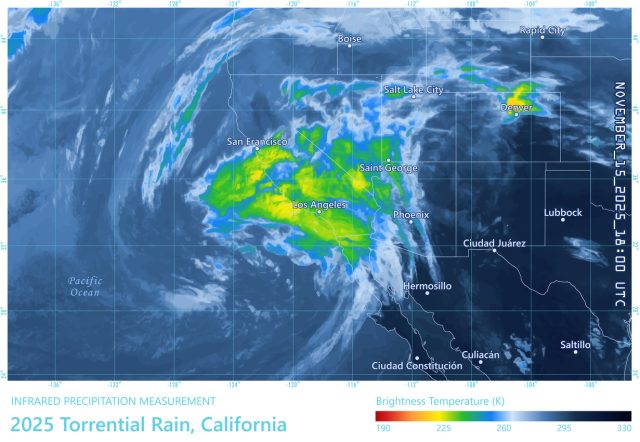
When California was declared 100% drought-free for the first time since Boxing Day 2000, the announcement drew national attention, as reported by the drinks business. The designation, based on data from the US Drought Monitor, reflected improvements in rainfall, snowpack, soil moisture, reservoir levels and streamflow, according to federal scientists and water managers.
For wine producers, the news offers encouragement rather than a change of course. “This designation is meaningful because anytime we are not in a drought is positive and indicates that the state is recovering from previous droughts and is better prepared to handle future climate changes,” Allison Jordan, vice president, environmental affairs, Wine Institute and executive director, California Sustainable Winegrowing Alliance, told the drinks business. “However, it’s important to note that there are significant regional differences in and there has been variability in drought conditions in wine regions across the state.”
Planning for scarcity
In practical terms, Jordan said the shift in official status does little to alter vineyard or winery planning. “Water use efficiency and conservation have been a significant focus of winegrowers’ efforts over the past several decades, and will continue to be,” she said.
She pointed to the California Code of Sustainable Winegrowing, described as the centrepiece of the state’s educational and certification programmes, which addresses both vineyard and winery water conservation and water use efficiency. “Currently, 2,634 vineyards that farm 251,687 acres (101,854 hectares) and wineries that produce 90% of California wine are certified sustainable,” she said.
Beyond certification, Jordan said resources and technology continue to shape practice. “The California Sustainable Winegrowing Alliance (CSWA) has a number of additional water-related resources available at sustainablewinegrowing.org. We’re also seeing more technology that helps with precision agriculture and growing interest in dry farming.”
Partner Content



She added that economic and qualitative pressures remain. “In addition, there is still a cost associated with water and water is still a precious natural resource. Careful water management is also important in terms of wine quality.”
Cycles and climate risk
Improved rainfall does not, in Jordan’s view, lessen the structural risks facing the state. “Droughts in California are cyclical and likely will be exacerbated by climate change. Therefore, we need to be prepared for future drought conditions,” she said.
This caution mirrors the warnings of climate scientists cited by the drinks business. Jay Lund, professor at UC Davis’ Centre for Watershed Sciences, told The Mercury News that the drought map offers a broad snapshot but can lack nuance in a state with complex water systems. Daniel Swain of the University of California Division of Agriculture and Natural Resources added that winter conditions can change rapidly and that rainfall patterns remain volatile.
Jordan also urged restraint in how the milestone is framed. “If focused solely on this current snapshot, they are missing the long-term sustainability approach to water management that has been broadly embraced by California winegrape growers and vintners,” she said.
That long-term view is shared by producers on the ground. Napa Valley grape growers told the drinks business that resilience remains their priority even after the drought-free declaration. Justin Leigon, vice president and partner at Pina Vineyards Management and vice president of Napa Valley Grapegrowers, said the designation “does not change how our growers operate day to day,” adding that investment in conservation, data-driven farming and long-term planning under California’s Sustainable Groundwater Management Act continues to shape decisions.
A fragile recovery
The water milestone comes amid acute market pressure. As reported by the drinks business, falling consumption, oversupply and weak demand are driving restructuring across the US wine sector. Constellation Brands is to shut the Mission Bell winery in Madera County, resulting in the loss of about 200 jobs, while Treasury Wine Estates has written off the goodwill of its Californian interests due to weakening conditions.
Related news
Glass half full: Asia offers hope for struggling California wine
California pleads with Quebec to lift trade ban
California wineries request US$32 million to fight vineyard pest


