



Reappreciating the 2016 Bordeaux, ‘ten out of ten vintage’
Despite Bordeaux 2015 being perhaps a flashier vintage, the “benchmark year” of 2016 has come into own, with Bordeaux Index’s recent retrospective tasting highlighting how well it has delivered on its early promise. Arabella Mileham reports.
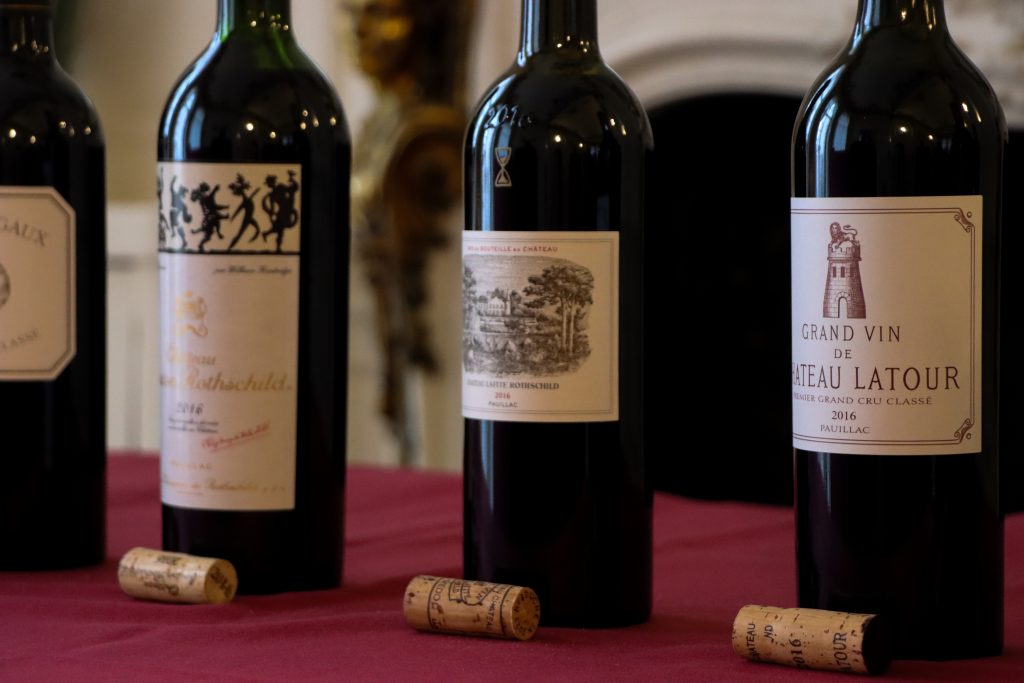
Writing in their 2016 vintage retrospective report, Bordeaux Index acknowledged that from the very first tastings, the 2016 “showed extraordinary promise, drawing attention for its balance, finesse and the remarkable quality that would come to define the vintage”.
Back in 2017, its director of fine wine, David Thomas called it “some of the greatest wines I have tasted en primeur” and the retrospective tasting ten-years on shows exactly how well the wines are living up to this early promise. It is “a vintage of classicism and clarity: wines of elegance, precision and deep-rooted sense of place, combining immediate charm with formidable ageing potential,” Bordeaux Index noted.
Speaking to the drinks business at the tasting last week, Ludovic von Neipperg, technical director at Vignobles Comtes von Neipperg vineyards, whose brands include St Emilion premier cru Château Canon La Gaffelière and La Mondotte, pointed out the differences between the 2015 and 2016, noting the fleshy, riper and rounder nature of the 2015 vintage compared to the more tense 2016, which has more acidity and tannins that “are a little bit more grippy”, suggesting better ageing potential.
He pointed out that the ’16 itself came at an interesting point in the history of Bordeaux, and Saint-Émilion in particular. As Jancis Robinson noted in her original report in April 2017, “the vignerons… are learning to cope with new technologies and a level of precision that would have been unthinkable even 20 years ago.”
As von Neipperg continued: “I think when you taste the range, you can see some style differences, and some of the wines are a bit evolved in the nose, and some of the wines have retained a bit more freshness and vibrancy.”
According to Matthew O’Connell, CEO of LiveTrade and head of investment at Bordeaux Index, people believe (correctly) that “this was the start of a golden age of winemaking”.
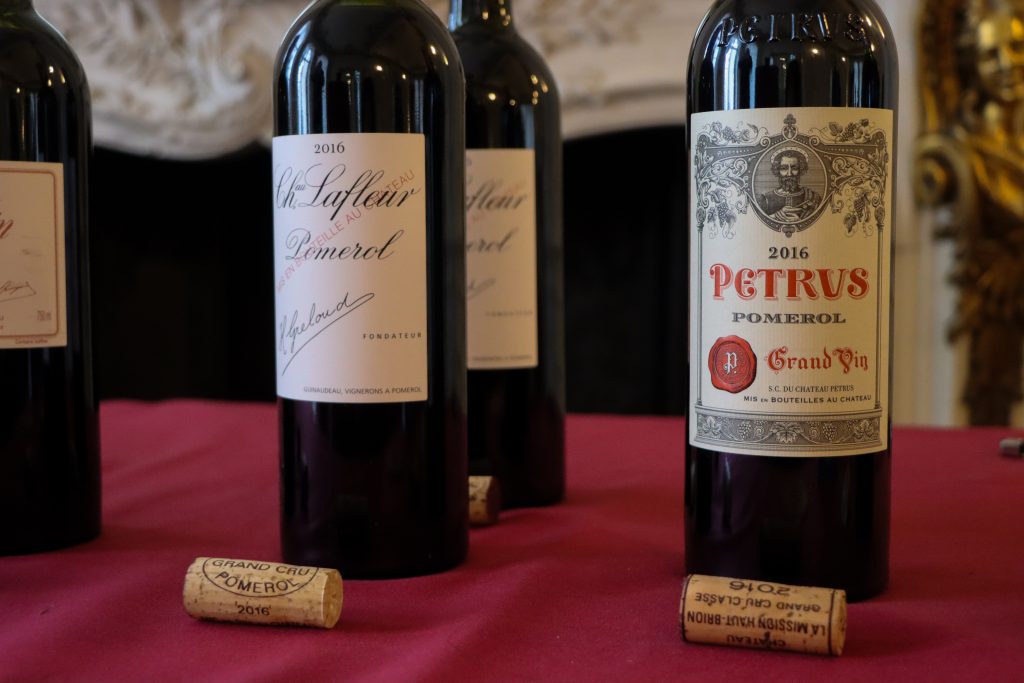
“They [the wines] are very terroir expressive, very fresh but with good concentration, with quite lovely plush fruit but no lack of freshness, which is a lovely combination,” he said. However, people had “lost a little appreciation” for exactly how good the 2016 is, particularly in the excitement of the well-received 2015 vintage.
“Between 2011 and ’14 there weren’t any fantastic vintage, and – based on our tasting – with the ’15, people got maybe a bit more excited than they should have. There were a few good wines and obviously post-2016, the ’18, ’19, ’20 and ’24 were really good vintages – but I feel that people have lost appreciation for exactly how good the ’16 is.”
They haven’t differentiated enough between the 2016 as “a ten out of ten vintage, and other decent vintages”, he concluded.
The wines are “singing”
Clare Burke, head of sales UK, UAE, India and Ireland at JP Moueix, told db that the 2016 was starting to replace vintages that people had been drinking, such as the ’12s and ’14s. “A lot of the ’15s that have been drunk too,” she noted. The younger vintage – the ’12s, ’16s and ’19s, right up to ’22 – are all those lovely, lush vintages,” she said.
Partner Content


“The ‘16 is absolutely lovely now, as is the ’22 when you open them,” she said. “The ’16s are singing and they’ll still be there in ten or 20 years.”
They are also still “very good value” she said, asking “What Burgundy can you buy” at the level of some of the ’16s?
Great value, good ageing potential
The wines are on the market at around the same price as their ex-London release price, O’Connell agreed, although they have done better than other younger vintage “that people have liked”.
“They have outperformed recently and I think that will continue,” he said, particularly as they start to be drunk and become more limited in supply.
“They are at a 20% discount vintage to the 2000s, and yes, they’re five to ten years younger, but that looks pretty cheap to me, [especially as] they’re probably better than the ’05 and the ’10,” he said.
With the ten-year anniversary prompting people to stock up having been reminded of the sheer quality of the 2016, this is likely to have additional positive effect on the still languid market.
“The ’16s are good value now, but when they go up again, and other vintages start to look cheaper by comparison, this may create more movement in the market,” he said.
And this is exactly what Bordeaux needs.
“You need that movement in the market, you don’t have that at the moment, there’s real inertia,” he said.
Vintage conditions
Weather-wise, the 2016 was not an easy one to produce. There were extremes of conditions meaning “that smart, knife-edge decisions were constantly being made”, the Bordeaux Index report noted. “On both sides of the river, those with a good portion of older vines and a majority of water-retaining soils had by far the best of the situation; many younger vines and those planted on sandy soils struggled with the drought.”
And this feeds into what Mathieu Depercenaire, commercial director and export manager at Château La Violette, Le Gay and Montviel noted. He argued that the Right Bank had been more successful in this vintage because it had more Merlot, which has integrated a lot more, making it “very, very easy, very smooth and very elegant.”
“After 2015, 2016 was maybe the better vintage,” he said, “with a very, very nice summer”.
Related news
Vin de France gains ground in Bordeaux


