



The secret to buying (and producing) sustainable wine
For people who love wine but are also fond of people and the planet, it has never been a more promising or confusing time. However, cork closures offer a simple route to more sustainable wine, writes Kathleen Willcox.
The earth- and socially-sustainable options abound, from USDA Organic, SIP Certified, Certified California Sustainable Winegrowing, LODI Rules, LIVE Certified, Salmon Safe, LEED Certified, B Corp Certified, Regenerative Organic, Demeter, Napa Green, to New York Sustainable Winegrowing. That’s a starter list, and just for the US. Many producers’ bottles wear multiple certifications.
What’s truly green and what’s greenwashing? Depends on whom you ask and what their personal priorities are, from reducing chemical use to ensuring clean waterways or providing fair pay to workers.
But one of the biggest steps a buyer and producer of wine can take toward drinking and making a truly eco- and human-friendly wine is also the simplest: purchase or make wine with a cork closure.
Cork’s environmental sustainability
Cork has been used to seal wine vessels since at least the 1st century AD, and the use became widespread in the 1600s. Cork forests are recognised by the United Nations and the World Wildlife Fund as biodiverse carbon sinks essential to the health of the planet. They have been identified by the Critical Ecosystem Partnership Fund as one of the world’s 36 essential biodiversity hotspots, alongside the Amazon rainforest and the African Savanna.
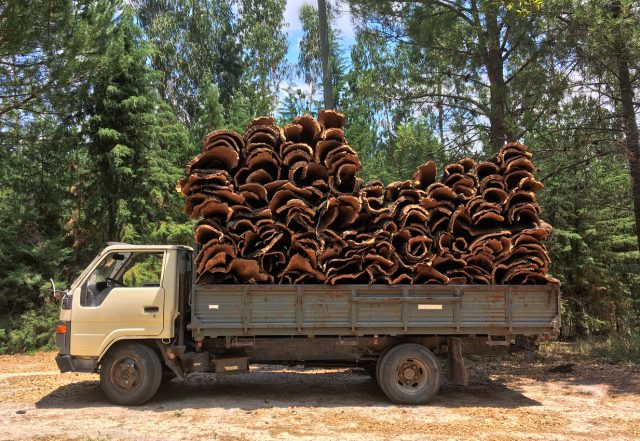
There are 2.1 million hectares of cork oak forests sprinkled across the Western Mediterranean Basin, acting as lungs for the region, and indeed, the planet. Cork oak landscapes are carbon sinks; the Portuguese Higher Institute of Agronomy estimates cork oak forests store 14.7 million tons of carbon dioxide per hectare a year. That’s because cork trees are never cut down and their bark is harvested every nine to 12 years.
“The bark is harvested by hand, and once the bark is harvested, the trees are actually healthier and absorb more carbon dioxide because they go into growth mode,” says Patrick Spencer, executive director of the Natural Cork Council. “The regenerated bark absorbs more carbon, produces more oxygen, and the process makes the tree itself healthier and stronger.”
An ancient forest
The regions of Portugal where cork trees proliferate—about one-third of the world’s cork oaks are in Portugal—have extraordinarily poor soil and very little water, making them even more prone to climate change and wildfires than the rest of the world, Spencer explains.
“The cork trees prevent forest fires because they are fire-resistant and actually won’t burn until the temperature reaches 2,000 degrees Fahrenheit,” Spencer says.
Plus, the trees themselves live for 200 years, hosting and sheltering thousands of other trees, plants, insects, birds and animals in the process, dozens of which are endangered and don’t exist anywhere else.
Herdade Aldeia de Cima, which sprawls across 3,500 hectares of forest or montado in the Serra do Mendro, part of the oldest geomorphological zone on the Iberian Peninsula, farms 22 hectares of vineyards, while producing cork and managing the forest.
Winemaker António Cavalheiro says the ancient forest defines the region.
“The montado forms a mosaic of shrublands, pastures, agricultural pockets and forest stands that have existed there for an estimated 40 million years,” says Cavalheiro. “It’s a natural habitat for 140 plant species and more than 200 animal species. It provides refuge for rare and endangered species like the Iberian lynx, the imperial eagle, the golden eagle, Bonelli’s eagle and the black stork.”
Cork’s social sustainability
But beyond its biodiversity, the montado is a man-made ecosystem that has evolved over centuries, fosters the responsible use of natural resources, respects and supports a traditional local culture, he says.
“The cultural identity of the Alentejo is inseparable from the cork oak forest,” Cavalheiro says. The Santana do Mendo has been recognised since medieval times and is located along the ancient Roman road between Évora and Beja. It developed as an isolated, but self-sufficient community shaped by forestry and agriculture.”
The production of cork is central to the social and economic life of the region.
“It sustains families, preserves traditional knowledge, and supports regional livelihoods,” Cavalheiro says.
And on a global scale, the production of cork is much more environmentally and socially sustainable than the most commonly used alternatives.
Partner Content


“The whole production cycle of cork has zero carbon footprint, and is in fact beneficial to the world,” Spencer says. “Compare that to screwtap closures, which depend on mining, which is absolutely devastating to the planet, and often include plastic elements, which require drilling for oil, and vast quantities of energy to turn those petrochemicals into plastic.”
Cork, simply put, is “carbon positive,” says Marta Mendonça, leader of climate action catalyst The Porto Protocol Foundation. “Cork comes from nature. It’s not plastic. When it has been used, it will not last for centuries in a landfill. By utilising cork from cork forests, you are not harming anything. On the contrary, you are taking care of that tree, supporting a biodiverse habitat, and you’re supporting an economy, because harvesting cork is a very difficult, very well-paid and skilled job that has been a leading industry in regions like the Alentejo for centuries.”
Cork harvesters are, in fact, the highest-paid agricultural workers in Europe, Spencer says, and in the Iberian Peninsula alone the industry employs tens of thousands of people.
Other considerations
For wineries like Unico Zelo in Adelaide, Australia, the environmental benefits of cork were the initial draw, but concerns about cork taint pushed the team to use a composite cork, which is composed of small particles of cork that are treated to eliminate cork-taint-causing compounds like TCA.
“Our ethos really boils down to: you can’t grow a screw cap,” says Noah Ward, Unico’s brand ambassador and head of wine sales. “The fact that the material is based on a plant that grows in the ground and can be replanted, that also sucks carbon out of the atmosphere, and the final product is endlessly recyclable is a massive plus. Sustainability is definitely a massive focus for us, but we wouldn’t use composite cork if we didn’t believe in the product. It’s why we don’t use traditional cork, but instead use DIAM or Vinc.”
That TCA-free guarantee is essential to Nate Wall, vintner at Troon Vineyard & Farm in Grants Pass, OR. Wall explains that as a biodynamic, organic and regenerative organic vineyard and winery, sustainability guides every decision. Cork has always been Wall’s closure of choice, but when he discovered in 2019 that their line of Origine corks was available in the US, he switched immediately.
“The benefits of DIAM are well-known, particularly the supercritical cleansing step to ensure all cork particles are free of TCA and 100 or so other related compounds that can alter the aroma or flavour of wine,” Wall says. “Having undrinkable bottles of ‘corked’ wine is incredibly wasteful, not just financially, but also considering all the resources used to craft, package and transport the product.”
Beyond TCA
In addition to concerns over cork taint, many producers want to ensure their cork comes from a forest that is responsibly managed.
“It’s very important to ensure that corks are harvested from forests that are certified by the Forest Stewardship Council,” says Mendonça. “This ensures that the forest is managed responsibly, according to environmental and social standards.”
Terry Culton, the director of winemaking at Willamette Valley Vineyards, produces 260,000 cases of wine closed with FSC-certified corks every year.
“Choosing FSC-certified corks reflects our commitment to the stewardship of land and people,” Culton says. “We can track them from forest to bottle, ensuring the protection of our forests and the production of excellent wines.”
Willamette Valley Vineyards also helped launch the Cork ReHarvest natural cork recycling program in the U.S. Cork-collection receptacles can be found in Whole Foods and other retailers across the country.
Culton also notes that wine closed with FSC-certified corks is better for the planet—and our palates.
“Unlike screw caps, natural cork allows wine to develop and mature gracefully over time, enhancing complexity and depth,” Culton insists.
Pierre-Henri Morel, proprietor and general manager at Two Hands Wines in Australia’s Barossa Valley, agrees.
“We craft wines to age, so we choose a closure that will help us achieve that goal,” Morel explains. “Ageability and quality are at the forefront of our decision-making for closures. I always find it surprising when I see Shiraz from exceptional vineyards being bottled under screw caps, as screw caps keep the wine under a very reductive environment. Even though consumers aren’t cellaring wines as much as they used to, we believe wines evolve with time, and you don’t want a 20 year-old-wine to look the same as a three-year-old one.”
Net benefit
Cork is an environmental powerhouse that supports thousands of well-paying jobs. It’s difficult to calculate just how much carbon each bottle of wine produced with a cork stopper offsets—there are so many variables, from the way the grapes were farmed and produced, to the weight of the bottle. (Although there is a calculator that attempts to do just that).
But one Life Cycle Analysis of cork and screw caps found that when the biogenic fixing value of the oak forest is included in the calculation, one cork removes -276 grams of carbon dioxide from the planet, while screw caps contribute 37 grams of carbon dioxide to the atmosphere.
It’s hot enough around here already—put a cork in it!


