



The forgotten cost of sustainability
Of the three pillars of sustainability, the economic factor is perhaps the one that is most easily overlooked by wine businesses, reports Tom Bruce-Gardyne.

“Sustainability is a much overused word,” says Mike Wagstaff, MD of Greyfriars, a grower-producer of English wines in the Surrey Hills. “But I think economic sustainability is probably as important as environmental or social. We’ve all got to sell at a price that we can stay in business for.”
It sounds obvious, but it is often overlooked in the whole debate around wine and the ‘s-word’.
“For the moment, I think there is an inherent forgetfulness around the economic pillar of sustainability,” says Dr Peter Stanbury, research director at the Sustainable Wine Roundtable. “Theoretically, it is supposed to be that three-legged stool of environmental, social and economic, but what tends to happen is that more and more gets loaded onto the grower without any sense of how they’re going to do this.”
Has the premium evaporated?
Wine buyer-turned-consultant Justin Howard-Sneyd MW agrees. “One of the challenges of better farming is to reward the growers who do it sufficiently to make it worth their while,” he says, pointing to the move to organic wines that initially earned its producers a small premium. “The trouble is, the market hasn’t shifted as fast as the growers have, and there’s too much organic wine sloshing around. The premium has pretty much evaporated, leaving the growers scratching their heads and wondering why they bothered.”
Stefano Girelli, whose wine interests include the Santa Tresa estate in Sicily, believes that much of the island is naturally organic, if not certified as such. The cost of certification is something he feels “you have to swallow if you believe in it”. But things are tough right now. “Our market is suffering from lower demand, and requests from our customers to be more and more competitive,” Girelli says, adding that “another severe challenge is the cost of all the recycling of the glass and paper”.
Packaging bugbear
According to Jane Masters MW, co-author of Rooted in Change: The Stories Behind Sustainable Wine, “about 50% of wine’s carbon footprint is in its packaging and distribution. One of my bugbears is that everyone thinks that organic wine is the most sustainable, but quite often it’s in very heavy glass bottles, which completely contradicts the ethos of what they’re trying to do”.
In the UK, lighter glass is often associated with bulk shipping, which “can be the right thing to do from a carbon footprint perspective”, Masters says, while admitting that bulk can have a social impact on countries like South Africa if it causes job losses on bottling lines. Many Italian DOCs insist on local bottling, including Prosecco, where “there’s pressure to put it in a can, or other formats”, says Dr Stanbury.
That may benefit the environment, but it’s very unlikely to happen, given the wine’s history. When a virtually naked Paris Hilton promoted a canned version in 2006, it was the catalyst for change. The authorities promoted Prosecco IGT to DOC status and ended years of abuse, as they saw it, while the original DOC became a DOCG and the sparkling wine took off.
As it happens, Prosecco DOC growers now farm the most profitable grapes in Italy, earning a little more than 20,000 a hectare on current prices of 1.15 a kilo.
Wildest dreams
That’s beyond the wildest dreams of growers in Puglia, where Vito Palumbo runs the Tormaresca estate for Antinori, of which he is also marketing director. “Puglia was once the cellar of Europe, based on a system of co-operatives and bulk wine,” he says. “It was a system that was obviously linked to the low-price segment, and I don’t know how that’s still sustainable.”
Palumbo fears that many local producers have been cushioned from reality by the fashion for Primitivo. “When that ends, there’ll be big problems as they won’t even be able to sell low-price, private label wines. Hopefully, we won’t get to that point, and can change the system before it collapses.”
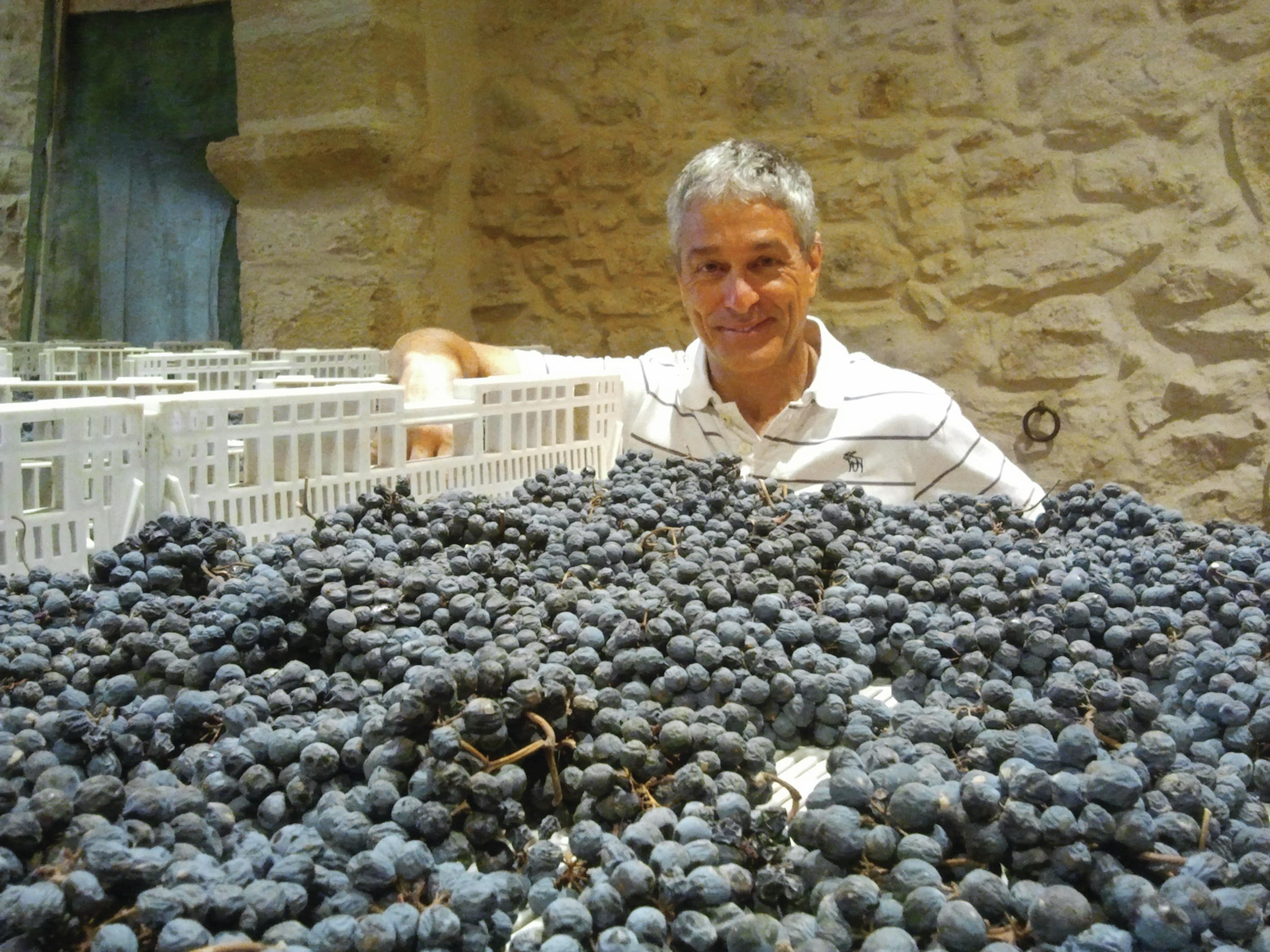
Rising costs: Stefano Girelli says a big challenge is the cost of recycling glass and paper.
To shift from quantity to quality, and help protect the environment in the process, growers have to be incentivised to reduce yields, and to use fewer chemicals. This is something Palumbo accepts “absolutely”, though who is going to pay is unclear. However, he does sense a change in mindset, and says: “Puglia lacked the idea of a wine grower that would also bottle – everyone used to sell their grapes or juice to someone else – but the region is starting to see the beginning of a rebirth of small producers.”
Winery balance sheets
Andreas Kubach MW, co-founder and CEO of Península Vinicultores in Spain, is frustrated by the fact that the whole green debate on wine tiptoes around the issue of viability. “If it’s not economically sustainable, it can’t be environmentally or even socially sustainable,” he says. “It is so obvious, but no-one’s really addressing it.
“Some people go on and on about their solar panels or lightweight bottles, which they fill with the most unsustainable wine you can imagine.
“I’ve been in the business 30 years, and in Rioja the average price of grapes hovers at around €0.80 a kilo,” he continues. “It goes up and down depending on yield, but the trend is flat. If you were to look at the balance sheet of quite a few wineries, they’re not in good shape. So maybe 20% of the Rioja market is not working.”
Market price
Kubach believes the land should yield an average minimum financial return of 3%–4% for the grower, and 8%–12% for the producer. If the market won’t accept that, “it pushes the whole system into environmental unsustainability”, he says, “with producers actually lying and cutting corners just to survive”.
At the Bideona joint venture with the Izagirre family, Kubach has assembled more than 300 small plots in Rioja Alavesa. “Because there’s real, intrinsic quality in those vineyards, it is relatively easy to make good wine if you scale it correctly,” he explains. “If enough buyers, gate-keepers and customers recognise the quality, then it works.” Sadly, too often they are chasing the lowest common denominator.
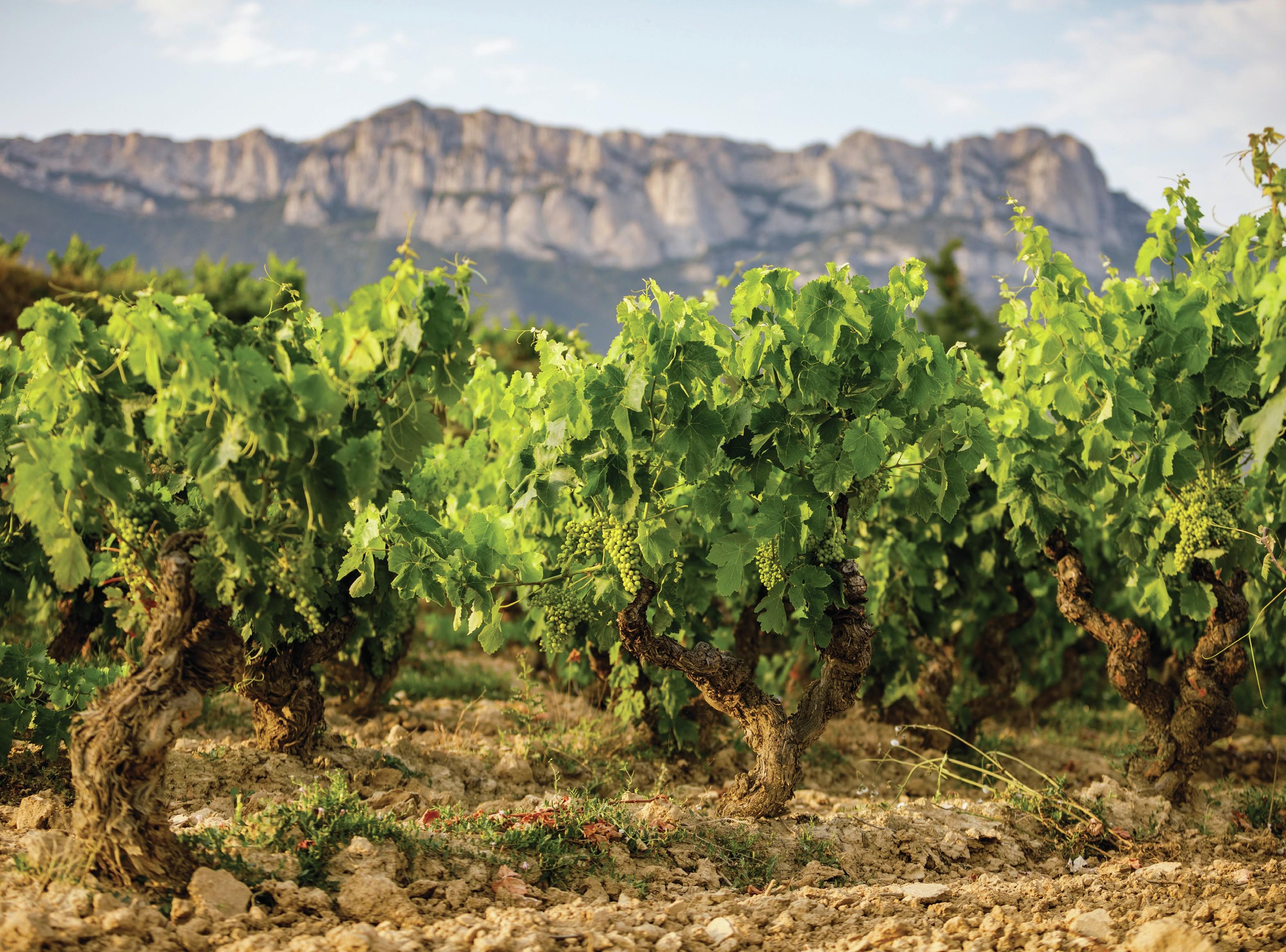
Hard graft: in a region like Rioja, grape prices remain stubbornly low
“Any pub chain or retailer in the UK has to acknowledge that you can’t produce a sustainable bottle of wine at €1.15 ex-cellar; it is technically impossible,” Kubach says. “The amazing thing is you can at €1.80. The difference is fairly small, but it’s just that last little bit that does so much harm.”
Squaring prices
That message hasn’t got through to Asda, which was selling Nice Drop Merlot from Spain, for example, for just £4.15 as of December. Strip out the duty and VAT, and there is barely £1 to split between the grower, the winemaker, the packaging, the transport and the retailer. Asda was asked how this squares with its commitment to sustainability and ethical sourcing, but had yet to respond at the time of writing.
Of course it’s not just Asda that is doing this, and it is certainly a buyer’s market right now, given the global oversupply of wine. In Australia’s Riverland, for example, which produces one-third of the country’s annual crush, prices for Shiraz grapes dipped as low as AU$200 (£100) per tonne in 2024. Similarly, falling demand in the US “has collided with several years of strong harvests, especially in major producing states”, says the Washington DC-based wine consultant and drinks industry lawyer Caroline Hermann MW.

Sea change: regions like Southern Italy may need to transform their business models
As to the impact on US growers, she says: “Instead of pushing them to use more chemicals or boost yields, it’s driving many to do the opposite: leave fruit unharvested, pull out vineyards or leave the industry altogether.”
In California, she claims, “an estimated 30% of the 2025 crop will end up left unsold – amounting to US$2m–US$3m in lost sales”.
Abandoned plots
Allison Jordan, VP environmental affairs at the Wine Institute of California, accepts the need to rebalance supply and demand, but also “worries a lot about what’s the next use of that [abandoned] land. Hopefully, a lot of these farms have been in families for generations, so they’ll find a way to let it fallow, and hopefully in two to three years when demand goes up, they can replant.”
There are plenty of examples of the environmental damage caused by abandoned plots, from landslides in the Douro to desertification in Sicily. According to Howard-Sneyd, abandoned plots were one of the reasons why the 2025 fires in Corbières were so bad.
“Basically, vineyards don’t burn, they get scorched,” he says. “These vineyards had been abandoned 10 years ago and had turned to brush, and brush does burn.”
Back in California, Jordan explains: “Our mission has always been to promote the adoption of sustainable practices, and we’ve done hundreds of workshops all over the state.” These have ranged from water conservation and using cover crops to harvesting by night to reduce the need for refrigeration.
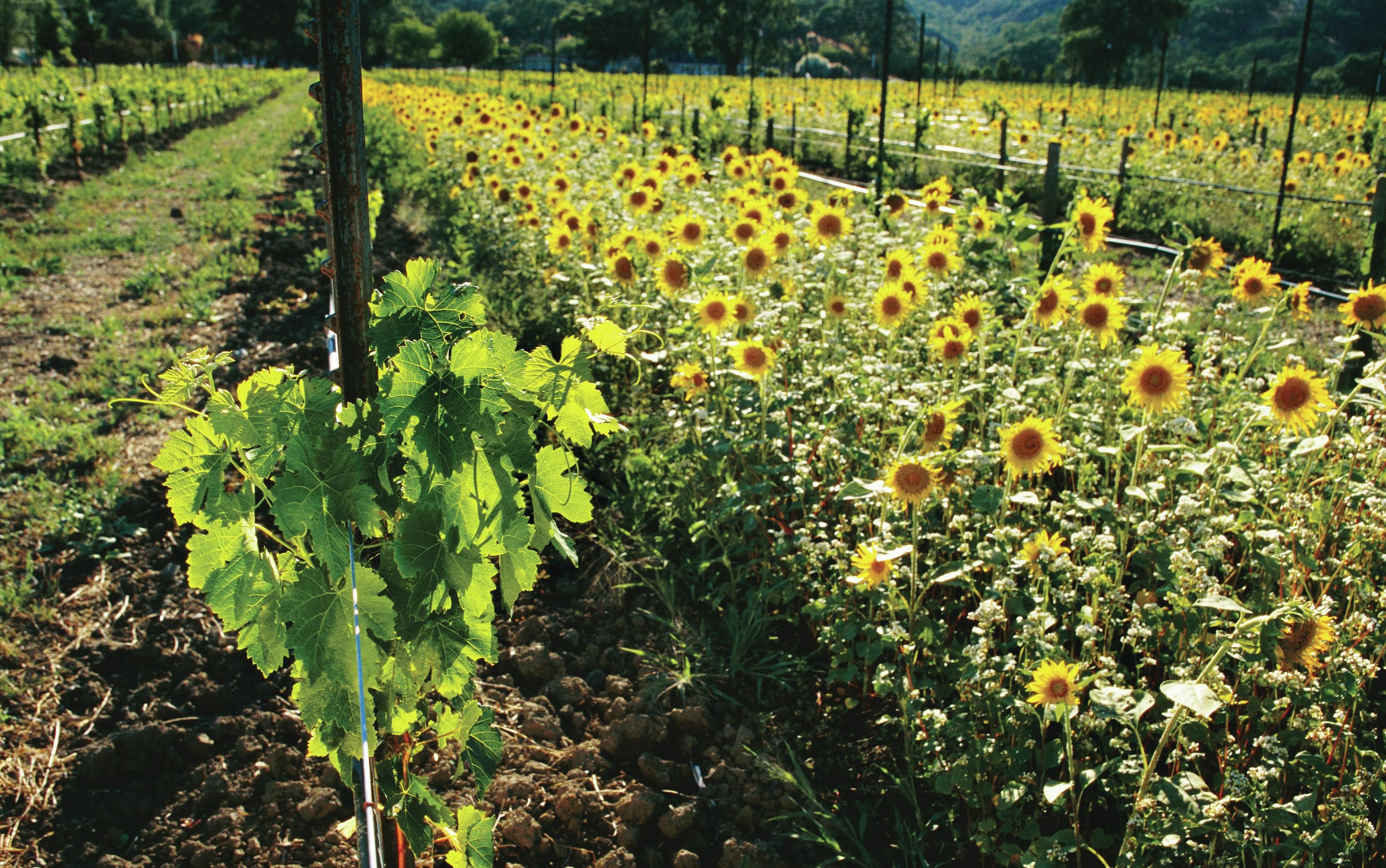
Cover crop: farming sustainably can enhance profitability
Clearly, as long as the supply chain is financially viable, the environmental and economic goals of sustainability can often be aligned. As Jordan says: “Any time you’re saving energy, you’re obviously saving money,” and the same economic argument applies to the targeted use of sprays, compared to spraying the entire vineyard.
Virtuous circle
In Chile, Elena Carretero, Santa Rita’s director of corporate affairs, sustainability and tourism, talks of “creating a virtuous circle between productivity, economic stability and environmental care”. She puts this down to the firm’s “financially solid supply chain [that] allows growers to adopt practices that improve long-term vineyard performance, such as increasing organic matter, enhancing soil structure or reducing chemical applications.”
Howard-Sneyd, a trustee of the Regenerative Viticulture Foundation, makes a similar point. “There are some examples where you can actually improve profitability by becoming regenerative,” he says. “You may or may not get a premium for the wine. You may get better yields, but you will have lower costs.”
He admits there’s a cost in time for anyone wanting to learn how to farm regeneratively, and that so far, “relatively few people are trialling it”, although “regenerative is growing very fast in the US and is gaining real traction with consumers”.
Not just for the elite
O’Neill Vintners in California is a leading light, and its head of sustainability, Caine Thompson, believes “everyone should be able to experience the benefits of this growing style and the quality of the fruit … [and] not just the elite”.
Yet all the while, for those producers who are struggling to compete in the market, there is what Howard-Sneyd calls “that very easy alternative, of using more nitrogen to get more yields, which leads you terribly far down the wrong track, leading to very depleted soil and very weak vines. When they get diseases, you use more sprays and it becomes a sort of negative cycle”.
“The global picture is not a good one for the wine sector at the moment,” adds Hermann. “But it has been through a variety of cycles before and survived, and people who love wine won’t stop drinking it.”
For Dr Stanbury, the wine trade is on the right road to balancing economics with sustainability.
“It’s going to take time and effort, but I think there are enough willing players in different parts of the supply chain who are asking the right questions. Ultimately, we’ll get there.”
Related news
10 things to look for when drinking rosé wine


