



What happens when Dry January is replaced by cannabis?
As Dry January rolls around, more people are choosing to drink less alcohol, but not necessarily to go without intoxication altogether, writes Kathleen Willcox. Instead, a growing number are swapping wine and spirits for low-dose cannabis drinks and edibles.
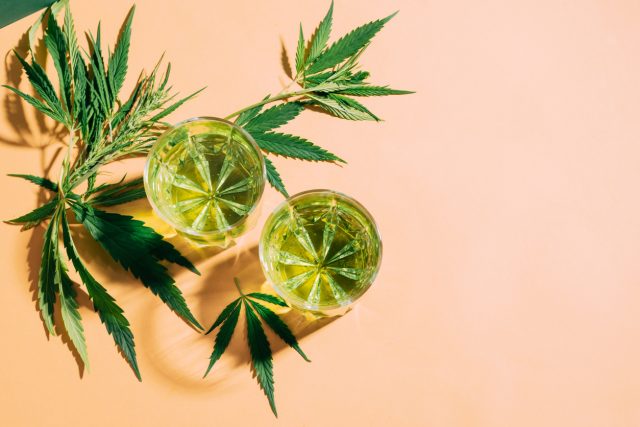
It’s no secret that more and more people are drinking less and less alcohol, especially in January. But instead of abstaining from intoxicating substances, they’re swapping their Cabernet for cannabis.
“In general, I don’t think people actually want to quit alcohol altogether, but rather they are looking to shift their relationship with it,” says Lauren Miller, co-founder of Wims!, a low-dose portable cannabis tonic that fits in a pocket. “Instead of alcohol being the default choice in every social setting, consumers are taking a more intentional approach and starting to ask, ‘what do I want to drink in this context or in this moment?’ Dry or Dry-ish January gives them an opportunity to do just that.”
What does this augur for January and the rest of 2026?
Last year, only 54% of US adults said they drank alcohol, the lowest reported number in almost 90 years of Gallup polling. Much of the decline is due to health concerns, with more than half of US adults saying that “one or two drinks a day” is bad for their health.
The numbers get starker for younger people: only about 50% of Gen Z adults drink alcohol.
And as people drink less booze, they tend to turn to cannabis in many forms, believing that edible and drinkable hemp and THC are healthier alternatives, generally with lower sugar levels than alcohol and, advocates say, fewer hangovers.
One study published in the Society for the Study of Addiction found that between 1992 and 2022, there was a 15-fold increase in the per capita rate of daily or near-daily use of cannabis. The repeated national surveys had 1.641 million participants.
The authors note that the increased use of cannabis comes amid loosening governmental restrictions across the world. It should also be noted that it corresponds to a widespread decline in alcohol consumption. In 2022, 18 million people aged 12 and up told the National Survey on Drug Use and Health that they use cannabis frequently, while only 15 million reported the same level of devotion to alcohol.
Ryan Evans, ceo of Shift Naturals, producer of hemp-derived THC drinks and edibles, attributes the increased acceptance of cannabis to some of the changes.
“Culturally, people aren’t being judged for using cannabis in the way they once were,” Evans says. “And people want options for relaxing that are lower in sugar, and don’t produce a hangover. There’s a certain level of curiosity in looking for alternatives and making more intentional choices. We’re finding that many of our customers are trying our products in January and then continuing to adopt them throughout the year.”
Evans notes that their low dose 2 mg seltzers are moving on and off-premise in the five states where they’re distributed, and direct to consumer in the rest of the states, save Idaho, Washington and Alabama, where they’re not allowed.
January is dry, but also high
Sales of THC beverages, products and other functional alternatives go up in January, with many people just changing their vehicle for intoxication. Is that a form of sober cheating, or is it, as advocates say, a reset?
“Dry January began as a practice rooted in intentional self-reflection,” says Mehrnush Saadat, founder of Atlanta’s non alcoholic bottle shop and THC CBD boutique Soberish. “The core purpose has always been the same: a deliberate pause from alcohol to reassess habits and wellbeing. As we see a steady rise in consumption of THC-infused beverages, it’s easy to ask whether one substance is replacing another.”
Saadat says that he sees people reaching for THC, but also functional beverages, adaptogens, and zero-proof spirits during Dry January.
“Non alcoholic drinks replace alcohol’s ritual the glass, the unwind, the social moment while THC replaces alcohol’s effect,” Saadat says. “These categories are adjacent, but not interchangeable.”
Saadat argues that Dry January isn’t about white knuckling sobriety but instead reassessing habits.
Partner Content


James Stephens, ceo of Sinful, a cannabis infused drinks company based in Montana, agrees that cannabis is replacing alcohol in January and well beyond, as many consumers reassess the impact of alcohol on their health. Stephens says that since launching in 2020, they’ve seen an average uptick in sales of 18% in January.
“I think Dry January can be dry with THC, because the impact and health concerns around cannabis are radically different from alcohol,” Stephens says. “We see the most interest from people ages 21 to 55. THC beverages offer the social ritual and mild intoxication that people enjoy about drinking, without the toxic metabolic burden alcohol creates.”
Is it a fad?
TBD. But most producers say that they think THC is here for the long haul if legislators and regulators get on board. Many see President Donald Trump’s rescheduling of cannabis as a step in the right direction, but note that the rescheduling is applicable to medical research only, and doesn’t change its legal status on the federal level. Cannabis and hemp products are legal in most states for either medical or recreational use, but are still illegal on the federal level.
Miller argues that a hardcore Dry January may just not be in the cards for most humans, but that Dry January with a THC buffer accomplishes goals, without feeling punishing.
“Wellness resets fail when they feel punitive,” Miller says. “Low-dose THC works because it doesn’t ask people to give something up it simply reframes the experience. A few milligrams can take the edge off, elevate a moment, or help someone feel more present, without derailing sleep, workouts, or productivity.”
Cannabis drinks grew 8.2% in sales year on year, with carbonated cannabis drinks seeing an 18.1% boost in sales, and shots rising in sales by 23.1%, according to BDSA Cannabis Insights.
“Hemp beverages are at the vanguard of the cannabis movement,” says Evans. “Their consumption is being driven by soccer mums and football dads who want to relax after a long day, but don’t want to get wasted. The market is evolving, and customers, retailers and distributors love our products, but legislators and regulators are still trying to understand them.”
Xander Shepherd, co-founder at Artet, which offers a line of canned spritzes and an amaro-inspired aperitif, says their products aren’t intended to replace alcohol, just indulge in the ritual of making and sharing drinks slightly differently.
“Artet has been embraced by the sober curious, and is stocked on shelves in non alcoholic bottle shops across the country,” Shepherd says. “It has been incredibly gratifying to hear from Artet drinkers that our beverages have improved the quality of their lives, and reduced anxiety around socialising.”
Shepherd argues that while the science is still in its infancy, there are reasons to “believe that THC provides meaningful functional benefits when compared to booze, and for us, that’s great too.”
An opportunity for alcohol
Paul Weaver, head of cannabis at the Boston Beer Company, says they established a subsidiary based in Canada as a research and innovation hub so they’re ready to go in the US when it’s completely legal.
“There is intrinsic demand for hemp beverages, and consumers want access to safe and regulated cannabis products, but as a publicly traded company with institutional investors and a board of directors, it’s way too risky for us to jump into a loosely regulated category, which is where it stands now,” Weaver says.
But in Canada, where recreational cannabis is completely legal, they’ve developed and refined several successful lines of cannabis beverages that they can bring into the US when federal legalisation materialises. For now, these cannabis beverages, and a new line of gummies, are exclusively distributed in Canada.
“The alcohol industry has the three-tier distribution knowledge to take on cannabis when the time comes, and for now, I’ve loved seeing how smaller craft brewers are developing lines of THC beverages,” Weaver says. “It has truly been a lifeline for many in the craft beer industry, and there is a lot of overlap between craft beer enthusiasts and THC seltzer drinkers.”
The appetite for all things cannabis, from edibles to quaffables, will likely spike in January, and continue to grow from there. Beer, wine and spirits producers don’t have to cash in on it, but what we once could safely characterise as a fad, and then a trend, has officially become a movement.
“Alcohol is no longer the automatic choice,” Saadat says.
Related news
Dry January drives shift from alcohol to cannabis in the US


