



Is Hong Kong’s wine sector slow on the AI uptake?
Amid the global rise of AI, Joyce Yip looks into whether the city is reluctant to give up the human touch when it comes to wine.
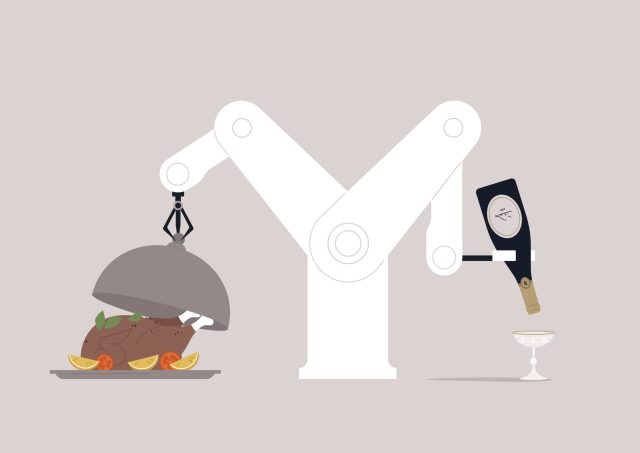
This summer, Alex Wong and Derek Yip turned their three-year-old monthly wine subscription business into one of Hong Kong’s first AI-backed sommelier services for restaurants.
Named WineSecret, the B2B2C programme collects wine data from public information, expert notes as well as its own pool of customer feedback. Once a venue uploads its food and wine menus, WineSecret can offer details such as the bottle’s tasting notes, grape variety, ageing technique, soil type and critic’s ratings, plus suggestions for food pairing.
Its aim is to help restaurants promote their wine programmes even without an on-site sommelier.
Beyond brick-and-mortar settings, WineSecret also provides a chatbot function to online wine retailers whose customers are seeking suggestions. Backend trackers of sales trends, inventory, point-of-sales systems and staff management are a few means for businesses to stay abreast of their performance.
Rather than replacing sommeliers and frontline staff, Chan says WineSecret instead empowers them with information that lets “everyone and anyone find the right wine for the right budget and right location”.
“The wine industry is riddled with hidden secrets and price gatekeeping – problems that can be solved by making information available and transparent,” says Wong.
Since its launch, WineSecret has around 1,000 end-users; its monthly plans start at HK$4,166.
AI is slowly infiltrating the century-old wine industry –whether in the vineyard or the wine bar.
Partner Content



However, Hong Kong has been slow to take up the technology despite being an important trading hub for wine.
Tighter budgets amidst the globally declining sector are one explanation, but a bigger reason is AI’s limitations in eradicating the tedious logistics involved in wine trade – a prominent aspect in Hong Kong’s downstream chain.
“For taxation and custom clearance, I don’t think AI is ever going to take over,” says Bojan Radulovic, general manager of Hong Kong wine distributor Links Concept. “There are just too many parties and layers involved in getting wine out of their places of origin.”
For the past three years, Radulovic has been eliciting the help of Google’s Perplexity and Open AI’s ChatGPT to improve the company’s inventory, forecast and even marketing, pointing out loopholes that he “wouldn’t catch no matter how long [he] stared at the screen”.
“Many people think that AI will take over jobs, but it only makes the process more efficient; it can never replace the human,” he adds.
John Ng, Director of Wine and Spirits at Tasting Kitchen Media Group, agrees that Hong Kong is a long way off fully embracing AI. Ng argues that this comes down to wine connoisseurs’ devotion to the human experience, believing that “wine knowledge and an acquired palette are something to be earned by experience rather than academically learned”.
He also adds that dining establishments may not be comfortable with total transparency. “If customers start using AI to look up information such as when is the best time to enjoy a bottle, sommeliers – who are basically wine salespersons at a restaurant – may have a harder time doing their jobs,” says Ng.
“In the short term, I don’t think restaurants will implement such technologies; they will still want the sommelier to be the sole decision maker, especially when these decisions have an impact on profit margins and deliver a more comprehensive dining experience.”
Related news
What drinks legislation would you change?


