



Amarone: ‘we don’t talk enough about appassimento’
One of the world’s great wine styles, Amarone della Valpolicella owes its unique character to the process of ‘appassimento’ – but this drying of the grapes is now evolving in tune with today’s consumer trends.
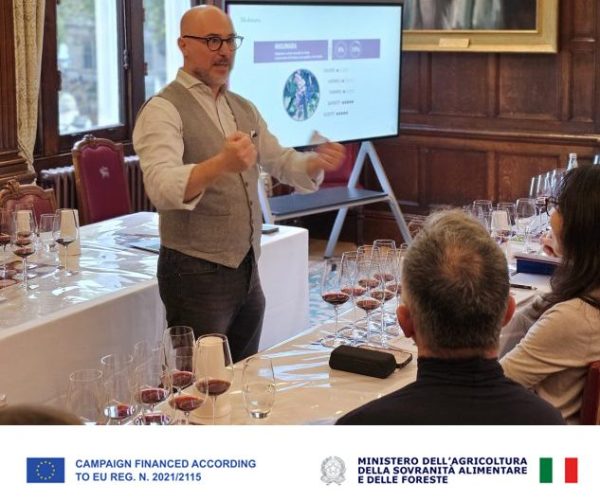
When it comes to Italian wines, “we don’t talk enough about appassimento”, Filippo Bartolotta told a packed masterclass focusing on the changing face of Amarone della Valpolicella.
“It really is amazing,” he said, pointing out that the same grapes – Corvina, Corvinone, Molinara and Rondinella – are used to make all four of Valpolicella’s very different wines (Valpolicella, Valpolicella Ripasso, Amarone and Recioto della Valpolicella): “Same blend, four different wines.”
Bartolotta, described by one attendee as “a terrific presenter – knowledgeable, informative and super-enthusiastic”, was speaking at Amarone Calling, a one-day showcase of Valpolicella’s famous wines at The Honourable Society of the Middle Temple, in London on 10 November. The tasting, organised by Consortium Valpolicella in collaboration with The UK Sommelier Association, also featured 25 of the region’s most renowned producers for a walkaround tasting.
The appellation spans around 300sq km in total (with 8,617 hectares of vines), on the southern shoulders of the Alps, the pink-and-white limestone amphitheatre divided into 11 valleys (Fumane, Marano, Negrar, Valpantena, Mezzane, Illasi, Tramigna, Marcellise, Squaranto, Avesa, and Quinzano) and two municipalities (Sant’Ambrogio and San Pietro in Cariano), the different exposures and altitudes enriched by occasional deep veins of iron-rich marls and volcanic elements, which affect the typicity of the grapes.
Wines from Fumane, for example, tend to have “a floral touch and finesse”, due to the colder nights, Bartolotta pointed out, while those from Marano reflect an “extra-smoky minerality” from the volcanic base under the limestone, and Illasi, the longest, steepest valley, maintains “a tannic grip and power”. distinctive style
However, it is appassimento that gives Amarone its distinctive style. As Bartolotta explained, 20 years ago, appassimento – the process of ‘withering’ or drying grapes before fermentation – was largely concerned with concentrating the sugar and increasing alcohol levels in the wine, but in recent years there has been “a Copernican revolution”.
No longer a mere process to enrich wine with sugar, it is now increasingly viewed as “a resistance of the grapes to the drying process, to oxidisation and noble rot” and as such, it can be viewed as “a terroir element, not just a ‘technical’ element”.
Talking the audience through a flight of eight wines, Bartolotta proceeded to highlight just how diverse Amarone wines can be, boasting both traditionalists and new-wave modernists. Whereas there are still some concentrated style wines to be found and enjoyed, there are also wines that display the best about Amarone – “balsamic fruit, menthol minty, acidity… tannins, [and] lots of juice” – but increasingly presented with greater balance and elegance.
“We’re moving towards energy, transparency, more precision and greater lightness,” he observed, adding: “This is something that happens when you move towards the idea of ‘what is the land that I work best suited to?’”

Related news
Cru World Wine sees huge demand for its 'community-ownership' share offer
'Fantastic time to be a whisky drinker’ as Hedonism launches own-label range


