



Champagne Henriot revamps packaging in sustainability push
Maison Henriot has reimagined its packaging to reduce environmental impact, in a move to “protect and promote Champagne” in a way the producer’s cellar master says “has been an integral part of our DNA for generations”.
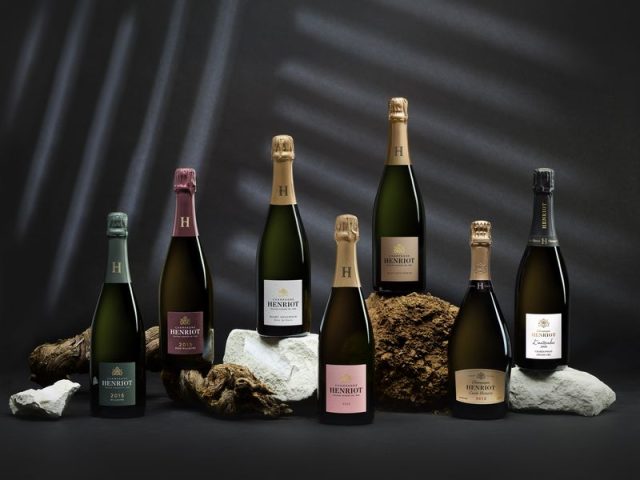
Champagne Henriot has unveiled a renewed brand identity, with the new design created to be more sustainable than the last.
The height and thickness of the foils have been minimised to limit material use, while the bottle’s collar and crest sticker having been removed, with all paper and inks sustainably sourced.
From the subtly embossed motif inspired by the Champagne vineyards, to the Henriot crest on the label and removal of unnecessary details, the new packaging is designed to reflect Henriot’s goal of crafting high-quality wines while gearing for a more sustainable future.
“At Champagne Henriot, sustainability is rooted in everything we do, ” said Alice Tétienne, cellar master at Champagne Henriot. She added that when working with nature there is “no magic formula” and the only solution is to “apply respectful and responsible practices”.
Pledge to ‘protect and promote’ Champagne
The estate was founded in 1808 in Reims by Apolline Henriot, and showcasing the region’s beauty through its Champagnes has been key since the very beginning.
Tétienne said: “The new packaging furthers our viticultural commitments, enabling us to protect and promote Champagne in a way that has been an integral part of our DNA for generations.
Partner Content


“We are proud to present Henriot’s new identity, a balance of tradition and modernity, reflecting wines renowned for their freshness and finesse”.
Sustainability commitments
Champagne Henriot’s other efforts at championing sustainability include the Alliance Terroirs Project. Founded in 2020, this initiative is described as a way for the Maison to better understand its terroirs, adapt viticultural practices to benefit both vine and environment and foster greater vineyard resilience. Since January 2025, the Maison’s vineyard has been certified Organic.
The initiative’s goal is to reduce the environmental impact of viticulture while engaging the entire sector. As a result of the project, the Henriot vineyards are now certified as HVE (High Environmental Value) and VDC (Sustainable Viticulture in Champagne), and began the certification process of transforming into organic viticulture in 2021, with organic label granted in January 2025.
Earlier this year, the drinks business also revealed the ways in which Maison Henriot was harnessing AI to gain a deeper understanding of the viticulture of its vineyards in the Montagne de Reims and the Côte des Blancs.
Recent years
By utilising cameras placed on tractors and drones to analyse the soil and vines, Henriot is able to precisely gather and analyse data. This technology has resulted in reduced vineyard interventions, lower input usage, and earlier detection of fungal diseases such as downy mildew and other diebacks such as Esca.
In 2023, the historic Champagne house was sold to Champagne’s largest cooperative group, Terroirs et Vignerons de Champagne (TEVC), having previously been owned by Artémis Domaines.
Artémis Domaines had only acquired Henriot in 2022 as part of a larger merger with its owner, Maisons & Domaines Henriot, but decided to reposition focus on consolidating its activity and estates.
Related news
Bollinger appoints Émilien Boutillat as cellar master
Prestige Champagne sees surprising silver lining
Maison Pommery's shares rise on back of Henkell merger talks


