



Weyborne: ‘England is the new El Dorado of the sparkling wine world’
Born in Languedoc, Benjamin Abric ditched his native France to literally put roots down in Sussex’ chalky soils. Now head winemaker at Weyborne Estate, he tells db why “England is becoming the new Champagne”, and warns French producers to watch their backs: “With England coming up, they’re going to have to keep their game up if they don’t want to be toppled over by some newcomers.”
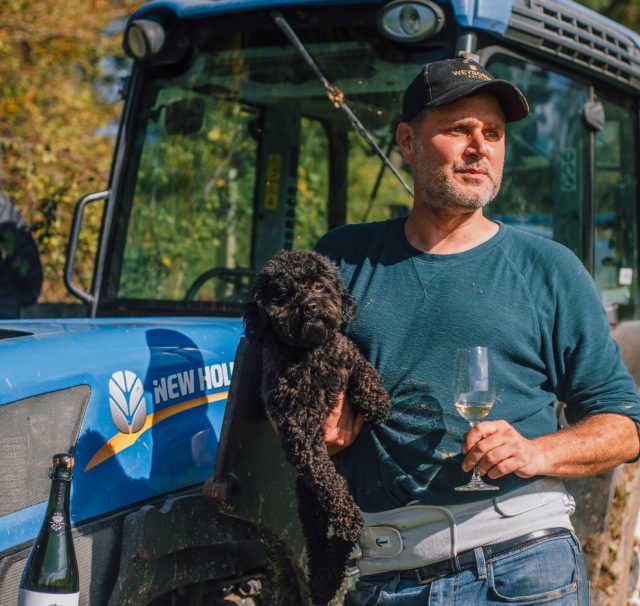
“Everything seems to be moving north. I believe that Burgundy is becoming the south of France, Champagne is becoming Burgundy and England is becoming the new Champagne,” Weyborne Estate’s head winemaker Benjamin Abric tells the drinks business. We’re at a tasting at Clarette, central London, and I’ve just asked him why he opted to build a winemaking career in the UK rather than his native France. “I’ve always loved a challenge”, he admits, adding: “I see my future here for many years to come. The wine industry in England has very bright days for it.”
Once laughed at, and then considered pretty niche, English sparkling wine has now secured stable footing in the wine industry, outstripping Champagne to score a trophy at this year’s International Wine Challenge, with English wine sales climbing 3% in 2024. All things considered – terroir, climate, and the flurry of Champagne houses investing in the English south – Abric truly believes that “England is the new El Dorado for the sparkling wine world.”
And Weyborne’s trajectory summarises the broader story of British success. Located at the highest peak of the National Downs in West Sussex at the mouth of the River Wey, the estate only started releasing wines two years ago, but has already scored an IWSC Gold medal for its Oriana 2019 cuvée, with its fizz reflecting the county’s chalky soils and cool climate.
Giving Champagne a run for its money
“Champagne has 400 years of history, so it’s going to be hard to get rid of them,” admits Abric. But, he adds, it’s healthy for them to have some competition: “Maybe they’ve been sitting on a bed of roses, as for many years they were the only ones having this reputation,” he suggests. “With England coming up, they’re going to have to keep their game up if they don’t want to be toppled over by some newcomers.”
Anyhow, while it’s important to know what’s going on across the border, Abric urges English winemakers not to copy other categories – albeit it be Champagne, Claret, Cava or Prosecco. “England has a specific cool climate with slow ripeness, late maturation,” he points out. “We should concentrate on what we do best rather than looking abroad and comparing ourselves constantly.”
Partner Content


While English winemakers uplift quality, the rest of the world just needs to recognise it. “It takes time,” Abric says, and official bodies, like Wine GB, as well as the government, play a role in spotlighting the sector. “We need to rally together and evolve,” he sums up. He’d also like to see more investment in the industry, with machinery, bottling lines and equipment still “reduced and expensive”.
Winning over wine-lovers
Then, Abric stresses that it’s “essential for us to convince and change the mentality of our own island, where people admit that English sparkling wine is at the top of its game, instead of systematically going for Champagne, Cava or Prosecco.”
He adds: “I don’t blame the English consumer or the Welsh consumer or the Scottish consumer. We have a problem with our costs being so high.” The average price of an English sparkling wine sits at £32.47, higher than Prosecco (£13.40) and Cava (£11.00), but lower than Champagne (£50.53), according to recent data from Wine Lister. “It’s true that it’s hard to compete with other vendors of sparkling when you look at the price only,” the viticulturalist adds.
English wine is on the cusp of blowing up. When it does, quality will be the “key factor” for success, Abric predicts. “It will naturally eliminate the people making wine for sport or fun, from the people with professionalism, sustainability and a long-term vision.
“Those who can’t keep up with the evolution and maturation of this wine industry will unfortunately have to either be absorbed or be set aside.”
Abric, for one, is laser-focused. When he joined the winery, Weyborne Estate’s owner Nick Clarke, who has a background in mining, was clear: “He said ‘I want to be the best, or at least in the top three in the UK, and it’s your job to get us there.’ So for the next ten years, that’s what I’m going to be trying to achieve.”
Related news
Maison Pommery's shares rise on back of Henkell merger talks


