



Ways stout and porter are commanding more attention
Stout and porter are currently on trend and, as beer styles go, they’ve been overlooked for far too long. Jessica Mason reports.
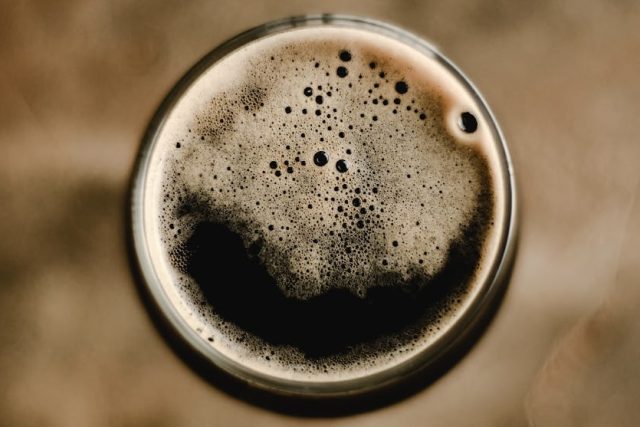
Dark beer is captivating in the glass. In fact, a nitrogen-laced inky beer that takes time to settle is immediately recognisable all over the world. Its creamy tan foam head looks inviting. Rich, malty coffee bitterness lingers on the nose. On the palate the beer is gentle, complex and offers layers of chocolate cake indulgence.
For years, IPAs have shouted profanities at your tastebuds. Ambers and best bitters have limped along with a muddle of embarrassment and foolhardiness. And lager has had its soul crushed by the weight of commercialisation. But in stout and porter there is trust – these are beer styles that will consistently deliver excellence time and time again. No wonder the world is taking note. 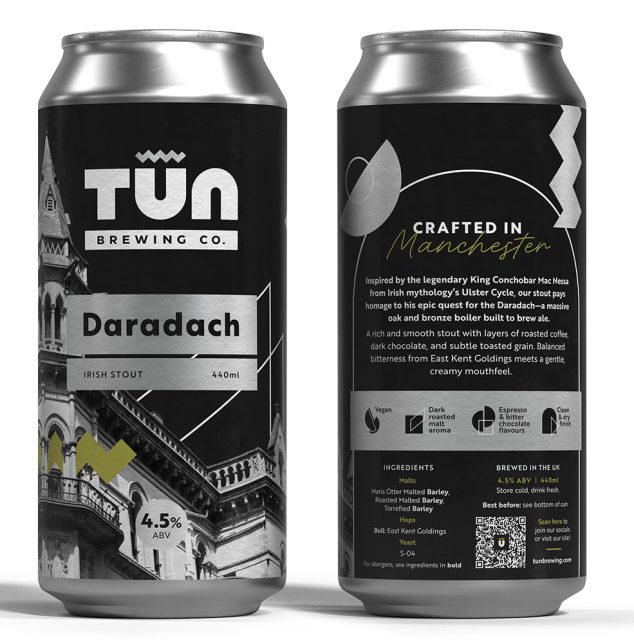
“Stout is having a resurgence, with UK stout volumes growing significantly in recent years, even as overall beer sales have declined,” says Tun Brewing Co. founder Richard Alston.
For porter, it’s a similar story, with porters also gaining “great impressions through social media”, says Anspach & Hobday chairman and co-founder John Hobday, who tips his hat to the beauty of a dark beer in the glass. “Attractive pints make for attractive photos,” he muses. You know, he might be onto something.
Hannah Moore, BrewDog’s senior customer marketing manager, on-trade, explains that, “with little or no innovation within stout for many years, and an ageing customer base, the category has been dominated by one brand for years”.
Naturally, Moore is referring to Guinness, which is also in the spotlight thanks to the recent premier of Netflix series House of Guinness. In August in the lead-up to the show’s launch, in the UK alone the name of the series generated more than 130,000 online searches.
Halo effect
For other Irish stouts, such as Murphy’s, the resurgence of interest in dark beers is having something of a halo effect. As Heineken UK marketing manager Stephanie Dexter points out: “Murphy’s has seen a significant increase in sales since this time last year. In the on-trade, Murphy’s is now pouring an incredible 542% more pints in UK pubs and bars, and demand for Murphy’s on the bar has soared – with more than 1,000 new Murphy’s draught stockists since last year.”
Looking back, the stage had been set. For instance, the Guinness story began more than two-and-a-half centuries ago, in 1759, when Arthur Guinness signed a 9,000-year lease on a derelict brewery at St James’s Gate, Dublin.
But other than its history, what else made Guinness the benchmark? Guinness global marketing and innovation director Jo Looby explains that Guinness is “crafted with a unique, proprietary yeast strain that has been passed down through generations and pure water sourced from the Wicklow Mountains”. But there are other elements that set it on its path – most notably its longevity.
“By the early 1800s, this iconic ‘black stuff’ was already a global trailblazer, bravely exported to distant shores across the globe,” says Looby.
This has stood it in good stead because, Looby adds: “Today, Guinness is sold all over the world.” There is also room to grow though and, as the Guinness brand owner Diageo has invested in its future, its expansion and its development, the beer has flourished. As Looby says, there is no time to stand still because “we have four, soon to be five, brand home experiences across Ireland, Great Britain and the US, with our latest brand home, Open Gate Brewery London, set to open its doors later this year”.
For Guinness, though, its marketing has rarely been subtle. Examples can be seen from its “landmark global partnership” with English Premier League football, where it became “the official beer of the Premier League, official non-alcoholic beer of the Premier League and official responsible drinking partner of the Premier League”.
This season, Guinness has increased its association with football by adding new club partnerships, including Arsenal, Aston Villa and Newcastle United.
For Guinness, the support will also go further to immerse the brand in the world of sport and the community that surrounds it. Looby explains: “To mark our second season of the partnership, we also recently launched our largest community-driven sports campaign, ‘Lovely Day for a Guinness’. The campaign features fans from all 20 Premier League clubs and shines a light on the shared love and devotion that connects football communities around the world.”
Positioning a brand as a ‘Guinness alternative’ is not new, but some are inching in on the style, as Brennan’s Irish Stout founder Peter Brennan says:
“Brennan’s Irish Stout combines the experience of two dedicated family breweries working in partnership.” This, it asserts, with the full knowledge that partner Theakston’s offers up a degree of heritage alongside the Brennan family’s connections with Ireland.
Compelling price points
Other brand owners look to replicate Guinness-styled beers but with compelling price points, in an effort to appeal to Guinness fans who are tightening their belts. For instance, from 8 September, Aldi shoppers were able to get their hands on Mulligan’s Stout, which retails at £4.99 for four 440ml cans. As an Aldi spokesperson points out: “It comes in 13% cheaper than Guinness.”
There are, however, other ways into the category, and non-emulation and forging their own paths is what a few independent brewery owners are choosing to do. Primarily, not being a copycat brand and instead creating a product that stands tall on its own. 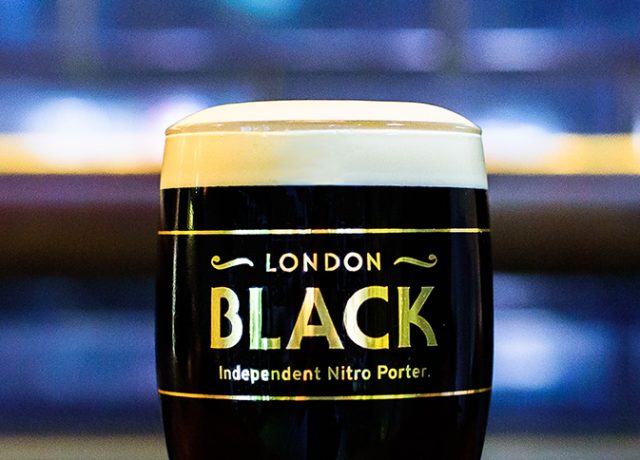
All eyes on Anspach and Hobday’s London Black. As John Hobday explains: “Key to its success is that it is in no way a clone of Diageo’s behemoth. Equally, the award-winning glassware and stand-out branding have propelled London Black to become 70% of Anspach & Hobday’s production. This year we are on course to become the biggest porter brewery of London – an historic title.” Hobday points out that “London Black won We Are Beer’s UK Top 50 Beers, beating Timothy Taylor, Deya and many others to secure top spot. We also recently won Brewers’ Choice Brewery of the Year 2025.” In terms of getting the word out, Hobday says: “Our main advertising has been organic content like social media, our London Black Map, and our recent tasting video. We also like to celebrate the pubs that stock us by doing photoshoots in them.”
Added to this, influencers such as Jason Hackett have raised awareness of London Black and where to get the perfect ‘absolute creamer’ pour among his many devoted followers. As Hobday notes, dark beers are in vogue and “London Black sales at our taproom in Bermondsey, have grown 110% year-on-year as sales explode”.
Hobday says: “There was a time when London was the biggest city in the world, and everyone who drank beer in London drank porter.” 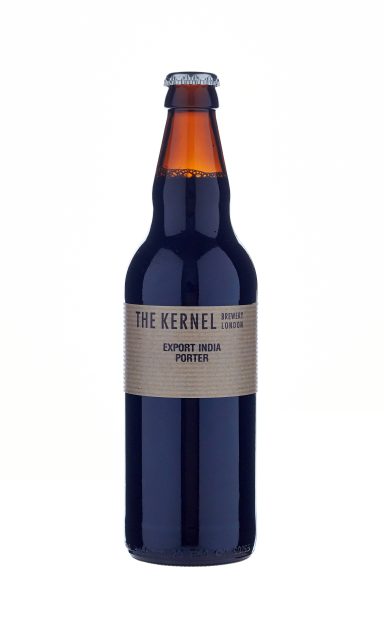
The Kernel Brewery founder Evin O’Riordain agrees and highlights how “dark beers have always been an important part of who we are, especially with being in London, the home of dark beers”.
While the decision on whether to use the word ‘stout’ or ‘porter’ for a product is largely down to the personal preference of a brand owner, the most straightforward distinction is that stouts are usually brewed using roasted, unmalted barley and porters are brewed with brown malted barley. To read stout on a label or pump clip is to ready yourself for a slightly fuller flavour, smooth mouthfeel and recognisable bitter burnt toast, coffee aroma. Porters, on the other hand, tend to be slightly lighter-bodied and balance complexity with a fruit cakeiness, which sometimes lends itself to plum porter variants.
19th-century recipes
The Kernel’s original three core dark beers are all brewed to 19th-century London recipes – Export India Porter, Export Stout and Imperial Brown Stout. O’Riordain explains: “This is part of our attempt to engage with London’s brewing heritage, to figure out what it means to be brewing in London.” Essentially, the goal is “to keep dark beers at the heart of London’s relationship to beer”, he says, adding: “The brewing of porters and stouts had pretty much ceased in London by the ’80s, with the exception of Guinness, brewed in Park Royal.” The Kernel also has its Export Stout, London 1890, which O’Riordain describes as “dark black, with an oily texture, loads of rich, dried fruit and alcohol warmth, with accents of leather, smoke, vanilla and cocoa, and then a herbal hop bitterness on top”.
He adds: “These 19th-century London recipes for strong, dark beers hold at their centre the abundant use of both black malt and brown malt. The black malt brings lots of burnt toast, overly roasted coffee flavours and an Source: IWSR, beverage alcohol data and insights assertive acidity. Brown malt is a specifically London ingredient, and adds so much depth to these beers and a certain old-fashionedness: leather, tar, tobacco. It feels to us like these anchor our beers in place, cleaving to this city’s history of brewing.”
Beyond the hallmarks of credible heritage, how else do breweries encourage newcomers to try stout or porter when they might otherwise eye it with suspicion?
Alston from Tun Brewing, which makes the 4.5% ABV stout Daradach, says: “Most people love the smell of freshly brewed coffee or the richness of chocolate, and Daradach offers those same familiar flavours in a glass. Rather than presenting it as a heavy or challenging beer, we highlight its layers of flavour.”
Looby considers this too and agrees that, for newcomers to Guinness, “the first sip often surprises many people, especially those who think all dark beers are heavy”, adding that it is “actually lighter in body than its appearance suggests”. She adds that this is where the category over-delivers, because “with every refreshing sip, you get a bold, smooth taste that’s both complex and deeply satisfying. It’s more than just a drink; it’s a timeless classic”.
Related news


