



Local biodiversity proves the secret to new Viña Artesano wines
Driven by research into the region’s terroir, Viña Artesano is an eye-catching new entry in the world of Mendoza wine. db attended a London masterclass to see how flowers and philosophy come together in the new releases.
“Artesano is taking our Mendoza projects to the next level,” commented Alejandro Bulgheroni Jr., at the end of a London masterclass dedicated to his father’s latest venture into the world of wine. The family company already has a presence in Argentina, as well as estates in Uruguay, the US and Italy, but Viña Artesano marks a bold new vision for Mendoza viticulture.
That is in no small part due to Alberto Antonini, the winemaking consultant who has proved central to Viña Artesano’s development. He has brought with him the experience of decades making wines around the world, as well as the benefits of an Italian upbringing. More than that, he has helped to hone a very specific vision for the wines.
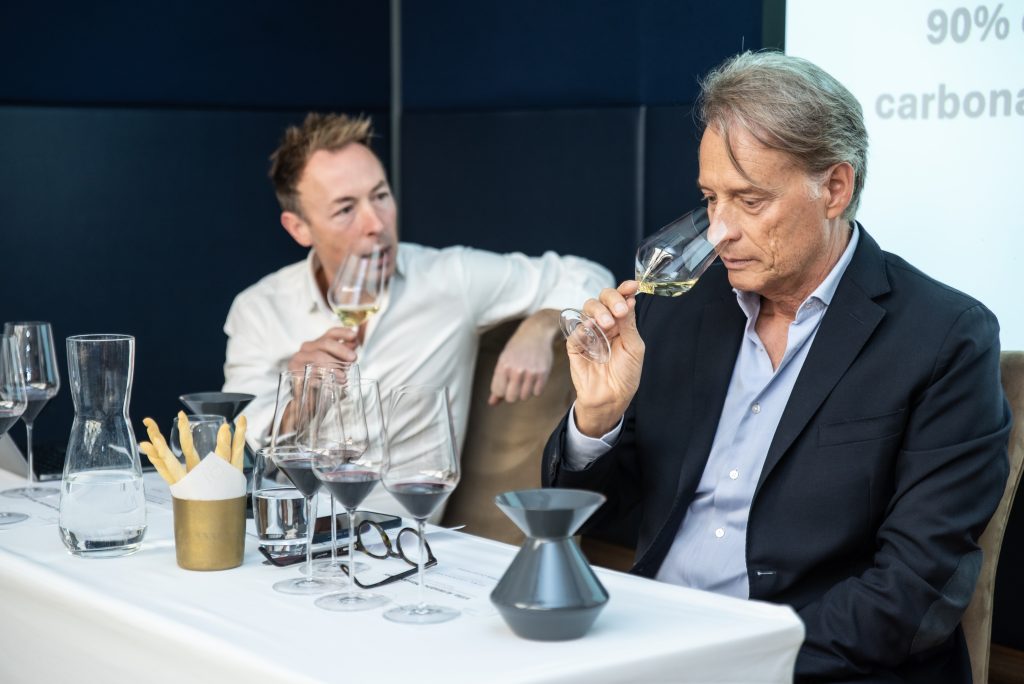
During the masterclass at 67 Pall Mall’s London club, he did, of course, introduce attendees to the range. Three Malbecs, plus a Chardonnay and a Cabernet Franc, demonstrated the excellence he has coaxed from Viña Artesano’s high-quality terroirs. However, fittingly for the wines, the masterclass went into some considerable depth.
For depth is how you might think of Viña Artesano. The viticulture and winemaking are inspired by Antonini’s deeply held principles and longstanding approaches. The vines are deeply rooted in their terroir, both literally and metaphorically. What it amounts to is a range that showcases the depth possible in a region still finding new converts.
First principles
Antonini’s approach is the same wherever he finds himself in the world: make a wine that reflects its origin. In the current market, that is not an unusual position. He does, however, have a rare amount of expertise in helping the wines express where they come from.
That is perhaps what differentiates him among winemakers. He is laser-focused on not just the idea of place, but also the practical implications of achieving it. “I always say how it is beautiful to make wines with a sense of place,” he said. “But you have to know how.”
He has thus adopted methods and principles to shape that endeavour, which he used to contextualise the Viña Artesano project. The first step is to understand where to do what. He summarised this as the reasoning that dictates, once making the wines, what you should do in one particular location rather than another. In practice, that means study: creating a detailed picture of the macro- and micro-terroir to inform future decisions.
His second step, as he explained, is that vineyards should be connected to the place. To thrive, a vineyard should be a part of its landscape and biome, not a disruption to it. He was gently scathing in discussing approaches that were commonplace until around 15 years ago, leaving landscapes that looked more like the Moon than a thriving ecosystem. “Life was a problem for them,” he said.
Thirdly, he turned to winemaking. It is a term, in fact, with which he is uneasy. Antonini believes “we should all be wine growers”, with winemaking as a conclusion of that growing process. His third step in crafting wine, therefore, is to ensure that winemaking processes preserve the impact of the soil and the vines. Rather than masking their character, the winemaking should encourage them to shine through.
Alongside these core ideas, he presented other rules of thumb. For instance, he has a list of his “enemies of wine”, which includes the likes of over-extraction and picking the fruit too ripe. Evidently, the masterclass could only scratch at the surface of his long-honed expertise.
Yet, if that all sounds a touch prescriptive, he still approaches winemaking with playfulness, reverence and an open mind. Betraying his Italian upbringing, his great reference point is Leonardo Da Vinci, a man who taught the virtue of observation rather than specific science. Although data is part of his arsenal, it is in the service of watching the vineyard.
Indeed, when discussing ageing, he spoke of not wanting everything to be precisely laid and detailed at every turn. “I like to keep a bit of mystery,” he mused. “With science, there are no more secrets, but there are mysteries.”
A new approach
Viña Artesano has been a project for Antonini to employ all these principles. That is not, however, the single most remarkable thing about it. The range is the first implementation of a considerable new research and development project.
MatrizViva is a scheme established by Grupo Avinea, the family of brands of which Viña Artesano is a part. Its aim is to study vineyard ecosystems, bringing together wineries and scientific partners to establish how water, soil, organisms and the environment co-exist in such sites. Its results gleaned from Viña Artesano’s three specific terroirs – Gualtallary, Alto Agrelo and Paraje Altamira – have been formative in conceiving the wines.
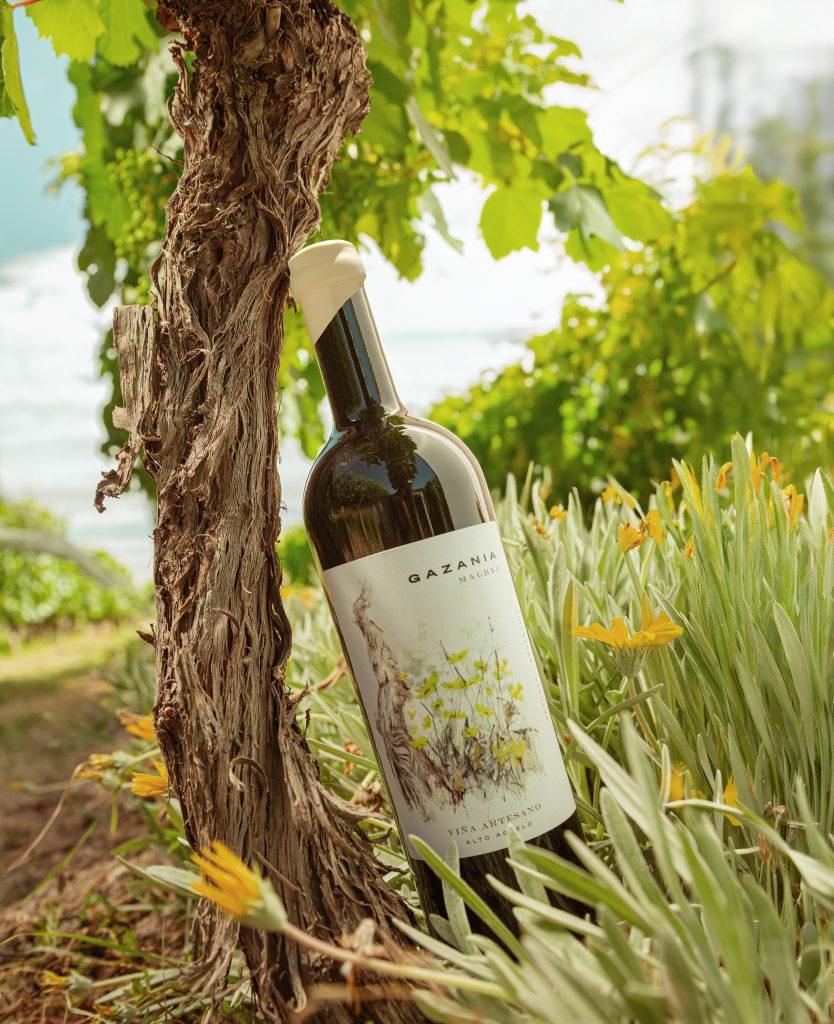
Look at one of the bottles, and you will notice elegant depictions of plants in the vineyard. You will also see evocative, if probably unknown, words on the labels: gazania, nassella and achillea.
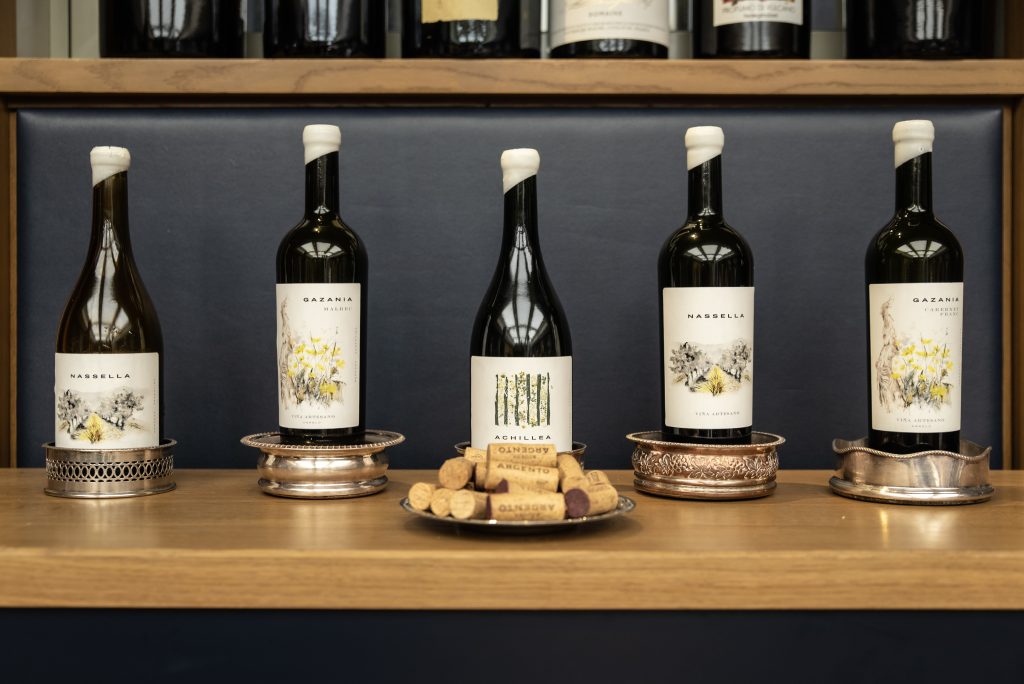
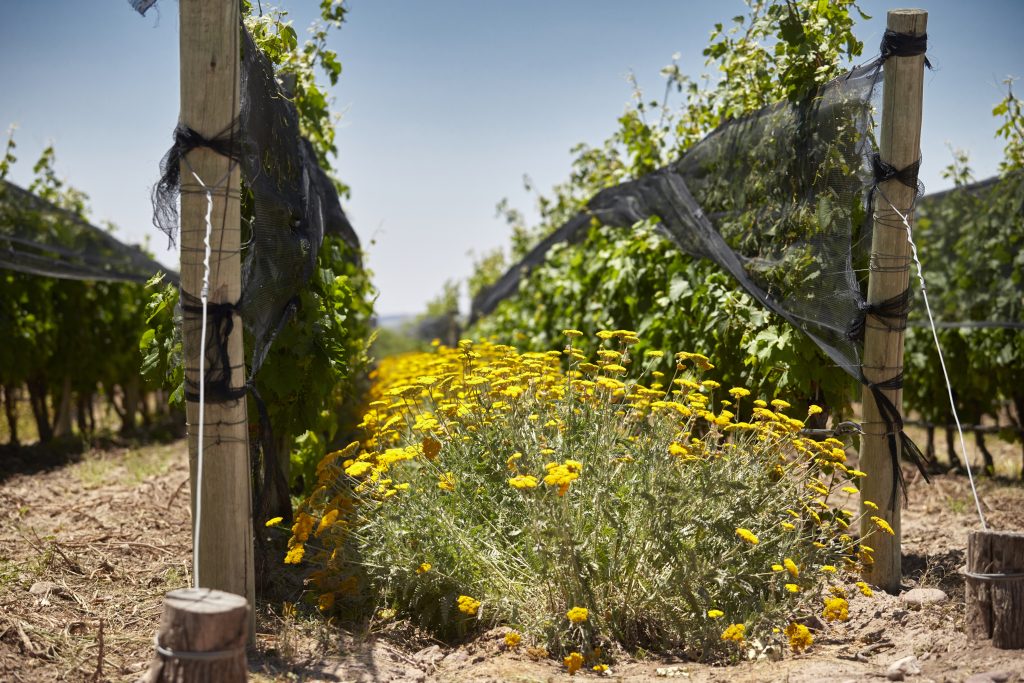
This is no marketing gimmick. One of MatrizViva’s key areas of study was the impact of native grasses and flowers in the vineyard. Each of the illustrations and words refers to a different species, specific to the wine’s sub-region, that helps to create a thriving ecosystem. Thus, in the vineyards, the plants have been encouraged in order to craft better wine.
The cover crops have encouraged a thriving ecosystem. Some of their benefits could perhaps be expected: the native crops have oxygenated the soil and acted as a biomass store, for example. However, thanks to the work of MatrizViva, their impact can be quantified.
The research project has, for instance, identified the insect species that Gazania repens attracts in Alto Agrelo. MatrizViva has also established how much carbon the delicate grass Nassella tenuissima will sequester when growing in Gualtallary. The scientific data has demonstrated the plants’ beneficial effects on local ecosystems, and Viña Artesano has therefore put them at the forefront of its efforts in the vineyards.
Of course, for many consumers, sustainability efforts are laudable, but what really matters to them is what is in the glass. For Antonini, there is a clear effect.
“I find with wines coming from these vineyards, there is more energy in the mouth,” he commented. That energy, or “voltage” as he later termed it, seemed to resonate across the wines.
The Gualtallary Chardonnay showed it in a nervy finish of white peach and preserved lemon. The Malbecs, meanwhile, riffed on themes of fresh berries, nimble acidity and gentle perfume, while the Cabernet Franc added touches of balsamic. They also communicated Antonini’s desire to reject over-extraction and “switch from concentration to texture”.
As you might expect, the winemaking aided this endeavour. A mix of old oak and concrete in the winery allows oxygenation without suffocating the impact of terroir. Although exacting, the work in the winery might be termed a light touch. After all, with considerable care in the vineyard, his work as a wine grower is largely achieved by the time grapes reach the winery.
A path forward
It would be too grand to call these wines a manifesto. They certainly do, however, make an argument for respectful, terroir-led viticulture in Mendoza. Moreover, they signal a future-facing philosophy that can be adopted elsewhere.
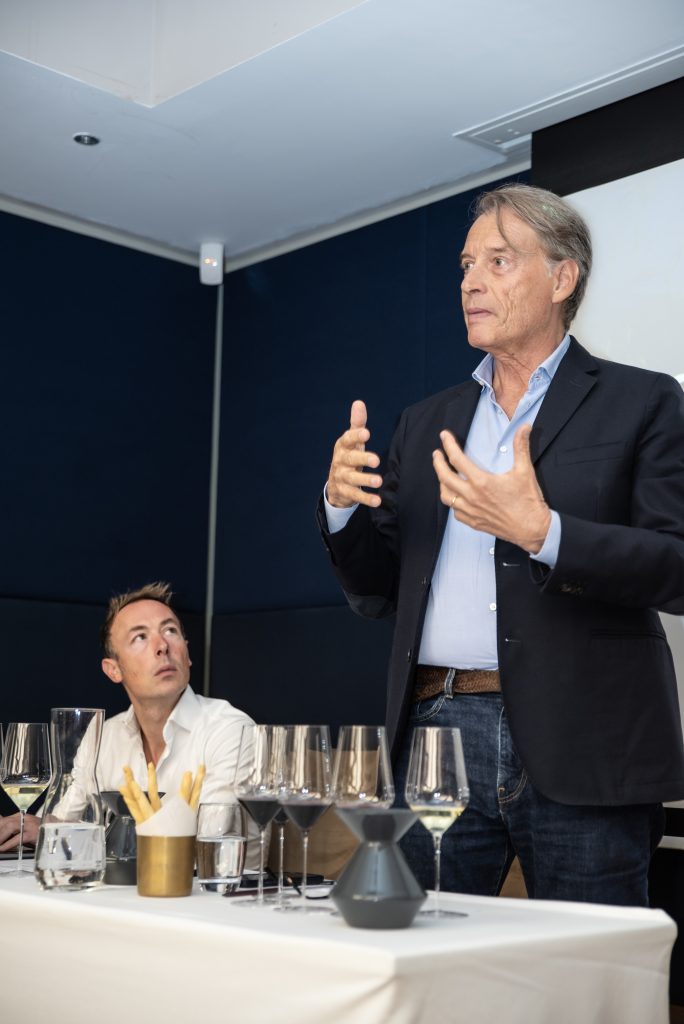
For starters, Antonini highlighted how Viña Artesano’s viticulture is promoting vine health. The thriving soil ecosystem and vineyard resilience promote deep roots. He commented that, to express a true sense of place, you generally need at least five years to bed in. However, with old vines increasingly valued, this approach goes further than just expressing place. By building a healthy ecosystem, it lays the foundations for future old vine plots.
The shift in approach can also have an impact on how wines are perceived, and by extension on their commercial prospects. For Antonini, it is evidence of a growing confidence among producers, which consumers are embracing.
“We used to see, across the whole world, everyone trying to emulate Bordeaux. I’m not criticising – it was a different stage of the wine industry,” he said. “But now, what I see, and what I like a lot, is people trying to understand where they are and what they can achieve without copying anyone.”
While Mendoza was once considered a centre for concentration, without concern for terroir, now Antonini believes the region can make its case on its own terms. With a new generation emerging that has diverse tastes, and is perhaps less impressed by richness and extraction, Antonini certainly believes that producers like Viña Artesano can find their place in the world of fine wine.
“I really believe in this style looking forward,” he commented. “You can’t change the climate and you can’t change the soils, so you want to make genuine and authentic Mendoza wines. Thanks to the organic farming and non-invasive winemaking, these are the most Mendoza wines you can make.”
Related news
What drinks legislation would you change?


