



Colour correction: Contemporary Italian rosé up-close
A masterclass held at this year’s Vinitaly trade show revealed how Italian rosé is fast becoming a commercial heavy hitter.
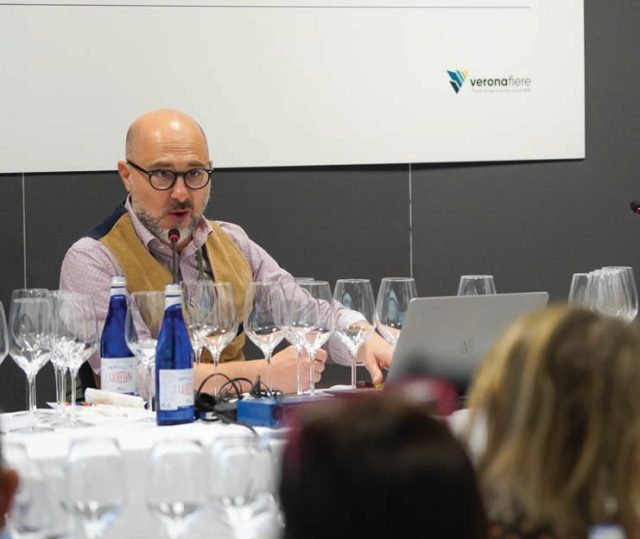
Titled as ‘Contemporary Italian rosé up-close’, a masterclass at the recent Vinitaly trade show was presented by Italian wine expert and the drinks business contributor Filippo Bartolotta.
In his opening, Bartolotta cited perhaps the most famous tasting in wine history, one which also happened to have been organised by the figure who mentored him. He said: “In 1976, Steven Spurrier organised the Judgment of Paris, pitting the best wines of France against the best of the US, and the US won.”
While much has been made of that particular tasting competition (indeed, there was even a 2008 film, Bottle Shock, starring Alan Rickman as Spurrier), it was not the last time that French wines would be pitted against their international rivals. “In 1977, there was another blind tasting of the best Cabernet Sauvignon. Who won? Sassicaia! Table wine, but it was better than Lafite, Latour and the
Americans, and ‘Super-Tuscan’ became a thing,” said Bartolotta.
Although none of these landmark tastings were concerned with rosé, they offered an indication of how the masterclass would be conducted. However, it was not to be a competition between the 11 pink wines tasted, with eight from Italy and three benchmark expressions from France, but instead a look at how the Italian rosé category offers quality from across a range of regions, and in a range of styles.
Of course, the global view of rosé has not always been as positive as it is today – there was a time when this hugely popular category was not taken seriously. “Rosé did not have a great reputation – partly because the colour was pink,” said Bartolotta. “In 1986, the best-selling wine in America, the number one, was Sutter Home White Zinfandel Rosé – 4.5 million cases were produced, but it was at a similar quality level to Yellow Tail: it’s pool juice that is cold and has some sugar. This destroyed the category, because critics and winemakers
rightfully criticised it.”
However, two decades later, there was a great leap forward in terms of the quality of rosé, with one producer transforming the category in the mind of the consumer. “Sacha Lichine, who acquired Château d’Esclans [in Provence] in 2006, wanted to make the best rosé in the world, and so he launched Whispering Angel,” Bartolotta explained.
“There is a beautiful acidity to balance the residual sugar here,” said Bartolotta. “It’s a very clean wine with a lot of crunchy fruit and rose petal.” Around 9.4% of Prosecco DOC’s production is sparkling rosé, with Pinot Nero providing a blush colour to the Glera base. As with many of the Italian wines tasted during the masterclass, Prosecco favours the French term ‘rosé’ over the Italian ‘rosato’, as the former
seems more accessible to a consumer base so used to buying French wine.
While Prosecco DOC is yet to become a pink wine powerhouse, the second wine tasted comes from a renowned rosé region on the shores of Lake Garda – Bardolino DOC. Of the region’s 2,550 hectares of vineyard, around 1,000ha are devoted to the production of Chiaretto di
Bardolino – the name ‘Chiaretto’ meaning ‘claret’, although this rosé is a world away from the Bordeaux with which Brits usually associate the term. The particular expression of Bardolino Chiaretto tasted was made by Cavalchina and was a blend of classic varieties from Veneto: Corvina, Rondinella and Molinara. The result was, in Bartolotta’s words, “very perfumed, with more red fruit, a bit of vanilla and gingerbread”.
Although rosé production is often associated with the northeast of the country, especially the zone around Lake Garda, the growth of rosé is a pan-Italian affair. Etna DOC (soon to be DOCG) covers rosé too, with around 15% of the region’s production being pink wine.
Scalunera Etna Rosato, made from 100% Nerello Mascalese by Torre Mora, consistently wins medals in The Global Rosé Masters, organised by the drinks business, and the wine provided a particularly bright expression of the Etna DOC. Whispering Angel’s popularity speaks for itself, but it is far from the only recent rosé success story.
Listing examples of some of the most expensive rosés on the market, Bartolotta noted the likes of Armand de Brignac’s Ace of Spades Brut Rosé Champagne (US$477) and Gérard Bertrand’s US$186 Languedoc Cabrières Clos du Temple. As these examples suggest, France is still very much the dominant force when it comes to pink wine. With rosé constituting roughly 10% of global wine production, France is by far the biggest provider, producing roughly eight million hectolitres (hl) of it each year (45% of that is from Provence) and exporting around 33%. Spain is in a distant second place with 4.6m hl, 20% of which is exported, and the US takes the bronze, making 2.3m
hl and exporting only around 10%.
Partner Content


At present, Italy does not even make the podium for rosé, producing around 2m hl per year and exporting approximately 10% of that. However, these things do not stay in stasis. Bartolotta drew a parallel between the world of rosé production and that of rugby union, pointing out how the 2025 Six Nations tournament showed that, while France is a (largely) dominant force, Italy is on its way up.
THE WINES
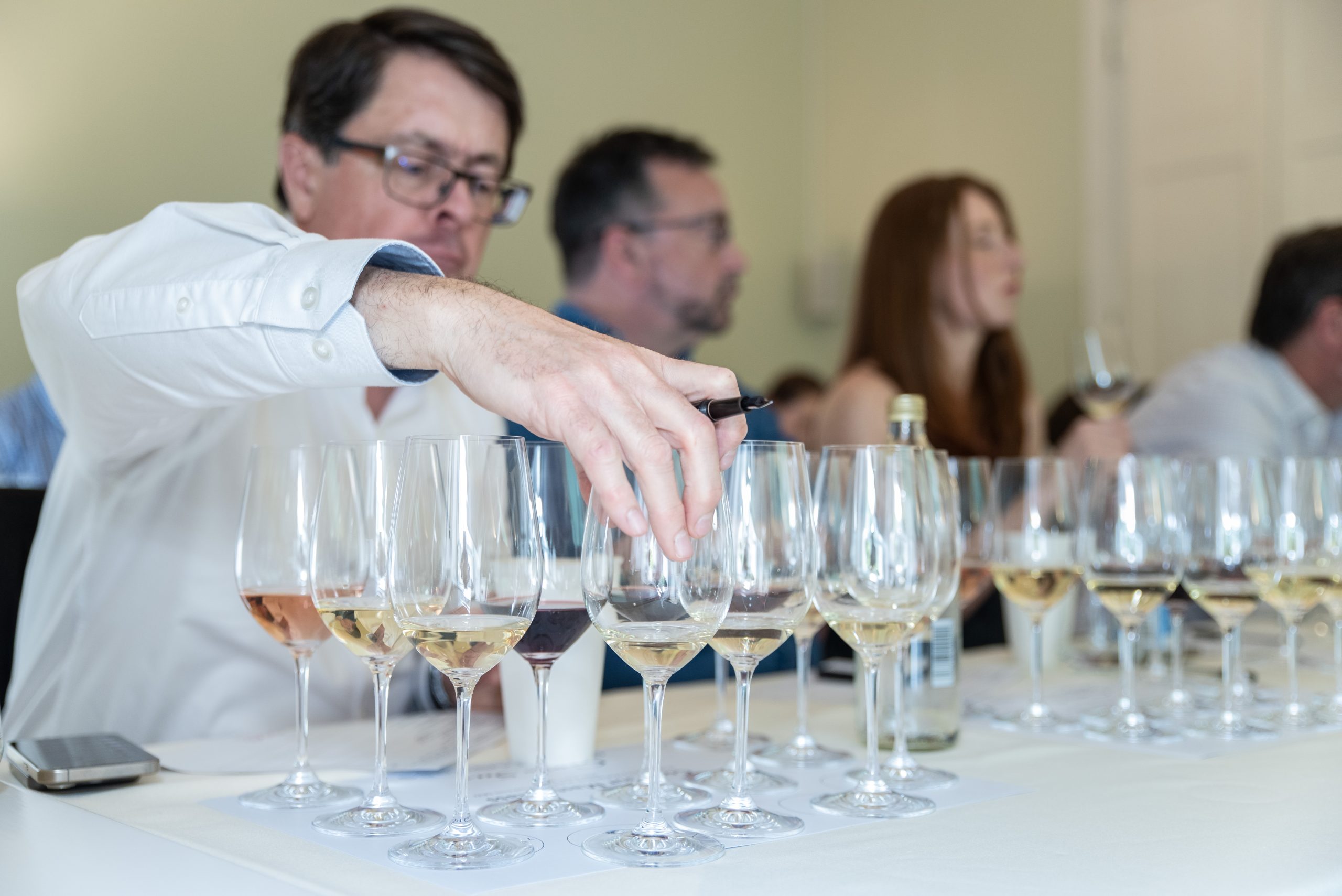
In keeping with the spirit of the Judgment of Paris, the wines were tasted blind, with their country of origin and producer only disclosed afterwards.
The first wine to be sampled was Delle Vite Prosecco Rosé DOC, the Delle Vite brand being owned by the Delevingne sisters, including model and actor Cara Delevingne.
Venturing up north again for the next two wines, Bosco del Merlo Pinot Grigio Rosé and Rosa dei Masi (made from Merlot), it became increasingly clear that Italian producers, to use Bartolotta’s rugby metaphor, are starting to contend with the French at their own game.
In the case of the Bosco del Marlo, many in the crowd were convinced that it hailed from Provence, rather than a Delle Venezie DOC rosé made from Pinot Grigio. The latter, meanwhile, seemed a world away from the Amarone that Masi is so famous for making.
Although Bosco del Merlo was not French, those who guessed that this was the case for the sixth wine were correct, as it was Provence’s AIX Rosé, a blend of Grenache, Syrah and Cinsault with, to borrow Bartolotta’s tasting note, “bell pepper, garrigue and rosemary”.
Following this was a return to Italy with Pasqua’s “very floral” 11 Minutes Rosé, which blended Italian grapes, including Corvina and Trebbiano, with French ones – Syrah and Carmenere – perhaps making it the best demonstration in the line-up of the stylistic overlap between French and Italian rosé.
Of course, a tasting of commercially successful rosés would not be complete without a look at Whispering Angel, and this was the still wine which was, judging by the crowd’s response, among the easiest to identify by taste – a consequence of its ubiquity.
PINK WINE FOCUS
What followed was a look at Italy’s pink wine-focused region, Valtènesi in Lombardy. “Valtènesi is hyper-focused on rosé, like Provence,” explained Bartolotta.
Indeed, of the 3m bottles of wine produced in the region last year, the vast majority (a staggering 77%) were rosé. The key grape variety in these wines, and in the Costaripa Rosa Mara tasted, is Groppello, which gives them “sweetness, structure and sapidity”.
“It would be useless to blind-taste this,” quipped Bartolotta when presenting the next wine – a dark-hued, almost-red wine that could only be Cerasuolo d’Abruzzo, in this case from Cantina Zaccagnini. There is much heated debate about whether Cerasuolo d’Abruzzo is a rosé or a light red wine. The Consorzio Vini d’Abruzzo’s position is that Cerasuolo is its own thing and should not be conflated with anything else. It’s an argument which is unlikely to be settled any time soon but, given just how important colour is in informing consumers’ buying decisions regarding rosé, it was perhaps the biggest outlier in the tasting, although not in terms of popularity with the crowd.
Equally easy to identify was the final wine, Champagne Laurent Perrier’s Cuvée Rosé. This is a fizz so popular that The Ritz Hotel in London sells more of it than it does of LaurentPerrier’s white equivalent.
COMMERCIAL STRENGTH
Perhaps the key takeaway from the masterclass was that the future commercial strength of Italian rosé will not come from imitating the likes of Whispering Angel and AIX, but rather from capitalising on the huge diversity of this category, whether the wines be as pale pink as those of Provence, or much deeper and darker.
It takes players of all shapes, sizes and abilities to make a winning rugby team, and success in the wine world can be achieved through such a richness of stylistic options. Concluding the masterclass, as well as his rugby metaphor, Bartolotta exclaimed: “When it comes to rosé, Italy can throw itself into the scrum!


