



The terroirs behind Chardonnay’s success in Austria
After a top bottling left db judges saying “wow”, we explore the rich range of terroirs – from ancient volcanoes to lakeside slopes – driving a Chardonnay revolution in Austria.
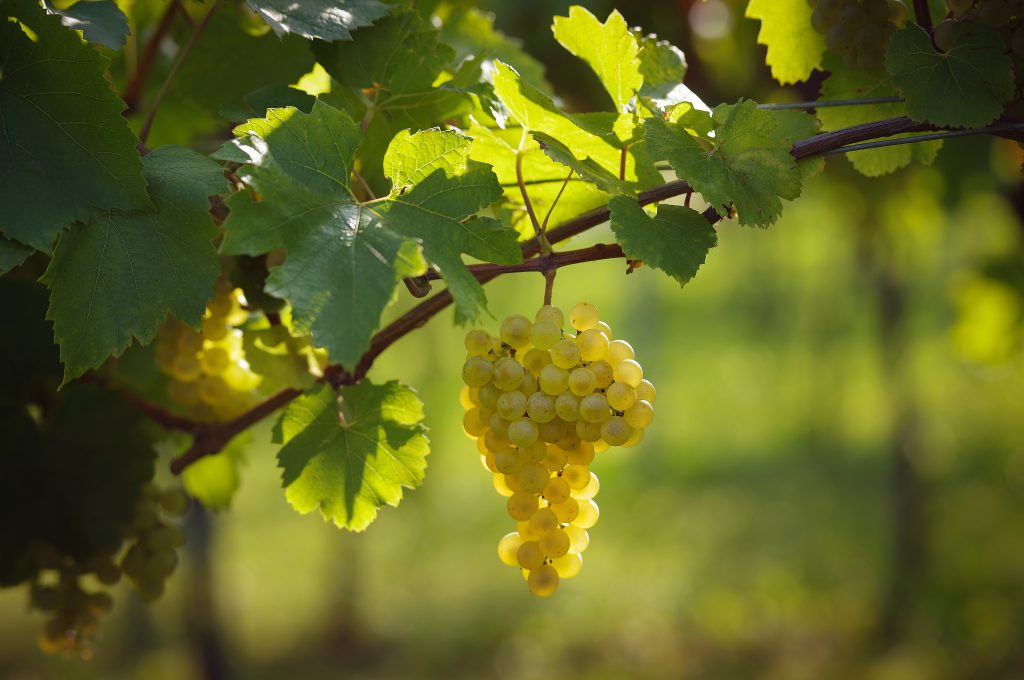
Chardonnay could well be claimed as the world’s premier fine winemaking variety. Though for decades its credentials were rooted firmly in French terroir (with, perhaps, the odd excursion to California) many countries are now promoting their Chardonnays as world-beating. As proved at a recent Global Wine Masters competition – where an Austrian Chardonnay was named Grand Master – Austria can stand proudly in that group.
Yet in Austria, its success is a very recent story. Historically, producers rarely distinguished between Pinot Blanc and Chardonnay, categorising both as Weissburgunder. Even relatively recently, the two grapes were grouped together in official statistics. Austria’s official survey of its vineyards takes place every 10 years, and the first time the two varieties were separated was 2009.
Thus, though the sometimes literal groundwork has been established for decades, recognition is a 21st century phenomenon. Austria has rightly been praised for its flagship Grüner Veltiner, but recent trends have seen its winemakers promote a wide range of grapes. As is the case with Sauvignon Blanc, Chardonnay is now proving that Austrian terroir can nurture international varieties just as successfully as native grapes.
A nation of terroir for the terroir-lover’s grape
What recommends Chardonnay most to Austrian production is terroir. Both in geography and in attitude, Austria is a country which has made terroir its calling card, and Chardonnay is a great medium for terroir.
The eastern edge of Austria, where its winemaking regions primarily sit, might seem relatively tame, but that is only because the alpine west of the country is so dramatic. For a winemaking hub, the country’s east has immense geographic diversity.
That is immediately evident in the landscape. The picture-postcard views of rolling hills, rugged mountains, pristine lakes and flowing rivers beloved by tourists are precisely the same features that commend it to winegrowers. To the visitor, they may serve as scenery, but to the winemaker they are cooling influences, safeguards against frost and positions to capture sunlight.
Though less evident at a glance, digging beneath the surface confirms that Austria is geologically rich. Wine drinkers may not know every soil type, but they would notice the difference on the ground. From extinct volcanoes’ metamorphic gneiss and mica schist in Vulkanland Steiermark; to Leitha limestone in Leithaberg; to silty sedimentary loess in Wagram, the soils vary dramatically.
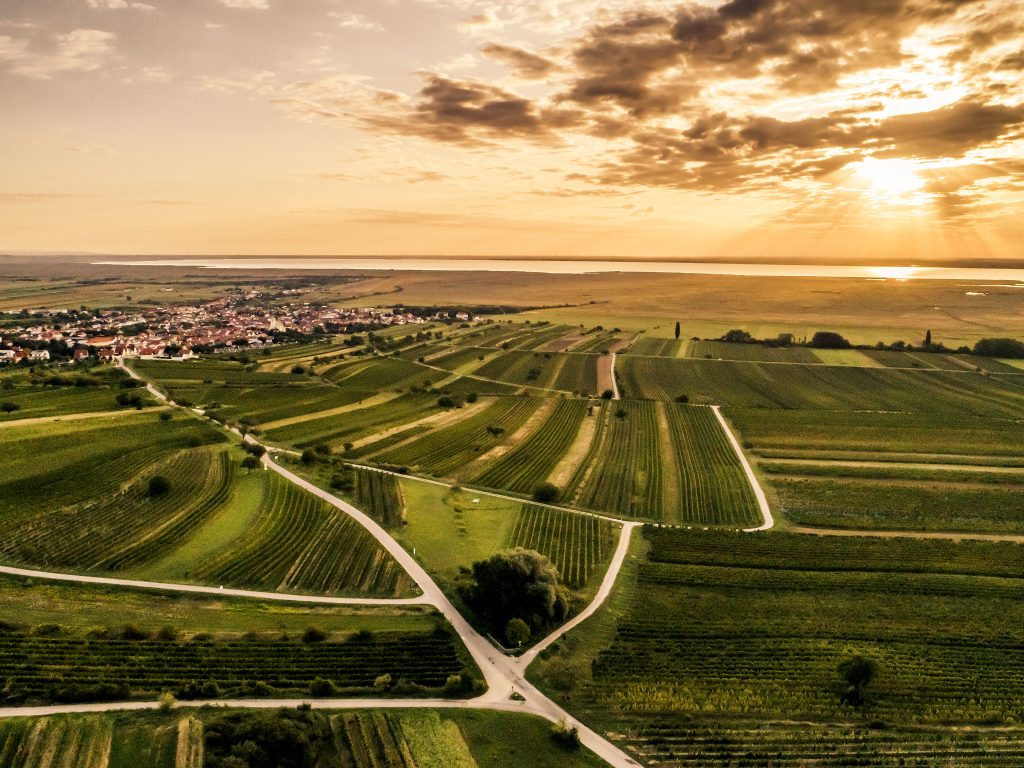
For Chardonnay, that is perfect. The grape thrives in many different terroirs, and tends to express their nuances.
It also benefits from the Austrian wine industry’s recent emphasis on terroir. Many Districtus Austriae Controllatus (DACs) now have a three tier hierarchy of specificity. Gebietswein is representative of the entire region. Ortswein is sourced from a single village. Riedenwein comes from a single vineyard, which from 2023 may have been given a premium designation of Erste Lage or Grosse Lage.
In several DACs, Chardonnay is a permitted variety for Riedenwein, offering Austrian producers yet more scope for crafting attention-worthy Chardonnay. The gauntlet has been thrown down, and several regions are embracing the challenge.
A wealth of options
Though a relatively recent project, Chardonnay is a significant one in Austria. It is the nation’s sixth most planted grape, accounting for 4.4% of plantings.
Interestingly, those plantings are spread widely across Austria’s regions and terroirs. No single DAC accounts for more than 23% of national plantings; by contrast, Südsteiermark has 42% of the nation’s Sauvignon Blanc plantings.
Many of these regions have, therefore, developed a niche in Chardonnay production. Leithaberg stands out, with its distinctive limestone being a natural partner for Chardonnay. Its wines are said to combine limestone-derived salinity with tension from local slate. The region’s vineyards also benefit from their position between Lake Neusiedl and the mountains: warm breezes off the lake help ripen the grapes, while cool mountain air supports acidity retention.
Südsteiermark, while better known for Sauvignon Blanc, still has a substantial reputation for Chardonnay – or Morillon, as it is sometimes known there. Ehrenhausen is a particular hotspot, with lime-rich soils and higher sites that shine through in poised, mineral Chardonnays. With a more Mediterranean climate, the Chardonnay grown there benefits from a longer growing season, slowly accumulating flavour for added complexity.
These two regions are among the larger hubs for Chardonnay production, along with the likes of Neusiedlersee, Weinviertel, Vulkanland Steiermark and Thermenregion. Yet other areas produce equally distinctive Chardonnay, albeit in smaller quantities.
Wagram, for instance, is dominated by those loess soils. They are prized for their ability to hold water in times of drought, but to drain easily in a wet period, as well as their depth for strong roots. The Chardonnay there basks in a continental climate, but enjoys strong winds from the north: it is a complex climate, that helps Chardonnay achieve a full, spicy character in the region.
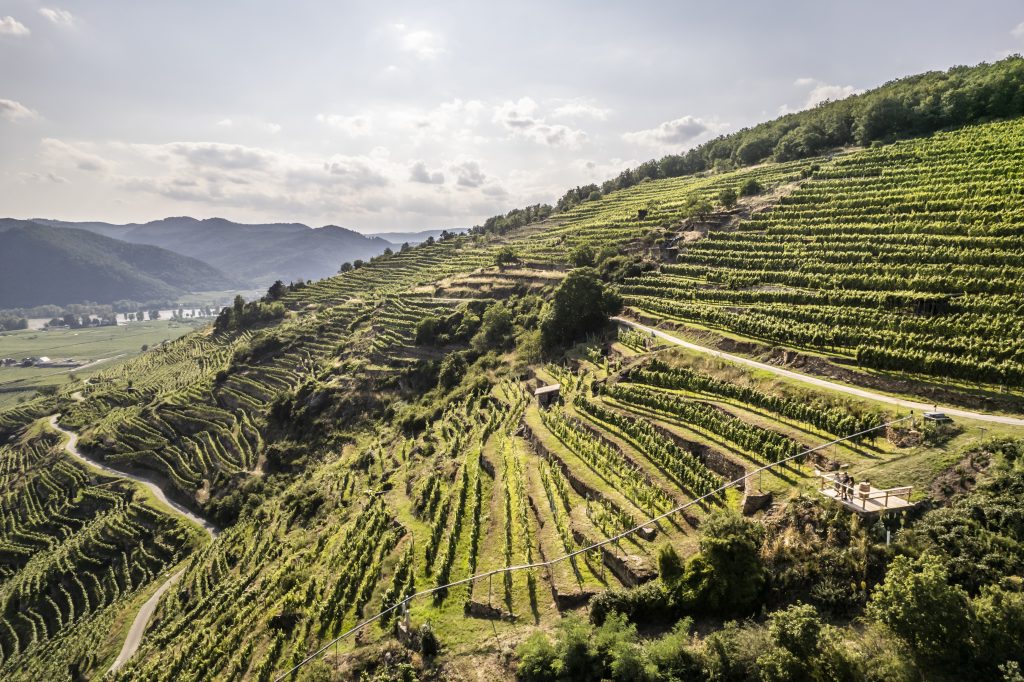
Wachau, too, is worth highlighting, since its varied terroirs almost defy classification. Its vineyards exist between opposing forces: an extreme continental climate versus the moderating Danube, the Atlantic weather patterns from the west versus the Pannonian climate in the east. Even humans have impacted the terroir here: stone terrace walls, constructed in the Middle Ages, both make steep slopes workable and act as heat stores for the vineyard. It is almost impossible to summarise the Chardonnays of Wachau, beyond to say that the complexity of Wachau’s terroir is evident in each wine.
A worthy winner
The importance of terroir in Austrian Chardonnay could not be better demonstrated than in Kollwentz Gloria Chardonnay 2023. The wine is sourced from a single vineyard, specifically selected for its Chardonnay potential. The cooling influence of altitude and nearby forests, balanced by a south-facing vineyard, combines finesse with ripeness in the wine.
It secured the title of Grand Master at The Drinks Business Autumn Tasting 2025. Below, Patrick Schmitt MW provides his tasting note for the wine.
Kollwentz Chardonnay Gloria 2023
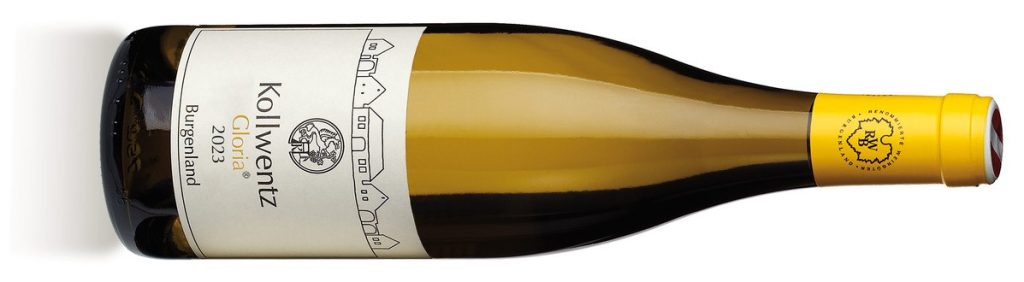
- Producer: Kollwentz
- Region: Burgenland
- Country: Austria
- Grape variety: 100% Chardonnay
- ABV: 14%
- Approx. retail price: £73
‘Wow’ is the best single word to describe this wine after just one sip. Worthy of grand cru Burgundy status, yet cheaper than your average village-level Meursault, this Austrian Chardonnay is certainly not cheap, but affordable considering the quality – that is relative to the benchmarks. Aromatically, it’s all subtle smokiness, with a whiff of freshly-struck matchstick, then hazelnuts and citrus. In the mouth, it’s layered, mouth-filling and refreshing, with toast and cedar wood mixing with white peach and fresh grapefruit, then a finish with some chalkiness to the texture, and lingering notes of grilled lemon and crushed rocks. One glass won’t be enough, and a wine to serve blind if you enjoy surprising those wedded to high-end Bourgogne blanc.

Related news
Copa Jerez to test UK chefs and sommeliers’ pairing prowess


