



All the drinks in House of Guinness
The Netflix series follows the ascent of the Guinness brand through Dublin’s murky political landscape in 1868 and sneaks in a number of references to other alcoholic drinks consumed at the time, from fine wine to local spirits. db investigates.
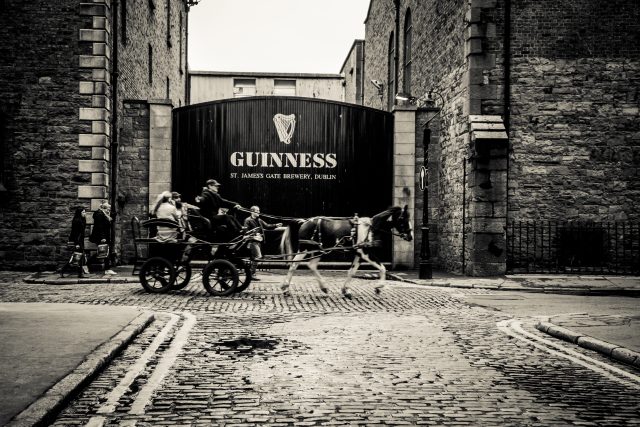
While the black stuff is undoubtedly the life blood of new Netflix series House of Guinness, the eight-part drama also nods to a number of other alcoholic beverages that were around in the late 19th century, offering a snapshot of the drinking habits of the wealthy and working class at the time.
In fact references to drinks are often used in the show to denote class, as well as the escalating tension between the Irish and the English. For instance, aristocrat Edward Guinness says to his older brother Arthur on the day of their late father’s funeral: “You’ve been in London for so long the Champagne has washed the Irish off your tongue…”
Drinks production is also used in House of Guinness to indicate upward mobility with Arthur Guinness telling Edward in the final episode: “It is you who has taken a success and turned it into a miracle. An international leviathan. Turning water, hops, and barley into gold!”
And if you’re wondering how cast members survived necking multiple pints of Guinness while filming the episodes, it has been revealed that glasses on set were actually filled with Guinness 0.0%, with actors including Jack Gleeson saying they felt “woozy” from a placebo effect caused by the non-alcoholic stout.
Madeira wine
One drink that crops up repeatedly is Madeira wine. It first appears in the series when Arthur Guinness, oldest brother and heir to the Guinness fortune, is interviewing a potential wife to fulfil ‘a mariage blanc’ – or in other words “a marriage in form but not in function.”
Lady Olivia Hedges demands a glass of Madeira wine rather than tea when they meet to discuss the terms of their non-traditional marriage arrangement, in which the nuptials will not be consummated. Hedges comes from an aristocratic family with a title but no wealth, while Arthur prefers gentlemen to women.
“Before we begin, you should know I value honesty above all else,” Lady Hedges says. “What lies ahead might be awkward and embarrassing so let’s dispense with the pretence of tea and at least open a bottle of Madeira. And since the house of Guinness is famously leaky when it comes to secrets, perhaps once the bottle is open we could be left to serve ourselves.”
Hedge’s character in House of Guinness is said to be based on the real Lady Olivia Charlotte Hedges-White, who married the second Baron Ardilaun in 1871.
After pouring the wine, Arthur explains: “This Madeira was a gift. We have wonderful relations with all the English vintners in Portugal. In summer, we go and stay in their castles. The wind blows off the Atlantic and it smells like freedom.”
His aunt, who is chaperoning the meeting, then suggests the winelands of Portugal as a potential honeymoon location “should you decide to agree to our proposal.”
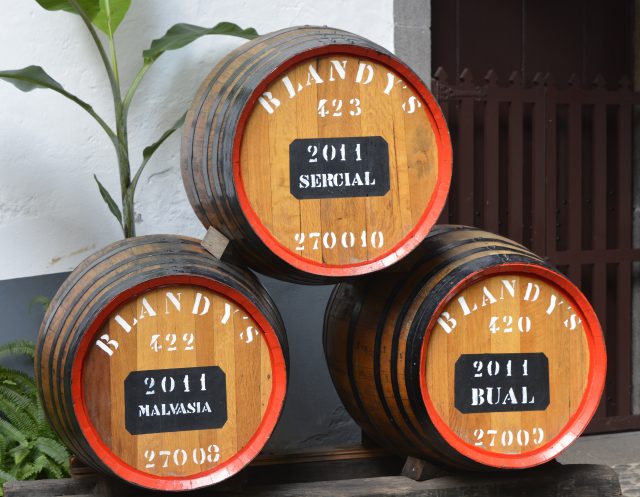
While the bottle of Madeira wine shown on screen is not branded, wine producers prevalent at the time include Blandy’s, founded in 1811, as well as Lomelino and Cossart, Gordan & Co. Blandy’s is still making and selling Madeira wine today, telling db earlier this year that it has taken on a radical new approach following research into Madeira’s maturation conditions. The Blandy family remains the majority shareholder of the Madeira Wine Company and is the only founding member of the original Madeira wine trade to still own and operate its original wine company.
Partner Content


Château Margaux
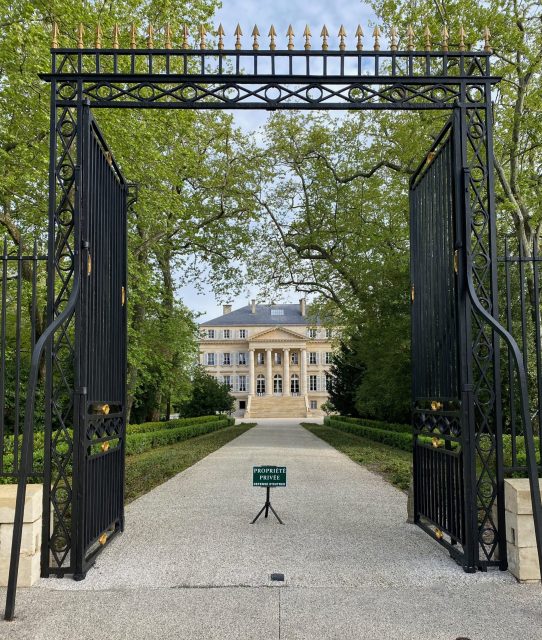
A turning point in Edward Guinness’ efforts to woo his future wife Adelaide comes during a dinner where a bottle of Bordeaux is served. Toasting “to honesty” and “to being surprised by honesty”, the two share Château Margaux 1844 paired with potatoes and eel gravy because as Guinness says: “No matter what our name may be, you and I are no different than the people living one mile away from us.”
Taking a sip, Adelaide asks: “Bordeaux?”
“Yes,” replies Guinness. “It’s Margaux 1844. I chose it because that’s the year of your birth…”
Adelaide responds with: “Actually, this wine is rather wonderful” to which he quips: “The year of your birth must have been very sunny and warm…”
Château Margaux gained Premier Grand Cru Classé status in the 1855 Bordeaux Classification (just over a decade before the year in which House of Guinness is set), springboarding it to the top of the Bordeaux tree. It is currently owned by the French-Greek Mentzelopoulos family, with Alexis Leven-Mentzelopoulos as CEO.
Today the 1844 vintage of Margaux would set a collector back a pretty sum. According to the château itself, the earliest vintage of its wine to be sold at auction was 1771, with the bottle reportedly appearing in a Christie’s catalogue at the time. However, more recently in 2015, rival auction house Sotheby’s held a landmark multi-vintage Margaux sale which included a single bottle of the 1900 vintage with an estimated price of US$10,000-$15,000, which gives some idea of how much a Château Margaux 1844 might fetch.
Released in June, the producer’s latest vintage (Château Margaux 2024) was released at €276 per bottle ex-negociant – making it the cheapest release price since the 2014. Available at around £3,240 per case of 12 to the London trade, this marks a 25% reduction on the 2023’s opening price. db’s Bordeaux correspondent Colin Hay called it a “gloriously expressive” wine.
Poitín
Poitín is a traditional, high-proof Irish spirit, made from grains or potatoes and distilled in small pot stills (‘poitín’ comes from the Irish word ‘pota’, meaning ‘pot’). The earliest records of the drink can be traced back to 6th century Irish monastic settlements, and it was widely consumed in Ireland until the British Crown prohibited it in 1661, after which the drink became a symbol of Irish culture and resistance. For more than 300 years, poitín continued to be produced secretly and illegally, but the spirit was re-legalised in 1997 leading to a slew of innovative flavour profiles with grainy, oily and toffee notes.
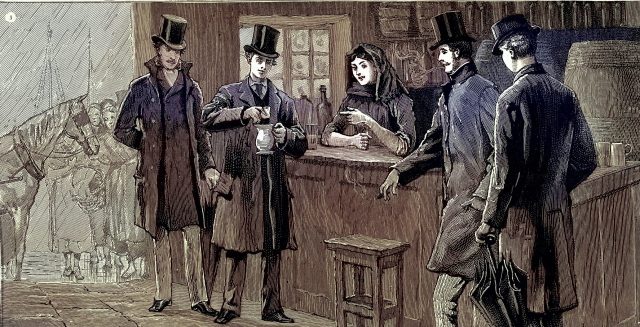
In House of Guinness, when Edward first visits the home of his mistress Ellen Cochrane, who is allied with the Fenian cause, she offers him a choice of either warm Guinness or Poitín to drink.
“Poitín, then”, answers Guinness reluctantly. Ellen uncorks a bottle and pours the clear, fiery liquid into glasses, raising a toast “To a free Ireland!”
Guinness downs his generous measure in one gulp and has to visibly restrain himself from reacting to the strong liquor while Ellen looks on, amused. Poitín is a high-strength spirit, typically ranging from 40% to 90% ABV.
The gut-punching Irish moonshine is also mentioned when alcoholic Ben Guinness tells his brother Arthur: “Every word you say is a twist in my guts”.
Arthur retorts: “What’s twisting your guts is poitín and laudanum.”
Related news
Map reveals cheapest pints of Guinness in the UK


