



Wine List of the Week: Palé Hall
Douglas Blyde heads to Pale Hall in Gwynedd, Wales to try out Welsh wines (but not before he’s served English wine; a “curious act of diplomatic self-harm”) in a grand dining room once frequented by Queen Victoria and Winston Churchill. But he leaves with more questions than answers.
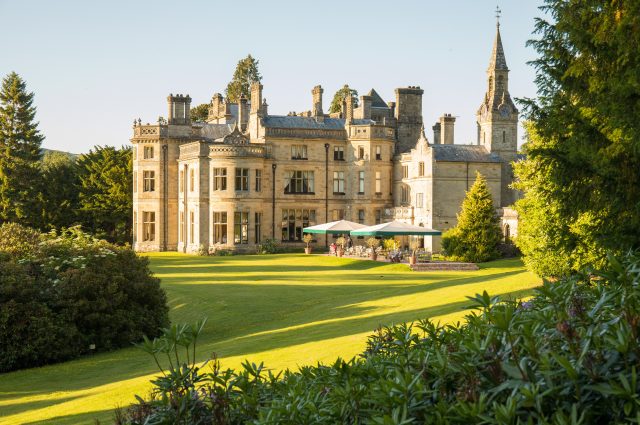
Things are shifting in Gwynedd – “four miles from Bala, on the cusp of the Snowdonia National Park and the wild, forgotten Beryn Mountains,” as The Telegraph described it. In April 2024, Anthony and Donna Cooper-Barney – he a residential park homes pioneer, she an entrepreneur- designer, bought Palé Hall, North Wales’s only AA five-star, Relais & Châteaux, Michelin-keyed hotel. They found it online, drove up on a whim, bid, and won. The kitchen has been restocked. Edward Marsh, veteran of Cliveden, Bovey Castle and Whatley Manor, leads the Henry Robertson Dining Room and the new Hearth – once the working kitchen of this 1871 pile, now a private dining space hung with bespoke Liberty James wallpaper around its original cast-iron hearth.
He has teamed up with Luke Selby, Roux Scholar and executive head chef at Le Manoir aux Quat’Saisons, set to close for refurbishment in January, in a partnership taut as a tightrope, whereby Selby leads a series of dinners threading Welsh culinary heritage into haute cuisine. The Cooper-Barneys’ ambition extends underground. A new wine cellar, already blessed by Oz Clarke, now hosts guided tastings, wine-and-cheese evenings and private gatherings. Soon there will be a whisky and cigar lounge, too.
Drinks

The Henry Robertson Dining Room, once host to Queen Victoria and Winston Churchill, remains the house’s grandest chamber. Named for the Scottish mining engineer and railway baron who built the place, it is not a room made for a perfunctory drinks list. Fuelling it is a directory of a list guided by a litmus test, “is it sellable?” – although it reads like the life’s work of a buyer who has stomped the grapes alongside the makers. The document treats producer and guest with equal care, favouring those who “respect the earth from which their livelihoods depend” printed on paper made from recycled fibres and grape must. Wales is no token gesture. Montgomery Vineyard in Powys offers a delicate demi-sec and a Solaris with the snap of cool nights. White Castle in Abergavenny provides Siegerrebe’s floral lift and a rare Cabernet Franc. Velfrey in Pembrokeshire makes “Naturiol”, lemon-edged with a salt-brushed finish. Gwinllan Llwynhudol on the Llŷn Peninsula works Rondo into a supple, berry-bright red.
Wine miles are counted in dozens, not hundreds. There are over 100 wines at or below £50 – from Château Derezla’s 2022 Dry Furmint (£28) to Bonny Doon’s 2020 Vin Gris de Cigare (£40). At the top end sits Domaine de la Romanée-Conti Grands Echezeaux 2001 (£6,000). In the gravitational middle are Joh Jos Prüm’s 2015 Graacher Himmelreich Auslese, Remelluri Gran Reserva 2011/2016, Château Lacoste Borie 2018 and Henschke 2019 Keyneton Euphonium, each around £120. Champagne is small but deliberate, crowned by Bollinger VZ16 Pinot Noir Brut in magnum (£350). Sweet wines range across eleven countries, including Gratavinum 2015 Dolç d’in Pique from Priorat (£60/half).
If the Henry Robertson cellar whispers of Welsh elegance and country-house pride, the Bryntirion Inn just across the grounds provides the counterpoint. Once a hunting lodge in 1695, it has sloughed off centuries of slumber in the wake of a £1m refit, its walls now hung with Cooper-Barney motorsport mementoes. Wrexham Lager, co-owned by Hollywood’s Ryan Reynolds and Rob McElhenney, runs from the taps; Penderyn whisky and Merlyn cream liqueur steady the evenings; while a Limoncello Pefriog cocktail sparks with fizz from Welsh wine. In the kitchen, Raymond Blanc protégé, Tristan Fitt turns out tarragon-scented chicken pies and a board of carefully kept cheeses. In the snug, where locals gather and live music carries, the chrome butt of a Mini erupts from one wall like a permanent punchline.
Dishes

Pairings today were staged by the dapper, Durban born bar manager, Bruce Dorfling. Of the canapés, one absolutely deserved in capital letters: Wales’ own Black Bomber with pickled walnut, croustade and chervil – a mouthful with the authority of a quarryman in Sunday best. Then whipped smoked cod roe with apple and fennel, the smoke a thuggish early arrival.
Partner Content


Finally, a squid ink croustade of rainbow trout tartare with lime and roe – all served not with Welsh wine but Sussex’s Ridgeview Cavendish, giving a chalky lift, like lemon on a cut. The Isle of Wight tomato dish impressed next: poached, blanched, curded, consomméd, oiled, tuiled in Parmesan. Lost in a Field Frolic, poured from magnum, was a happy acid trip of a pét-nat, a blend of heritage grapes led by Madeleine Angevine and Reichensteiner, padded with Schönburger, Huxelrebe, Müller-Thurgau and the crimson dab of Triomphe d’Alsace, its label as daft as a Global Hypercolour T-shirt. But it was shackled in a politically delicate Veuve Clicquot glass with a carrot-orange stem, as if to remind you of the champagne you weren’t drinking. Fifty millilitres – barely a gulp – made the exercise feel like a hotel’s idea of a tasting menu where the sommelier fears you might actually swallow. Two English wines in Wales before a single Welsh one – a curious act of diplomatic self-harm.
The sourdough, from a 25-year-old starter, landed with the crusty gravitas of an old judge, buttered with beurre noisette which gave you momentary hope this might turn into dinner. Cod followed, brined, steamed, buttressed with crab and fennel, in a beurre blanc enriched with brown meat. Kleine Zalze Project Z Chenin, raised in amphorae and matured for six years, was a brilliant match, not that 50ml lasted for long – nectarine, pear, skin contact. But the fish itself was only cod. A restaurant straining for Michelin polish should by now have reached halibut or turbot. Crab lent it borrowed glamour, but the centrepiece remained the albeit decent spec Mondeo of fish.
Beef was the most successful dish. A 21-day aged fillet and featherblade, with mushroom, outstanding black garlic purée, rolled Swiss chard and a bhaji-like fritter, was bolstered by Adega Damm Cazoga 2019 from Bierzo – granite-grown Mencía from old vines, with a faint liquorice drag. Poured into a heavy, workhorse Villeroy & Boch glass, at last a proper pour, though un-decanted and therefore gritty – like meeting an intellectual who hadn’t shaved. The finale was strawberry: white Ivoire chocolate mousse, elderflower, strawberry gels, tuilles, discs and sorbets stacked like patisserie Jenga. Montgomery Pink Rondo, Wales’s moment in the sun, was racy, rhubarb-edged, tense – and then mislaid in yet another Veuve glass. A nice match, concealed.
Last Sip

You have to want to come here. Oz Clarke did, the week before, down those narrow, cardiac-inducing lanes into a landscape of waterfalls and storybook gardens. But it’s a meal with questions. Where are the smart ingredients, or even the PGI Welsh lamb, some of which grazed outside the window? And why is vinous Wales wheeled on for the curtain call rather than the overture?
Most fellow diners hadn’t bothered with the written dress code, arriving in hoodies, jeans, trainers, fleeces and even hiking boots – one lady glugging a chain of Porn Star Martinis under Henry Robertson’s gilded ceiling, the very room where the tasting menu is staged. Which is the point: the bar menu operates here, cheek by jowl with fine dining, so pub-goers eat burgers and knock back cocktails at the next table to couples who have saved for a celebration. The effect is less Relais & Châteaux, more Wetherspoons at Glyndebourne. The wine programme needs its Welsh flag at the start, not the afterthought, and the glassware unified rather than pieced together from promotional off-cuts. The Cooper-Barneys have the will and the means. What’s missing is the ruthless focus to make Palé Hall not just another grand house with QR-coded art for sale, rolling views, and no doubt, forthcoming croquet, but a place where food, wine and setting finally sing together – in tune, in time, and in Wales.
Best for
- Newly completed cellar
- Complimentary mead in bedrooms
- Welsh wines
Value: 96, Size: 96, Range: 96, Originality: 96.5, Experience: 93; Total: 95.5
Palé Estate, Llandderfel, Bala, Gwynedd, LL23 7PS, Wales; palehall.co.uk
Related news
Wine List of the Week: Orrery by Pierre Minotti


