



‘Make fine wine fun again’ – Jamie Ritchie starts life at BBR
EXCLUSIVE: In his first interview since joining Berry Bros. & Rudd to mastermind its foray into the US market, Sotheby’s veteran Jamie Ritchie talks auctions, tariffs and the need for authentic storytelling. Richard Woodard reports.
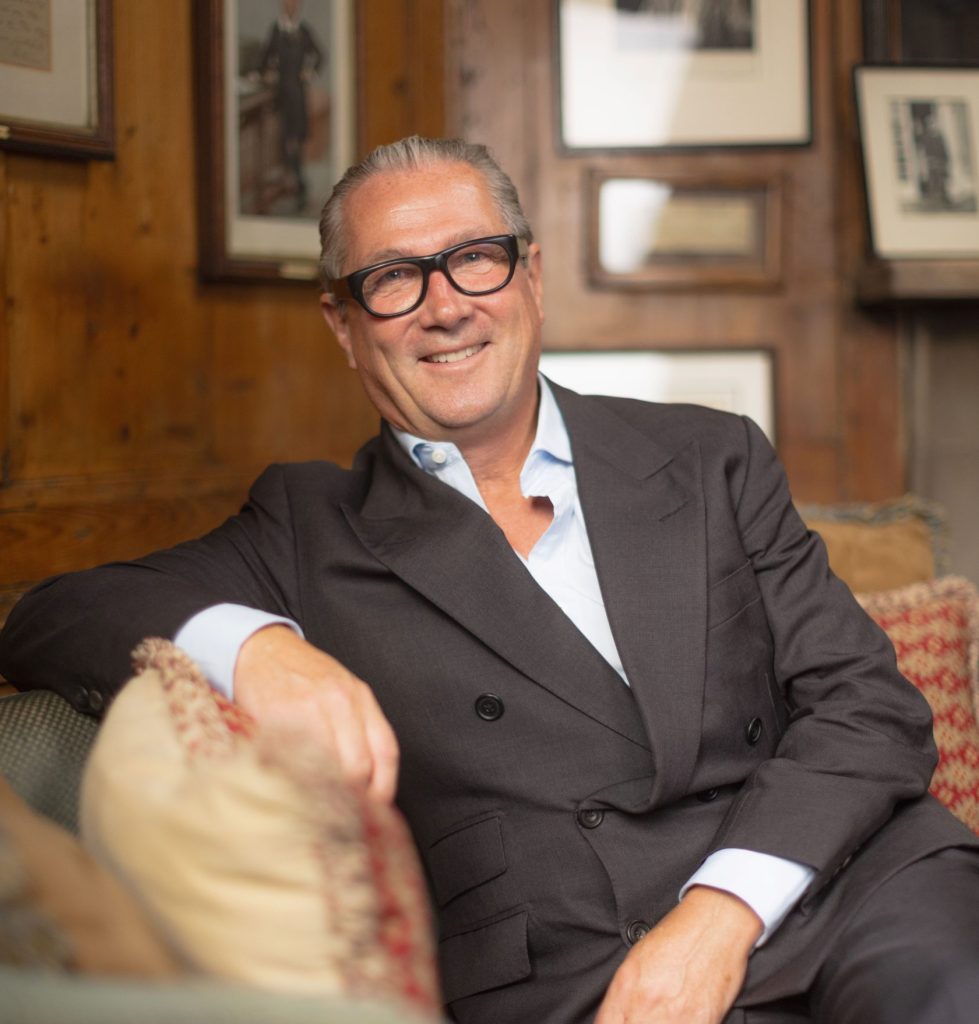
If you had to pinpoint the ideal individual to spearhead the expansion of London wine merchant Berry Bros. & Rudd (BBR) into the United States, Jamie Ritchie ticks more than a few boxes.
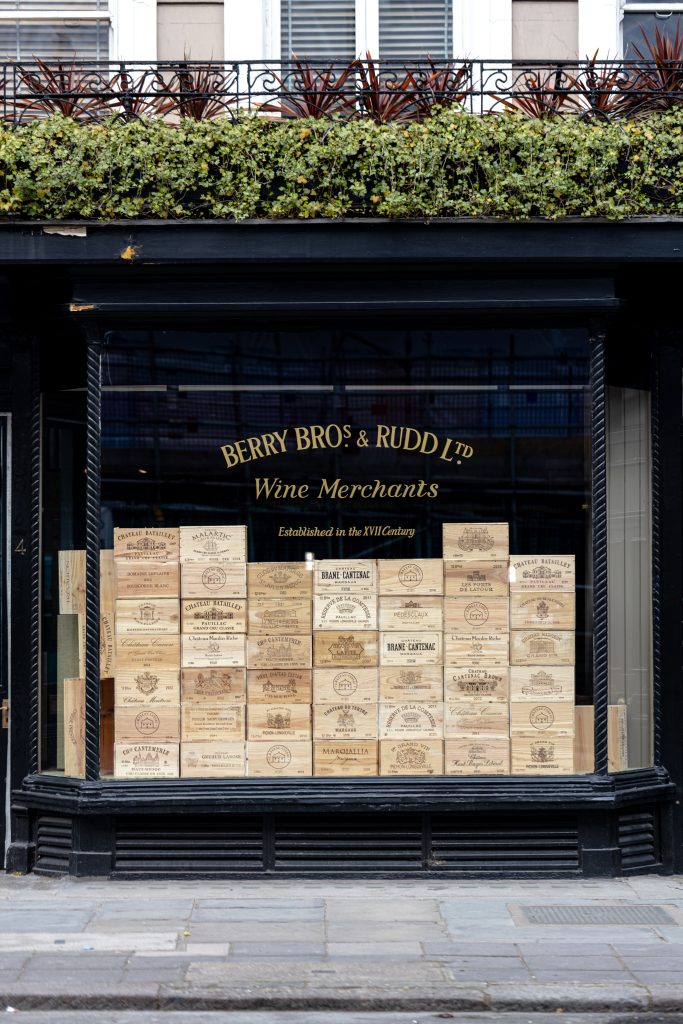
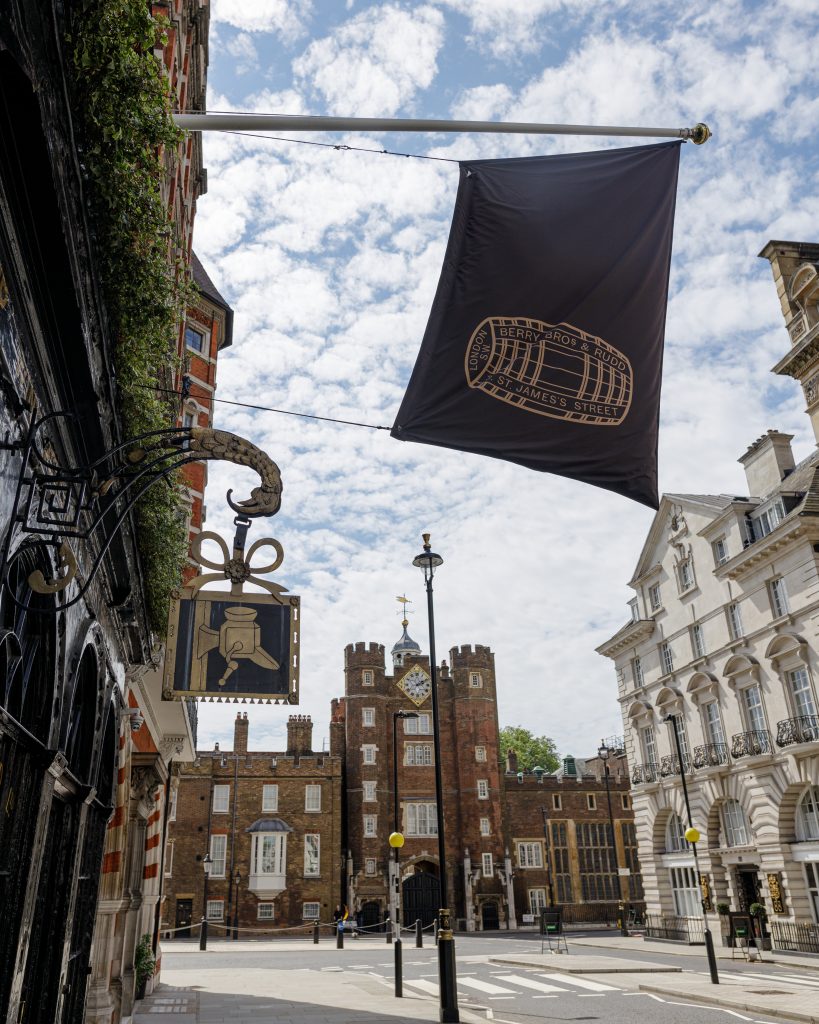
For 30 years, he was the archetypical Englishman in New York, overseeing auction house Sotheby’s successful ventures in the US and Asia, before moving to his current home in Washington DC via two years in Miami. Even Ritchie’s diction has a transatlantic poise: the accent remains impeccably English, but when we speak at BBR’s historic St James’s base, he tells me that the company’s new store in the US capital should be up and running “this fall”.
It’s a combination that Ritchie – new job title MD international & auctions – believes will be crucial to the success of BBR’s US venture. “I think it’s a blend of the history, heritage and everything they [BBR] bring to it, combined with a US philosophy of relationship-building and hospitality,” he says. “The US consumer behaves differently to the UK consumer. There are different levels of knowledge and appreciation. There’s more of a formality in the English way of doing business, and more informality in the US.”
That informality is perhaps key to the f-word with which Ritchie peppers his responses: fun. “When American consumers begin to enjoy wine, they want to have fun with it,” he says. “We sometimes forget that we’re occupying people’s fun time, what they do outside their workplace, generally speaking. With the speed and pressure of modern life, when people give up their free time, they want it to be enjoyable, fun, exciting, escapism.” The evolution of BBR’s business model to encompass events and hospitality, he suggests, will be key to achieving this.
Ritchie has previous here: when Sotheby’s expanded its auction offer into the US during the 1990s, he disrupted the buttoned-up, traditional live auction model, substituting the bidders’ ranks of cramped chairs with round, restaurant-style tables, making each sale a social event. “We gave them coffee, croissants and bagels,” he recalls. “We gave them lunch. If we were going on through the evening, we’d keep feeding them. Sitting in rows where you can’t put a cup of coffee down is not a very nice environment, and you probably won’t stay for more than about an hour.”
Auctions are another key part of Ritchie’s BBR job description, following the merchant’s first sale last year . “For me, the auction business is fun to go back to,” he says. “I had a nice break for a couple of years” – a reference to his brief stint as COO of wine and spirits NFT business BlockBar . “In a way, because we’re new to the environment of auctions at Berry Bros., we can sort of have some fun and play around with it a little bit. We’re not restricted by ‘ooh, you can’t do that; ooh, you can’t do this’.”
Does that mean live, as well as online auctions? Ritchie says online auctions are here to stay and emphasises that BBR won’t be starting live auctions in the US “next month”, but adds: “As an auctioneer, towards the end of my time at Sotheby’s, the fun auctions were Distillers One of One, Hospices de Beaune, Napa Valley Vintners, etc.
“Selling to a screen is not much fun as an auctioneer. Being eye-to-eye with people, using charm, wit, timing – that’s the fun of a live auction. If you’re going to be in the auction world, live auctions are theatre.”
Difficult climate
‘Fun’, however, is not a word that many would use to characterise the current state of the fine wine and spirits sector, with BBR itself suffering a round of redundancies earlier this year.
While acknowledging the difficulties of the current climate, Ritchie adds a little perspective, recalling the start of his Sotheby’s career in July 1990. “The first six months were relatively good,” he recounts. “Then the Gulf War started and the world fell apart.”
Sotheby’s held a wine auction the day after war was declared on Iraq. “We had this fax machine on a roll and, when we came in, there were reams of paper all over the floor with people cancelling their bids,” Ritchie recalls. “I don’t believe this situation is anything like as bad as that was. That was truly terrible.”
How, then, would he characterise the most recent boom-bust cycle? “If you look at the premiumisation surge, maybe it sometimes lacked a little bit of authenticity – people putting a new label on something and then putting the price up. Rather than just the transaction, people want to understand why something is good, why it’s worth that value.
“Maybe some of the people who came into the market weren’t so interested in the product; they were interested in the commercial activity. But we all need to encourage consumption of these wines. If the wine’s being bought purely from an investment perspective, you actually don’t need any descriptors of the wine or the production background.
Partner Content


“People want to feel a connection with the producer – why they do what they do. The move to everything digital has also probably played a role in the lack of authentic storytelling, because we’ve lost these beautiful [auction] brochures and catalogues which explained it all. It’s just presented as a transaction in the digital realm. How do you bring that back in the modern world?”
Not that Ritchie would portray himself as a traditionalist harking back to some mythical ‘golden age’ of fine wine. “We want to work with all age groups,” he says. “You need to keep refreshing your client base. The way you interact with someone who’s my age – a Boomer – compared to someone who’s my children’s age is different. We need to do both.”
All of these aspects – appealing to younger consumers, creating connections, authentic storytelling – are perhaps even more critical at a time of softer market conditions – and, in the US, of tariffs. For Ritchie, the issue is not so much the tariffs themselves as the unpredictability of life in the shadow of the Trump White House.
“Do tariffs have an impact? Yes, they do. But if they’re still in place in 15 years’ time, it makes no difference. In the short term, the value of inventory lying in the US goes up. The cost of new inventory coming in is more expensive, and it takes about 18 months to two years to work itself out.”
But if tariffs yo-yo and are cancelled and reinstated, that’s a different scenario. “Business loves certainty and doesn’t love uncertainty,” says Ritchie. “And we have a President who likes a certain amount of uncertainty. It changes some aspects of what we might do, but it doesn’t fundamentally change the model or the achievable success of the model.”
Asian appetite
Such is the focus on Ritchie’s role in launching BBR in the US, it’s easy to forget that he is also responsible for overseeing the merchant’s Asian operations, and its offices in Hong Kong, Singapore and Tokyo. It’s another part of the world that has posed challenges for fine wine and spirits in the past few years, but Ritchie has no doubts about its long-term potential.
“The Asian wine market overall is going to be critically important for the wine business everywhere,” he says, highlighting the enduring lure of wealthy Chinese consumers living not only in China itself, but also in overseas locations such as Thailand and Taiwan. “In the early days, the wealth was centred around the government employees, people making significant amounts of money from enterprises aided and supported by the government. Now we’re moving towards a healthier market, with wealthy individuals who enjoy wine. The result in the longer term will be a much more sustainable marketplace.”
Appetite, Ritchie believes, is beginning to return across the region: not just in the vast markets of China and India, but in smaller but growing destinations such as Thailand and South Korea. Then look beyond APAC and there are emerging opportunities in Mexico, Brazil and pockets of Africa.
“There’s an awful lot to do,” acknowledges Ritchie. “How best do we operate in those areas to build relationships, make interesting experiences, communicate effectively? Working out what the fine wine auction and retail business looks like in the future is a fun challenge.”
Looking for a connection
A few minutes before Ritchie and I begin our discussion, two American tourists hesitantly enter the dimly lit, wood-panelled BBR premises at 3 St James’s Street. “Hello!” the cheerful receptionist says in greeting. “What are you here for – wines and spirits, or history?”
“Well, wines and spirits, I guess,” the man replies, before his companion adds: “But maybe we can look at the history first?” A small episode that might be said to encapsulate the likely foundations of BBR’s future success in the US, and beyond.
“People are looking for a connection,” Ritchie says. “A connection with Berry Bros., a connection with the producers – reasons for buying something, rather than simply what it is. The idea of just having bottles on shelves and people coming into a store is something that’s over. If you’re doing that alone, it’s not sufficient to being a great wine merchant.”
Berry Bros. & Rudd’s latest auction, A Classic Collection, launched on Monday 15 September at 9am BST. It features more than 500 lots from a single vendor’s cellar built up over a period of 20 years, with highlights including 2014 Domaine de la Romanée-Conti and large formats such as a salmanazar of 2005 Château Pontet-Canet. Mixed cases include Champagne Salon’s 2008 Oenothèque selection. More details: https://www.bbr.com/auctions
Related news
Olivier Goudet acquires Wine-Searcher
The battle of Canada's frost control methods heats up
Vintae signs restructuring deal to secure future of Bodegas Riojanas


