



Flint Wines MD Katy Keating to share insight at db conference
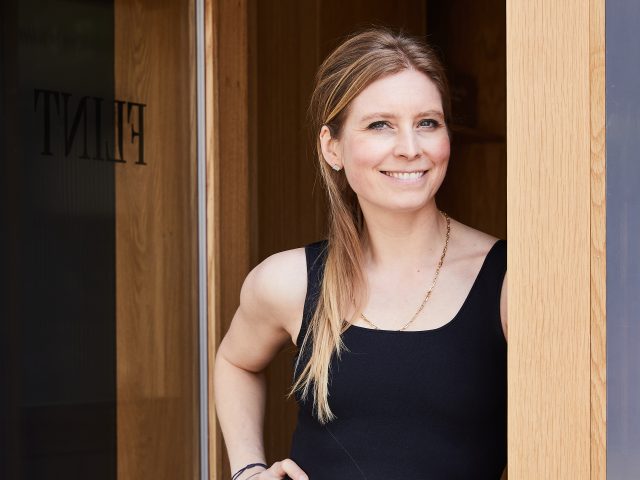
Flint Wines boss Katy Keating, formerly of Lay & Wheeler, offers a glimpse into the guidance she will be sharing at the upcoming db conference next month.
The db conference is titled ‘profitability in a challenging market’ and takes a crucial look into the issues affecting the sector from the hard economic realities facing the trade this year right through to the best techniques for tackling declining consumption, as well as how to maximise the opportunities for sustainable growth for the future.
In an interview with the drinks business, Keating offered examples of where to focus to build value across the wine sector and assured: “There are always things that can be done” before divulging how “Flint has been ‘preparing for the upturn’” which in practice means zoning in on three areas of focus: Investing in the business, supply growth and changing the customer experience.
In terms of investing in the business, Keating explained that “perhaps counterintuitively, we are spending money” but insisted that “this is to make sure we’re ready for growth. In the past 18 months we’ve renovated our office, revamped our brand which included bringing our private client arm under the same name, relaunched our website which is an ongoing project, upgraded our back end system, and hired over 10 people”.
Looking at supply growth, Keating revealed that Flint Wines have “signed about 10 producers in the past 18 months, focusing on where our customers are looking”. Unveiling more, Keating used the example of how “in February we brought on an excellent value biodynamic Bordeaux from the Cotes de Francs called Chateau Marsau. And in the release of Burgundy’s 2023s this year we took on a little known but future star in Burgundy named Charles Boigelot who studied under Raphael Coche and Thierry Pillot now making a stunning Monthelie). Rather than close our doors, we’re opening them”.
As for changing the customer experience, Keating suggested that Flint Wines is always “looking at how we sell wine and how we can do things even better”. For instance, she explained: “We have a Burgundy tasting every year in January, to taste the newly released vintage. However, our merchant partners, critical to our success, make their buying decisions in the two-three months prior”. This means that this year, Flint Wines is “hosting a private merchant tasting at our London office at the end of November, to better align our sales approach to what our customer needs are”.
Regarding reducing margins, Keating pointed out that Flint Wines objective is “always to offer wines at a fair price for the quality of the wine so that our customers can trust us to have their best interests in mind”.
Added to this, she highlighted how “the same goes for our producers, that they can trust too that we have their best interests in mind, upholding the perceptions about their brands which we’ve built together over the past nearly 20 years (and for those with family businesses running back generations, much longer).”
According to Keating, “slashing prices in a panic can undo decades of work in days” and, she noted how the business was “fortunate to work with high quality wines where the more productive path is to better communicate their story to help our customers understand why they are so special, and taste so good and therefore cost what they cost”.
Partner Content




To take this into account, she outlined how Flint Wines will “also focus on being the voice of the UK market back to our producers to ensure they’re aware it’s a soft market and that they help us look for the best ways to represent their wines, whether it’s setting out certain exclusivities by customer, or sending additional samples for new accounts”.
Granted, lately, the name of the game has been survival and many businesses are working day-to-day while others have longer term strategies, but in terms of the best approach here, Keating encourages the trade to look into the future.
She told db: “We think in generations. We do everything with the ‘long game’ in mind. We like this approach because it aligns our time horizons with those of our producers – vines take years to mature, wines take years to age, families take years to grow. This also reflects our relationships with our customers – built over years, not days – and our desire to retain a brilliant team – for whom the operative word should be career, not job.”
Flint Wines has many examples of how it has maintained momentum amid a really tough time for the sector. A few examples of late include how the company has “sampled (both with our team and our customers!) more bottles than in the history of Flint: letting our products do even more selling for us than usual”.
Plus, Keating admitted: “I totally subscribe to the adage ‘you manage what you measure’ and now it’s more important than ever”. In explaining this, she gave the example of how, during the summer months, she had been aiming to beat the company’s rosé sales of two key producers – Triennes and Rumor – year on year since she started at Flint in 2023. She shared how “every week, we review how many bottles we’ve sold versus the prior year’s total” and revealed that now “indeed, both are set to break the company record”.
Additionally, she explained how Flint Wines has also been working to increase its own visibility. To achieve this, Keating admitted: “We’ve said ‘yes’ to more partnerships than ever this year, we’re hosting our first trade tasting in Bristol next month, we’re working to get interesting wines into the hands of interested journalists, we’re making sure our trade partners have a print copy of our list if they’d like” and suggested that perhaps that was the best piece of guidance for progression, not being afraid of “saying yes”.
The db conference will take place at the Science Gallery in London on Wednesday 8 October from 9.30-5pm. To find out the full list of speakers and to sign up to attend click here.
Related news
Felix Hart turns 'visual sommelier' in Peter Stafford-Bow's new wine novel
Raising labour standard in the wine industry 'unsexy, but important'
Old Vine photography shortlist unveiled at heritage showcase


