



The db wine crime files 2025: Part I
In an exclusive new series for the drinks business, Sarah Neish explores the biggest wine crimes of 2025, from fakery and heists to targeted cyber attacks.

Drinks companies have been victims of billions of pounds worth of criminal activity this year as professional fraudsters and opportunists alike targeted producers, restaurants and consumers.
The good news is that a raft of high profile court cases have ended in convictions for criminals of major crime against drinks operators. Some of these incidents also serve to highlight where drinks companies can improve and tighten their security, and the speed at which they should do so. In the case of the cyber attack against Japanese brewer Asahi (more on this below), the beer giant had already identified its potential vulnerability against cyber hacking one year prior to the crime, and was in the process of “assessing the maintenance” of its security system in order to reduce that risk. Taking action, and swiftly, could protect your business.
In part one of this exclusive new series, db rounds up some of the biggest drinks crimes of 2025, with more to follow in a second instalment, coming soon.
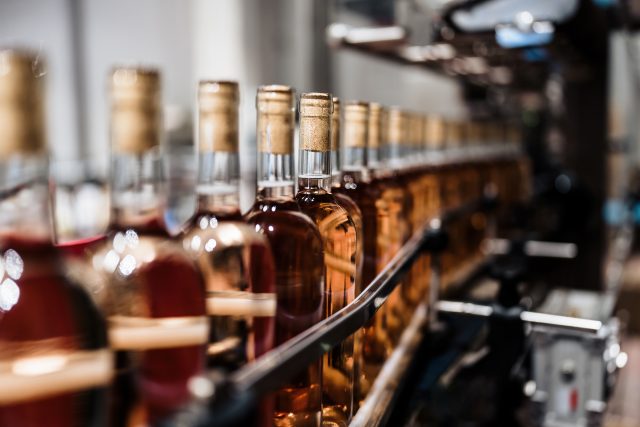
May: Gangs spend £500,000 faking wine bottles and labels
Wine fraud specialist Maureen Downey told the Wine Blast podcast in May that the average consumer was “pretty screwed” as a result of increasingly sophisticated counterfeit operations taking place in the UK.
The step-up in the quality of fake bottles comes as a result of counterfeiters employing identical digital printing specs as authentic wine producers, making it harder to spot the difference between a genuine bottle and a fake, especially at the lower end of the market.
Downey alleged that “an Asian organised crime gang has partnered with a European organised wine gang to flood the market with counterfeits”, with one victim being Australian brand Yellow Tail. “The crime rings are spending half a million dollars to get the same digital printer used by the professional producers. They’re replicating bottles to an unprecedented level,” she said.
“It is a relatively low bar to entry in terms of capital investment, and it’s nothing but reward. Wine and spirits have some of the most opaque supply chains in the world. Governments, in some cases, have better vision over the supply chain of illicit drugs than they do over wines and spirits. So, until we can talk about supply chain oversight, counterfeits are going to continue to be a problem.”
The increase in fake bottles is causing wine producers to go back to the drawing board and create new harder-to-replicate designs for their labels, along with implementing additional measure such as individual numbering and bespoke cork stoppers.
July: Tuk-tuk thief admits £24,000 wine heist in London
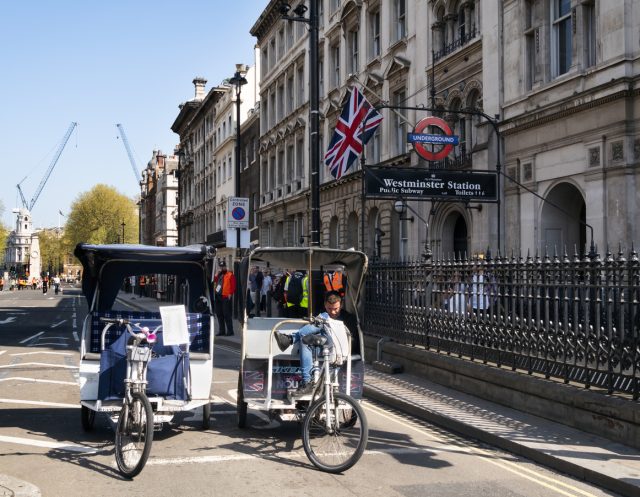
One of the most leftfield crimes of the year concerned a pedicab driver, who pleaded guilty to stealing fine wine worth £31,000 from a London restaurant. The unusual theft involved the culprit loading up a wheelie bin with 73 bottles of stolen wine and attaching the bin to his tuk-tuk before pedalling off into the night.
Iuliu Kubola, 61, of Islington, admitted three counts of burglary after breaking into Piazza Italiana on Threadneedle Street on 6 May. He was arrested on 22 June at 12:30am after police constable Jordan Felstead spotted him lurking outside a bar. Kubola subsequently admitted he had also stolen wine from Comptoir Café and Wine in Mayfair and Oliveto and Olivo in Belgravia, using the same getaway method.
CCTV footage confirmed Kubola’s creative method of transporting his haul, with further offences recorded on 15 and 19 June when he had stolen three additional bottles of wine worth around £680.
Detective constable Marcus Fairclough, of the City’s Criminal Investigation Department, applauded the “good work by our officers, who spotted him and quickly made enquiries and the arrest”, ensuring Kubola would now “face the consequences of his criminality”. Judge Mark Lucraft KC sentenced Kubola to 20 months in custody, suspended for two years, as he said Kubola had demonstrated “remorse” by helping police recover some of the stolen alcohol.
“Some wine has been recovered, a total of 32 unopened bottles of wine, valued at approximately £6,687,” the judge said.
Defence barrister Daisy Kell-Jones told the court that Kubola had previously worked for two of the restaurants he targeted and claimed he had not been paid for his work. She added that her client struggled with a drinking problem, which contributed to his “reckless and stupid decision” to commit the thefts.
September: Woman shot dead in luxury Napa resort
The Napa County Sheriff’s Office confirmed it was investigating a “suspicious death” after a young woman died from a fatal shooting at an upmarket Napa hotel frequented by wealthy wine fans.
Ahmyiah Iman Pinkney, 24, was found dead on the morning of Thursday 4 September at the Bardessono Hotel & Spa in Yountville. According to the Napa County Sheriff’s Office, police received a 911 call at about 7.30am, shortly after which time deputies from the Sheriff’s department entered the room to find the victim dead from a fatal gunshot wound.
The crime rocked the California wine community due to its high-end location. Bardessono Hotel & Spa is a favourite with tourists visiting Napa wine country, and promises to deliver “the ultimate Napa Valley experience”. Rooms start from US$1,000 per night, and many come complete with fireplaces, hot tubs and virtual surround sound speakers. Listed in the Michelin Guide, Bardessono is described as “a complete package, quintessentially Napa”, with a contemporary Californian restaurant serving produce from the hotel’s own farm, and a “massive wine collection”, which includes bottles from its own organically cultivated vineyard.

September: Winemaker jailed for carbonating still wine and selling it as Champagne
Didier Chopin was jailed for 18 months after carbonating hundreds of thousands of bottles of still wine from Spain and France and passing them off as Champagne. Speaking to court reporters, Chopin, from Aisne in northern France, said: “I made a mistake, I am ruined and I have nothing else to add.”
A French court sentenced him to 18 months in prison, with an additional 30 months suspended, during a hearing on Tuesday 2 September in which Chopin stood accused of selling counterfeit ‘Champagne’. His crime was referred to by the prosecution as “a cynical and premeditated scam” in which Chopin and his wife had hoodwinked droves of unknowing customers out of “several million euros”, carrying out the crime through their holding company, SAS Chopin. The liquid they were passing off as Champagne was proven to be still wine to which Chopin had added “aromas and gas” to ape the famous French sparkling wine, heard the court.
Partner Content

As well as receiving a jail term, Chopin was also banned from ever running a company again, and is prohibited from working in the Champagne industry for a minimum of five years. Additionally, both Chopin and his wife were fined €10,000 each, and their holding company SAS Chopin fined €300,000 for “embezzlement” and “misuse of company assets”.
Furthermore, the couple were instructed to pay damages to trade association the Comité Champagne, as well as a number of wine buyers, in a case that caused outrage in the Champagne region.
September: Asahi hit by targeted cyber attack
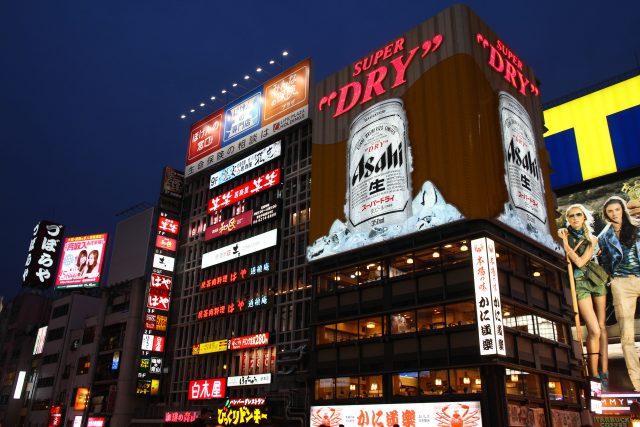
Asahi announced on 29 September that it had experienced a devastating systems failure as a result of cyber-hacking, saying “there is currently no estimated timeline for recovery.”
The cyber hack led to a shortage of Asahi products including its flagship Super Dry beer and Nikka Whisky, in Japanese restaurants, bars and retailers as the brewer suspended all new orders and shipments, reiterating there was “no prospect of resumption.”
Such was the gravity of the attack that Asahi was forced to keep business going by visiting customers in person and handwriting orders as it worked with authorities to investigate the cyber attack.
Asahi resumed a degree of production for its flagship product at its six Japanese factories on 2 October following the shutdown but confessed that the facilities were still not “fully operational”. Shipments of 16 additional products did not resume until 15 October, more than two weeks after the hacking took place.
The attack also impacted Asahi’s busy festive period as the brewer made the call to halt sales of gift packs in order to prioritise the supply of regular products over seasonal items to clear the backlog. As a final blow, Asahi was forced to revealed there was “a possibility” that personal information could have been compromised as a result of the breach, despite previous assurances to the contrary.
October: Mulled wine heist foiled by sniffer dog
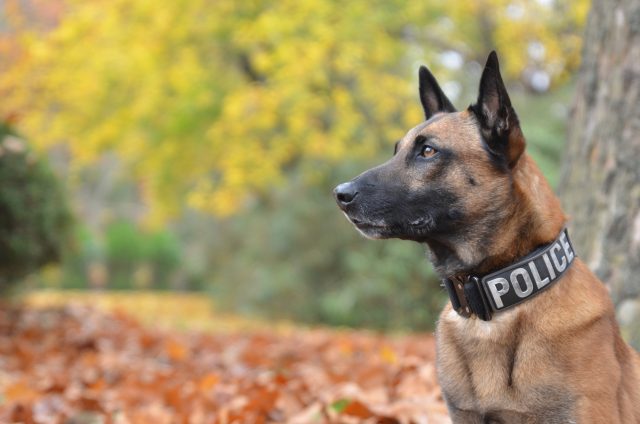
A UK police dog sniffed out a batch of stolen mulled wine worth £110,000 in Yorkshire after the perpetrator robbed a sea container containing the popular festive drink.
The lorry and container were stolen from Rotherham, Kent, in south east England, and was spotted being driven through South Yorkshire sporting false registration plates. The criminal was caught after a dog handler and road police unit were deployed to intercept the HGV.
After being pulled over, the culprit attempted to flee on foot but was stopped in his tracks by police dog Rocco, who went on to search the shipping container on the the lorry, uncovering 26 pallets of mulled wine worth £110,000. A 45-year-old man was arrested at the scene on suspicion of theft of a motor vehicle, driving without license or insurance, driving while being disqualified, and possession of Class A and Class B drugs.
However, it seems like the thief will be home by the fire in time for Christmas and more of his favourite mulled wine as he was released on bail pending further investigation. According to a South Yorkshire policeman “the man has been remanded in custody for driving offences, and released on police bail while our investigation progresses. Great work by the Operational Support Unit and PD Rocco!”
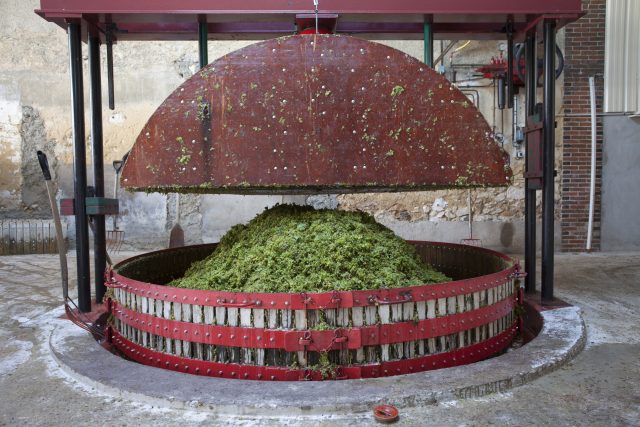
October: Treviso winemaker crushed to death by wine press
The Treviso Public Prosecutor’s Office launched a manslaughter investigation after a winemaker was crushed to death by a winepress in October. Matteo Forner, head of the Pat del Colmél winery, was cleaning the press, which appeared to be turned off, when the machine sprang suddenly back into action, trapping Forner by the neck and killing him instantly.
The victim’s father, Pietro Forner, who witnessed the accident, immediately called emergency services. However, Matteo was pronounced dead on arrival.
According to local publication Corriere del Veneto, Matteo Forner “had done it [the cleaning] a thousand times and was convinced that the press he’d used during the day was off this time too.”
Despite talk of a power outage being responsible for the event, the Treviso police has since opened a manslaughter probe into the incident.

November: UK Foreign office reveals methanol poisoning ‘red zones’
2025 has been a shocking year for reported fatalities following the consumption of methanol in contaminated alcohol beverages. The increase in incidents triggered the UK Foreign Office to publish a list of countries where the risk is highest to help stem “a global increase in methanol poisoning.”
In October, Ecuador, Japan, Kenya, Mexico, Nigeria, Peru, Russia and Uganda were all added to the warning list. Just one month later a further 11 countries were added, as reports continued to flood in. Those 11 countries were: Bangladesh; India; Iran; Jordan; Libya; Malawi; Malaysia; Morocco; Nepal; Papua New Guinea; and Rwanda.
UK Foreign Office minister Hamish Falconer said all travellers should know the signs of methanol poisoning.
“If you’re drinking spirits overseas, stick to trusted places and avoid homemade alcohol or free shots,” Falconer said. “If something feels off, like a hangover that’s way worse than normal or vision problems – get medical help fast.”
Among the horror incidents that took place this year were 25 pensioners in Leningrad dying after drinking cheap, unlabelled vodka laced with methanol, and more than 160 cases of methanol poisoning and 23 deaths as a result of methanol poisoning in Kuwait.
Related news
Queen Camilla gives speech at Vintners Hall
Master Winemaker 100: Alberto Stella
Australian Vintage sales dip 1.7% as turnaround plan targets stronger second half


