



Gratien & Meyer bets big on Crémant future with long-term vineyard overhaul
As global thirst for Crémant grows, Gratien & Meyer is investing in a 15-year vineyard transformation, increasing plantings of Chenin Blanc and Chardonnay in pursuit of sustainability and “excellence in viticulture”. Amelie Maurice-Jones reports.
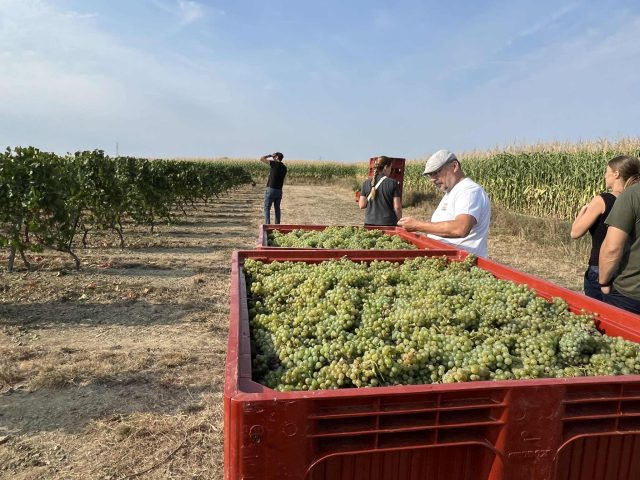
Henkell Freixenet saw Crémant sales soar by 16.1% last year, as consumers seek out alternative sparkling styles, with the volume of Crémant consumed globally increasing by 3.2% in 2023. the drinks business joined Henkell’s Cremant de Loire producer, Gartien & Meyer, in the Loire Valley region for the start of harvest, to scope out ‘25 vintage predictions and long-term visions for the vineyard.
Gratien & Meyer is slowly switching things around at its vineyards to focus on sparkling wines by planting more Chenin Blanc and Chardonnay grapes. Speaking to db, Katy Murarotto, general manager of Freixenet Gratien, France, said: “The whole idea is to expand with the global consumption for Crémant.”
Ideally, overall production will be split with 40% Chenin Blanc, 30% Chardonnay with a remainder of Cabernet Franc. “It’s a lot of investment and expenses,” Pierre Charon, winemaker and chef de cave at Gratien & Meyer, told db, “but we should achieve this ideal vineyard in 15 years”. It’s a bid, according to “excellence in viticulture” through focus on sparkling wine, according to Charon.
Coping with climate change
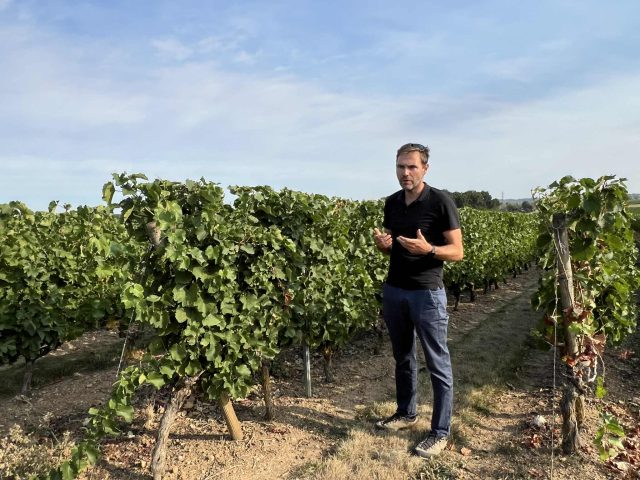
While Chenin Blanc is less susceptible to disease than Chardonnay, the latter grapes can better stand up to dryness and hot conditions – making it an appropriate pick to fight the impact of climate change.
“Climate change is a big concern,” says Charon. “In the Loire, they say big heatwaves and not much rain in summer is going to become quite typical. But ‘23 to ‘24 was very rainy. Because we are close to the ocean, nothing is guaranteed. It can change very quickly.”
And as production grows, does Gratien & Meyer worry about finding workers? “Yes,” admits Charon, “every year this is a challenge.”
He believed the solution is providing good conditions, motivating people and finding good people. “But there is a trend in society that doesn’t give a good image of this work,” he added. “So we need to change the image at a society scale.”
Harvest underway
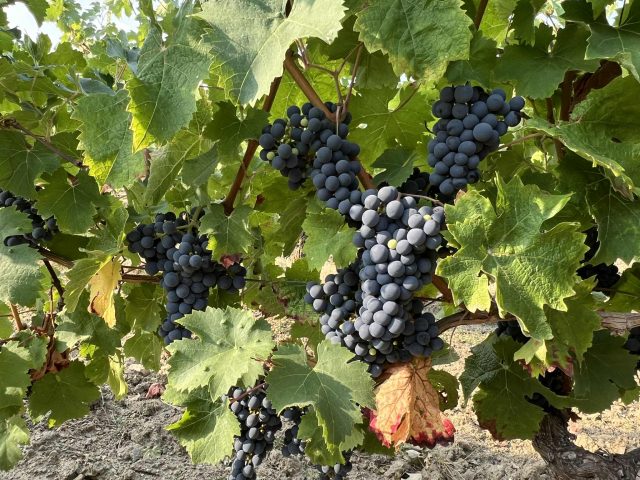
At Gratien & Meyer in Saumur, the 2025 harvest began on 20 August with the first Chardonnay plots, and is expected to be wrapped up by around mid-September with the final Cabernet Franc grapes. The 2025 harvest, shaped by a heatwave and early rains, is expected to produce high-quality, characterful vintage wines, despite lower yields due to extreme weather last year, according to the winemakers.
Murarotto said: “After a significant heatwave in August, the grapes quickly reached maturity, offering excellent quality and particularly expressive aromatic profiles.”
Partner Content



She said the early September rain in the Loire Valley was beneficial and helped preserve a “beautiful balance in future wines”. She added that the ripe Chardonnays showed “beautiful intensity”, while the Chenins stood out for their freshness and aromatic profile.
“The conditions this year point to a vintage with character, ideal to produce vintage wines that will perfectly illustrate the richness of the Loire grape varieties,” continued Murarotto.
Mirroring ’22
Reflecting on the 2024 vintage, Charon said, “for sparkling wine, last year was not bad, because we had a lot of acidity”. But 2022 was a fantastic year, with standout weather conditions that Charon thinks are mirrored in ‘25, which he hopes will lead to wines with “nice, fruity flavours”.
“We had a very nice spring with not so much rain, not like ‘24. We had a lot of rain in July, around 60 millimetres, and no rain since then, but we had a big heatwave in France in August, so the vines are very happy, as they like heat and dry conditions,” he said.
Charon predicts a low yield for the 2025 harvest, with Loire grapes damaged by turbulent weather in June 2024. Additionally, some young vines suffer more during dry spells, with shallow root networks struggling to access water, which could impact the yield.
Still, he thinks the quality will be “perfect”, with “nothing to throw on the floor”.
Harvest challenges
Despite good luck throughout the year, what happens in August is always vital for a harvest: “If it’s too rainy or too cold, you get a lot of diseases, and botrytis, which is the worst.”
During harvest, the biggest challenge is to pick grapes at the right time to preserve acidity and limit alcohol levels, said Charon. “It gets tricky because we handpick the grapes, and you can’t pick everything at a very fast rate,” he added, “it’s not like a machine.”
Looking forward, there’s also plans in the works at Gratien & Meyer to preserve the local environment. The winery is aiming to gain sustainability certifications for its vineyards.
Related news
Manchester’s new power pairing: Chicken and Crémant
Timeless elegance: Crémant de Loire’s leading light
Bijou moves into sparkling with Éminence de Bijou Crémant de Limoux


