



Is the green agenda really worth it for Hong Kong’s bar scene?
Does going green fill the till? For Hong Kong’s on-trade the answer is yes and no. But the real motivation is personal passion. Joyce Yip reports.
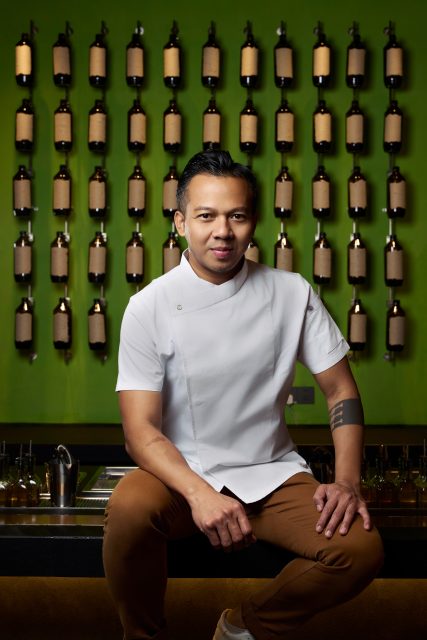
At Socio bar in Hong Kong’s Central district, the menu’s front page touts its sustainable impacts: “4.4kg oyster shells upcycled monthly”, “5kg of avocado seeds and peels sourced”; “1.8kg of coffee grounds repurposed”. Within its pages, the cocktails name the outlet from which the upcycled ingredient is sourced: oyster shells from fish-and-chip shop Hooked, banana peels from bakery Butter; coffee grinds from Amo-Ago café — the list goes on.
Still, co-founder Amir Javaid says sustainability is just “another factor to good tasting-drinks”.
“We don’t push it onto our customers: the facts are just there so they can see the kind of good they’re doing when they’re here,” he says, adding that half of those who come through his doors are inquisitive about its green approach.
“In some respects, upcycling ingredients reduces costs; but with climate change and the economy, everything is super expensive. Even if you’re repurposing everything, you still need to pay for ice and labour. And it’s hard to get creative about sustainability after a 16-hour shift,” he says.
What’s worse is customers expect poignant flavours of, say, coffee when they order a drink called ‘Coffee Grinds’, for example, only to be disappointed when second-brew grinds fall short.
Another disadvantage, he says, is inconsistent supply.
“If Hooked’s oyster sales are low that week, it means we can’t serve our Oyster Shell cocktail. I personally think it’s kind of cool, but it can be a disadvantage when running a bar.”
Food sustainability has been in the spotlight since the early 2010s, and bars around the world have been hopping on to the green train with changes both superficial and fundamental, from refusing straws to rethinking their water filtration system. But if it’s not for profit, why do they still bother more than a decade later?
“Because I’ve seen how much goes to waste if we don’t actively try to fix the problem,” says Javaid.
A successful case is Penicillin in Hong Kong, ranked no.27 on Asia’s 50 Best Bars list. Despite overflowing crowds coming through the door, the bar retains a portion of its 1520sqft space as “the stinky room”.
Partner Content


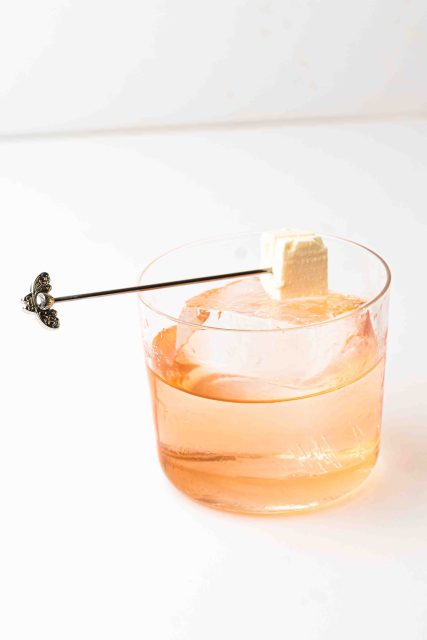
Kept at 30-odd degrees Celsius, the stinky room is thick with a musky sourness coming from foaming jars of strawberries, banana skin, cabbage, passion fruits – ingredients either left over from the bar or sourced from nearby fruit hawkers who’ve deemed them too ripe to be sold at full price. The resulting elixirs or the ingredients themselves make it into Penicillin’s cocktails, which retail for HK$125 each (£11.90), or seasonal ferments that cost HK$100. Beyond the bar’s mostly closed-loop system, it also collects leftover croissants from a nearby bakery for its drink ‘Advance Treatments’.
After six years of “trial and error”, co-founder Agung Prabowo says his approach to sustainability has been making the green. Under six months of opening, Penicillin took home the Ketel One Sustainable Bar Award in 2021; it has since been a chart-topper on Asia’s and The World’s 50 Best Bars lists.
“Upcycling works; fermentation works: to make 20L of cider, for instance, we only need to buy honey for under HK$50; and the rest is from leftovers,” he says, though he’s quick to add that costs come in forms of manpower in, say, fetching and preserving ingredients; time in research and development; and – the biggest challenge for land-strapped Hong Kong – space. For reference, a nearby street-level storefront measuring 500sqft – less than a-third of Penicillin – is leasing for HK$60,000 a month; not to mention Prabowo’s off-site lab, located just around the corner from the bar, designed just for R&D.
“There’s no way to really calculate profit and loss if you want to do sustainability. Admittedly, we’re only 80% sustainable – we still use ice, air conditioning, electricity and water. There are ingredients we haven’t found second lives for yet; but we always think of ways to maximise their lifespan,” says Prabowo.
Taking another approach to closing the loop is Jack Byrne, manager of Paragon Bar, also in Hong Kong’s Central district. He has turned the curdle of his bestselling ‘Rosa’s Milk Punch’ into a panna cotta to accompany his ‘Havana To Haroldstown’ spiked cold brew coffee. The latter, vice versa, is mixed with agar powder in a gummy candy to complement the former drink.
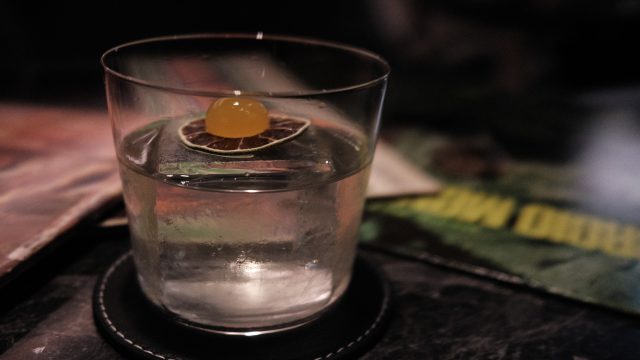
These are fruits of a five-year R&D process. Still, Byrne refuses to toot his own horn.
“Sure, the sustainability aspect gives customers a unique talking point – it shouldn’t be much more than that. We in the industry shouldn’t be patting ourselves in the back for going greener, it’s what we should be doing all along,” he says. “I don’t want people to come because they’re doing something to the environment.”
In terms of profit, he says customers who’ve had one garnish-drink combo may be more inclined to try the other one, sharing the challenges of time and manpower as both Prabowo and Javaid.
“We do everything in our 50sqft kitchen-and-bar space. Is it driving profit? Maybe. It’s hard to assess when every business is focused on putting bums on seats,” he says. “I just can’t bear kilograms of fruits that are wasted at bars to make garnish alone.”
Related news
Brown-Forman warns of flat year despite sales beat


