



Rising costs push Irish breweries ‘out of business’
Independent brewers across Ireland are showing concerns over a 9.8% price hike in water charges that will threaten the future of the sector.
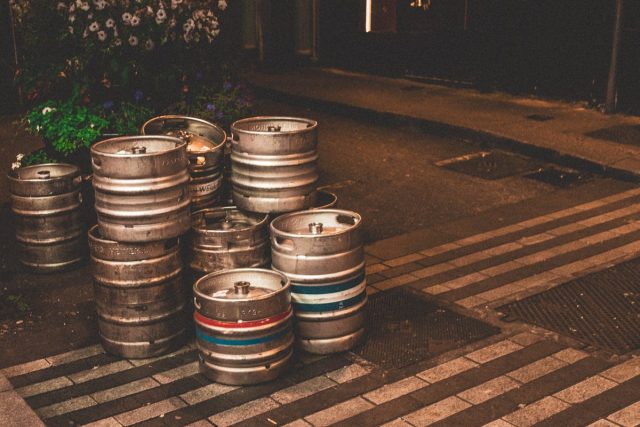
The new challenge emerges as indie brewers are already struggling with “astronomical” input cost increases amid closures from neighbouring beer businesses.
In a recent report via The Irish Times, closures of prominent breweries were discussed in a deep dive into what was affecting the industry. Within the report, it noted how Killarney Brewing and Distilling (KBD) recently shutting its doors for good last month had been a move which had also directly led to more than 50 job losses.
As the business folded, KBD’s management outlined how “significant and sustained challenges” had impacted the business “stemming from the lasting effects of the Covid-19 pandemic, delays in opening our state-of-the-art distillery in Fossa, global supply chain disruptions, rising input costs, and ongoing geopolitical and trading pressures”.
The brewery, which also produces spirits alongside its beer offering, had also revealed how it had felt the effects of US import tariffs as well, having further impact on its success.
One week prior to Killarney’s closure had also seen Ballinlough-based Black Donkey Brewery cease production after 11 years in business.
Speaking about the demise of the business Black Donkey cofounder, Richard Siberry said that the “archaic and arcane alcohol licensing laws” were to blame for the failure of small breweries and had made him “virtually prohibited” from selling directly to customers while also struggling with 17% margins.
Letterkenny-based Kinnegar Brewing co-owner and chair of the Independent Craft Brewers of Ireland (ICBI) Libby Carton insisted that the raft of independent brewery closures have become a symptom of the struggles of the industry generally.
Carton explained: “For independent breweries, much like other independent businesses, the actual cost of doing business and the legislative burden simply have to be reduced. In the last couple of years, it has been legislative changes that have increased our input prices, and one of those is water,”
Non-domestic water charges are reportedly set to be increased by 9.8% following a decision by the Commission for the Regulation of Utilities (CRU) that took place in July. This means that the new water and wastewater tariff rates will become effective from 1 October.
According to CRU, the hikes are due to the need to “ensure the recovery of costs of water services” to aid “the reliability, efficiency and sustainability of water services”. However, according to a spokesperson from the Irish Hotels Federation, the decision is just “yet another example of the relentless increases in operating costs that are eroding Irish competitiveness and undermining the viability of businesses”.
db recently reported how a quarter of Irish pubs have been forced to close their doors in the last 20 years, with Limerick hardest hit and a further 1,000 pubs at risk “without government intervention.”
The situation is being amplified across brewery businesses too with Carton having noted how a similar sentiment is held by brewery owners no, calling the rising water charges “simply unsustainable” for beer businesses.
Carton warned: “Breweries are going to go out of business [because] water is our biggest raw material, as well as being a utility material in the brewing industry. We just cannot sustain the increase in costs. It seems completely unjustified that the cost of water should be going up at the rate that it is.”
Seamus O’Hara of the Carlow Brewing Company, who founded the brewery and the O’Hara’s brand in 1996, highlighted how “beer is 90% water, it is an important input” and added “people do not realise [how the increase will impact the beer sector]”.
Rye River Brewing Company founder and chief executive Tom Cronin admitted that “over the past four years alone, businesses like Rye River Brewing Company have been levied with 110% increases, eroding and undermining profitability and the viability of the business.“
Partner Content


Cronin implored that “cost increases like these cannot be simply passed on to the consumer and while we continue to find sustainable savings through water management initiatives within the business, we cannot cover these annual increases.”
Despite reducing its water usage and consumption, Cronin told reporters that the business had seen a €70,000 increase in water charges between 2024 and 2025.
Added to this, the legislative issues for the brewing sector are not limited to water alone but also include the implementation of the Deposit Return Scheme (DRS) for cans and plastic bottles which has reportedly also become an added challenge. Carton At Kinnegar noted that, because of DRS, it has been hit with another annual cost of €16,000.
Carton explained. “That is nearly the same as half of a decent job in a brewery, it is simply an additional charge that has come out of nowhere” and emphasised that even though the initiative had her support for its “general intent” it was still going to force breweries out of business.
She lamented: “We don’t think it is sustainable for small producers to bear the burden of cost. I would imagine that the people [working on implementing the DRS initiative] are better paid than most brewers.”
O’Hara looks back at how things came to be and admitted that “while the pubs were closed, that was a challenging time [because] the on-trade is where a lot of people interact with your beer for the first time.”
He revealed how the Carlow Brewing Company was “severely impacted” by lockdowns in some of its key export markets, such as Germany, where the majority of its demand was for kegs, but was “much stronger in retail” domestically.
To stay afloat, O’Hara has said he focused primarily on exports to France, Italy, Spain, Germany and Canada, with Irish sales accounting for about a third of its production as the domestic craft beer sector in Ireland had grown steadily.
He also explained how, prior to the pandemic, the US had been one of O’Hara’s 10 largest markets but that since then the company had been priced out of the market.
O’Hara explained: “There was a period in which the logistics, the costs of shipping containers to the US went up enormously. There were a few different challenges – long before the tariffs – that knocked the US back a bit.”
This meant that shipping beer “just wasn’t economical” he added.
The more fundamental challenge for the beer sector are the new rising input costs, which O’Hara observed have gone up “dramatically” with some of the Carlow Brewing Company’s costs “almost doubling”. He pointed out how “a lot of things have gone up by between 50% and 100% [and] just when you’re getting out of one thing, suddenly that challenge comes down the tracks”.
Most of the glass bottle manufacturers used by Irish breweries were previously based in Russia, due to the low cost of energy. Now, since the Russia’s invasion of Ukraine and sanctions in place, with O’Hara flagging how brewers across Ireland have, because of this detail, become an unlikely victim of circumstance.
To navigate these headwinds, O’Hara highlighted how “bottling was moved to other countries where, at the same time, energy and energy costs were shooting up.” But, he admitted that “the period of high inflation coming out of Covid was crucifying for us, it was really difficult. Our glass bottle costs went up astronomically because of the energy crisis – even the cost of cardboard cases went up”.
One silver lining for the industry has been the fact that the introduction of health warning labels on alcoholic drinks in Ireland have now been postponed for two years.
Carton also echoed how the “stark increases in costs” is crushing the sector and remarked on these “astronomical” increases, such as carbon dioxide also “went up eight-fold during the energy crisis”.
Related news
FyneFest teams up with Indie Beer campaign



Irish Government taxes on beer and spirits is 55%, one of the highest in the EU.
18 to 23 year olds in Ireland are drinking less alcohol and going to pubs less.
Challenging times.