



Ways alcoholic drinks retailing is getting smarter
What digital wizardry are retailers using to source, market and sell alcoholic drinks? Jessica Mason looks at how far things have moved on in-store and online.
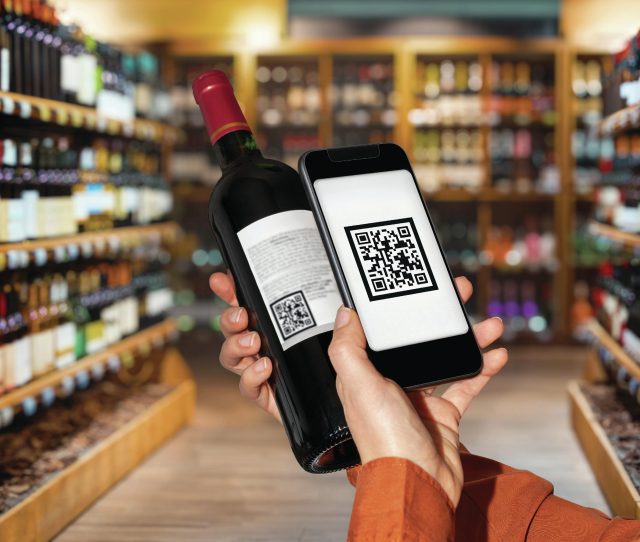
The landscape for drinks retailing is changing and so too are the ways the sector is being guided. As consumers become more intuitive with AI, drinks retailers are following suit.
This includes keeping an eye on freight, right through to helping to decide which products ends up on shelves. Then, from the consumer-facing side, supermarkets are exploring digital price tags, interactive shelf displays and even smart barcode replacements to engage shoppers in real time. Marketing drinks in the off-trade no longer relies on the whim of the buyer. In many ways, it’s becoming smarter.
“Retail media is the number one touchpoint now,” says Patrick Young, managing director of PRS In Vivo’s UK office, who is known for speaking avidly on the topic of technological advancement. Young notes that retail media has already overtaken traditional digital, television and out-of-home channels in terms of marketing spend. “Some retailers are trialling QR codes instead of barcodes, which you can scan for more information [on a specific product],” Young says. “Digital screens and displays on glass fridges and doors could well be a new opportunity – especially if they can be responsive or personalised to shoppers.”
Still, there’s a practical limitation. “I’m not sure how many shoppers will want to stop and scan a bottle in the aisle,” he explains. However, new technologies are unquestionably changing the way we browse shelves before selecting which drinks to place in the basket.
In terms of the shopper experience, grocery technology has, for some time, been actively moving towards self-service checkouts, smart carts and robotic assistants, as well as mobile apps that help to generate personalised offers. We may have not labelled these things as artificial intelligence or AI, but that is exactly the headline they fall beneath. It has all just been hiding in plain sight.
Profound impact
In the ‘State of AI in Grocery 2024’ report, conducted by Grocery Doppio, the research explores the profound impact of AI on the grocery industry. The report highlights that AI is projected to unlock US$136 billion in value across the grocery sector by 2030, with the largest impacts expected in supply chain and logistics (US$67.7bn) and merchandising (US$25.7bn). Other significant areas expected to generate cash using AI include marketing (US$19.3bn), store operations (US$15.8bn), customer service (US$2.5bn), and IT (US$2.3bn).
According to the report findings, 86% of grocery c-suite (convenience store) executives admit that AI will be a necessity in the future, up from 81% in 2023. Despite this insight, the researchers said few retailers had yet fully embraced AI across multiple business domains, pointing to significant untapped potential. The report, in many ways, serves as an incentive to retailers to accelerate their future strategies.
Another element that the researchers highlight in the report is how imperative it has become for the sector to “adopt AI to achieve substantial improvements in targeted marketing and customer service”. With this in mind, it outlines how “AI-powered solutions are expected to be pivotal in elevating the shopping experience, thereby boosting customer loyalty and satisfaction”. This, the research shows, is an area that should not be overlooked.
One UK retailer that was ahead of the game when it came to using technology to assist its learning was Waitrose. The company even trialled video technology on its alcoholic drinks shelves some eight years ago. Initially, it started as a way to keep the consumer informed with up-to-date information on the wine on shelf, but the potential for the retailer to gain valuable shopper insights was being noted even then.
The move, which it called its “new generation” of in-store tech, included the launch of video shelf-edge technology in the drinks aisles. Essentially, it was being used to give customers access to tasting notes and recommendations from Waitrose’s wine team, including food and wine matching. It began as a tool to support the retailer’s seasonal campaigns, but developed quickly.
Speaking about the innovation at the time, Waitrose customer relationship manager Charles De Clerck said the retailer would evaluate the technology’s potential before making any decisions on whether and how it might take it further. De Clerck added: “We are always looking at how we can bring the Waitrose offer closer to our customers and give them clearer, more convenient access to product information and recommendations from our buyers.” Knowing very little about how things might progress, or even that the term AI would soon become part of the public’s vernacular, De Clerck described it as “a new generation of digital ticketing” and tentatively hinted that “this small trial is a first step to enable us to determine if the technology is something that has the potential to improve our customers’ shopping experience further in future”.
Online shopping
There was, however, one very successful retail avenue already utilising this kind of technology. After all, ecommerce, or rather the birth of online shopping, had already made significant strides in boosting drinks sales on a global scale.
One thing has held back online shopping, though, and it is not convenience, but the human element. Or rather, the sense that consumers tend to idly browse rather than make informed, deliberate decisions. To combat this, KPI optimisation tools have been created to answer those needs. For instance, Constructor’s AI shopping assistant, according to its maker’s website, is “purpose-built to increase revenue for enterprise ecommerce by giving shoppers an engaging, human-like experience that helps them explore new items they want to purchase”.
The business also suggests that it can help to “deliver a smarter, intent-driven experience that guides customers from inspiration to purchase – boosting engagement, loyalty, and revenue” – which is quite the boast for any shopping assistant.
But how does it achieve this? According to the team at Constructor, it works “by mimicking the experience of interacting with a knowledgeable store associate”, and this gives people a sense of being out shopping and making decisions, only with a fairly astute person on hand who understands what they are looking for and even helps to upsell by showing them other bottles or flavour variants that might pique their interest.
The Constructor team adds: “The AI shopping assistant helps educate and engage online shoppers during their buying journey, leveraging real-time data analysis to offer highly personalised product recommendations, answer questions in real time, as well as guide shoppers to best-fit items.”
Shopper autonomy
Sam Curtis, who is head of digital analytics at Kantar UK, echoes this sentiment and reiterates how important it is for shoppers to feel autonomy when buying drinks and making decisions, but also suggests that drinks producers need to be aware that they’re not just trying to influence and market their creations to the end consumer any more, but also to the AI which will give out recommendations.
Curtis explains: “We know that consumers like to do their own online research to discover drinks brands and products, particularly when it comes to premium spirits. AI overviews are creating a huge shift in this part of the buying journey – suddenly drinks businesses need to be thinking about how to influence not just shoppers, but increasingly machines too.”
According to Curtis, drinks companies need to stay alert, because “if their product is recommended above a competitors’ in an overview or another LLM platform, there’s a chance to make real gains and speed up consumers’ decision-making process.”
But, he warns, overlooking how fundamental influencing the AI overview is to success could have a detrimental impact on sales.
“Without a concerted effort to influence the AI and make sure it’s your content and goods which are being promoted – and in an accurate way – brands risk slipping out of sight and out of mind. Our research shows that AI overviews now represent as much as 70% of searches for spirits, so drinks businesses really can’t afford to just sit by and hope for the best.”
Flavour preferences
Another way that the alcoholic drinks sector is using new technology is to anticipate flavour preferences and move alongside trends.
Within the drinks retail industry, AI can help to analyse customer behaviour and identify any patterns and lifestyle shifts impacting sales. Access to this data can also help retailers and drinks companies to create highly personalised promotions that are not only tailored to individual preferences, but are also in tune with what is trending and fashionable.
What’s your whisky?
One example of this that is already in motion is Diageo’s What’s Your Whisky? platform. It’s a good example of how a drinks brand owner is using AI to engage with consumers, in this case at the company’s Johnnie Walker Princes Street visitor attraction in Edinburgh. While perhaps not a traditional retail channel – although there is a retail shop as part of the experience – the learnings from the initiative are clearly being taken on board. Through a series of simple questions, the What’s Your Whisky? platform analyses and maps consumers’ flavour preferences against a large proprietary sensory database of foods and aromas, to generate a digital representation of what it calls a person’s unique ‘FlavorPrint’. This is personalisation via tech in real time. Looking back, Diageo has been leading from the front for a while now because, in 2022, the company acquired Vivanda – the owner of the technology behind What’s Your Whisky? – and has since also launched What’s Your Cocktail? and What’s Your Beer?, as well as localised versions of What’s Your Whisky? in both China and India.
FlavorPrint is part of Diageo’s ambition to provide customised brand experiences across all channels, and also supports the drinks giant’s goal of having a deeper understanding of consumer preferences. These advancements have already helped Diageo to unlock further opportunities in innovation and personalised consumer experiences, although it is often silent on many of those until plans come to fruition.
Loyalty benefits
Last spring, Tesco stores flagged how, via the use of AI, it had offered its customers extra loyalty benefits. In truth, it was another way that drinks retail was able to showcase how technology can help with shopping personalisation.
In this instance, the AI tech gave each customer a personalised challenge which, when completed, rewarded customers with extra Clubcard points. Customers could then complete up to 10 challenges, with a total of £50-worth of Clubcard points up for grabs during the store’s six-week campaign.
At the time, the retailer noted that the personalised technology was about improving its helpfulness, and even went on to say: “Personalisation is about using what we know about customers to make their experience better and our rewards more helpful, and we’re very excited to see how our customers respond to the Clubcard Challenges.” By the end of last year, Tesco’s use of the AI-powered Roambee platform also enabled the retailer to identify a reduction in dwell times, as well as enhanced stock accuracy, across 3,000 locations.
The UK’s largest supermarket chain, which operates more than 4,250 stores nationwide, admits that it has a complex supply chain which requires constant visibility and efficient management, and so it began using Roambee, a supply chain visibility platform powered by AI.
“Roambee’s platform has allowed us to track and manage our container movements across rail and road much more effectively,” says Tesco’s head of primary, global and rail logistics Ben Smith.
He further explains: “We now have more real-time visibility and don’t need to rely on third-party data to confirm deliveries and track containers. We can trace the location of any of our shipments at any time, reducing delivery errors and ensuring that our stores are stocked efficiently.”
Plus, as Smith remarks: “This real-time insight has allowed us to resolve issues faster, reduce dwell times and increase stock accuracy across our network.”
There will, however, inevitably be challenges – primarily for the independent drinks retail sector. After all, the gap between big retailers with drinks aisles and small boutique or specialist bottle shops will grow ever wider because, while only large and medium-sized enterprises will be using predictive analytics and automation methods, a lot of the smaller indie drinks retailers will continue to use manual calculations, potentially making them less informed about stock balances.
There is no doubt that, for every advancement, there are hurdles and also many businesses that will fall behind while others prosper.
As the research from Grocery Doppio’s report states: “AI’s potential to unlock US$136bn in value by 2030, especially in supply chain and logistics, and areas like merchandising and marketing, underscores the strategic importance of AI investments for driving growth and operational efficiency.”
The advancement is happening and drinks retail is on the precipice of change. As the researchers outline: “The sector is undergoing digital transformation, with 81% of sales in early 2024 being influenced by digital channels.
Comprehending this digital shift is vital for businesses seeking to adapt and excel in the evolving retail environment.”
Related news
Why travel retail is the smart route for drinks hoping to crack Asia
Why drinks brands with thoughtful design gain traction in travel retail
Business rates hikes 'symbolic of how little Labour is doing to help' independent drinks retailers


