



Hybrid grapes could save wine from climate change
Extreme weather is threatening the world’s traditional winemaking regions, with up to 70% at risk. Hybrid grapes offer resilience and sustainability, but will consumers embrace the change? Kathleen Willcox reports.
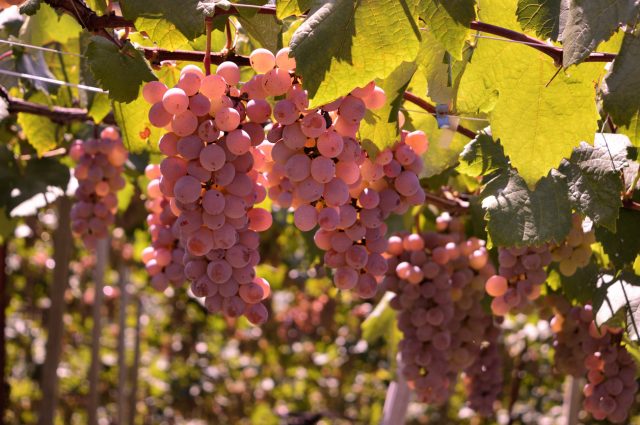
It is not just the headlines or your imagination; the weather is getting worse everywhere.
Climate extremes are here to stay, and it is going to get worse. Nasa recently unveiled data demonstrating the vertiginous increase in droughts, floods, heat waves and shock freezes over the past five years.
Climate change threatens global winemaking regions
The world is on track to lose most (70%) of the winemaking regions it currently occupies if the average temperature continues to increase as scientists have predicted, according to a study published in Nature Reviews Earth and Environment, compiling decades of research tracking the impact of climate change on grapes.
Hybrid grapes are clearly not a solution to all of the challenges facing viticulture. Certain once-unusual weather events, like wildfires and floods, are becoming expected and are causing billions of dollars in damage on an annual basis.
But they are still, at first glance, the best Band-Aid on offer. Freezes, like the ones French vineyards experienced in 2021, causing US$2.4 billion in losses, or the widespread frost damage to vineyards in 2023 in the Finger Lakes, destroying upwards of 50% of the grapes under vine, affect hybrids far less than they do vitis vinifera.
Why hybrids work
Hybrids are bred for cold hardiness, with some varieties capable of withstanding -40℉ temperatures that would decimate classic vitis vinifera varieties. They are also created specifically to resist certain diseases and pests, which makes for greener vineyards requiring fewer inputs, and making them inherently more eco-friendly (and cheaper to farm) than vitis vinifera.
But grapes are grown to make wine that people want to drink, and hybrid grapes often fail to enchant.
Overcoming stigma and taste challenges
Partially, it is due to ongoing stigma. Following the 19th century phylloxera epidemic, during which European varieties were grafted onto US rootstocks, several countries, led by France, restricted or completely banned the use of hybrid grapes, which certainly did not help their image.
But some of the issues are chemical. Hybrid grapes contain compounds that vitis vinifera do not, like methyl anthranilate, which can transmit overtly grapey or wet fox aromas and flavours. (Its cartoon grapiness is so intense, methyl anthranilate is used by sweet and fizzy drink manufacturers in Jolly Ranchers, grape soda, Kool-Aid and the like).
For decades, winemakers cultivating hybrid grapes leaned into the eco-friendly and economic benefits, making wines that paid the bills, but did not excite the palates or interest of the wine industry’s gatekeepers. But that is starting to change, as it becomes increasingly clear just how important hybrids are to the future of winemaking, and growers and producers in extreme weather-prone regions like the Finger Lakes in New York learn how to leverage hybrids’ clear pros, while evading their cons.
‘Less intensive and expensive’
Winemakers are not coy about openly discussing hybrids’ biggest assets.
“The low-input aspect of hybrids is the big appeal for us,” says Colleen Hardy, co-founder of Living Roots Wine & Co., with a range of vitis vinifera like Cabernet Franc and Pinot Noir and hybrids like Niagara and Elvira under vine in Hammondsport. “They require at least half the sprays and tractor presses, and sometimes that can be even less, depending on the variety and other vineyard management practices used.”
Lisa Hallgren, co-owner and national sales director of Ravines Wine Cellars, which has a mix of grapes like Chardonnay, Sauvignon Blanc, Cayuga and Vignoles, agrees that hybrids require far fewer sprays, often producing bumper crops.
The hands-off approach that hybrids engender pays off for both growers and winemaking buyers.
“Hybrids are generally less intensive and expensive to farm,” says Alex Alvarez-Perez, co-owner of Usonia Wine, which has a 3.5 acre home vineyard comprised primarily of Cabernet Franc and Riesling, and a handful of hybrids, including NY-81, Helios, Marquette and Noiret. They buy a lot of grapes from local growers, and say the price difference is stark. “Vinifera usually ranges from $2,000 to $3,000 a ton, while hybrids are usually in the US$800 to US$1,000 per ton range.”
The hybrids he and co-owner and partner Julia Alvarez-Perez are farming are also growing well, despite the more than a foot of rain received in recent weeks.
“We are farming our entire vineyard organically, and frankly, we are getting walloped by downy mildew,” Alvarez-Perez says. “We are also working with two other growers, who farm organically. The hybrids look much better, and have had far fewer inputs of copper and sulphur.”
Reducing yields, considering chemistry
Hybrids were bred to be productive, which essentially guarantees more product for the same amount of money.
But Hallgren says they purposefully “crop our hybrids like we crop our vinifera,” lowering the yield in order to concentrate flavours, increase complexity and produce more inherently appealing wine grapes.
At Living Roots, Hardy also focuses on reducing yields by dropping fruit and “good canopy management to optimise sunlight, airflow and vine health.”
Erin Rasmussen, who founded Wisconsin’s American Wine Project in 2018, says that considering the chemistry of hybrid grapes at harvest is just as important as creating an open canopy. (Which she also obsesses over).
Partner Content


Rethinking cellar approaches and changing the narrative
Kyle Mizuno, who cut his teeth making wine in the Napa Valley, working alongside Philippe Melka, Michel Rolland, Heidi Barret and Aaron Pott, eventually crafting several 90+ point wines from Robert Parker, Wine Spectator and others, wanted, perhaps counterintuitively, something more.
He says that as much as he loved Napa Cabernet, he was looking for a challenge and a change.
“I love California Cabernet, but making it got boring,” Mizuno explains. “It is like painting the same landscape over and over again. When I was approached with an opportunity to create something truly different, and to even help change the narrative on hybrid grapes, I could not resist.”
Mizuno joined Rolling Hills Estate Winery in New York’s Champlain Valley, tasked with putting the Champlain Valley on the map. At this point, there is no wine, but the Marquette, Petite Pearl, Frontenac, Sabrevois, La Crescent and Frontenac Gris plantings are thriving. Mizuno’s goal is to show these hybrids the same level of respect and care that meticulously farmed Napa Cabernet Sauvignon is, in the vineyard and cellar.
“There are no established rules about how hybrids should be turned into wine,” Mizuno notes, clearly relishing the freedom. “These varieties are still new to the world. And it is important to recognise them for what they are. Marquette will never be a Cabernet Sauvignon, I do not care how long you let it hang.”
He is at the beginning of the winemaking journey there, and so far has stuck to the basics.
“I am working with excellent cooperages for barrels and stainless steel,” he says. “By eliminating variables, I will more easily be able to know what effect each one has on different varieties. It is already clear to me that blends will be key, because it is not like in Napa, where we have so many different clones of Cabernet to choose from, and so many soils to grow it in. Here, a Marquette is a Marquette.”
Global adoption of hybrids
At Milea Estate Vineyard, general manager Russell Moss is equally bullish on hybrids for both the Hudson Valley estate and for winegrowing in, of all places, Bhutan. (He is a partner in Bhutan Wine Company).
“At both Milea Estate and Bhutan Wine Company, we are not chasing sustainability certifications while dumping copper on struggling vinifera,” Moss says. “We are matching varieties to our sites and values so our kids’ kids can still farm these vineyards. That is real sustainability, and it also happens to make incredible wine.”
While he admits that there was a lot of initial scepticism about planting hybrids, especially in Bhutan, where his partners were not necessarily deeply familiar with premium hybrid winemaking, he says the Traminette and Vidal Blanc they planted have “won over even the harshest critics because they are thriving in Bhutan’s challenging wet season better than any other variety we have tried.”
The real reason people resist hybrids at first, Moss says, is the same reason toddlers turn their noses up at unfamiliar fruits and vegetables.
“Unfamiliarity breeds suspicion,” Moss notes. “But here is the fascinating irony. Luxury is supposed to be about provenance, quality and rarity. Hybrids check all those boxes; they are definitely rarer than ubiquitous Cab and Chardonnay, they can produce exceptional wine in skilled hands, and they have unique terroir stories. Plus, they are the most environmentally conscious choice we can make.”
Learning how hybrids behave in the cellar
In the cellar, the Milea team has learned that hybrids behave differently from vitis vinifera as they do in the field, often calling for drastically different winemaking techniques. For Vignoles and Seyval Blanc, for example, they have noticed “a phenolic component that can be disjointed.”
To offset the lack of cohesion, they fine the liquid when it is still in the juice phase, right after whole-cluster pressing, with casein and bentonite.
“It helps manage phenolic astringency to achieve elegance and approachability,” Moss says.
At Ravines, fermentation is where the magic happens.
“We ferment hybrid whites on skins for aromatic and textural orange styles, and we ferment reds off-skins for bright, juicy flavours,” Hallgren says. “We often make hybrid batches into blends, but we have also found that we can make single varietal wines that we are proud of, like Marquette.”
Critical and consumer response
Critics cannot always move the needle in sales, but having zero bragging rights around an entire class of grapes is a problem.
That is starting to change for underloved hybrids, though. Milea Estate’s Chambourcin recently snagged 92 points from Wine Enthusiast, and powerful sommelier voices like Paul Grieco at Terroir in New York City have put several of American Wine Project’s creations on his list, including a Pet Nat made from Brianna.
At Usonia, Alvarez-Perez says their enthusiastic demographic skews “a little younger and hipper than the typical Finger Lakes winery. We get a lot of folks visiting from East Coast cities. We set up a tasting room last year.”
Even the most rarefied European regions, like Champagne and Bordeaux, that once outlawed hybrids, have welcomed them with open arms for their climate change-busting power.
Urbane hipsters and critics are in. So are Europeans. The mass market is surely next.
Related news
Alentejo: lessons from the front line of climate change
Why climate change may favour Garnacha in Rioja
Moët employs historic plant cuttings and new PIWIS in climate change battle


