



Every country’s legal drinking age – from 13 to 21 years old
With the UK government poised to give 16-year-olds the right to vote, James Bayley explores how the world decides when you’re old enough to drink, revealing wildly different ideas about adulthood across the globe.
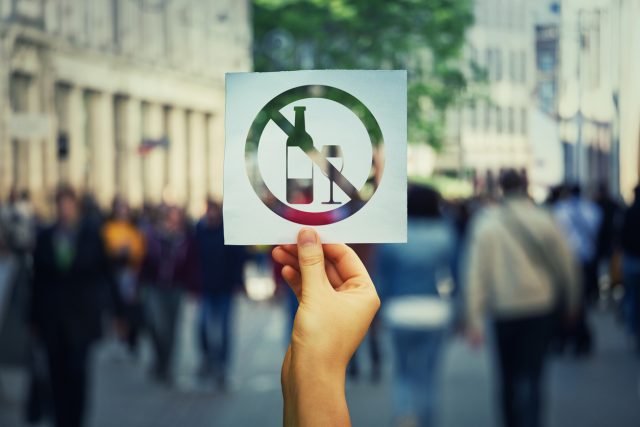
Alcohol is one of those legal oddities that shows just how differently societies define adulthood. Some countries set no age at all, others follow a moderate 18, and a few insist on 21. And then there are those where alcohol is completely prohibited, making the question irrelevant.
No legal minimum age
Several countries have no national minimum drinking age, an omission rather than a philosophical endorsement. Angola (beyond its capital), Mali, Guinea-Bissau, Equatorial Guinea, Comoros and Djibouti have no age specified for alcohol purchase.
This doesn’t mean young children are legally downing spirits in public; cultural norms and parental supervision still play a significant role. But the absence of legislation leaves the decision largely in the hands of vendors and social custom.
Early teens (13–15 years old)
According to the World Health Organisation, Burkina Faso is often cited as having the world’s youngest legal drinking age – effectively 13, though enforcement is minimal and the law rarely applied. In the Central African Republic, alcohol can be purchased at 15 from a shop but not served in a bar until 21.
These allowances are relics of older legal systems rather than active endorsements of early drinking. Elsewhere, Antigua and Barbuda permits 16-year-olds to drink in the presence of parents. Most countries, however, have moved away from allowing under-16s legal access to alcohol, citing the established health risks to adolescent development.
Sweet sixteen
Many European countries, including Germany, Austria, Denmark, Belgium, Luxembourg and Switzerland, allow 16-year-olds to purchase beer and wine. Spirits, however, are restricted until 18.
The philosophy is that early supervised exposure reduces risky, unsupervised drinking. In Denmark, for example, teenagers may buy drinks under 16.5% ABV at 16 but must wait until 18 for anything stronger. Similar approaches exist in Burundi, Palestine and (historically) Barbados, which has since raised its age to 18.
Seventeen
Malta is unusual in having set its legal drinking age at 17 since 2009, when it was raised from 16. It represents a compromise, designed to curb school-age drinking without removing what had become a social norm.
The island remains a rare example of a 17-age jurisdiction, with most nations opting either for the continental European 16 or the more common 18.
Eighteen – the global norm
Eighteen is by far the most common legal drinking age worldwide. It is the standard in much of Europe (France, Spain, Italy), Latin America (Brazil, Argentina, Mexico), Africa (Kenya, South Africa) and Oceania (Australia, New Zealand).
The reasoning is clear: 18 is the age of legal majority in many places, when individuals may vote, marry, sign contracts, and, logically, consume alcohol. Even where exceptions exist, such as India’s variable state laws (18 to 25) or Canada’s provincial differences (18 or 19), 18 remains the global benchmark.
Partner Content

Nineteen
Nineteen, while uncommon, is primarily used to prevent high-school students from purchasing alcohol. Canada exemplifies this approach, with most provinces at 19 and a handful at 18.
South Korea similarly uses 19 (now measured by international age following a recent reform), ensuring most citizens have completed secondary school before legal drinking.
Twenty
A small number of countries raise the bar to 20, often citing public health. Japan ties its drinking age to its cultural “Coming of Age Day”, while Iceland and Lithuania (which increased its age from 18 in 2018) also stand here.
Thailand, Paraguay, Uzbekistan and Benin round out the “20 club”, representing societies that take a conservative stance on alcohol access while avoiding the jump to 21.
Twenty-one
The United States has enforced 21 nationwide since 1984, credited with reducing drink-driving fatalities but still debated domestically. The rule means Americans can vote, marry and serve in the military at 18, but cannot legally buy alcohol for another three years.
Several other countries, including Bahrain, Qatar, the UAE, Egypt, Indonesia, Malaysia, Sri Lanka and various Pacific islands, also opt for 21, often driven by religious or cultural attitudes. While 21 is stricter than the global average, it remains common in societies seeking to delay youth drinking as long as possible.
Countries with alcohol prohibition
In some countries, alcohol is illegal regardless of age, rendering any “legal drinking age” irrelevant. Saudi Arabia, Kuwait, Iran, Libya, Yemen, Afghanistan, Somalia, Sudan, Brunei and the Maldives operate complete bans, often grounded in religious law.
Pakistan and Bangladesh similarly restrict alcohol for Muslims, issuing limited permits to non-Muslims. In such societies, the debate over whether 16 or 21 is appropriate simply does not arise.
The range is striking – an eight-year difference between the youngest and oldest legal drinkers. Add in countries that ban alcohol entirely, and you have a picture of remarkable global divergence.
Recent trends show some countries tightening regulations (Lithuania, Malaysia) while others easing them (Barbados). Meanwhile, the UK’s debate over lowering the voting age to 16 while keeping the drinking age at 18 highlights how societies define adulthood differently.
Travellers would do well to check local regulations before purchasing alcohol – what is legal in Luxembourg at 16 may still be illegal in Texas at 21, and entirely forbidden in Riyadh.
Related news
Who is really driving the public health debate?
Who wins the bank holiday fizz battle?
Where are they now? Peter Stafford-Bow: the wine buyer who survived


