



Rhône whites dazzle at the Rhône in White party
‘Think red, think Côtes-du-Rhône’, was a hugely successful slogan, but db found that excitement now lies with the Rhône’s white wines at a recent tasting.
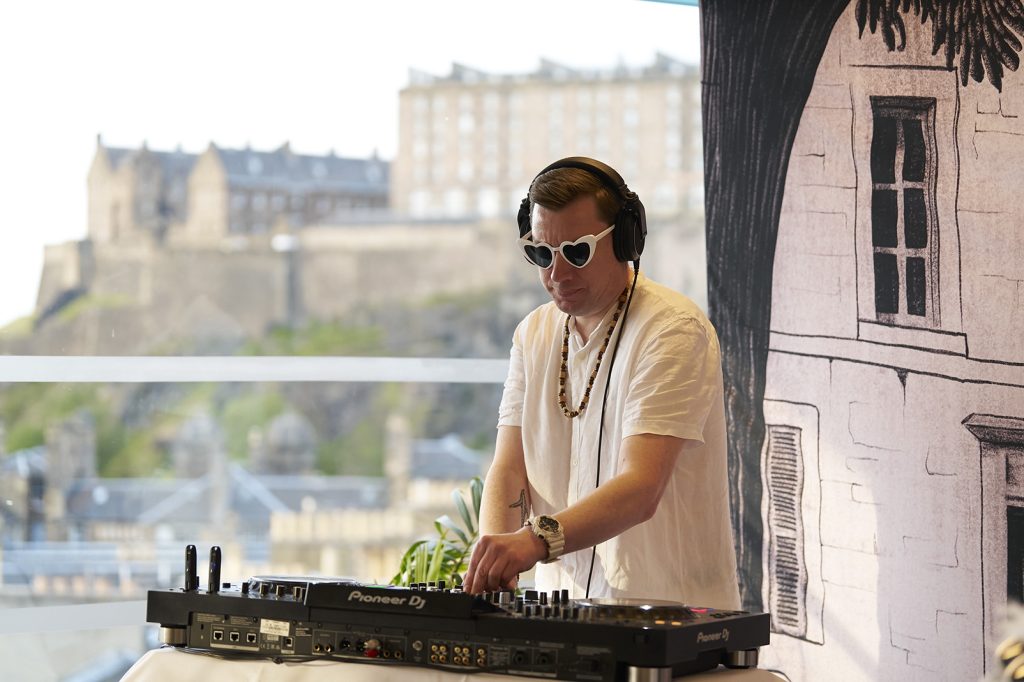
“When we think ‘Rhône Valley’, we think red – but today things are changing,” says Caroline Moro, winemaker at négociant house J. Denuzière, who joined the crowds at the recent Rhône in White party in Edinburgh’s SKYbar.
Plantings of white varieties are on the up in the region, and so is demand. “We can see the market is there,” says Moro, “and it’s really increasing.”
From red to white
This new emphasis on whites is driven by a number of factors. She concedes that the market for red wines is “complicated – particularly in France,” and this is leading to growers adapting their vineyards to suit market conditions by planting more white varieties.
Change is also being driven by consumer demand. “White wine is less intimidating than red wine… you don’t need to know a lot about it to discover it,” says Moro, which makes whites from Rhône Valley vineyards more attractive to a new generation of consumer.
White wine is also more adaptable with food thanks to its acidity, she believes, and is better suited to drinking alfresco. They also drink best chilled of course, which is another important trend. To illustrate the versatility of white Rhône with food, the two enlightening masterclasses, hosted by Rhône expert Matt Walls and Alistair Cooper MW, included different canapés to match each wine.
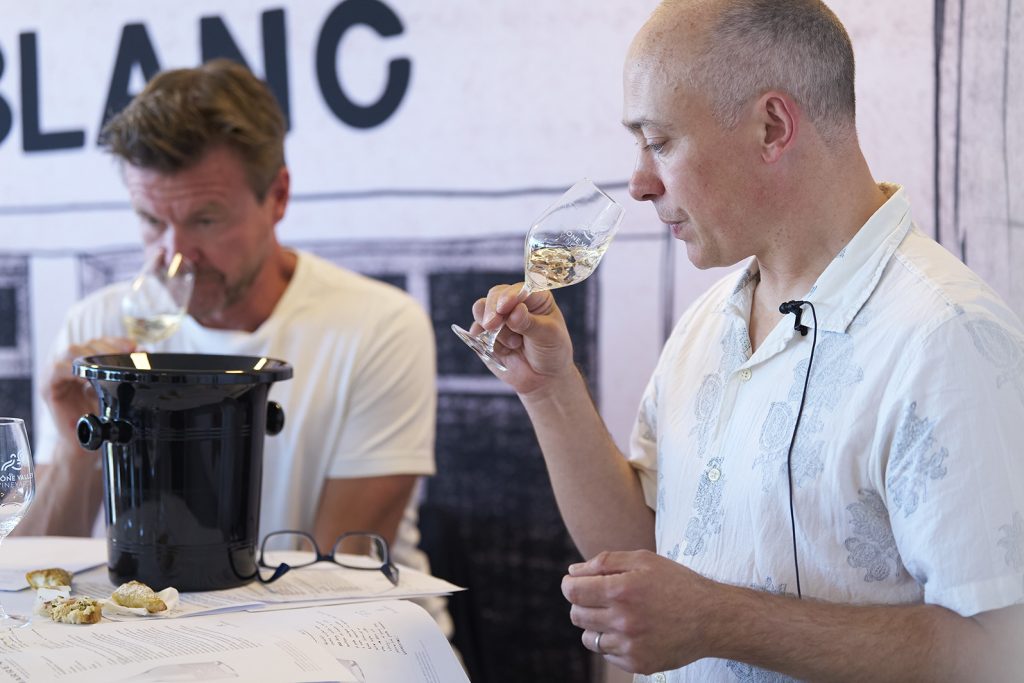
“I’ve witnessed the quality of white wines in the region steadily rising over the past 10 years,” says Walls, “which has resulted in increased demand in the UK. As demand increases, more winemakers are encouraged to invest in good quality equipment, further increasing quality – it’s a virtuous circle.”
The region is also seeing increased commitment to sustainable practices, an important buying criterion for many consumers. In 2024, certified organic and biodynamic vineyards made up 23% of the overall surface of Rhône Valley vineyards; a further 37% had HVE certification, making a total of 60% with some kind of sustainable certification.
Diverse styles
To showcase the quality and diversity found in the region today, regional wine association Inter Rhône are hosting dedicated white tastings in eight key global markets this year. For the UK edition, they opened the tasting to consumers from 6pm, with a DJ and a mixologist making cocktails using white Rhône wines as a base. The event sold out quickly, reflecting growing public interest in Rhône whites, beyond the trade.
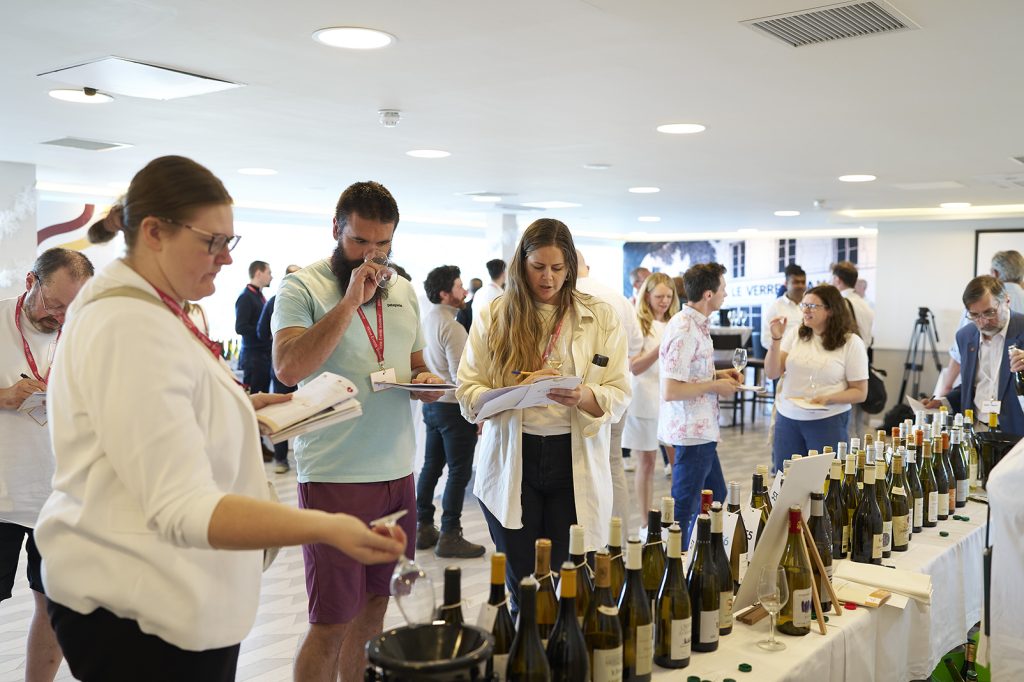
Both the professional and consumer sessions featured a walkaround tasting of 100 wines. Due to the diversity of style on offer, they were split into four categories to aid navigation: Fresh & Lively, Fruity & Round, Rich & Complex and Sparkling & Fortified.
“At first I’d say the diversity of white Rhône is a weakness,” says Moro, “because you can’t simplify it. But even if they’re diverse, they’re accessible – in style and in price.” Retail prices of the wines on show ranged from £10.50 to £68.90, with most under £20.00 per bottle.
This diversity is down to a number of factors: grape varieties (there are 14 authorised white grapes in Rhône Valley AOCs), different terroirs, and varied winemaking practices. Despite this, there was still a family style among the still dry whites on offer, with each category offering a handful of standout wines.
Fresh & Lively
The first category grouped together lighter-bodied wines that emphasise brightness of aroma, often showing citrus or white fruit flavours. They are typically grown on cooler terroirs by dint of altitude, exposure or drainage capacity. These wines tend to be picked relatively early to encourage liveliness (higher acidity, lower sugar, lower alcohol) and fermented at low temperatures with discreet, if any, oak ageing.
The Domaine Rozel Grignan-les-Adhemar ‘Le Temps de Vivre’ 2024 was a perfect example of this style; pale in colour, light in body with zesty lime and satsuma aromas and good acidity. Domaine Lombard Côtes-du-Rhône ‘Culture Libre’ 2024 was very dry, very bright, with pithy grapefruit notes. The biodynamic Domaine Montirius Côtes-du-Rhône ‘La Muse Papilles’ 2023 was more generous, with complex citrus and fennel flavours and a strong sense of place.
Fruity & Round
This category offered wines with more body and ripeness, whites driven by fruit rather than acidity. Grapes are typically picked at a more advanced level of maturity and fermented between 12 and 18 °C. Fruit flavours here tend towards tropical fruits and stone fruits rather than citrus. This was the most versatile category of the four, as these wines could be easily drunk on their own or with food.
From the 2024 vintage, Laudun will be promoted from Village to Cru level, and this wine demonstrates why – Maison Brotte Côtes-du-Rhône Villages Laudun ‘Bord Elegance’ 2023. Medium-bodied, vibrant and fresh, finishing long on citrus and spice notes, it was towards the lighter end within this category. The organic Domaine de Montvac Vacqueyras ‘Mélodine’ 2023 was more rounded and succulent with yellow plum flavours and a creamy finish. From the Northern Rhône, the J. Denuzière Saint-Péray 2022 was fuller, with apricot and vanilla flavours, good intensity and a long finish.
Rich & Complex
The fuller-bodied, more layered examples were reserved for this category. Many of the wines here saw longer barrel ageing, contributing complexity of flavour and texture. Though they didn’t necessarily require longer ageing, most whites that would benefit from extended bottle age were to be found here. If the ‘Fresh & Lively’ category featured the most aperitif wines, this category majored on food-friendliness.
AOC Gigondas has permitted white wines under the appellation since the 2023 vintage, and they must contain a minimum of 70% Clairette. The Gigondas LaCave Gigondas ‘Domaine de la Souchière’ 2023 is made of pure Clairette, and shows just how well this variety is adapted to the terroir; full-bodied but fresh, with floral pear aromas and real depth on the palate. Domaine Aymard Ventoux ‘Elegance’ 2022 was a bold, oaked style with enjoyable breadth and power. The Cave de Tain Hermitage ‘Nobles Rives’ 2022 was concentrated, rich and savoury, with noble bitter notes to the almond, brioche and apricot flavours. Delicious now, and will improve for a decade or more.
Sparkling & Fortified
The fourth category contained the fewest wines, as it gathered together the limited number of sparkling and fortified whites found in the Rhône Valley. There were fewer to choose from, but this table was very popular with consumers and professionals alike.
Starting with a dry sparkler, the Jaillance Crémant de Die ‘Icône’ 2019 (majority Clairette) was medium-bodied with fine bubbles and brisk acidity, with attractive aromas of white flowers, lime and white bread. Union des Jeunes Viticulteurs Récoltants Clairette de Die ‘Cuvée Chamberan’ NV (majority Muscat Blanc à Petits Grains) is a sweet, low alcohol fizz with lychee and satsuma notes, well balanced with a clean finish. Finishing with a still Muscat, the Domaine la Ligière Muscat de Beaumes de Venise ‘Chante Coucou’ 2023 was fragrant and floral on the nose, sweet but balanced, full-bodied but fresh.
A growing trend
Moro believes the growth in white wine production “will continue to increase… because winemakers really believe in it”. After Gigondas successfully lobbied the appellation authorities to include white wines, other exclusively red Crus such as Rasteau and Vinsobres are attempting to follow suit.
White wine currently only represents 12% of production in the Rhône Valley (2024 figures), but, as this tasting showed, they are emerging as a vital force in the region — dynamic, diverse, and increasingly sought-after. Thanks to their diversity, there is a white for every occasion and for every palate. For many winemakers and consumers right now, it’s an increasingly exciting and dynamic category to explore.
Related news
10 things to look for when drinking rosé wine


