



Tiny fermentations, big impact: Study backs microvinification for wine R&D
New research suggests that miniature wine fermentations – as small as 50ml — can reliably replicate larger-scale results, paving the way for faster, cheaper innovation in the wine industry.
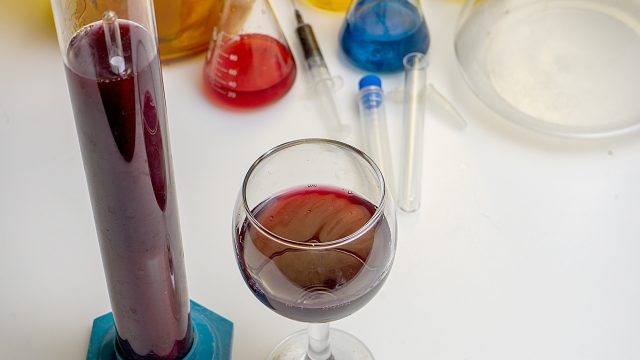
Winemakers and researchers could soon lean on much smaller fermentation trials to refine their wines, according to a new study from Penn State University, which shows that “microvinifications” — fermentations of just 50ml — produce results on par with traditional pilot-scale batches.
Conducting large fermentation trials — often around 5 gallons — is the norm when evaluating grape quality, yeast behaviour or winemaking techniques. But these come at a cost, both in time and resources. The Penn State research, published in the American Journal of Enology and Viticulture, demonstrates that significantly smaller batches can serve as an accurate, cost-effective alternative.
“With proper replication — doing enough repeated tests — microvinifications can give trustworthy results,” said Misha Kwasniewski, senior author of the study and associate research professor of food science. “These small-scale tests can be a powerful, cost-effective way to improve research accuracy, predict how wine will turn out based on grape chemistry and support commercial wine-production decisions.”
Testing the industry’s assumptions
Microvinifications are often overlooked by winemakers, who worry about issues such as oxygen exposure or inconsistent results. Kwasniewski and first author Ezekiel Warren, a doctoral student in Penn State’s Department of Food Science, set out to test whether those concerns were valid.
The team analysed variables such as oxygen uptake, temperature during fermentation, cap management (how grape solids are mixed) and maceration time (how long grape skins are in contact with juice). The researchers then compared chemical compounds — including phenolics, which affect colour and mouthfeel, and aromatic compounds, which influence aroma and flavour — between 50ml microvinifications and 5-gallon fermentations.
Partner Content


They found that the mini fermentations held up well. Despite their small size, they were not more prone to oxygen-related issues and closely mimicked the chemical outcomes of larger-scale trials.
Applicable across grape varieties
To test consistency, the study used both Chambourcin and Noiret grapes in both scales of fermentation. All grapes were harvested from the same vineyard blocks, destemmed, crushed by hand, and fermented with added yeast. According to Kwasniewski, the grape variety was not a key variable, as the study’s focus was on testing scale rather than grape quality.
“This is looking at winemaking in a new way,” he said. “There are wineries and researchers who really think the only way you can do anything that’s going to be relevant to wine is at scale… which obviously makes progress difficult, cumbersome and expensive.”
A practical tool for product development
The findings could be especially useful for fine-tuning winemaking techniques. “As winemakers, we make all sorts of little interventions — such as harvest timing, adding specific cultured yeast strains or filtration — to get the best quality out of our products, and we must be able to accurately judge the results,” said Kwasniewski. “And microvinifications allow us to more easily accomplish that.”
Despite industry scepticism, the study suggests the prejudice against microvinification may be misplaced. “It turns out, they’re not more prone to problems like oxygen exposure, and they can mimic larger batches well — making them a practical option for researchers and winemakers alike,” he said.
Alex Fredrickson, fermentation consultant at Terroir Consulting Group in Oregon and a former doctoral student advised by Kwasniewski, also contributed to the study. The research was funded by the US Department of Agriculture’s National Institute of Food and Agriculture.
Related news
Why electrolytes have become wine's newest additive
Bordeaux marks milestones with commemorative bottles
#WeekInPictures: the Queen visits Plumpton as craft beer and rum move into new territory


