



What makes a good wine label in China?
Master of Wine Xing Wei tells Rebecca Lo why sleek label design, rather than translated text, is the way to win over Chinese wine consumers.

Xing, who became an MW in 2024, believes bilingual labels are not the way to go for wine brands looking to win over consumers in China.
“I think to be successful in China, international brands needs to maintain their identity while introducing a touch of design,” he said.
All wines sold in Greater China have a translated back label, meaning information about the wine is always available to the consumer.
However, Xing explained that for the majority of wine consumers in China, technical information is not a primary factor influencing purchasing decisions. “The problem is no matter if Chinese is on the front or back, the translation of the wine’s information or tasting notes is not necessarily a motivator to buy it,” he said. “People who don’t know what Tempranillo is won’t know its Chinese translation.”
Instead, “labels should make Chinese people feel closer to the wine”, particularly through elements of design.

So which labels work best in China, according to the MW?
Xing named LVMH’s Ao Yun, Lafite’s Long Dai and Petit Mont, a winery in Yunnan, among his favourite Chinese wine labels.
Partner Content

Ao Yun means ‘above the clouds’ and references the altitude at which its grapes are grown in Yunnan province.
“The English script for Ao Yun is designed like a cloud, with the Chinese characters’ position exactly like being above the clouds,” he said. “The English word is bigger than the Chinese characters, which shows its international brand positioning.”
By contrast, Long Dai reads like a scroll of art, with its ink painting-inspired landscape wrapping around the bottle and equally sized name in Chinese and English. “Its label looks very familiar to people who drink Bordeaux Grand Cru Classe — classic and elegant,” noted Xing. “I think Qiushan as an appellation was first used by Long Dai and links to a very specific mountain range, which reminds me of Pauillac.”
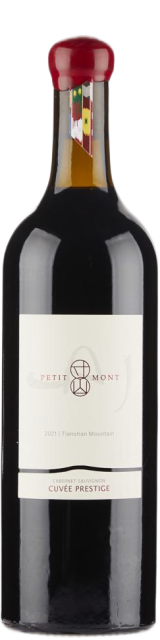
Xing explained that he is also drawn to Petit Mont’s label, which reflects the independent winemaker’s DNA. He also has a personal relationship with the brand. “The winery asked different friends to write the Chinese character for mountain each year beneath the logo — I wrote vintage 2021,” he revealed. “The label is minimal, with the varietal and region of origin in English. The only Chinese is the brand name, which references window lattices commonly found in ancient Chinese garden pavilions.”
Outside of Chinese wines, the label most attractive to Xing is Mouton Cadet’s Fresh Collection, which intentionally targets younger, more casual wine drinkers. “Some people think wine for younger consumers mean cheaper in price and more colourful in design,” he said. “There should be more. The Fresh Collection is trying something cool, with the slogan ‘Freshness with Style’. Style is the key.”
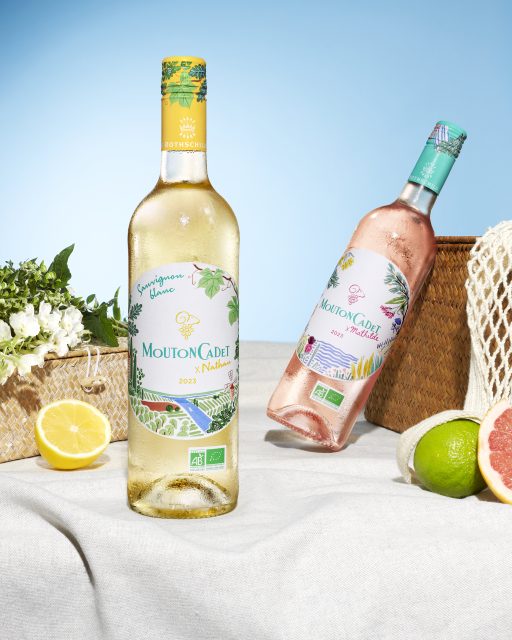
Xing cautioned against labels which are too kitschy or pander too obviously to Chinese wallets. He said: “Ao Yun, Long Dai and Petit Mont are intended for export, but they are aligned with Chinese aesthetics. While of course a label isn’t everything, it doesn’t hurt to have one that will give me pause while scrolling.”
Related news
Italy launches new 'crisis fund' for winemakers in Trentino
10 award-winning English wines to drink during English Wine Week


