



The world’s “engine of Pinot Grigio” pitches to UK buyers
At this year’s London Wine Fair, Pinot Grigio Delle Venezie DOC made its case to the UK trade. db headed along for the inside track on the commercially important region.
When scanning the talks, tastings and masterclasses at any major wine event, there are a couple of pitches that you will recognise. There are the sessions that take you off the beaten path, introducing you to an unexplored region or grape variety. There are the events which allow you to span a wide range of wines in a single sitting. And of course, there are also prestige tastings, generating an enthusiastic queue of visitors looking to taste a bottle they could never afford.
Yet when Patrick Schmitt MW stood before a full theatre at this year’s London Wine Fair, he was offering none of the above. The session, titled ‘Discover Pinot Grigio’, examined the wines of Pinot Grigio Delle Venezie DOC in northeast Italy. It is a region that is very well-known to the UK trade, that zeroes in on a specific and recognisable style, with wines that are among the most affordable on the market.
What, then, was the hook for the UK trade? Quite simply, it offered an opportunity to understand one of the most commercially important denominations in Europe. Many might know the DOC’s approximate style, but its meteoric rise as a popular wine region demands a closer look.
“This region is the engine of Pinot Grigio, not just for Italy, but worldwide,” explained Schmitt. Of the world’s supply, around 40% is Pinot Grigio Delle Venezie, an impressive concentration of production for such a popular grape variety. The region produces around 200 million bottles of Pinot Grigio every year from 32,000sq km spread across Friuli Venezia-Giulia, Veneto and Trentino. For context, that is around two-thirds of Champagne’s annual production.
The grape is hardly a new kid on the block. Under the name Pinot Gris, it has been documented in France for more than 300 years, with its history likely stretching much further back. It has been seen in Italy for around 200 years. Yet sales have boomed in the last 25. From less than 7,000 hectares in 2000, plantings have grown to 25,000ha of Pinot Grigio in Italy, almost entirely in the northeast. “Pinot Grigio feels like it’s been around forever,” commented Schmitt, “but the scale of it is a recent phenomenon.”
Its commercial importance is not just a question of scale, either. Pinot Grigio Delle Venezie DOC is a substantial generator of Italian wine exports. Ninety-six percent of production is exported, with the US receiving 43% of shipments and the UK in second place with 27%.
Members of the UK trade, therefore, should ignore Pinot Grigio Delle Venezie DOC at their peril. Not only did the masterclass at London Wine Fair 2025 offer a chance to taste nine emblematic wines of the region, but it also allowed attendees to discover how the denomination has achieved such an enviable position.
A drinker’s favourite
No wine region can thrive without enthusiastic drinkers, and Pinot Grigio Delle Venezie DOC has certainly found them. The wines have built a firm following thanks to their easily identifiable style.
Indeed, the variety in this specific Italian expression has become a byword for a particular style. Although that can at times be a hindrance – think of Chardonnay becoming associated with all that is overly oaked and unbalanced in the early 2000s – Pinot Grigio Delle Venezie has a positive, easily accessible connotation. “When people say they like Pinot Grigio,” said Schmitt, “what they’re really saying is that they like light styles of white wine.”
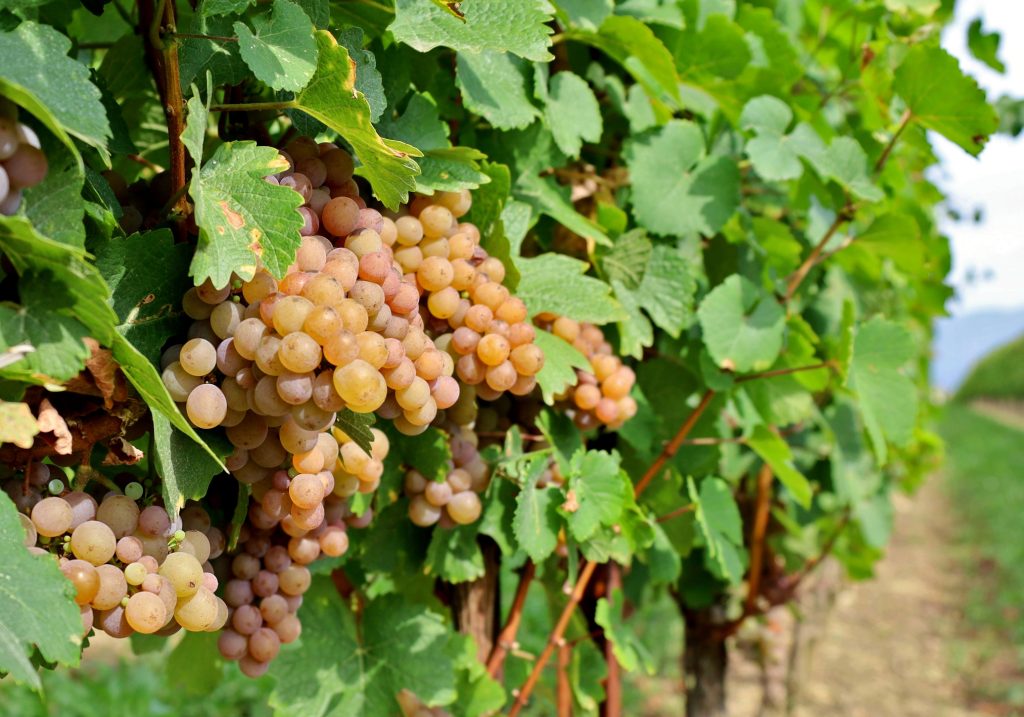
Of course, that does not reflect the global picture. The grape itself is hugely versatile – the rich, deeply aromatic Pinot Gris of Alsace demonstrate an entirely different side to it. Yet, when picked early, it can consistently provide delicate citrus and orchard fruit aromas, as well as lower acidity and a light body.
To the culinary thrill seeker, that may not fit the bill, but for the vast majority of UK consumers (and, indeed, even for the wine enthusiast when the mood strikes) it is a great match. Lightness, freshness and delicacy are much prized by drinkers – often above complexity or gastronomic potential. Schmitt commented to the audience: “Much is made of food pairing but, especially in the UK, we need wines that are really good on their own. That’s part of the success of Pinot Grigio.”
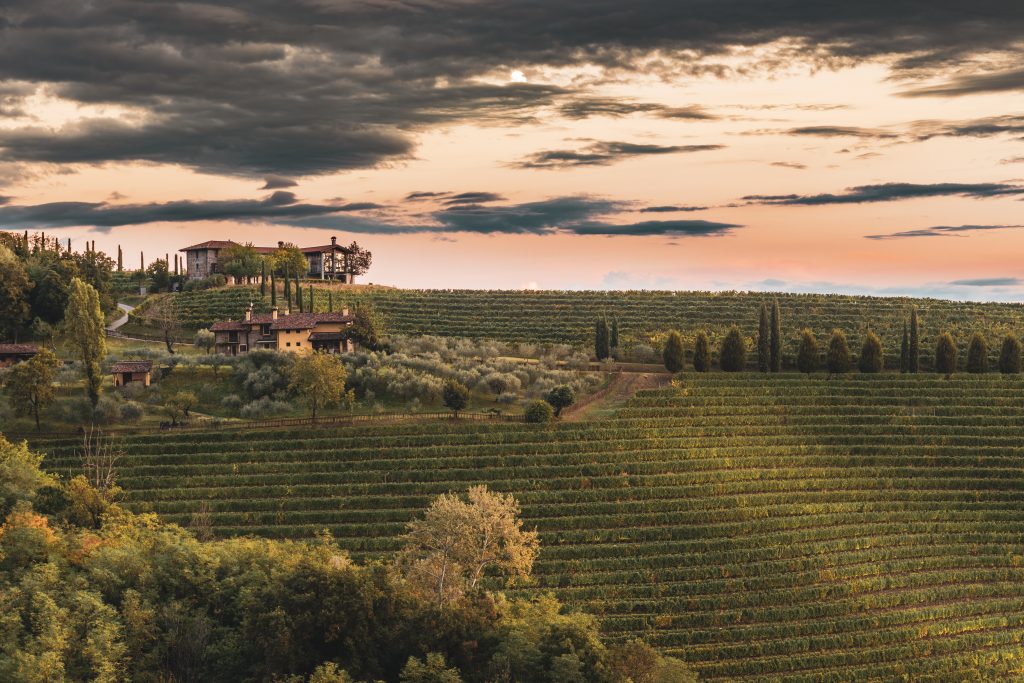
The landscape too has helped form the popular style of Pinot Grigio Delle Venezie. Although a large area, it can be summarised as a large amphitheatre facing the Adriatic Sea. The plains towards the coast gradually give way to slopes, until you are in the foothills of the Dolomites.
That facilitates breezes from the sea and cool air descending from the mountains, both vital in offering characteristic freshness. And yet the Alps also protect the vineyards from very cold air coming from Central Europe, reducing threats to the vines, while the Mediterranean climate means that rainfall is balanced at 1,000mm–1,250mm.
In short, it is an ideal combination of variety and geography for crafting light, easy-drinking white wines. They have clearly found their niche in the UK market: on average, three bottles are drunk in the country every second.
Appeal for buyers
The other side of the coin, of course, is that a region’s wines should make sense for buyers. If no-one has the enthusiasm to bring them into a market, they will not reach consumers. Fortunately, Pinot Grigio Delle Venezie has plenty of appeal for the modern buyer.
Schmitt firstly highlighted its recent development in pursuit of higher quality. The DOC itself is a relatively new creation, officially instituted in 2017. It replaced the earlier IGT Delle Venezie, bringing in more stringent quality control. This includes legally defined maximum yields and minimum alcohol levels, as well as taste testing to ensure quality.
“One of the best things about Pinot Grigio Delle Venezie DOC,” Schmitt summarised, “is that it has been a quality guarantee.” He compared today’s wines with those on the market a decade ago – frequently from higher yields with far less intensity and a need to be served fridge-cold. The DOC has spearheaded efforts to improve quality, all without compromising on the keen price that attracts customers.
The region offers further advantages to the buyer in the way the business is structured. There is an abundance of co-operatives in the Venezie region; they were a means of safeguarding the industry after the Second World War. Although sometimes dismissed as producers of less characterful wine, Schmitt suggested that a co-operative’s scale and experience offer advantages in sourcing the perfect wine for a business. “Don’t be scared by this,” he advised. “It gives you – as a buyer – so much choice.”
Indeed, the value of co-operatives has only risen with time. Thanks to their pooled resources, they can often afford top-range equipment beyond the means of small producers. That modern technology greatly benefits producers of Pinot Grigio Delle Venezie, as efficient, protective winemaking ensures the fresh, light profile that consumers seek.
As the final advantage for buyers, Schmitt highlighted how easily Pinot Grigio Delle Venezie makes a light, low-alcohol wine. As more consumers in mature markets lessen their alcohol intake, lower-ABV wines are a path to moderation. Moreover, with the UK duty system now tied to alcoholic content, wines that can easily sit at around 11% ABV have a commercial advantage.
For both drinkers and the trade, Pinot Grigio Delle Venezie clearly has a powerful proposal. Yet the final element that explains its success is its development as a brand. Pinot Grigio Delle Venezie is easily understood by consumers and has become synonymous with light, bright styles.
Deliberate positioning
In part that is deliberate positioning. For instance, the denomination’s official title takes its name from the world-famous city of Venice. Although viticulture is an industry of the countryside, for an international audience, the city more clearly places the region in northeast Italy. It also comes with connotations of history and fine food – no bad thing, as the region promotes itself.
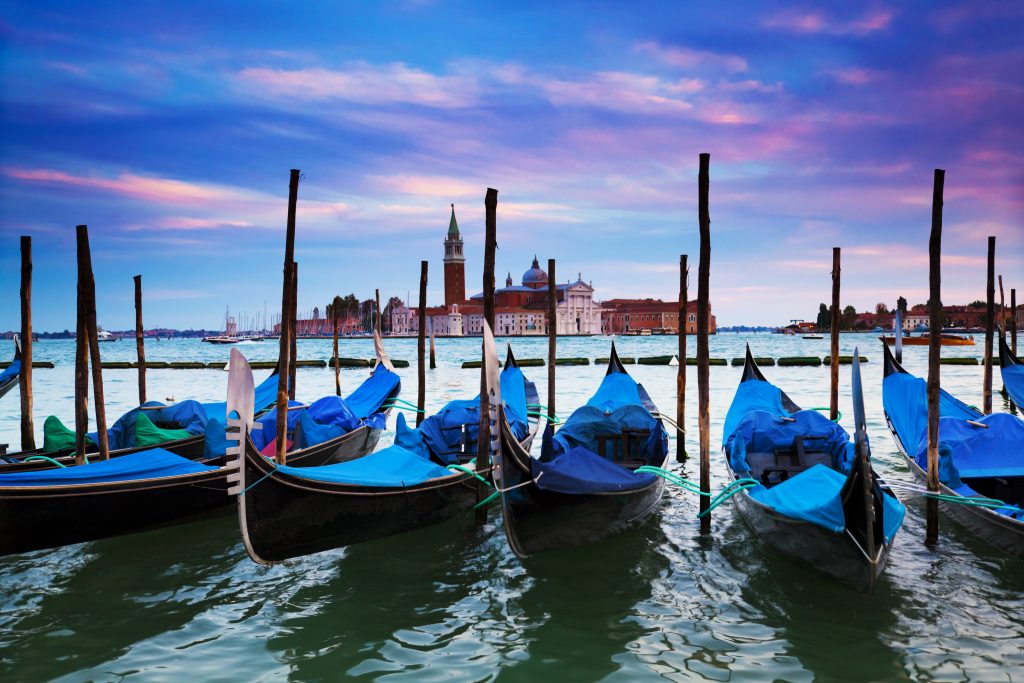
Indeed, the Venice connection is strong enough that the Delle Venezie DOC has adopted the city’s iconography. Its logo is a stylised version of the fèrro, the ornamental counterweight found on gondolas. Accompanied by lines that show the region’s diverse landscapes, it makes a powerful point to the drinker: these are wines informed by history and by the land.
Pinot Grigio Delle Venezie DOC has therefore penetrated the market in ways scarcely imaginable 25 years ago. It appears everywhere, from restaurant wine lists to supermarket shelves to Lady Gaga lyrics, now an instantly recognisable style. Yet Schmitt’s masterclass demonstrated that its rise is more complex than a simple surge in popularity. The wine trade may think it knows Pinot Grigio Delle Venezie DOC, but – as the London audience soon learned – such a commercially important region requires a deeper understanding.

Related news
English investor buys historic Château Vignelaure
Wales bids for world’s first natural wine appellation
How service crop management could save vineyards in dry years


