



Montecucco proves a treasure trove for Italian wine lovers
The region of Montecucco in the south of Tuscany produces Sangiovese to rival that of any of its more famous neighbours.
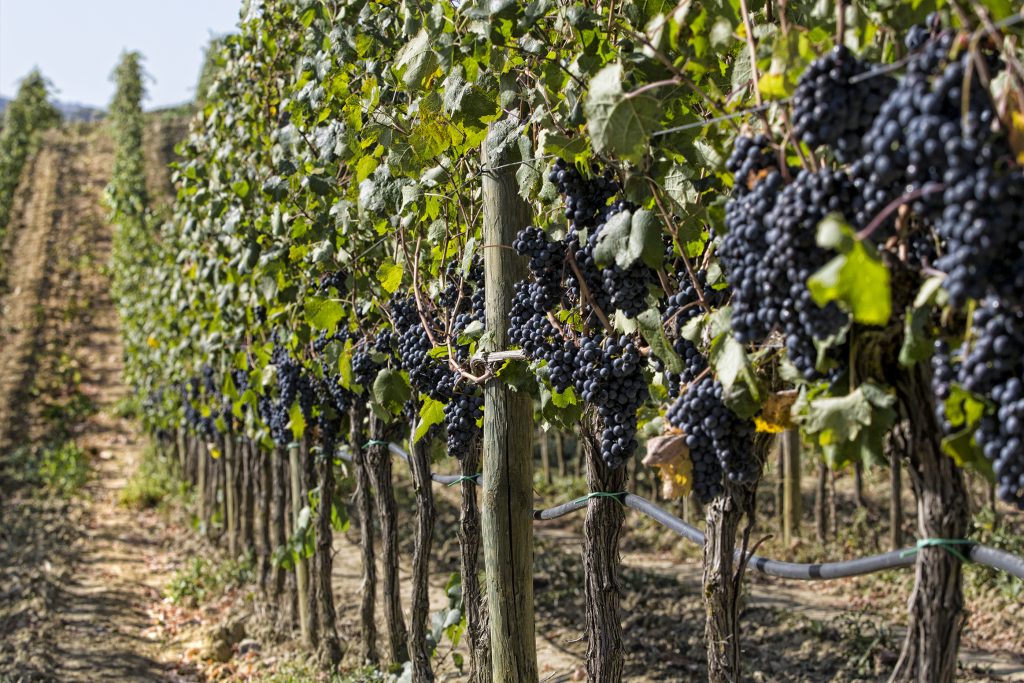
Sandwiched between the zone of Montalcino to the north, famous for Brunello, and Morellino di Scansano to the south, Montecucco sits within the stratum of Tuscan Sangiovese regions.
This wild, rugged region has not achieved the same fame as the aforementioned Montalcino or Chianti Classico, but a masterclass at London Wine Fair on 19 May, 2025 sought to prove that Montecucco has both the quality to ensure its future success, and a few tricks up its sleeve to protect it from the worst of climate change.
Called Montecucco Unveiled: The Other Face of Sangiovese, the masterclass and tasting of nine wines was co-presented by Giovan Battista Basile, president of the Consorzio Tutela Vini Montecucco, and the drinks business senior staff writer Louis Thomas.
“One of the things I have covered extensively as a wine journalist is the difficulty producers across Italy, but especially in Tuscany, have had in recent growing seasons,” said Thomas. “From the sudden downpour which hit Bolgheri last September to the challenges of drought in Montalcino, it is clear that Tuscany is bearing the brunt of a changing climate.”
This makes the fact that 95% of Montecucco’s DOC/DOCG production is already certified as organic especially remarkable, given that extreme weather conditions make viticulture without synthetic chemicals, such as fungicides, incredibly challenging.
The region’s key asset for the production of organic wines is its climate. To the east lies Mount Amiata, the lava dome of a volcano which last had a major eruption some 300,000 years ago during the Pleistocene Epoch. Had viticulture been practised at this time, producers might well have referred to a “challenging vintage”. And, although Montecucco is not coastal, to the west there lies the Tyrrhenian Sea.
“The sea breeze allows for ventilation, meaning that it is drier and there is less humidity and therefore a lower risk of disease affecting the bunches,” explained Basile, who suggested that this figure of 95% would place Montecucco as the region with the highest level of organic production in Tuscany, and possibly Italy.
The crucial question is whether the Consorzio Tutela Vini Montecucco might try to push for 100% of production to be certified as organic.
“I hope that it will arrive at 100%,” responded Basile, “but it is not easy to make rules to enforce it – as a wine consorzio, we are a democracy.”
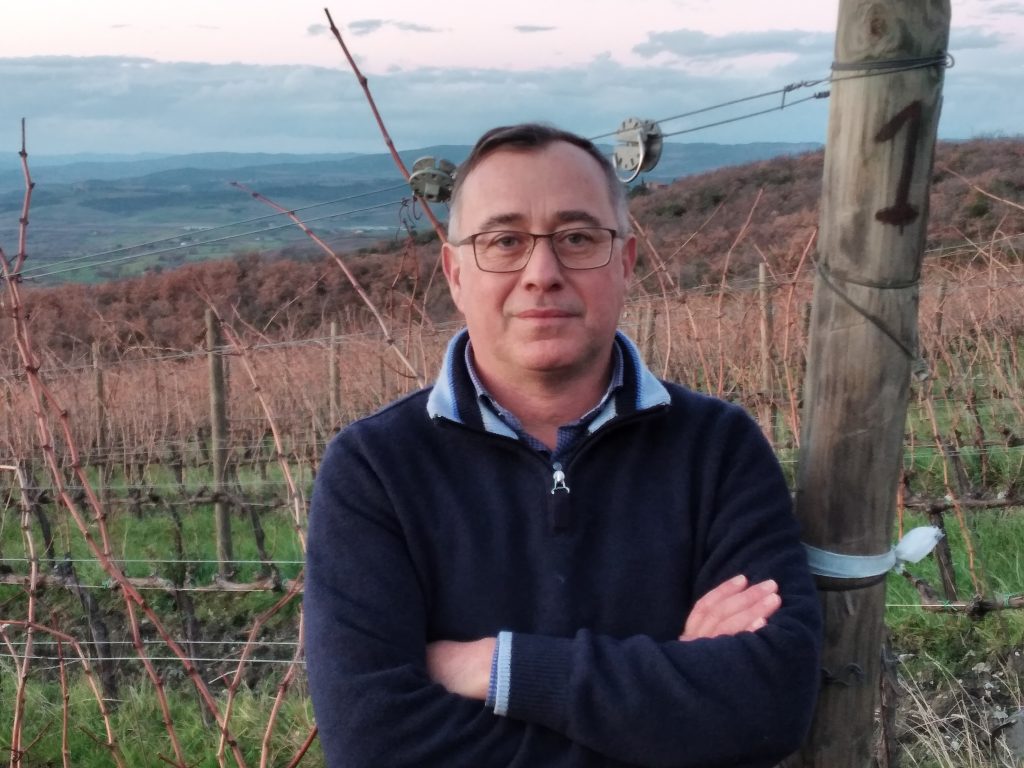
Higher elevations
One regulation which Basile thinks he can change, and in the near future, is increasing the altitude at which plantings of DOC- and DOCG-certified wines can take place.
As the name ‘Montecucco’ might suggest, this is a region which is not lacking in altitude, with most vines planted between 200 and 700 metres above sea level. Generally speaking, the higher-elevation vineyards are in the east, closer to Mount Amiata, whereas the lower ones are in the west, nearer the coast.
“We have to analyse the soils and the impact of solar radiation, but we hope to increase the permitted altitude for vineyard plantings up to 800 metres above sea level,” Basile revealed. “The cooler conditions at higher elevation will protect the grapes from climate change.”
The diurnal range which comes with higher-altitude plantings also means that the grapes grown in Montecucco retain their acidity, a factor which is highly beneficial for the production of quality wines.
Grape varieties
The majority of what is planted in Montecucco is Sangiovese. According to data from the consorzio, almost two-thirds (61%) of the 500-hectare vineyard area is devoted to this red grape, which has become synonymous with Tuscany.
“The Sangiovese clones in Montecucco are very similar to those in Montalcino,” explained Basile – a fact that makes sense, considering that the two regions are adjacent to one another.
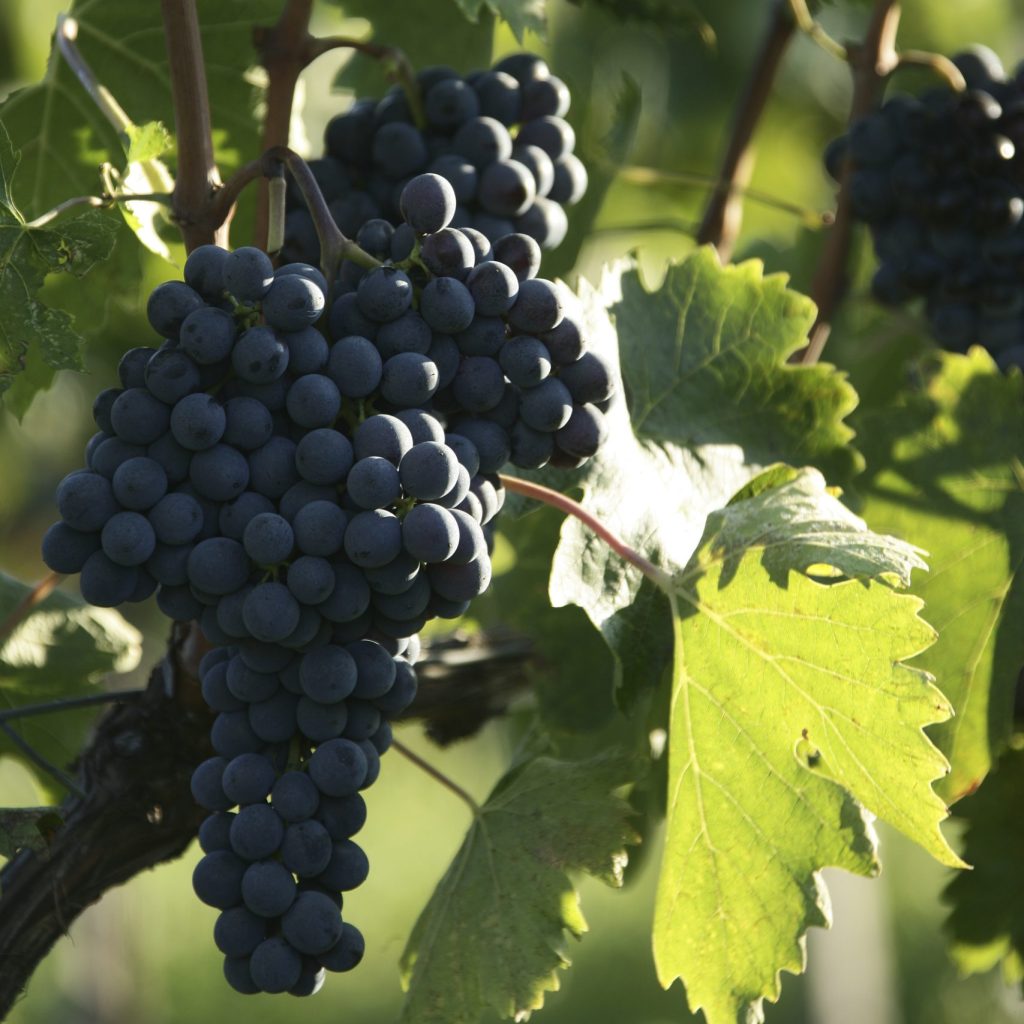
The second most-planted variety is Vermentino, a white grape closely-associated with Tuscany, with 11% of the vineyard area. This is followed by Merlot (7%) and Ciliegiolo (5%). Although the former of these grapes is considered ‘international’, being best-known for the wines produced on the right bank of Bordeaux, and the latter is more regionally specific, both are commonly used as blending components alongside Sangiovese. And while wine is the key agricultural product of Montecucco, Basile noted that it is far from the only thing that the region produces. “We also make a lot of olive oil, milk and cheese,” he explained. “Huge areas are not farmed; instead they are covered in forest.”
Regional wines
The masterclass examined four of the DOC/DOCG categories that the Montecucco region produces.
The first of these was the Montecucco Rosso DOC. Production regulations stipulate that the maximum permitted harvest yield for these wines is nine tonnes per hectare, and the minimum proportion of Sangiovese that can be used is 60%.
“While it is tempting, and sometimes easier, to view DOC wines as the ‘lower tier’ of Italian [wines] compared to DOCG,” said Thomas, “the reality is that the key distinction is the strictness of the production regulations – not the quality of the wines.”
Although Montecucco Rosso DOC wines can be released one year after production, and there is no rule stipulating a need for maturation in wood, this does not mean that they do not have ageing potential, as evidenced by Le Pianore Tiniatus Montecucco Rosso DOC 2018, tasted during the masterclass.
Still demonstrating a remarkable freshness, with aromas of red cherries mingling with tertiary notes of leather, the vibrancy of this wine almost seven years after harvesting was an indication of the acidity which can be achieved through clever planting and equally clever winemaking.
The next category examined was that of Montecucco Sangiovese DOCG. Lower yields of seven tonnes per hectare, a minimum of 12 months’ ageing in wood and at least 90% Sangiovese are required in the final blend.
Interestingly, although there is leeway to use 10% of a blending component, such as Merlot or Ciliegiolo, in wines, the three Montecucco Sangiovese DOCG wines tasted were all single-varietal Sangiovese.
As well as variations in the oak ageing regimes of the trio, one key distinction between them was in the altitude from which they originated, with Albaluce Clemanto Montecucco Sangiovese DOCG 2021 made from fruit harvested at 60 to 80 metres above sea level, whereas Vegni e Medaglini Montecucco Sangiovese DOCG 2021 came from 270 metres above sea level. As for the year, 2021 was a well-regarded vintage, and although the lower-altitude wine had a touch more ripeness in its primary fruit profile, the quality of the vintage was evident in all.
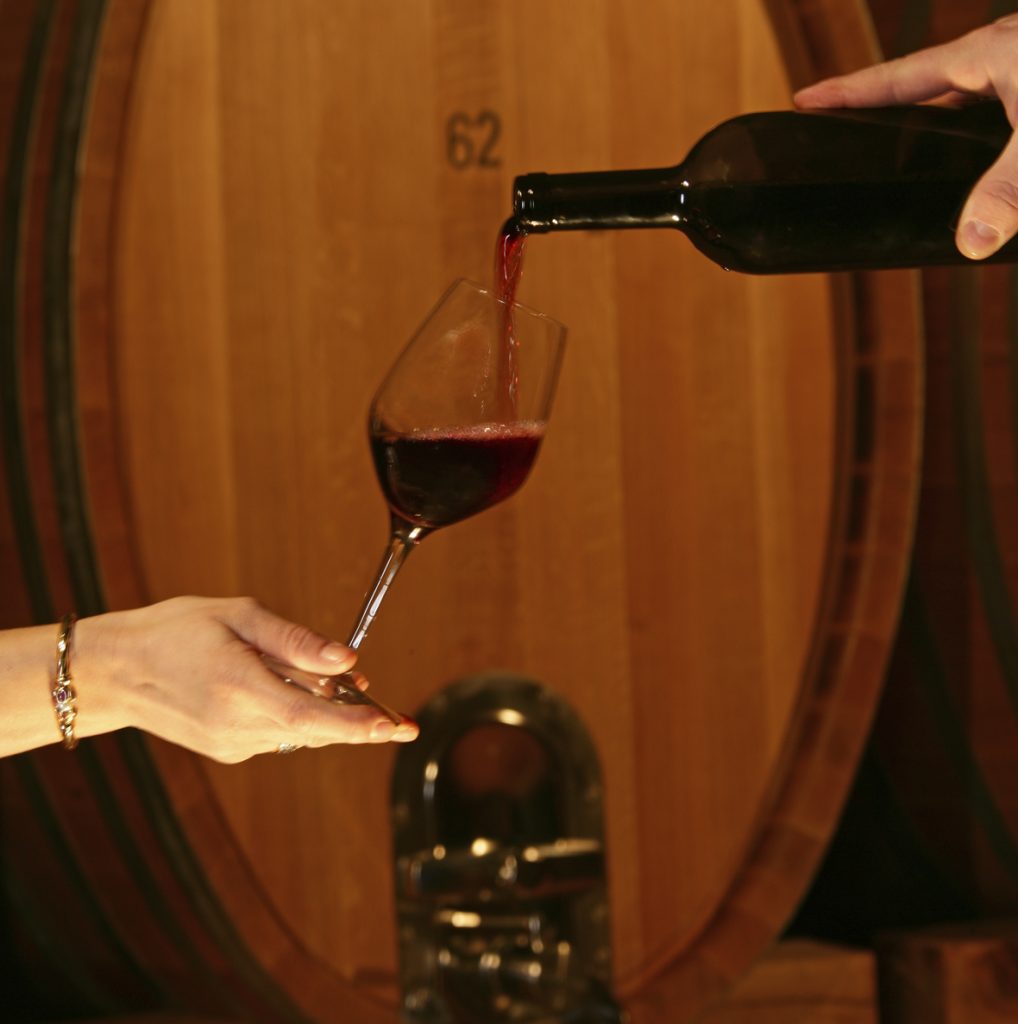
The final red wine category tasted was that of Montecucco Sangiovese DOCG Riserva. With the same yield and blending restrictions as those of Montecucco Sangiovese DOCG, the distinction comes from the ageing requirements, with a minimum of 24 months in oak and a further six months in bottle, meaning that these wines are typically released three years after production.
Thomas posed the question of whether, in a post-Robert Parker world where heavily-oaked wines are seen as unfashionable and out of keeping with modern tastes, Montecucco Sangiovese DOCG Riserva might struggle to find its market.
However, Basile argued that these more mature wines are not lacking the lightness that modern drinkers increasingly seek. All three of the wines tasted in this category were produced from high-altitude Sangiovese, ranging from Basile Ad Agio Montecucco Sangiovese DOCG Riserva 2019 (350 metres above sea level) to Podere Montale La Casetta Montecucco Sangiovese DOCG Riserva 2019 (450 metres above sea level). Despite the amount of oak that all of these wines saw, none of them felt heavy – the tannins were soft, the structure evident, but not overwhelming.
Vibrant Vermentino
Whereas the convention for most tastings is to serve the white wine first and then build up to the bigger, bolder reds later, this masterclass opted to conclude with a white wine.
ColleMassari Irisse Montecucco Vermentino DOC 2023, a blend of 85% Vermentino and 15% Grechetto which spent nine months on its lees, certainly provided a lighter finish to the masterclass, but it also served as an indication of what the coming decades might hold for Montecucco.
“Vermentino can cope very well with climate change,” suggested Basile. “It does not suffer from heat as much as some other grapes – I think it will become more important for our region in the future.”
This year marks the 25th anniversary since the Consorzio Tutela Vini Montecucco’s foundation. Although Tuscan producers are plagued with climatic uncertainty from vintage to vintage, the next 25 years could well see the rise of Montecucco continue.

Related news
English investor buys historic Château Vignelaure
Wales bids for world’s first natural wine appellation
How service crop management could save vineyards in dry years


