



Vintage Port makes a comeback
Vintage Port is breaking down barriers of perception, casting aside its old-school reputation to try something more dynamic on for size.

WHAT DO you do when your sibling steals the limelight? Vintage Port has long reigned supreme at the top of an immutable hierarchy. Yet events of recent years might spark the suspicion that tawny Port harbours an ambition to upset this status quo. Immediately likeable and far easier-going at dinner, tawny has seized headlines and listings with a wave of seriously mature special releases that make vintage look, well, pretty cheap.
The options for retaliation appear limited. After all, vintage is hampered by most Port houses’ self-imposed rule that they will only declare when quality meets stringent conditions. Even with modernday oenological expertise, that’s still rarely more than three times a decade.
Add to that reticence the very formal image of vintage Port: its intimidating conventions, high-maintenance cellaring and decanting demands. It might be tempting to draw the conclusion that vintage Port is a category, like its stereotypically upper-crust consumer base, in terminal decline.
Fortunately, you’d be wrong. Fewer people these days may regard vintage
Port as a cellar or dining room staple – indeed, many homes feature neither – but the thirst is still there. It just needs a dynamic retailer or sommelier to offer the right prompt, to transform the traditions surrounding this drink from barriers into an intrinsic part of its unique appeal.
PORT IS ‘SEXY’
As a category that can often feel inescapably British, it’s helpful to introduce some international perspective on ways to make this drink a success. “My motto is: ‘Port is sexy,’” maintains renowned German chef Johannes King, who runs gourmet bistro and delicatessen Sylter Manufactur Johannes King on his country’s upmarket island destination of Sylt.
That mindset might be rather at odds with Port’s old school, Oxbridge don image, but sex sells: King gets through around 1,500 bottles a year, of which roughly 40% is vintage. That performance hasn’t happened by accident. King’s ontrade arm offers five Ports by the glass, of which one – currently Quinta do Noval 1991 at €16 – is always vintage.
On a normal day, his bistro feeds anywhere between 60 and 200 guests, of whom “most” will order Port. A fair few will also be inspired to wander into the deli and buy a bottle to take home. That activity ramps up in summer time, when King opens a separate Port and Madeira themed pop-up offering seminars and tastings, with a “five Ports for €35” flight every Thursday.
If King neatly punctures the notion that Port is only for Christmas, then Maximilian Wilm, operations manager and sommelier at Kinfelts Kitchen & Wine in Hamburg, is busy proving that it doesn’t just appeal to a stuffy senior crowd either. “Our average guest is 35 to 40 years old,” he reports. “They tend to be more curious than older gentlemen.”
With a monthly Port training session for the team, that curiosity can be channelled into significant sales. It helps that Port isn’t made to wait until the end of the meal here. “We sell it especially with the main course and game, to get it out of the cheese corner,” explains Wilm.
While tawny Port tends to be offered by the glass at Kinfelts, for vintage there is a focus on half-bottles. It’s a format that Marc Almert, head sommelier at Baur au Lac hotel in Zurich, also finds useful, especially for smaller tables.
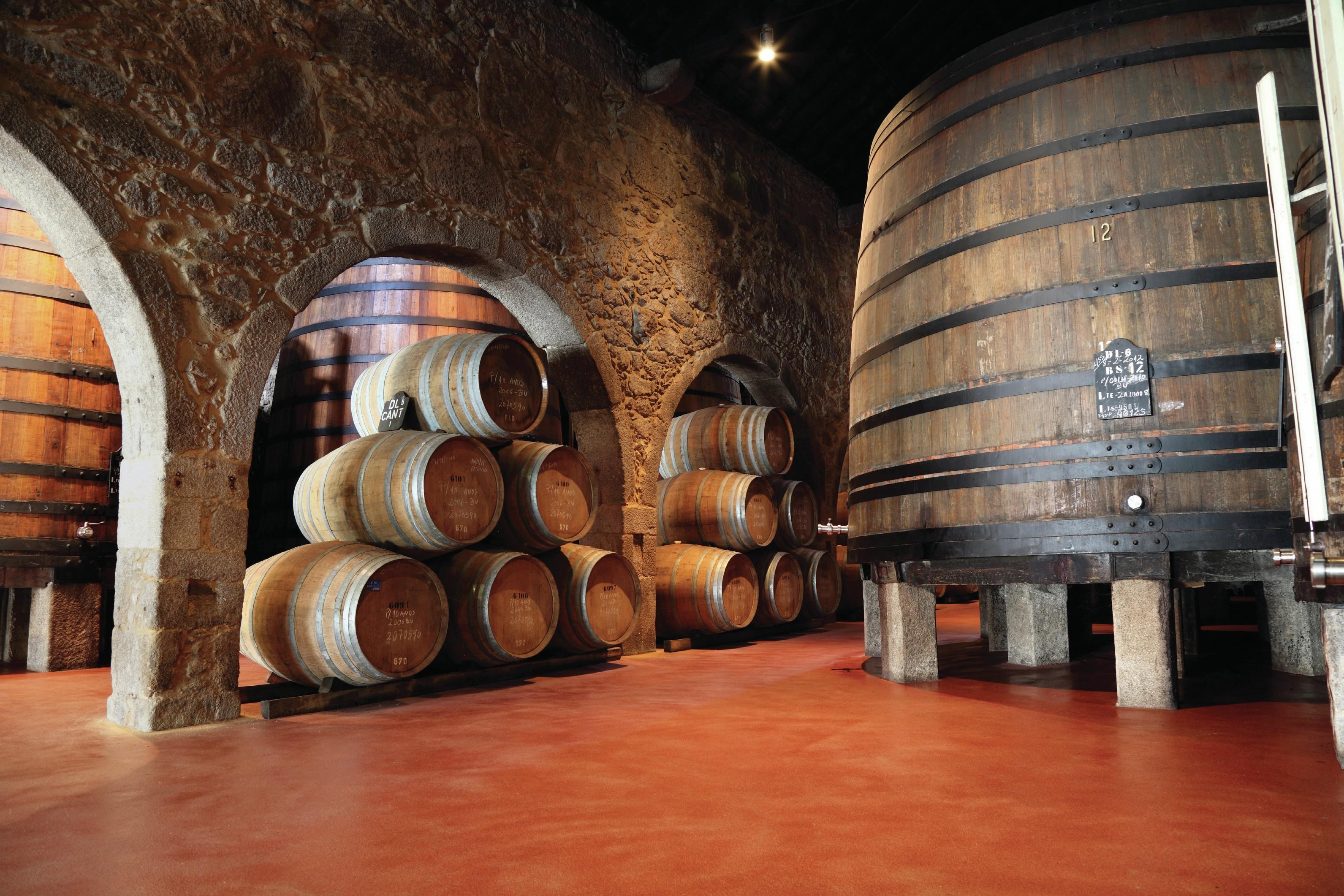
That said, he’s also a fan of the eyecatching large-format bottles. “Make it visible,” stresses Almert. In the fine dining arena, that means adding Port to the cheese or chocolate trolley, while ensuring that it appears not only on the wine list, but on the dessert menu too. “And of course,” he advises, “include tawny or vintage Ports in tasting flights whenever possible.”
This demand for alternative bottle formats is one that many Port houses are keen to support. While half-bottles can help remove a barrier, even if only a psychological one, for less confident restaurants afraid of expensive wastage, nothing makes a bolder statement than a super-sized version.
“We have the most amazing stock of big bottles,” confirms João Vasconcelos, UK market manager and head of global duty free for The Fladgate Partnership. “We can very easily use these in top restaurants to really get the sommeliers excited.”
At present, diners at The Ritz in London are tempted by a 12-litre bottle of Fonseca Guimaraens, its unwieldy size solved by Coravin and decanter.
Large formats are just one of the eye-catching tools vintage Port has at its disposal for restaurateurs with an eye on Instagram. Far from consigning Port tongs to a basket of unhelpful anachronisms, Vasconcelos actively encourages their use.
“It’s something sommeliers absolutely love,” he explains. “They want to create theatre. Port’s served at the end, so that’s the last memory you have of that restaurant experience.”
It doesn’t end there, though. People who have an enjoyable vintage Port experience in a restaurant – or indeed as part of Porto’s booming tourism scene – may feel encouraged to recreate that moment at home. What’s more, a lot of the contemporary attitudes towards vintage Port displayed in the on-trade can also prove useful tools in retail.
Berry Bros. & Rudd certainly won’t dissuade customers from the classic vintage Port and Stilton match, but head of content Barbara Drew MW likes to encourage a broader mindset.
“The fruitiness and sweetness of Port can also work very well with more contrasting flavours: cured meats and pickles as part of a light supper, or alongside a rich, chocolateor nut-based dessert,” she remarks. “A small glass of vintage Port is also magnificent alongside a slice of traditional iced fruit cake at a wedding.”

Then there’s the question of year-round appeal. Although Drew confirms “a strong uptick” for vintage Port sales at Christmas, “this is often for mature vintage Ports, which are ready for drinking”.
Outside the festive season, BBR presents vintage Port as part of the portfolio mix for those customers who prefer to take a rather longer-term outlook on their wine purchases. “The fact remains that vintage Port is not only a wine that ages magnificently well – for up to 50 years, in many cases – but also for the quality offers incredible value for money,” remarks Drew. “For any wine collector looking to lay down bottles for decades to come, it is a must for their cellar.”
When it comes to collectors, Filipe Gonçalves, chief marketing officer at Sogrape, is alert to what makes this rarefied section of the market tick.
“Many collectors prefer magnums and double magnums for their best table wines, and vintage Port can do the same,” he argues.
Taking a cue from the irresistible party statement made by large-format Champagne bottles, Gonçalves notes: “Vintage Port is well suited for marking celebrations with a significant number of invitees.”
The Port trade is also keen to cater for the modern breed of wine enthusiast – drinkers rather than collectors – who lack either the space or the patience to cellar their purchases. In an era when few retailers or restaurants can take the cash flow and storage hit, several houses plug the gap between new vintage declarations with special releases from their own extensive cellars. For the producer, it’s an opportunity to generate excitement and command a premium; for the consumer, there’s the guarantee of perfect provenance, and often a chance to get your hands on a limited release.
While The Fladgate Partnership deploys this approach with its vintage Port, Vasconcelos confirms that it’s also a useful tool for single quinta expressions, which offer a high-quality but more accessible introduction to the vintage Port style. “This year we released Croft Quinta da Roêda 2004 for Majestic,” he reports.
NO BARRIERS
Others are at pains to remind people that they don’t have to wait 20 years to broach that bottle. “Most wines are bought and drunk within six hours or six days – it’s the same thing,” remarks Dirk Niepoort of Niepoort Vinhos. In his view, that doesn’t have to be a barrier to enjoying even vintage Port.
“The ’22, even if it’s the most tannic thing you’ve ever tasted in your life, is still so fun to drink,” insists Niepoort. His main concern is that Port avoids the mistakes of Sherry “by dropping prices, making it worse and worse, so that people lost respect for it”.
By contrast, he ventures provocatively: “I think we should be a bit snobbish.” For Niepoort that means “we should make it better, smaller quantities, very rare, keep up the good reputation”.
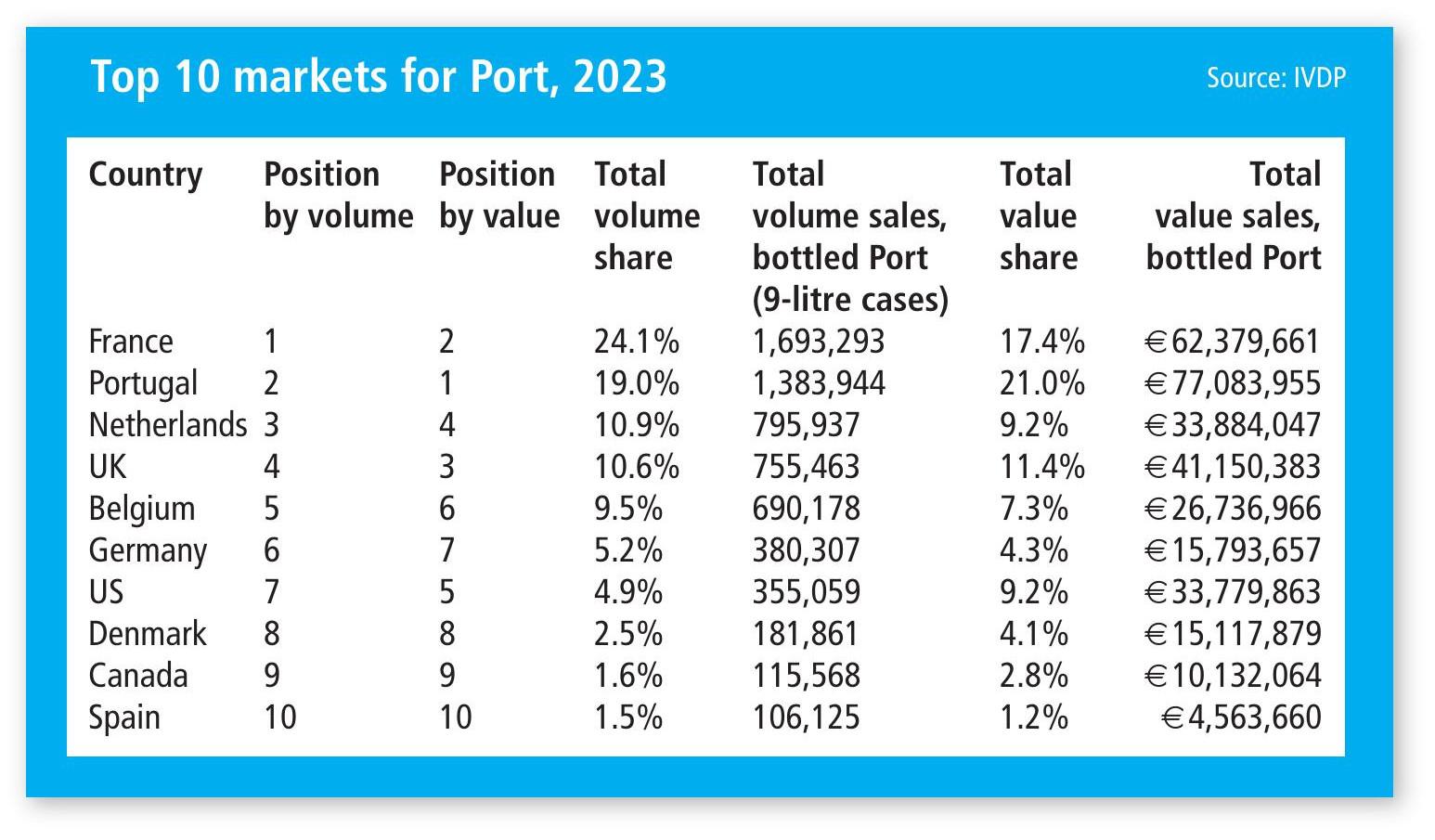
It’s a view echoed in part by Constance Descamps, international marketing manager for Porto Cruz’s parent company La Martiniquaise. However, she prefers to highlight two divergent sides of the Port business.
“At a time when consumers are looking for the best deals, accessible ports such as tawny, ruby or white want to remain competitive and affordable, so promotions are tending to intensify to offset price rises,” she observes. By contrast, continues Descamps, “consumers of vintage Ports are true connoisseurs who know how to drink them and what to pair them with to enjoy them to the full.”
The suggestion from all sides is that vintage Port needs to celebrate and cement this status as one of the world’s great fine wines. Let other styles reinvent themselves and reinvigorate the wider category. A select bunch of these new fans will then inevitably want to explore its pinnacle. Vintage Port doesn’t need to change; it just needs to welcome people to the summit and ensure they feel part of something truly special.
Related news
Taylor's launches first ever ‘Very Very Old White Port’


