



Araex president hails his ‘exciting, excellent and diverse’ homeland
Javier Galarreta, president of Araex Grands Spanish Fine Wines, explains how the producer advocates for Spain on the global stage.
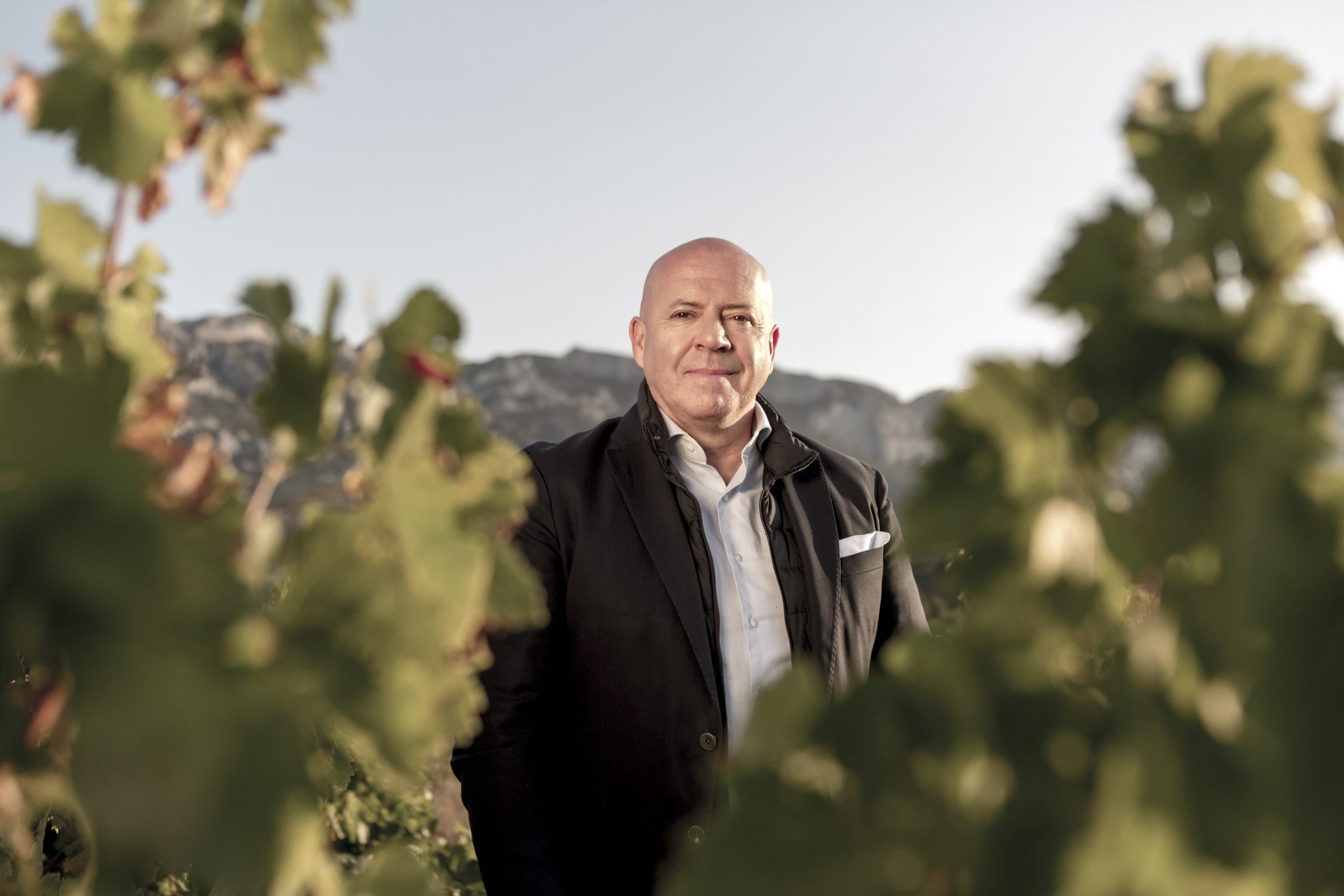
What, in your opinion, are the main strengths of Spanish wines?
The main strengths are excellence and diversity. There is no such extraordinary territory in the world, offering the possibility to work with so many native and international varieties, and such a great variety of soils, climates and terroirs. I honestly believe that some of the best wines in the world are Spanish.
What is Spain’s current position on the global market?
Spain has an obvious strength in quality. Year after year, our brands are more relevant in the market. However, we have a problem with international presence. Most markets only know a very small percentage of our wineries and wines. Araex was born precisely with the objective of highlighting the oenological excellence, first of all from Rioja Alavesa at our founding in 1993, and later, in 2001, from other Spanish regions such as Ribera del Duero, Toro, Rueda, Txakoli, Castilla, Navarra, Priorat, Cava and more.
How important has sustainability become for Spanish producers?
Sustainability has long ceased to be a buzzword and is now a reality. Whoever does not have sustainability as the epicentre of their business strategy today will soon cease to be in the market. We must forget about greenwashing and really work in this field.
In our case, sustainability is part of our DNA, with pioneering projects at the time such as the calculation and reduction of carbon footprint, or the Product Environmental Footprint (PEF), with which we aim to calculate and effectively reduce the environmental impact of the entire production cycle of our wines.
How relevant is professional training for Spanish wine brands?
Absolutely relevant. In January 2014, through the Araex Foundation, we created the Spanish Fine Wines Institute, a training platform on quality Spanish wine, which was born with the precise objective of increasing training and knowledge about our main regions, varieties, climates and terroirs.
Thanks to our platform, and the training courses that we have given in these last 10 years, more than 5,000 professionals in the sector have increased their knowledge and training on quality Spanish wine.
What do you see in the future for Spanish wine brands?
We know that the international market is going through a complicated time. It’s tremendously competitive, and with many sources of political, economic and social conflict in different parts of the world. That is to say, it will not be easy to continue growing, but if we do things well, I think the future is exciting.
What do you wish drinkers understood better about Spanish wines?
I would love for the consumer to know Spain for what it is: the most exciting, excellent and diverse winemaking country. I would like people to be able to find our wines anywhere in the world, because that would make them fall in love with who we are and what we do. I would like them to understand that our wines can be among the best in the world.
Related news
Historic Polish vodka distillery heads to auction with £53m redevelopment potential


