



Which Asia market is best for your brand in 2024?
As the taste for wine in Asia continues to blossom, Eloise Feilden finds out which APAC nations are ripe for the picking.

LI BAI, the ancient Tang Dynasty poet, is said to have consumed 100 cups of wine before letting his poetry flow. And flow it did. Writing during China’s ‘Golden Age of Poetry’, Bai saw alcohol as a blessing, rather than a sin.
“Throughout time, sages and men of virtue have only the company of solitude, / Only those who drink leave behind a reputation next to their name.” Thus goes Bring in the Wine, one of Bai’s most iconic works.
Today, one could only dream of conjuring the same level of inspiration. Contemporary wine consumers, particularly in the West, are fast losing interest in the category.
Despite still accounting for 48% of global wine consumption in 2021, European Union figures have been in decline for over a decade. Wine consumption fell by almost one-quarter (24%) in the 10-year period to 2020. This decline is expected to continue, according to the European Commission, although at a slower rate.
Take France, one of the world’s wine capitals, where people drank 63.8 litres of wine on average per person in 2007, yet only 47 litres per person in 2021. In August this year, the French Government allocated €200 million (£171.6m) to destroy surplus wine, and money was made available for winegrowers to change to other products, such as olives.
In funnelling the money into the industry, the French Government aims to stop “prices collapsing … so that winemakers can find sources of revenue again”, Minister of Agriculture Marc Fesneau said at the time. He warned that the wine industry must “look to the future, think about consumer changes … and adapt”.
European Commission data for the year to June 2023 shows that wine consumption has also fallen 7% in Italy, 10% in Spain, 15% in France, 22% in Germany and 34% in Portugal.
Wine in the modern age, then, may not inspire the same lyrical poetry to trip off the tongue of the average European consumer. However, the buying power of Asian markets is certainly enough to make producers sing.
Tastes vary significantly from country to country. Even so, the thing that unites the continent’s wine drinkers is their growing numbers. Wine in Asia is expected to grow annually by 5.19% to 2027 (Statista data).
In China, wine has now become a serious alternative to baijiu, the country’s national spirit. With a growing population (which currently sits at 1.4bn), China’s number of imported wine drinkers has also grown by about 14% since 2019.
Meanwhile, in Hong Kong, the market for wine is expected to show volume growth of 2.5% in 2024. And Japan, where the wine market was expected to be worth US$3.8bn in 2023, is predicted to record 1.6% volume growth in 2024.
MATURE MARKET
Jean-Marc Lafage, owner and winemaker at Domaine Lafage in Roussillon, has seen the growth of Japan’s wine market firsthand. Family-owned for more than two centuries, Domaine Lafage entered the Japanese market, its first in Asia, more than 20 years ago.
“It’s very different from other Asian countries,” Lafage explains, calling it a “very mature market”. He adds: “It’s a steady market, with no dramatic changes like we can see in other places,” and says that consumers in Japan are “demanding” when it comes to the quality of the wine and its packaging.
Mature markets such as Japan also offer key opportunities for up-and-coming winegrowing regions. English wine producer Black Chalk launched in Japan in early 2020, and CEO and winemaker Jacob Leadley says the country was a focus from the very beginning.
“Japan has a long and passionate relationship with sparkling wines from around the world and, alongside this, English products are often held in high regard,” he says. “This has generated genuine curiosity and enthusiasm for what is the newest premium sparkling wine region.”
Launching into a mature market can also create challenges and, for some brands, tapping into those less saturated is the way forward.
China may offer one of the most mature markets in the region, but Lafage argues that it is also one of the most “demanding”, with “a lot of obstacles”. Chinese tariffs imposed on Australian wine exports since November 2020 have led to increased uncertainty for businesses. Now, the country’s wine producers are making the best of a bad situation by pivoting their attention to markets elsewhere.
China still performed strongly from a market attractiveness perspective, according to Wine Australia, but the nation’s wine producers are also waking up to the potential of other, less challenging markets.
In 2020, around one-fifth of Australia’s export volume was shipped to Asia, with particular success in South Korea, Taiwan, Hong Kong and Malaysia. India is also showing potential, although all countries currently face a 150% import tariff on wine exported to India, which is a significant deterrent for consumers.

Heart and Seoul: South Korea has seen a surge in the number of wine drinkers
As for South Korea, according to Wine Intelligence, the number of wine drinkers jumped from 10.2 million in 2017 to 12.6m in 2022.
Pernod Ricard Korea, the Korean unit of the French drinks giant, has seen dramatic growth in the South Korean wine market. The company’s beverage alcohol sales, including those of wine, increased 33% year-on-year for two consecutive years, reaching KRW160bn (US$123m) in 2021-22.
Chile, one of the top three sources of wine imports to South Korea, has seen its shipments grow by more than 70% in the last eight years.
“The so-called Generation Z in Korea concentrates a key consumption force with a significant amount of wealth,” says Fernando Diaz, Asia director at Wines of Chile. He says this generation of wine drinkers in Korea is keen to “adopt new trends”, taking “educated guesses on premium wines” rather than following the crowd.
Diaz was not one to underplay Asia’s relevance when it comes to the success of Chilean wines. In 2022, Wines of Chile’s top markets in Asia accounted for more than 30% of its export value, and it continues to hone in on Vietnam, Malaysia and Thailand.
When it comes to high-end bottles, five of Chile’s top markets in Asia already represent 40% of the premium value of Chilean wine exports, Diaz says, “showing how relevant Asia markets have become for our premium offer”.
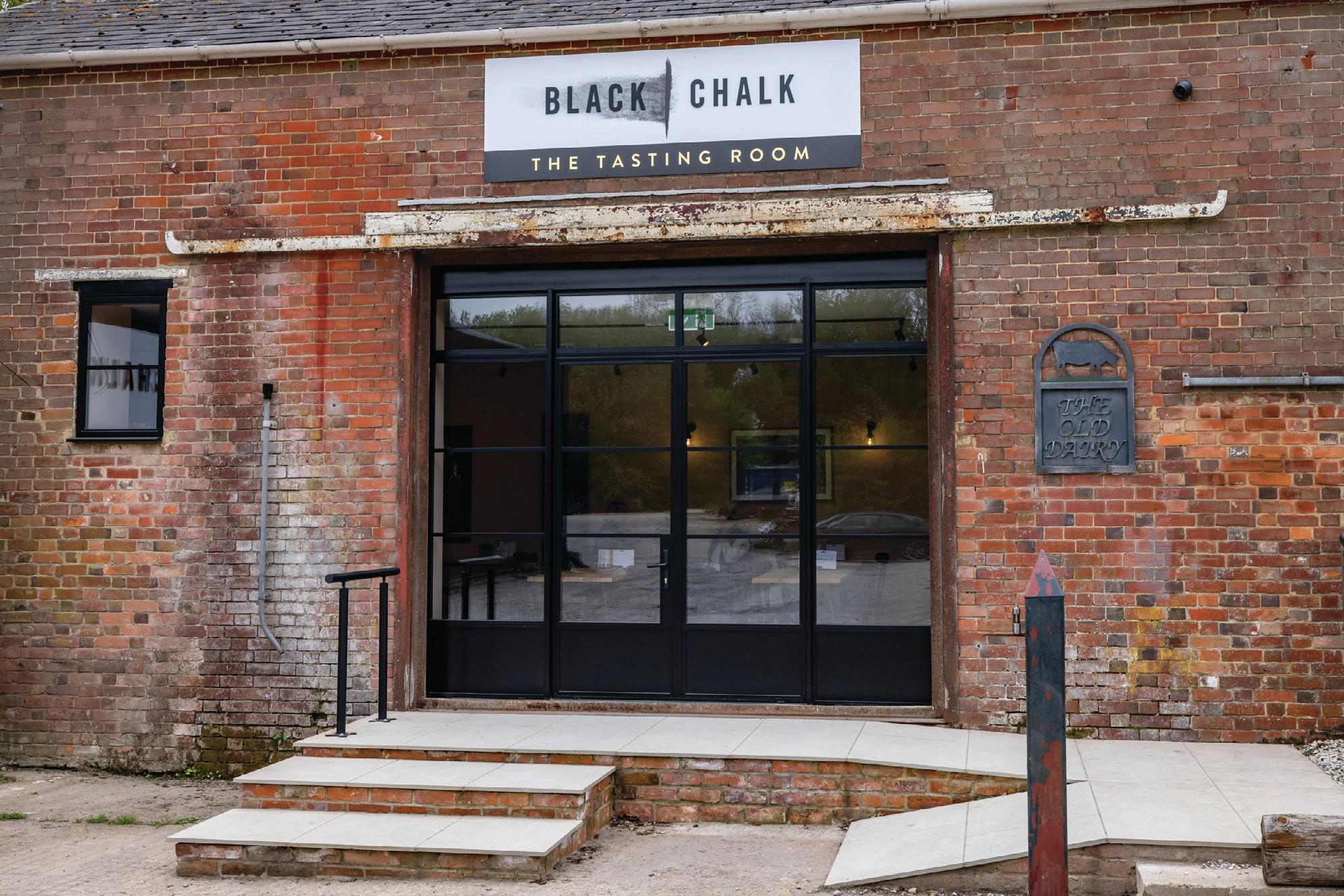
Eastern promise: English wine producer Black Chalk launched into Japan in 2020
ANALYSING TRENDS
The premium price segment is an important part of the story for wine in Asia. Auction houses are a good barometer for analysing trends in the premium space. With Asian buyers and bidders making up 40% of participants in Sotheby’s auctions over the past year, their buying power is obvious.
“In terms of regional participation,” says George Lacey, head of Sotheby’s Wine, Asia, “collectors from China and Hong Kong have continued to be the driving force for our business in Asia, but we have seen greater interest this year coming from Japan, Singapore, Vietnam, Thailand and Indonesia.”
Interest was driven by the launch of The Epicurean’s Atlas auction series in Hong Kong, which drew in collectors from all over the world, and Sotheby’s inaugural whisky auction in Singapore – its first wine or whisky auction on the ground in that market.
Success in Asia is driven as much by the outsiders who pay attention to the region as it is by those who populate it. The trade is beginning to look beyond the well-established markets – the likes of China and Hong Kong – to countries with yet fully realised potential.
With wine consumption falling to worrying levels in Europe, could growth in Asia be a saving grace? At times like these, the words of ancient Chinese poet Li Bai feel ever more fitting: “Please drink up; let not your chalice lay neglected.”
Related news
Louis Roederer enters Burgundy with Domaine Pierre Damoy acquisition
Manchuela broadens wine styles and relaxes bottling rules
Two wineries from Perelada Chivite group attain climate certification


