



Can Gen Z rescue the Cognac category?
Cognac houses are responding to tougher times with a raft of new initiatives, including recruiting Gen Z to the category, reports Kate Malczewski.
OVER THE past few years, the spirits industry has risen to the challenge of post-pandemic recovery, with the trend towards at-home drinking and the return of the on-trade both encouraging sales.
But growth is slowing amid tempestuous political and economic circumstances: global spirits volumes fell by 2% in 2022, and “subdued” expansion is predicted for the future, according to research firm IWSR Drinks Market Analysis.
In Cognac, the impact of this shifting landscape is particularly felt. Figures from the Bureau National Interprofessionnel du Cognac (BNIC) show that the French spirit’s exports hit an all-time high in 2021 before returning to normal last year. In the year to 31 July 2023, shipments dropped 18.9% by volume and 6.2% by value.
The results of Cognac’s major players reflect this downturn. Moët Hennessy, the wine and spirits arm of LVMH, saw revenues decline by 3% in the first half of 2023, noting “weak demand” for its category-leading Hennessy brand.
Meanwhile, Rémy Cointreau reported organic sales of its Cognac brands plummeting by 30.1% in H1, driven by “tougher market conditions”, including a “fiercely promotional environment”.
ECONOMIC CONTEXT
“The global economic context in a post-Covid era is affecting all drink categories,” says Christophe Veral, president of the BNIC. “Cognac is no exception, and is facing a decrease in exports, especially in its main markets, which are the US and China.”
In China, Veral attributes the spirit’s slowing sales to the stifling economic impact of Covid-19 restrictions, lifted in early 2023. In the US, excess supply is a major factor. Independent distributors in the country built up stockpiles of Cognac in the wake of the pandemic, and efforts have turned to rebalancing inventory.
“During the second half of 2022, Cognac houses took action on the American market in close collaboration with their commercial partners,” explains Veral. “This strategy to win back American consumers focuses on the visibility and desirability of Cognac, as well as on the logistics and distribution side of the business, in order to rebalance stocks now at their lowest.”
Against this backdrop, Cognac houses are vying for consumers’ attention, exploring new tactics to appeal to modern drinkers and untapped occasions. One such brand is Martingale, launched in October 2023 with the aim of engaging a “new generation”. It’s the first label from the Thomas family, who have been producing eaux-de-vie for other firms for more than a century.

Straight up: Cognac houses are increasingly emphasising the spirit’s mixabilityOn a liquid level, innovation in Cognac is not easy – at least, not if you want to put “Cognac” on the bottle.
In an effort to preserve the spirit’s character and identity, Cognac has a limited production area and strict regulations, making it arguably less accessible to new players than categories such as Tequila, and also less amenable to trends. Martingale aims to innovate within this framework by crafting a Cognac suited to the tastes of the modern consumer.
“We’ve created it for today’s palate, for people who like things that are a bit fresher and more versatile,” says chief commercial and marketing officer Andrew Weir, who co-founded the brand with Guillaume Thomas, CEO, and Amaury Thomas, master blender.
“I think that versatility is what will set us apart, and will put us into these moments where people have migrated to whisky, and possibly Tequila and mezcal.”
Weir sees the brand “talking to” two audiences. The first is someone who has enjoyed Cognac in the past, but has since transitioned away from the spirit. In the US, he says, this is often an African-American consumer – historically a key demographic for the Cognac sector – who is now looking to categories such as agave spirits.
“To them, we are something new and different, more akin to what they’re experiencing now, but a comfort of what they know in Cognac,” Weir explains.
The second target audience is an adventurous drinker, likely a fan of whisky, who hasn’t considered drinking Cognac. “Don’t get me wrong, it takes some explaining,” Weir says. “But the first thing we do is just let them taste it.”
The Thomas family’s experience in Cognac is key to the brand’s ability to bring something new to the market, says Weir.
“I think it gives you some licence to come up with something slightly different and unexpected,” he continues. “If we walked off the street and suddenly came to Cognac and said: ‘We’re going to do things our way,’ it’d be a bit harder.”
Anne-Laure Pressat, executive director of Rémy Cointreau-owned Louis XIII, agrees that the balance between tradition and innovation is crucial in Cognac.
“This balance can only be kept if innovation is constructed on the foundations of Louis XIII, securing its heritage at the core of our visionary ambitions,” she says.
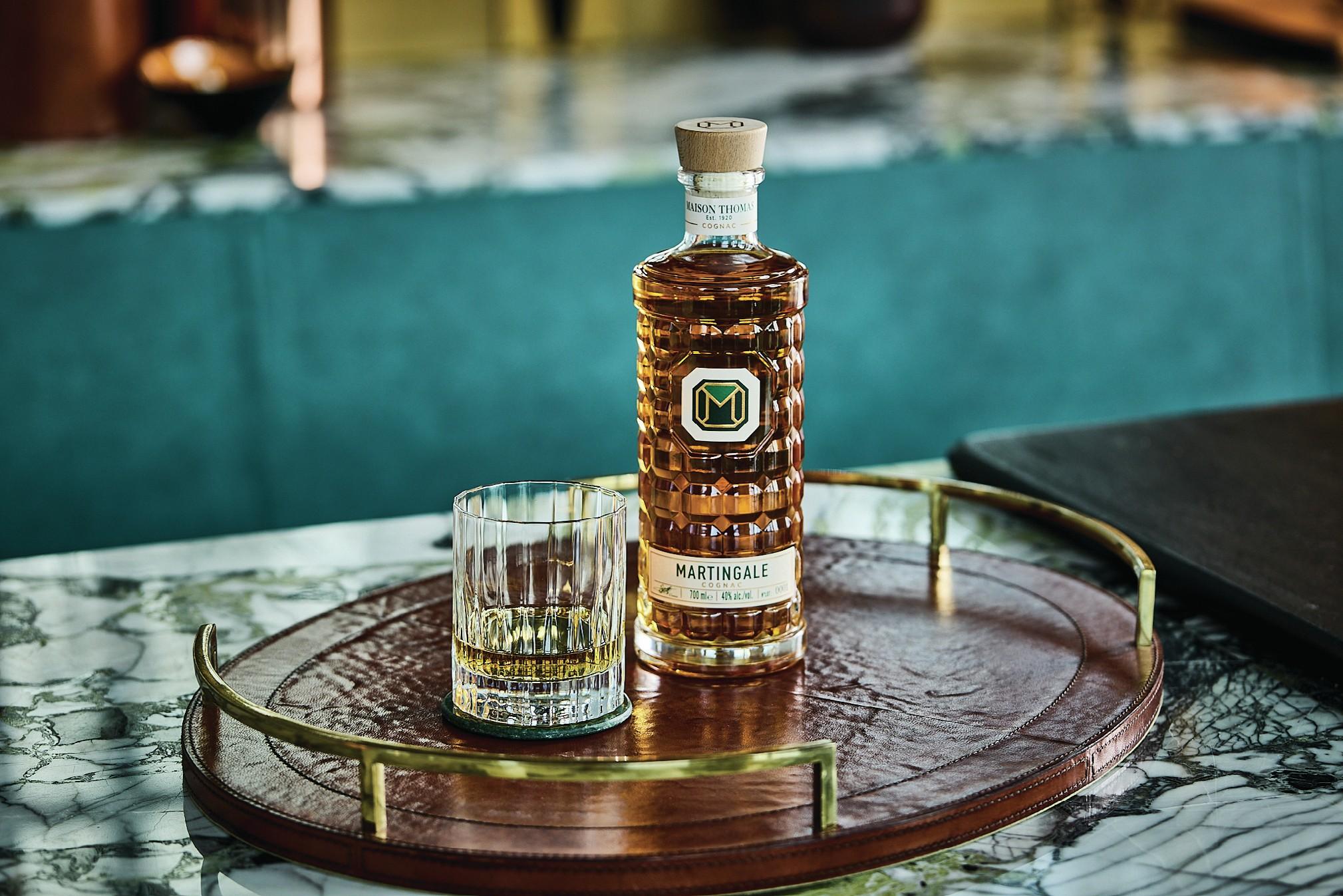
New tricks: Martingale targets adventurous consumers
Louis XIII’s ambitions have taken the form of a new range of miniatures called The Drop. Unveiled worldwide in October 2022, it’s a collection of five core expressions, each presented in 1cl packaging reminiscent of a bottle of perfume or nail polish. The brand has also created a carrying case with a shoulder strap to further facilitate on-the-go consumption.
“Louis XIII The Drop, with a nomad mindset, brings a twist to the brand to better anchor Louis XIII in its era, highlight its rarity and address the new generation: digital natives and experience seekers who are always on the move,” Pressat says.
Retailing at £160 per 1cl bottle, The Drop appears to be aimed at redefining the concept of luxury in the context of an affluent Gen Z consumer – someone with ample disposable income, despite the current economic climate.
To speak to this target audience, Louis XIII has employed a mix of social media content and in-person promotional events, including a pop-up in Singapore that featured an augmented reality experience and a personalisation workshop.
STRONG IDENTITIES
At Camus, the largest family-owned Cognac firm, global brand director Anna Kim also sees an alignment between Gen Z and luxury in Cognac. She says that, rather than following trends, younger consumers look for brands with strong identities.
“With drinkers becoming more discerning, they seek products that can authentically communicate their story, emphasising terroir and heritage,” Kim explains. In response to this demand, the producer established a luxury division, Les Ateliers Camus, dedicated to the development of rare products.
However, given younger drinkers’ focus on quality, there is potential for premium Cognac brands to appeal to other financial demographics in this age group, too.
“It’s fair to say the cost-of-living crisis has disproportionately affected younger people, but I also think that consumer is much more thoughtful about how they drink and what they spend their money on,” says Weir.
Market research supports this statement. Surveys conducted by IWSR in February 2023 show “the resilience of the premiumisation trend”, with many drinkers embracing economic moderation by buying better-quality products less frequently.
“Yes, money’s tight,” Weir says. “But there is this idea of enjoying an experience, rather than just having something.”
For Marie Brizard-owned Cognac Gautier, an experiential element is pivotal when appealing to consumers looking to moderate.
“In all the communication that we do on our products, we portray the consumption moment as quality time, intimate, unique,” says Caroline Alzieu, international brand director of Gautier.
“You don’t drink Cognac as you would drink wine. The occasions are less frequent, and therefore a bottle lasts much longer.”
With this in mind, Gautier promotes specific occasions for its expressions, developing its Pinar del Rio XO Cognac to pair with cigars, and highlighting its Tradition Rare variant as a match for desserts. In addition, the producer is developing more cocktails with its VS and VSOP bottlings in an effort to harness new trends and to target fresh consumption settings.
Indeed, more and more brands are tapping into Cognac’s mixability, playing up the potential for use in cocktails at home and in the on-premise through kits, bar takeovers and more.
“The idea is to provide various ways to enjoy Cognac, especially for younger consumers,” says Veral, noting that VS and VSOP expressions are more affordable and adapted to cocktail consumption.
Moët Hennessy strengthened its commitment to cocktails in June 2023, when it opened the doors to a five-floor hospitality venue in the Saint-Germaindes-Prés neighbourhood of Paris. Called Cravan, the space features three bars and a bookstore, and serves cocktails made with spirits from the firm’s portfolio, including Hennessy VS and Hennessy XO.
According to Moët Hennessy chairman and CEO Philippe Schaus, Cravan is aimed at “bringing to life Moët Hennessy’s mission: crafting experiences”.
New growth: the BNIC expects Cognac exports to bounce back next year
SIGNIFICANT ROLE
Partnerships and collaborations continue to play a significant role in the visibility of Cognac houses, particularly for Hennessy.
In October 2023, the brand demonstrated its investment in a partnership-driven strategy by extending its contract as the official spirit of the National Basketball Association (NBA). To mark the renewal, the Cognac maker released limited-edition bottles cobranded with the NBA and unveiled a series of basketball courts in recognisable settings worldwide, including a floating version on the River Thames in London.
Cognac Frapin has also looked to basketball to help raise its profile in the US. Since 2021, French NBA player Rudy Gobert has served as the brand’s ambassador, bolstering a strategy that is driven in part by tastings.
“The goal is to use the notoriety of Rudy Gobert to make more noise about Frapin in North America,” says Thomas Soret, communications manager at Frapin.
And there’s more exciting activity on the horizon in the Cognac region itself, as American whiskey maker Uncle Nearest recently announced its intention to enter the category with the purchase of Domaine Saint Martin, the historic estate that encompasses 40% of the Grande Champagne cru. The American distiller will operate its Cognac brand under a separate name, which has yet to be revealed.
Uncle Nearest founder and CEO Fawn Weaver teased that her company’s strategy in Cognac “pivots from the norm”, revealing that her team will first release a short film exploring the category’s rise in the US, Europe and Asia.
Adrian Parker, formerly the vice-president of global marketing for Patrón Tequila, will lead the new venture as president. Looking ahead, the BNIC forecasts a “strong return to growth” for Cognac from 2024 onwards – and each producer ’s efforts will be instrumental on this journey.
Veral knows that the next year will be a complex one, but he is nonetheless optimistic about the category’s resilience. “After record highs, we have entered a new phase,” he says.
“In a changing economic and geopolitical context, Cognac houses are fully committed and continue to invest in their markets. The measures we take today will lead to growth in the future.” db
Cognac by numbers
• In 2022, Cognac represented 0.8% of the total global spirits market by volume and 4.5% by value (Euromonitor International).
• Between 1 August 2022 and 31 July 2023, the category’s export shipments totalled 180.2 million bottles, worth €3.6 billion (US$3.9bn), representing year-on-year declines of 18.9% by volume and 6.2% by value (BNIC).
• The global Cognac market is forecast to grow at a CAGR of +3.8% by volume and +8.3% by value between 2022 and 2027 (Euromonitor International).
• The spirit’s top five markets are the US, China, the UK, South Africa and France (IWSR Drinks Market Analysis).
Related news
Brown-Forman warns of flat year despite sales beat


